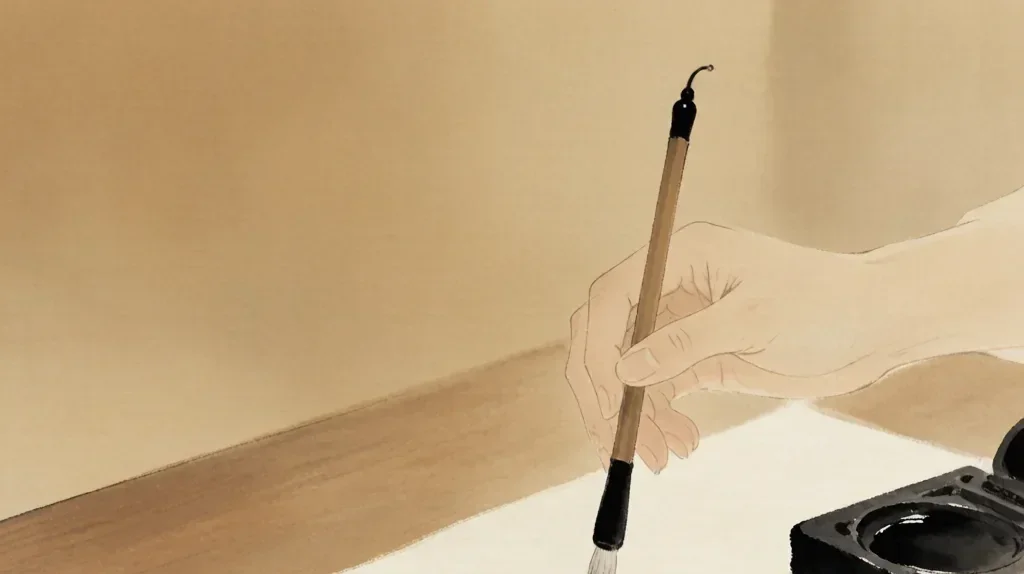
Letter writing has a uniquely honored place in Chinese culture. Long before phones and email, the written word was the primary way to maintain family bonds across distance, to show respect to teachers and elders, and to conduct affairs of state. Classical letter collections are studied as literature, and the conventions of opening, addressing, and closing a letter encode Confucian values of hierarchy and warmth. Even today, knowing how to write a proper Chinese letter—or at least a polite message—opens doors in both personal and professional life. This article explores the traditions, formats, and etiquette of Chinese letter writing.
Historical Status of the Letter
In imperial China, letters (书信, shūxìn) were treasured objects. Scholar-officials exchanged them as a form of literary art, and many famous essays began as private correspondence. Collections of such letters became standard reading for the educated.
Because travel was slow, a letter might be the only contact between family members for months or years. Letter carriers were respected, and receiving news from home was a solemn, happy event. The phrase 家书 (jiāshū, "family letter") carries deep emotional weight.
The tradition of valuing the handwritten word means that even a short note is read as a sign of sincerity. A typed message is convenient, but ink on paper still carries special weight.
The Structure of a Traditional Letter
A classical Chinese letter opens with a respectful salutation naming the recipient and your relationship—for example, addressing a teacher as 恩师 (ēnshī, "gracious teacher"). It then offers a polite inquiry about the recipient's health before stating the letter's purpose.
The body develops the matter plainly, with courteous hedges rather than blunt demands. Closing phrases express humility—"my crude words" or "I respectfully bow"—and sign off with the writer's name and a dated seal or signature.
Vertical writing from right to left was traditional; modern letters usually run horizontally like Western ones, but the polite openings and closings survive in form if not exact wording.
Opening and Closing Formulas
Common openings include 见字如面 (jiàn zì rú miàn, "seeing your writing is like seeing your face"), used among loved ones separated by distance. It beautifully captures the letter's emotional role.
Polite health inquiries such as 近来可好 (jìnlái kě hǎo, "hope you have been well lately") soften the transition into business. These formulas are not empty—they affirm the relationship first.
Closings often use 此致 (cǐ zhì) followed by 敬礼 (jìnglǐ, "respectful salute") in formal letters, or warmer lines like 珍重 (zhēnzhòng, "take care") among family. The choice signals the closeness and formality of the bond.
Addressing Elders and Superiors
Hierarchy shapes address. One writes to an elder with elevated terms and humble self-reference; never use a casual or equal tone with a senior. Titles precede surnames—王教授 (Professor Wang), 李经理 (Manager Li).
When writing to a teacher or mentor, expressions of gratitude for guidance are expected even if the letter's main point is practical. Showing respect costs nothing and builds the relationship.
For official letters, a clear subject line and formal register are standard. The envelope itself may carry the recipient's full title, signaling the writer's attentiveness to rank.
The Envelope and Fold
The envelope (信封, xìnfēng) traditionally showed the recipient's address and title on the front and the sender's on the back flap. Red envelopes were for festive messages; plain ones for ordinary mail.
An old superstition held that folding a letter so the recipient's name touched the writer's was disrespectful, and that letters should never be folded to put the addressee "under" the sender. Such nuances have faded but linger in etiquette guides.
Today, addressing the envelope clearly and correctly matters more than symbolism. Still, writing the name neatly is a small courtesy the recipient notices.
Festival and New Year Letters
The most letter-writing-heavy time was historically the Lunar New Year, when family members sent greetings and reports home. The 拜年信 (bàinián xìn) combined good wishes with news of the year.
Even now, New Year cards and messages follow letter-like conventions: open with blessing, inquire after family, offer hopes for the coming year. The structure mirrors the old home letter.
For overseas Chinese, the annual letter home became a cherished ritual sustaining identity across generations and continents.
Modern Messages and Etiquette
Texting and WeChat have largely replaced postal letters for daily life, but the polite register survives. Opening a message with the person's title and a greeting, rather than diving into requests, echoes the letter's respect-first logic.
When sending a formal email in Chinese, a subject line, proper salutation, and a courteous sign-off remain expected in business. Skipping them reads as abrupt even among peers.
For condolences or major life events, a handwritten note still outperforms a quick text. The effort itself communicates care in a way pixels cannot.
Thank-You and Congratulatory Notes
A short note after a gift, a visit, or a kindness is a graceful habit. It need not be long—two or three sentences of specific thanks suffice—but it should name the gift or act and the writer's feeling.
Congratulatory letters for weddings, births, or promotions follow the blessing-first pattern: open with joy for the event, add a warm wish, and sign with your name and relation.
These notes keep relationships warm between meetings. In a culture that prizes 人情 (rénqíng, mutual obligation and feeling), the written thank-you is a small deposit in a lifelong account.
Learning to Write Well
For learners of Chinese, practicing letter format is excellent training in politeness markers and social register. Start with the salutation, the health inquiry, the body, and the closing—the four beats of a good letter.
Studying model letters from textbooks or classical collections teaches not just grammar but the rhythm of respect. Native speakers judge warmth as much as correctness.
Whether on paper or screen, a well-formed Chinese message tells the reader: I see you, I respect our bond, and I took the time to say so properly.
❓ Frequently Asked Questions
How do I open a formal Chinese letter?
Name the recipient with their title and relation, then offer a polite health inquiry before stating your purpose. Respect-first ordering is key.
What does "jian zi ru mian" mean?
It means "seeing your writing is like seeing your face," a traditional tender opening used among loved ones apart.
How should I address an elder in writing?
Use elevated terms and humble self-reference; never a casual tone. Put titles before surnames, like "Professor Wang."
Is a handwritten note still expected today?
For daily life, texts suffice, but for condolences, thanks, and major events a handwritten note shows extra sincerity.
What closing should I use?
Formal letters use "ci zhi, jing li"; family letters may end with "zhenzhong" (take care). Match closeness and formality.
Do email and WeChat messages follow letter etiquette?
Loosely: open with a greeting and title, keep a courteous register, and close politely. The respect-first logic carries over.