☯ Philosophy & Thought

Explore 152 stories across 3 topics

🪷 Buddhism in China

🪷
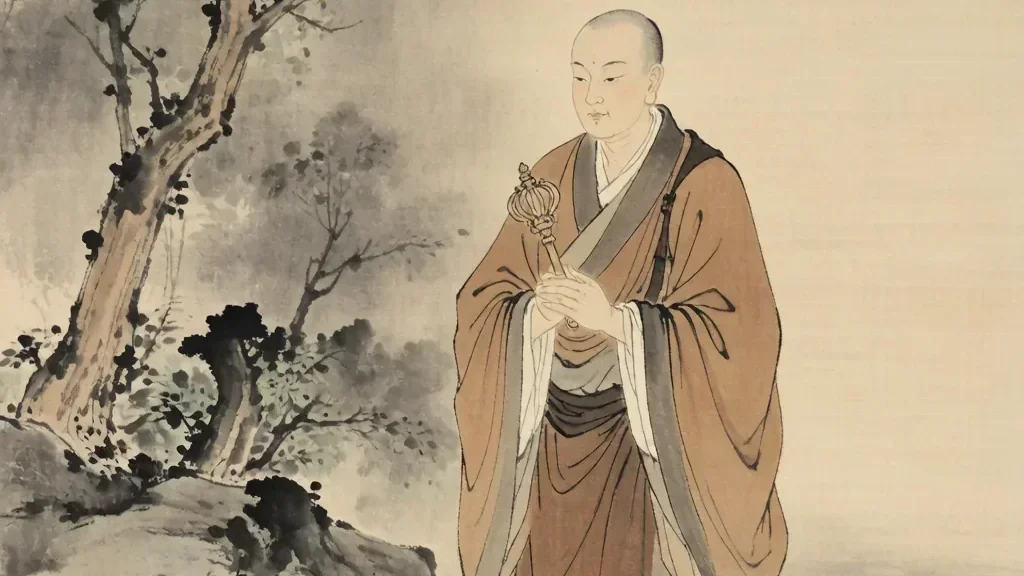
Amoghavajra: The Esoteric Master of the Tang Court

Amoghavajra: The Esoteric Master of the Tang Court

From a remote monastery in Sri Lanka to the innermost chambers of the Tang imperial palace, the life of Amoghavajra reads like a Silk Road adventure story — except that every step was driven by an unshakeable conviction that the secret, ritual methods of Esoteric Buddhism could protect an empire, heal its emperors, and reveal the cosmic truth hidden beneath ordinary reality. Amoghavajra (, bù kōng) was not just a monk; he was a diplomat, a miracle-worker, a translator, and arguably the most politically powerful Buddhist monk in Chinese history.

Read story →
🪷
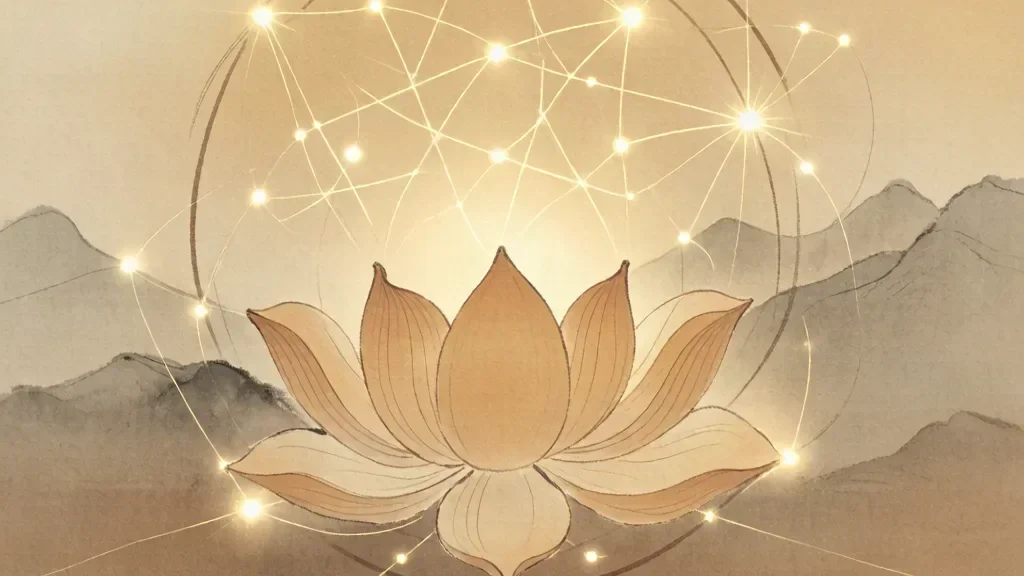
The Avatamsaka Sutra: The Cosmos Interwoven

The Avatamsaka Sutra: The Cosmos Interwoven

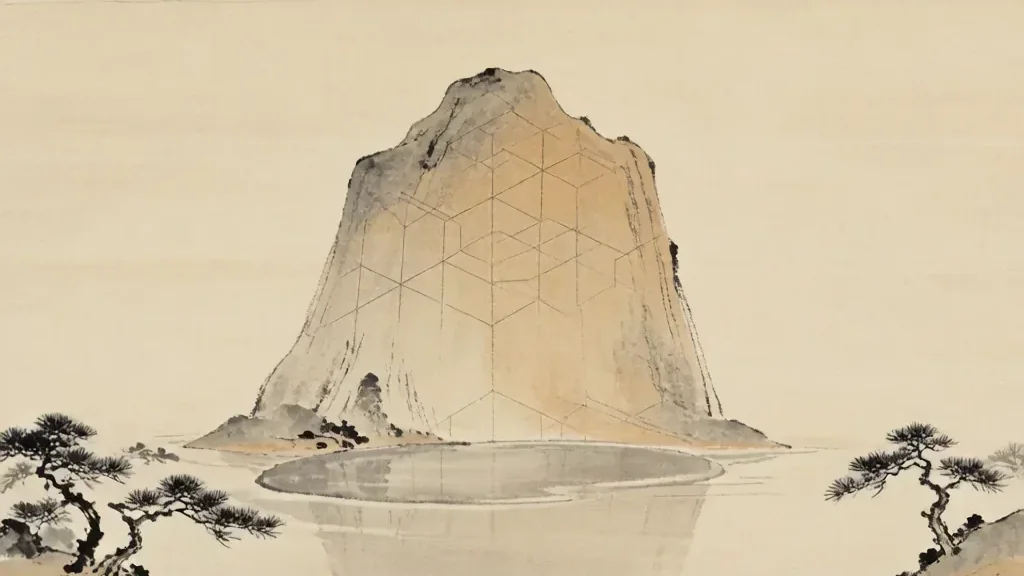
If the Heart Sutra is a single drop of wisdom and the Lotus Sutra is a flowering tree, the Avatamsaka Sutra is an entire universe — a vision of reality so vast, so intricate, and so endlessly interconnected that reading it is less an act of study than an act of cosmic travel. The Avatamsaka Sutra (, huá yán jīng), or Flower Garland Sutra, presents a universe in which every atom contains all other atoms, every being reflects every other being, and the entirety of existence is a single, radiant web of awakening. This text gave rise to the Huayan school, one of the most philosophically sophisticated traditions in Chinese Buddhism.

Read story →
🪷
Chengguan: The Great Commentator of the Avatamsaka

Chengguan: The Great Commentator of the Avatamsaka

If Fazang was the architect of Huayan philosophy, Chengguan was its master builder — the commentator who took the system Fazang had outlined and expanded it into a cathedral of thought, brick by logical brick. Chengguan (, chéng guān) lived to be over one hundred years old, served seven Tang emperors, and produced the most detailed and authoritative commentary ever written on the Avatamsaka Sutra. His life spanned almost the entire ninth century, and he witnessed both the glory of Tang Buddhism and the first tremors of the persecution that would nearly destroy it.

Read story →
🪷
The Lotus Sutra: The One Buddha Vehicle

The Lotus Sutra: The One Buddha Vehicle

Imagine a scripture that opens with a beam of light so brilliant it illuminates eighteen thousand worlds, where the Buddha reveals that his entire lifetime of teaching has been a skillful deception, and where a dragon princess attains enlightenment in the space of a single moment. This is the Lotus Sutra (, miào fǎ lián huā jīng), perhaps the most influential and certainly the most beloved text in East Asian Buddhism. Its message — that there is only one vehicle to enlightenment, that all beings are destined for Buddhahood, and that the Buddha's apparent death is but an expedient teaching — reshaped the Buddhist imagination of China, Japan, and Korea.

Read story →
🪷
Zhiyi: The Founder of Tiantai Buddhist Philosophy

Zhiyi: The Founder of Tiantai Buddhist Philosophy

Among the founders of Chinese Buddhist schools, one man stands out not for his travels, his miracles, or his political influence, but for the sheer depth and systematic rigor of his philosophical vision. Zhiyi (, zhì yǐ) never left China — he never made the pilgrimage to India that was the dream of every serious monk — yet he created the first genuinely Chinese system of Buddhist philosophy, a comprehensive synthesis of Indian doctrine and Chinese sensibility that would shape East Asian thought for over a millennium. He is the philosopher's philosopher of Chinese Buddhism.

Read story →

🥋 Martial Arts

🥋
What Are the 18 Arhats of Shaolin? Complete Guide

What Are the 18 Arhats of Shaolin? Complete Guide

The Shaolin 18 Arhats (, Shaolin Shiba Luohan) is one of the most famous and historically significant forms in Chinese martial arts. The "Eighteen Arhats" — enlightened disciples of the Buddha who have attained liberation from the cycle of rebirth and serve as protectors of the Dharma (the Buddhist teachings) — have been depicted in Chinese Buddhist art for nearly two millennia, each with distinctive postures, expressions, and attributes. The Shaolin Temple transformed these static iconographic poses into a dynamic martial arts form, creating a sequence of movements that embody the spiritual and combative dimensions of Shaolin practice. The 18 Arhats form is not merely a method of combat — it is a moving mandala, a physical meditation in which the practitioner embodies the qualities of these enlightened beings, developing both martial skill and spiritual realization through the discipline of the body.

Read story →
🥋
The Complete Guide to Tai Chi: Combat, Health and Philosophy

The Complete Guide to Tai Chi: Combat, Health and Philosophy

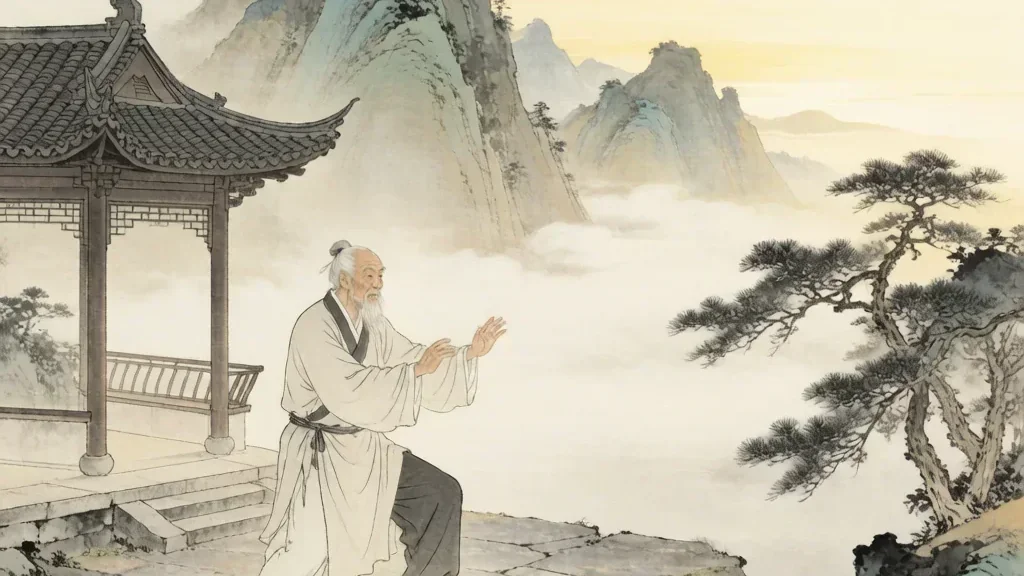
Walk through any park in China at dawn, and you will see them — groups of people moving through slow, graceful postures, arms tracing arcs through the morning air. To most observers, Tai Chi (Taijiquan, ) appears to be a gentle exercise for the elderly, a moving meditation for health and relaxation. But beneath the serene surface lies a sophisticated and devastating martial art, one that for centuries was a closely guarded fighting system taught only within family lineages. This is the Tai Chi that most people never see.

Read story →
🥋
Drunken Boxing

Drunken Boxing

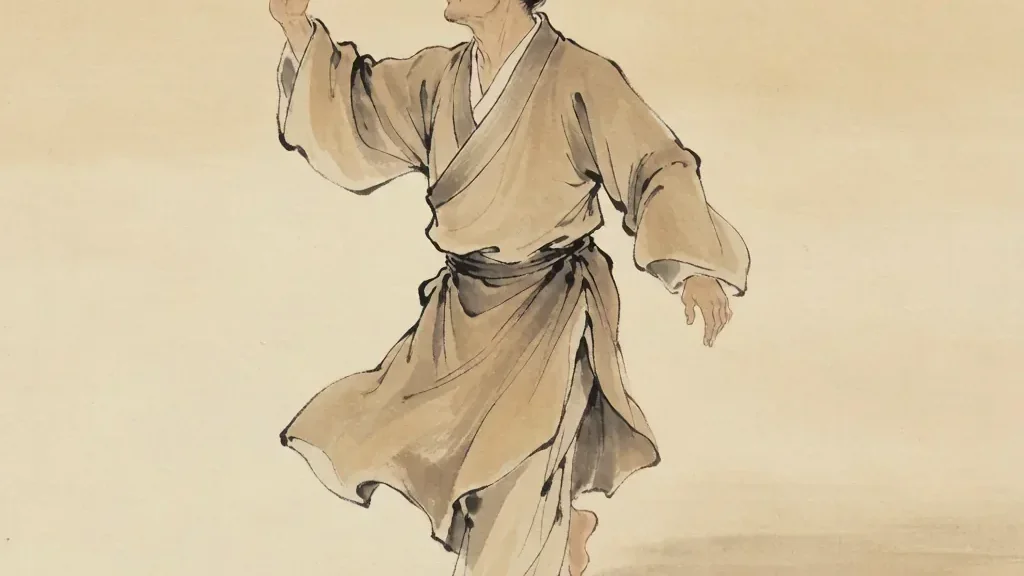
Of all the images of Chinese martial arts, few are as unforgettable as the "drunken master": staggering, wobbling, seemingly helpless—then striking with stunning precision from a fall. This is Zuiquan (, Zuì Quán), "Drunken Boxing." Far from a comedy routine, it is a sophisticated style built on off-balance stances, deceptive posture, and sudden explosive recovery. It matters because it turns weakness into strategy: by appearing clumsy and vulnerable, the drunkard invites attack and punishes it. For students of Chinese martial culture, Zuiquan is the clearest proof that illusion and psychology are as much a part of kung fu as muscle.

Read story →

☯ Schools of Thought

What Were China's Imperial Examinations (Keju)? Guide

What Were China's Imperial Examinations (Keju)? Guide

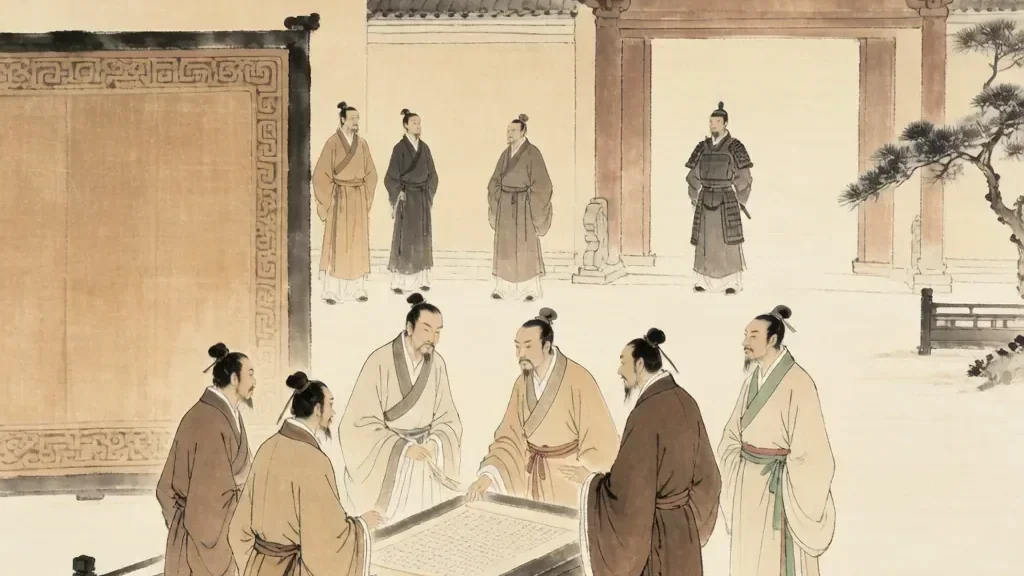
For over 1,300 years, from its establishment in the Sui Dynasty (605 CE) to its abolition in 1905, the Imperial Examination System (, Kējǔ zhìdù) served as the engine of Chinese governance, social mobility, and intellectual life. It was the world's first large-scale, standardized merit-based civil service recruitment system — a revolutionary concept in an era when most societies distributed power based on birth, wealth, or military prowess. Through this system, any male, regardless of his family's social standing (with a few exceptions), could theoretically rise to the highest echelons of government through sheer intellectual ability and scholarly dedication. The examination halls of imperial China produced not just officials, but poets, philosophers, historians, and the cultural elite who shaped one of humanity's most enduring civilizations.

Read story →
What Is the Doctrine of the Mean (Zhongyong)? Guide

What Is the Doctrine of the Mean (Zhongyong)? Guide

The Zhongyong , translated as "The Doctrine of the Mean" or "The State of Equilibrium and Harmony," is one of the most profound and philosophically dense texts in the Confucian canon. Originally a chapter in the Book of Rites , it was elevated to independent canonical status by the Song dynasty Neo-Confucian master Zhu Xi (1130–1200), who made it one of the "Four Books" that formed the core of Chinese education for nearly 700 years. Attributed to Zisi (, c. 483–402 BCE), Confucius's grandson, the Zhongyong articulates a vision of cosmic harmony in which the cultivated human being becomes a partner of Heaven and Earth, capable of transforming the world through the perfection of inner equilibrium. Far from the simple moderation that the English phrase "Doctrine of the Mean" might suggest, the Zhongyong presents a dynamic, creative philosophy of balance that influenced not only ethics and politics but also Chinese aesthetics, medicine, and spiritual practice for over two millennia.

Read story →
← Back to All Stories