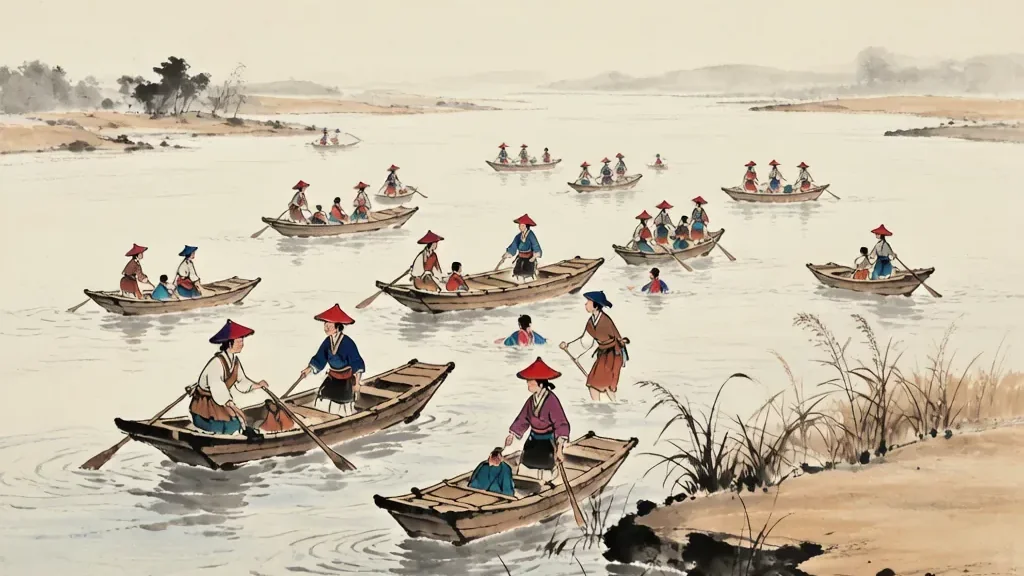
The Miao Dragon Boat Festival: Racing Dragons on the Qingshui River
The River Crossing Festival of the Miao is a Dujiang-style swim and boat rite — young men diving the current to prove their mettle.
Read story →Explore 171 stories across 3 topics
The River Crossing Festival of the Miao is a Dujiang-style swim and boat rite — young men diving the current to prove their mettle.
Read story →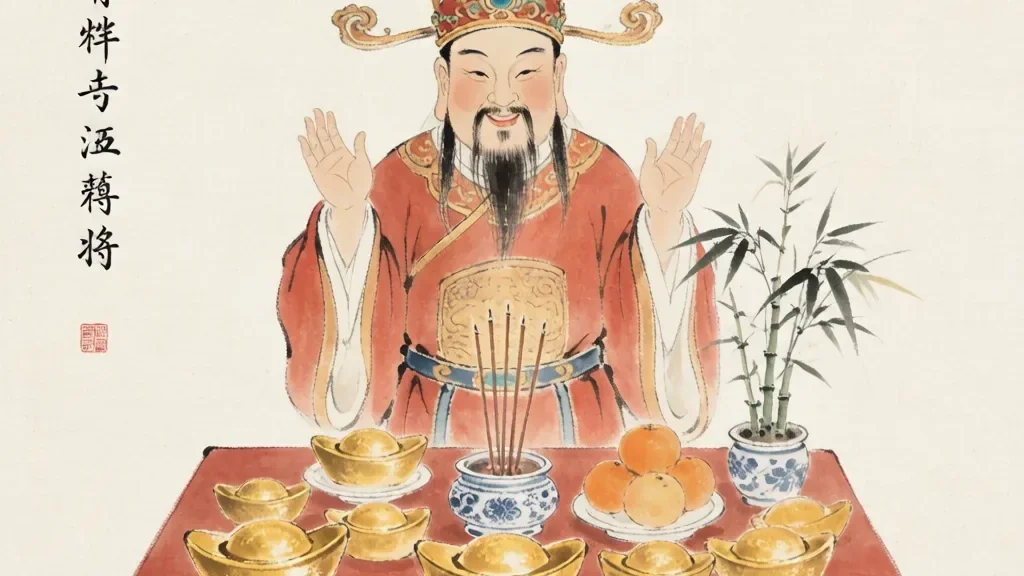
The God of Wealth's Birthday is a day of worshipping prosperity — offerings and open ledgers to court fortune.
Read story →
In the soft, damp days of early spring, when the plum blossoms have faded and the peach buds are just beginning to swell, the Chinese calendar once held a festival of pure, unalloyed beauty: Huazhao (, Huāzhāo Jié), the Flower Festival. It was, quite literally, the birthday of flowers — the day on which all blossoms were said to be born, and on which the goddess of flowers herself was honored. It was a festival of poetry, of wine drunk among blossoming trees, of red ribbons tied to branches, and of a deep, old reverence for the brief and dazzling beauty of the natural world.
Read story →
The She Day is the festival of the Earth God — the village feast to the soil spirit for a good harvest.
Read story →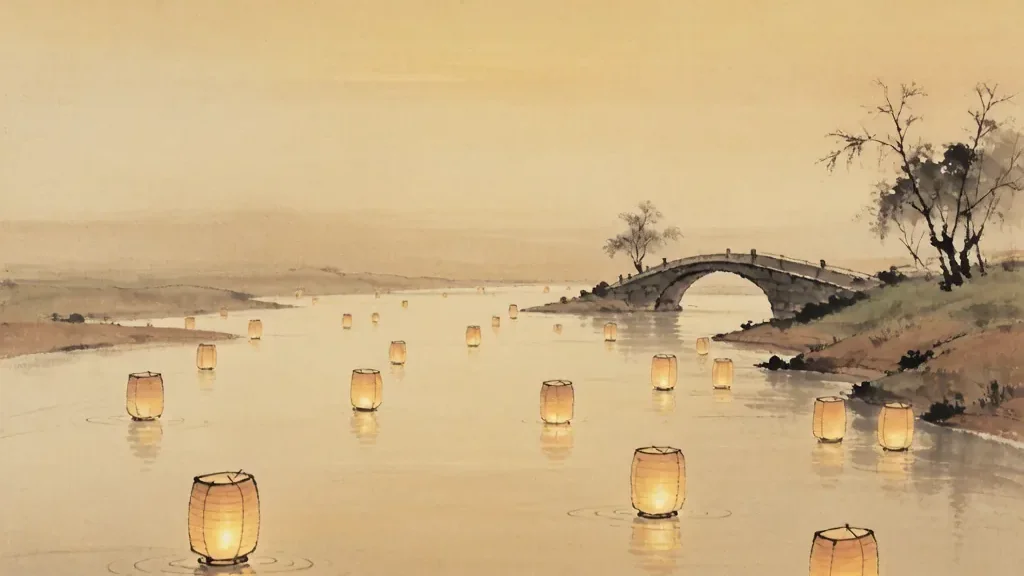
On the fifteenth day of the seventh lunar month, the gates of the underworld swing open. For one month — the entire seventh lunar month, in many traditions — the spirits of the dead are allowed to walk the earth, to visit the homes of their descendants, to enjoy offerings of food and paper money, and, if they are lost or forgotten, to wander. The fifteenth itself is the climax: Zhongyuan (, Zhōngyuán Jié), the Ghost Festival, also known as Yulanpen (, YúLánPén) in its Buddhist form, or simply Guijie , "Ghost Festival."
Read story →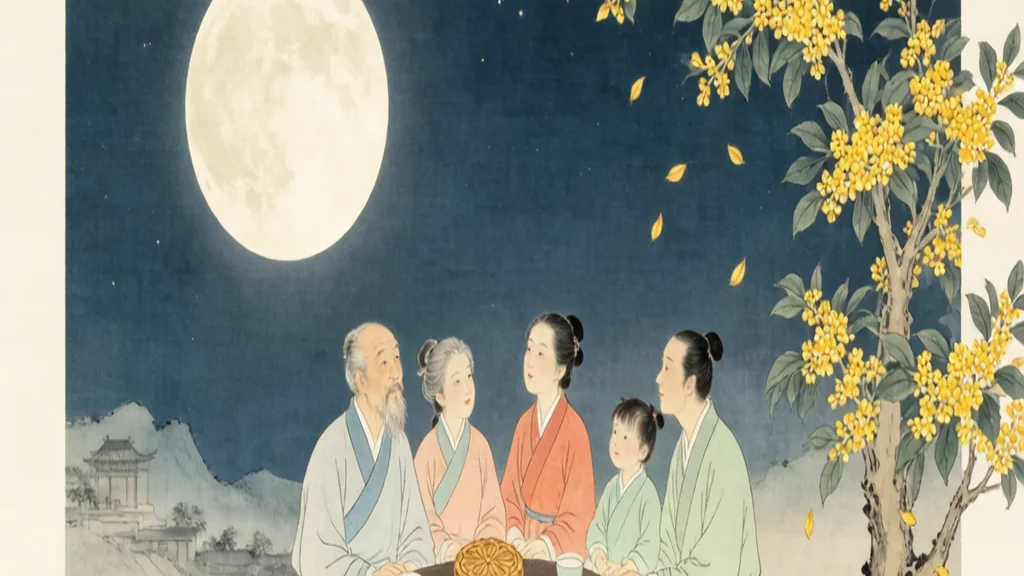
On the fifteenth night of the eighth lunar month, the moon hangs fullest and brightest. Families across China and East Asia gather for mooncakes, lanterns, and reunion under the silver light — the second most important festival of the Chinese year.
Read story →
Rain Water (, Yǔshuǐ) arrives as the second solar term in the traditional Chinese calendar, usually falling between February 18th and 20th. Unlike the dramatic storms of summer, Rain Water brings a gentler transformation — the slow thawing of frozen earth, the first tentative drizzle of spring, and the quiet awakening of dormant seeds beneath the soil. For Chinese farmers across millennia, this moment has signaled the true beginning of the agricultural year, when the land becomes receptive once again to the seeds that will feed the nation.
Read story →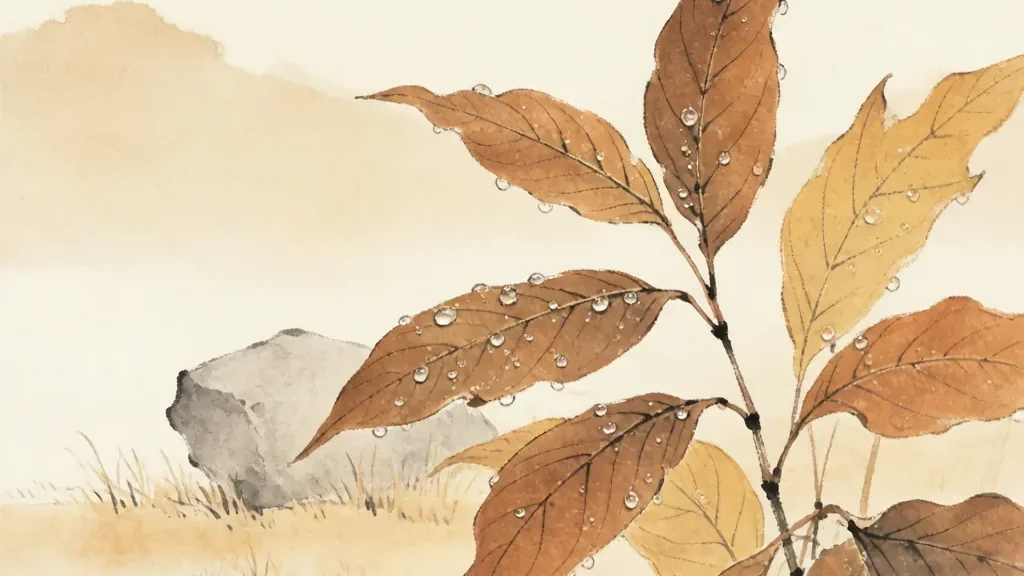
White Dew is the autumn dew that descends — the solar term when mornings glisten and the air turns cool.
Read story →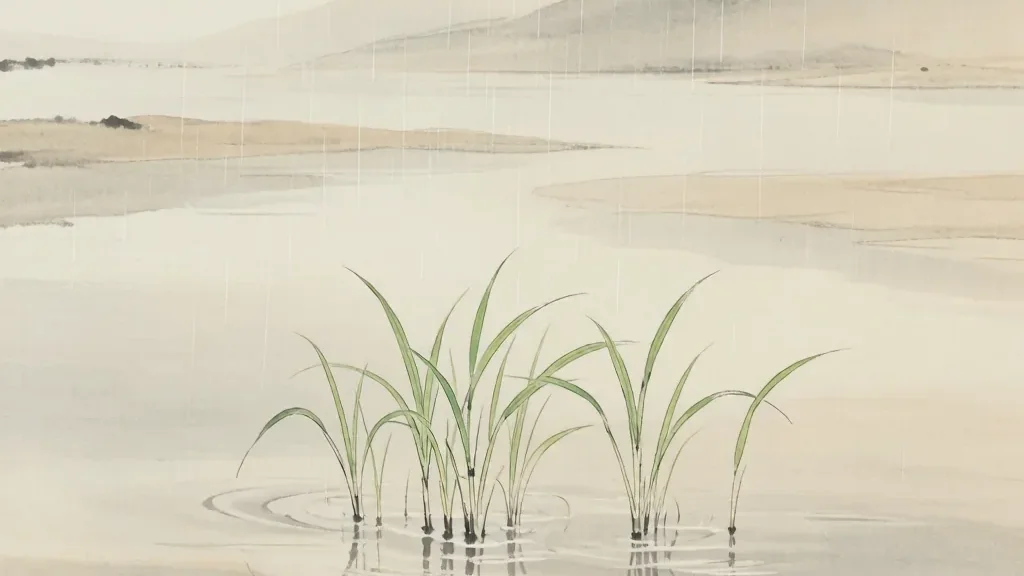
Grain Rain (, Gǔyǔ) arrives as the sixth and final solar term of spring, typically falling between April 19th and 21st. Its name carries a beautiful simplicity: (gǔ) means grain, and (yǔ) means rain — together declaring that the spring rains nourish the hundred grains. For the agricultural civilization of ancient China, this was a moment of profound gratitude, when the life-giving waters of late spring filled the swelling seeds that would become the year's harvest. The ancient saying "" (yǔ shēng bǎi gǔ), meaning "rain gives birth to a hundred grains," captures the essence of this season in just four characters.
Read story →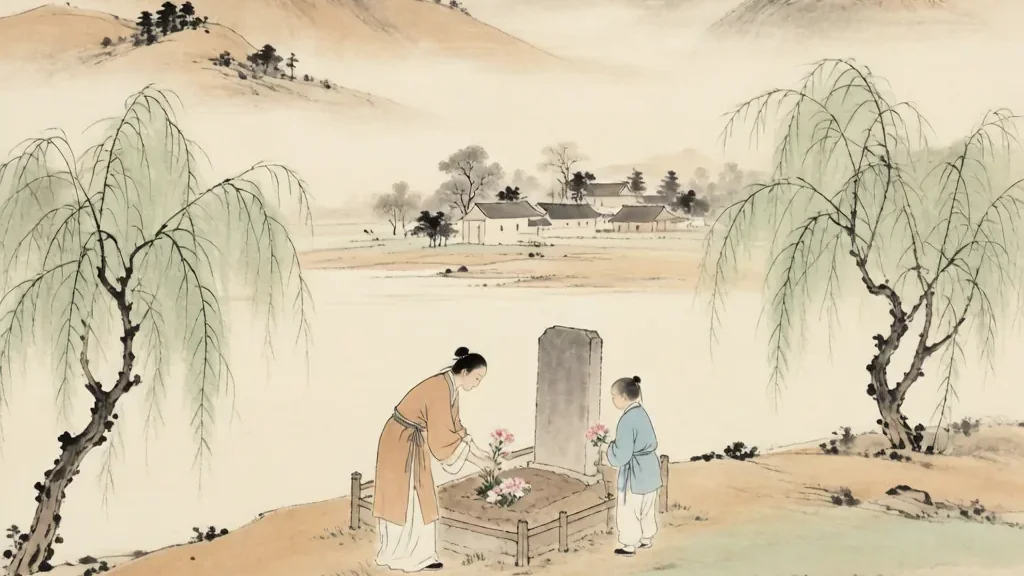
Among all twenty-four solar terms, Qingming occupies a unique position — it is simultaneously an astronomical marker, a traditional festival, and one of China's most emotionally resonant occasions. Falling annually between April 4th and 6th, this fifth solar term arrives when spring is at its most radiant, when the landscape has been washed clean by gentle rains and the world appears fresh, bright, and full of promise. The name itself captures this quality: (qīng) means clear, pure, or clean, while (míng) means bright or luminous. Together they describe the luminous clarity of the spring world — the light that seems to shine from within new leaves, the transparency of streams swollen with snowmelt, and the sense of renewal that permeates the season.
Read story →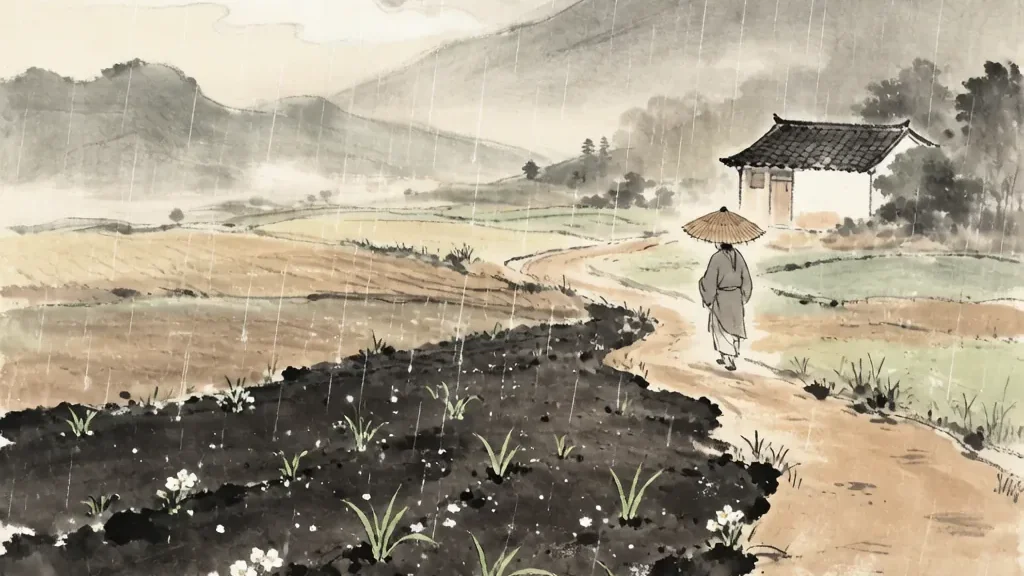
Rain Water is the thaw begins — the solar term when snow gives way to the season's first rains.
Read story →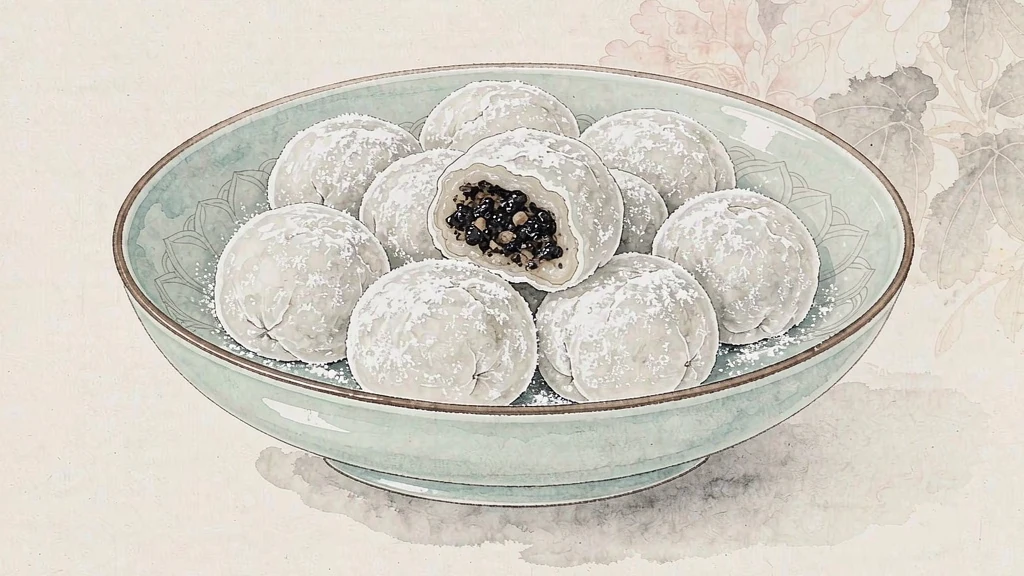
In the gentle pantry of old Beijing sweets, ài wō wo is the quiet one — a round, snowy ball of steamed glutinous rice cradling a sweet filling, dusted with dry rice flour so it looks like a tiny snowball. Its name is onomatopoeic and folkish, and the snack has been a favorite of the capital's children and elders for centuries. Unlike the chewy lvdagun, aiwowo is tender and almost melt-in-the-mouth, with a filling that might be red bean, mashed sesame, or walnut. It is a dessert of subtlety, representing the northern Chinese talent for turning rice and sugar into something delicate. To eat aiwowo is to taste the softer, sweeter side of Beijing's snack heritage.
Read story →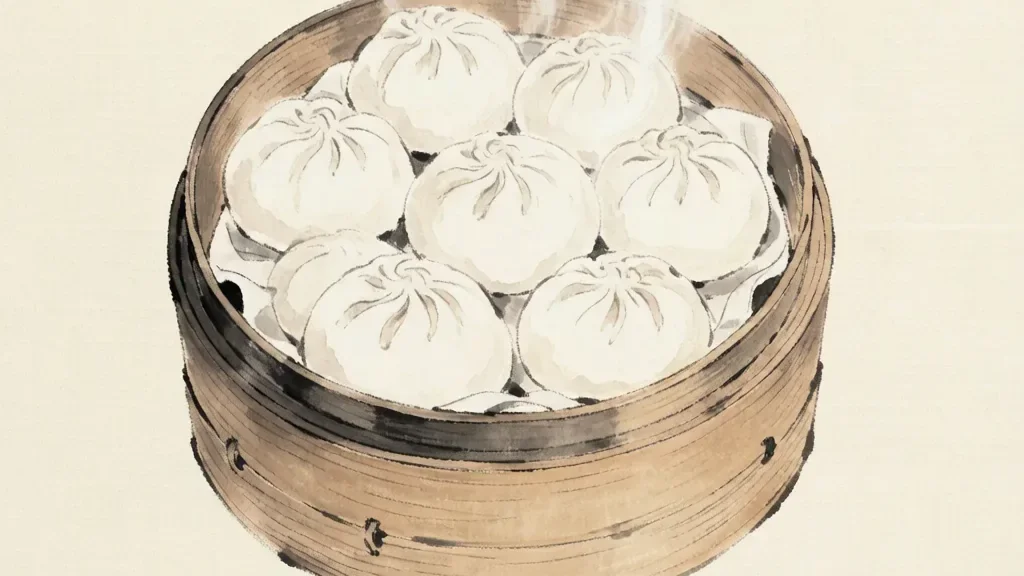
Ask any traveler in China what they ate for breakfast, and the answer is often the same: a warm, pillowy (bāo zi), a steamed bun with a savory or sweet filling tucked inside a soft, snow-white shell. More than a snack, the baozi is a daily companion to millions, sold from street carts at dawn, stacked in bamboo steamers outside subway stations, and folded by hand in family kitchens. To understand baozi is to understand a core truth of Chinese food culture: that the humblest staple can carry the greatest comfort, and that a single bite of dough and filling can bridge regions, classes, and generations.
Read story →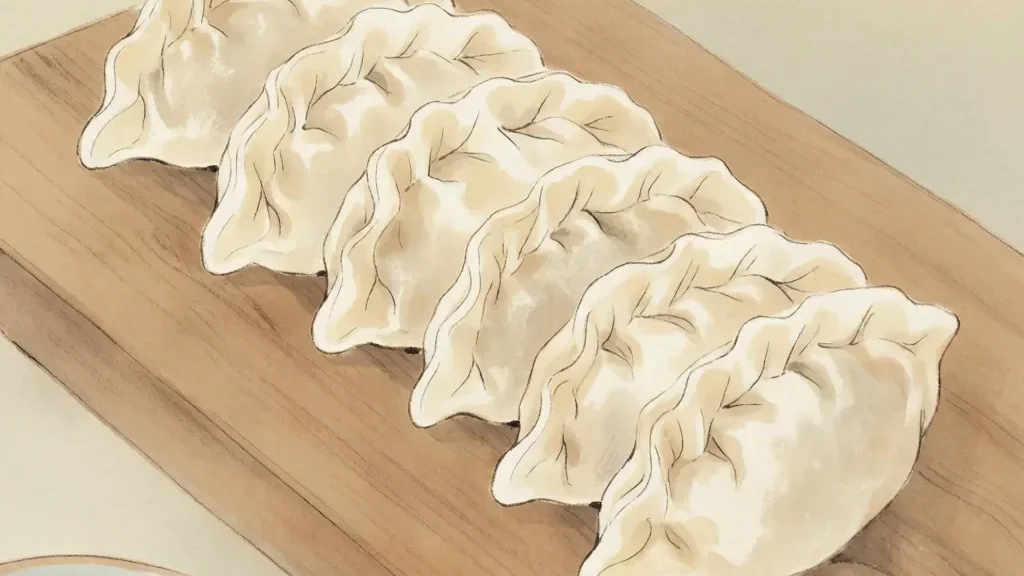
On the stroke of midnight every Lunar New Year's Eve, something remarkable happens simultaneously in millions of Chinese homes. Steaming platters emerge from kitchens across the country, each carrying crescent-shaped parcels of joy that have brought families together for nearly two millennia. These are jiaozi — dumplings so deeply woven into the fabric of Chinese culture that their very shape tells a story of prosperity, their filling whispers of family secrets, and their preparation transforms an ordinary meal into a sacred ritual of togetherness.
Read story →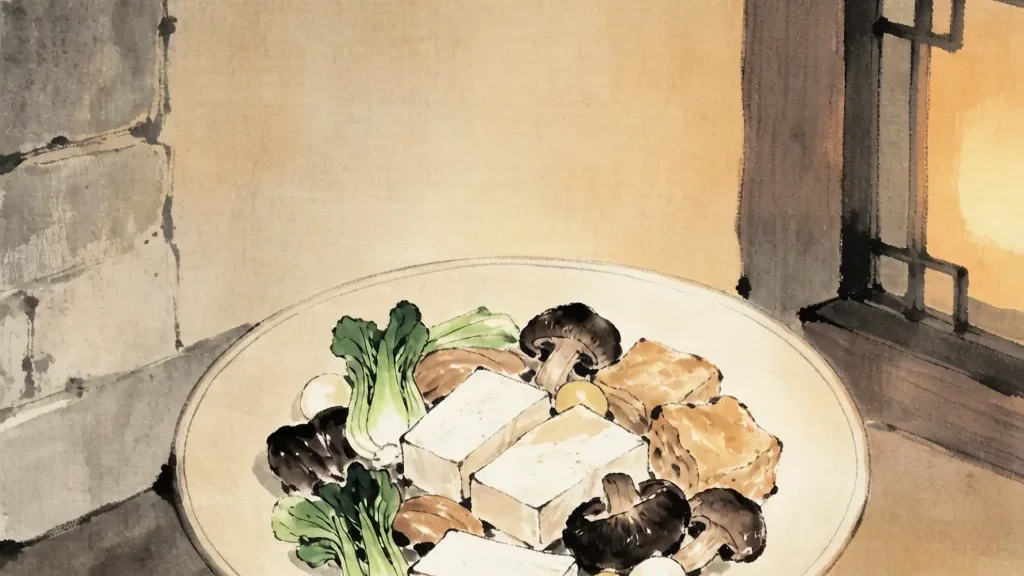
Buddhist vegetarian cuisine is compassion on the plate — temple cooking that mimics meat with tofu and mushroom.
Read story →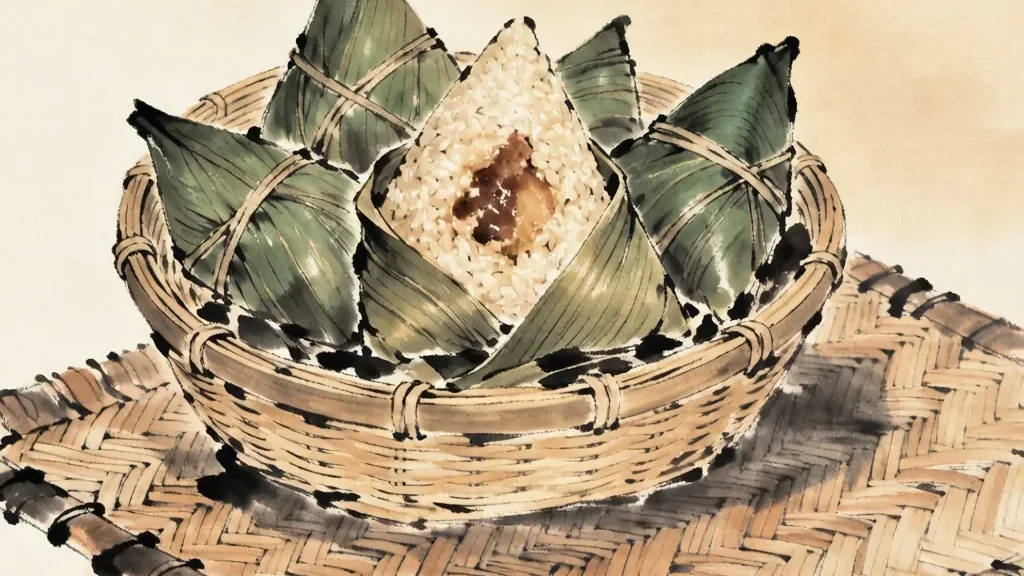
The scent reaches you before the sight — a vegetal, almost tea-like aroma that drifts through alleyways and apartment corridors each year when the fifth lunar month arrives. It's the smell of bamboo leaves steaming, releasing their essence into parcels of sticky rice that have been tied with kitchen string into neat tetrahedral pyramids. These are zongzi, the food that carries within its humble leaves one of China's most poignant legends, a story of loyalty, poetry, and a love so profound that an entire nation still throws rice into the river to honor it.
Read story →