Etiquette
44 articles — The art of harmony in Chinese social life.
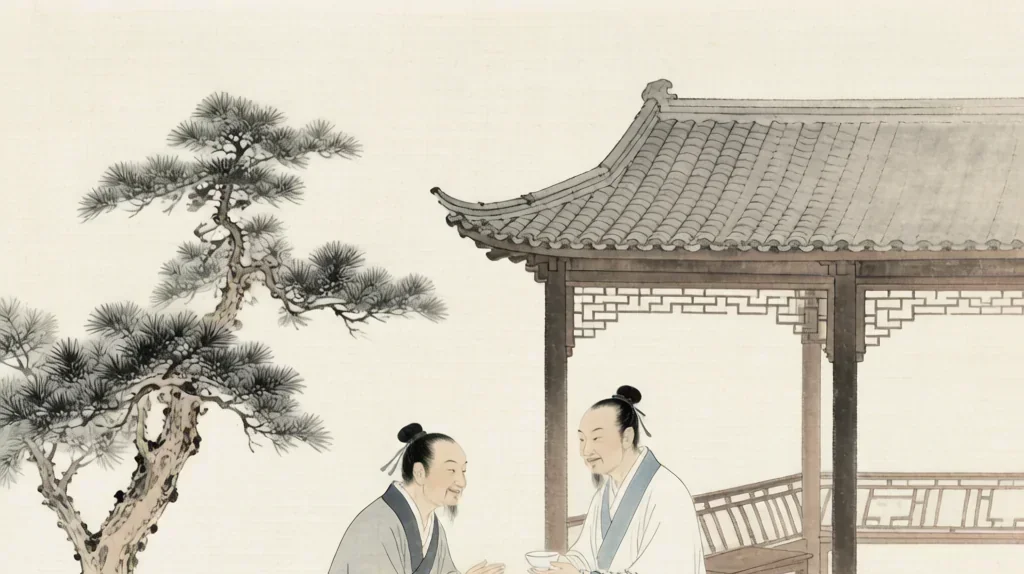
Chinese Etiquette and Politeness: The Art of Harmony
Chinese etiquette, or 礼仪 (lǐyí), is far more than table manners — it is a centuries-old system for keeping people comfortable with one another. Rooted in the Confucian idea that good conduct preserves social harmony, it teaches people when to yield, how to show respect, and above all how to protect each other's dignity in public.
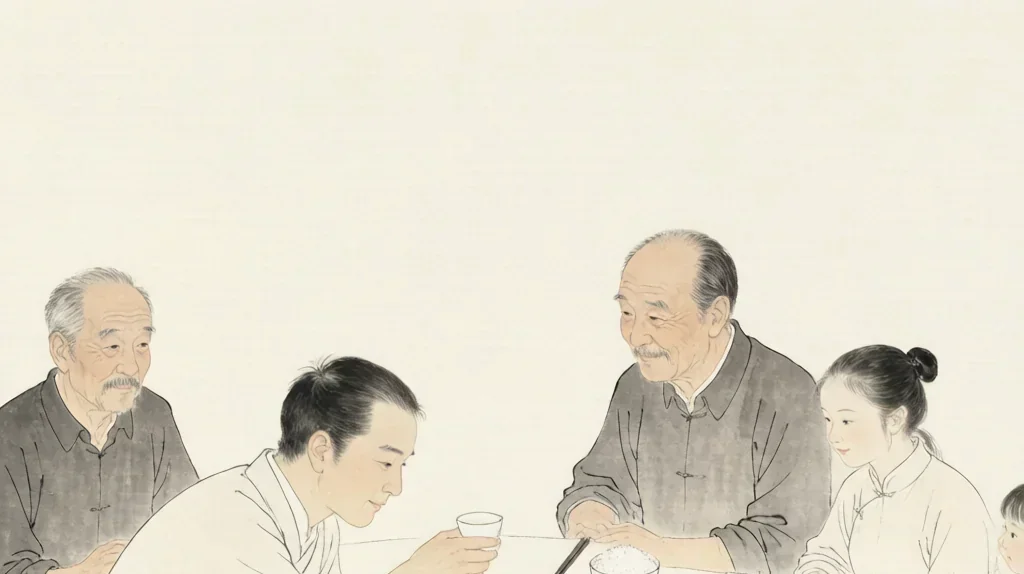
Chinese Dining Etiquette (餐桌礼仪)
In China, a meal is never only about food. For thousands of years the table has been the place where families reunite, strangers become friends, and business is quietly sealed over a second round of toasts.
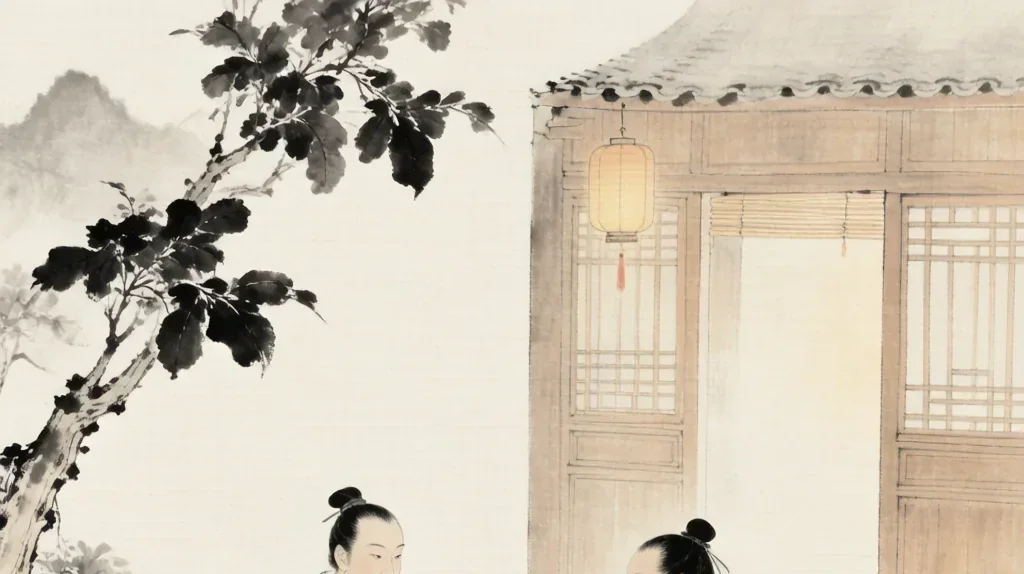
The Way of Hosting Guests (待客之道)
To be a guest in a Chinese home is to be temporarily adopted. From the moment the door opens, the host begins a quiet campaign of generosity — tea appears before you sit, the best seat is yours, the fruit is washed and cut, and the meal somehow has far more dishes than the number of people could need.
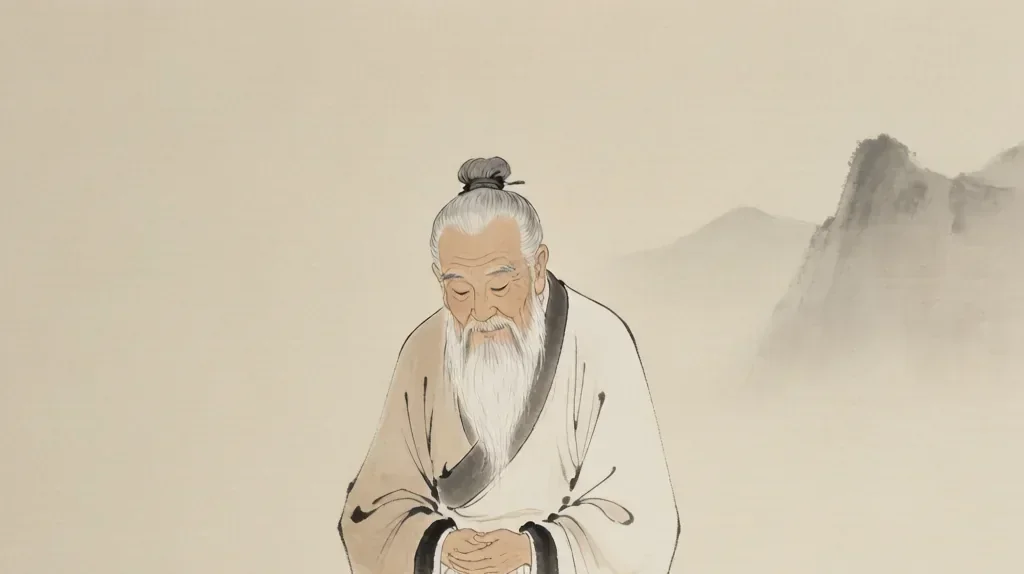
Reverence for Teachers (尊师重道)
In China the teacher has never been merely an employee of the school. For more than two thousand years the master who opens a child's mind has been ranked among the most honored figures in society — beside the parent who gave life and, in older formulations, just below the emperor who gave order.

Filial Piety and Respect for Elders (敬老)
Of all the virtues China has prized, none sits deeper than the reverence owed to parents and elders. Two ideas carry it: 孝 (xiào, filial piety) toward one's own family, and 敬老 (jìnglǎo, "respect the aged") toward elders everywhere.
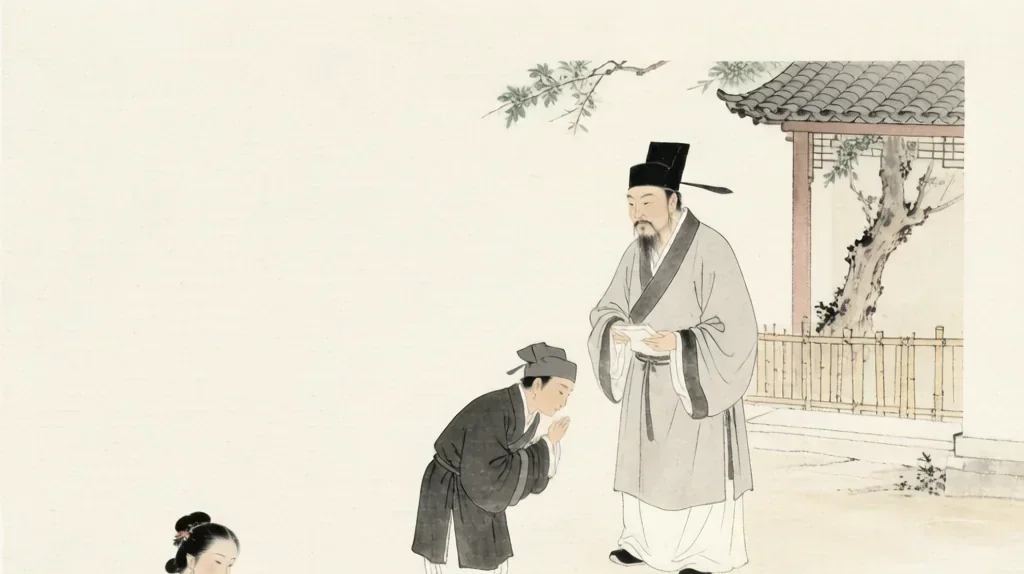
Forms of Address and Honorifics (称谓敬语)
In Chinese, the simple act of naming someone is never simple. The word you choose — a title, a kinship term, a respectful 「you」 — announces exactly how you place the other person in the web of rank and relation.
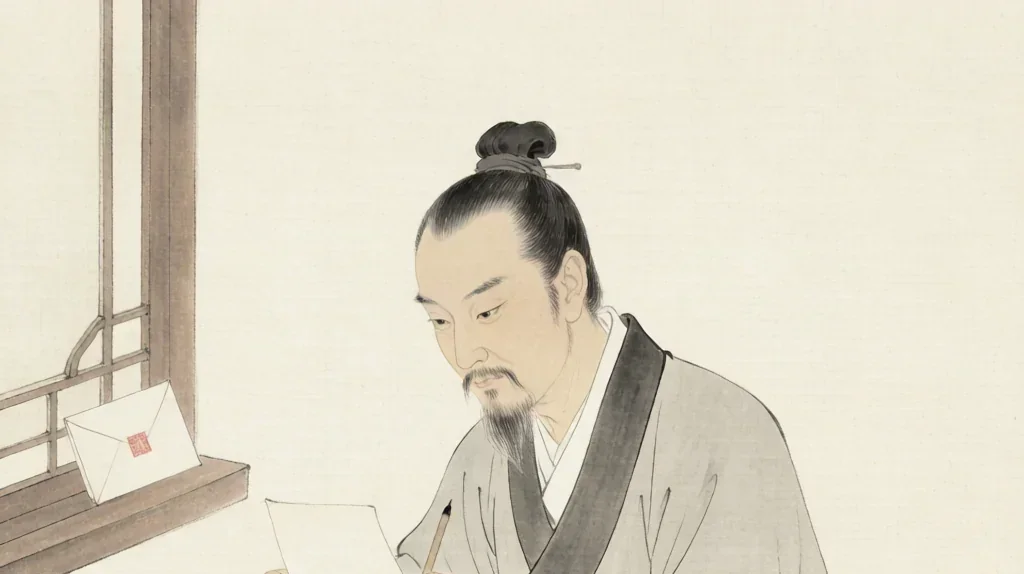
The Etiquette of Letter Writing (书信礼仪)
Long before the telephone, the Chinese letter was a small ceremony. A sheet of paper, a brush, and a careful order of words could carry not just news but reverence across a thousand miles — to a parent, a teacher, a friend, or an official.
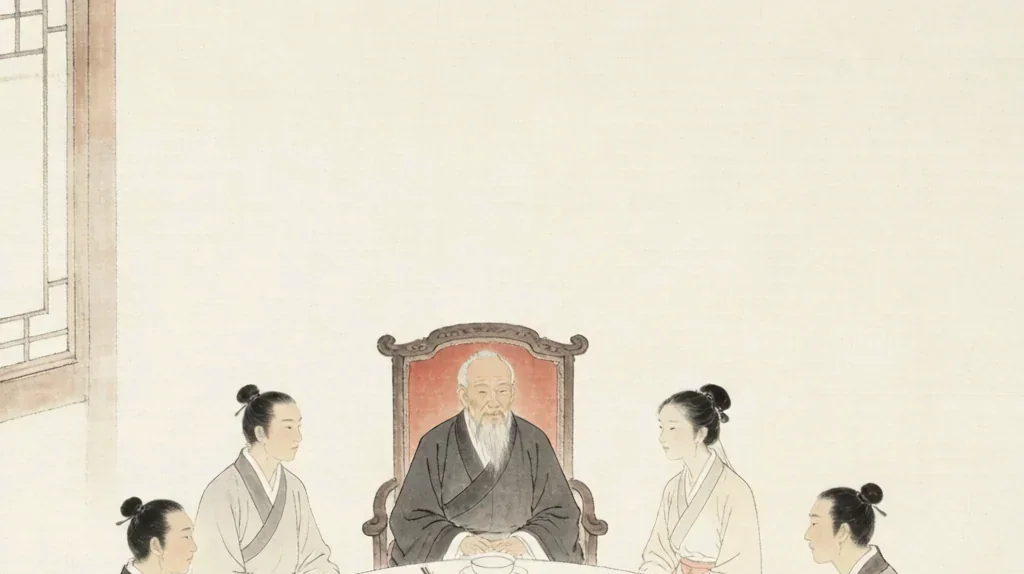
Seating and Rank at the Table (座次尊卑)
Where you sit in China can speak before you do. At a banquet, a family feast, or a business dinner, the arrangement of bodies around the table is a quiet map of the social order — who is honored, who serves, and who must wait.
Family Titles: The Language of Kinship
Chinese kinship terminology is among the most elaborate in the world, requiring speakers to distinguish between relatives that English collapses into single terms. A single English "uncle" expands into at least six distinct Chinese terms based on whether the relative is paternal or maternal, elder or younger, and related by blood or marriage. This complexity is not accidental — it reflects the centrality of patrilineal family structure in traditional Chinese society and the importance of hierarchy even within the family.
Apologizing: The Words and Gestures of Regret
The Chinese apology — dào qiàn (道歉) operates on a fundamentally different logic from its Western counterpart. Where an English apology often seeks forgiveness for a specific action, a Chinese apology aims to repair the relationship by acknowledging that harmony has been disturbed. An apology in Chinese culture is not always an admission of fault; it can be a gesture that prioritizes relationship harmony over being right. This distinction is crucial for cross-cultural understanding.
Banquet Seating: Who Sits Where at the Table
Few moments at a Chinese banquet are as socially charged as the seating. Guests arrive, stand behind chairs, and engage in a ritual of mutual deference — each insisting that the other take the seat of honor, each refusing, each attempting to guide someone else into the prized position. The host eventually resolves the impasse by physically directing each guest to their designated place. The seating that results is not random but a coded map of the social hierarchy present at the table. The guest who understands this map gains insight into how the group perceives itself — and who matters most.
The Bow: The Shared Etiquette of East Asia
Visitors to East Asia often notice that bowing is far less structured in China than in Japan — and wonder whether they should bow, nod, or shake hands. The answer depends entirely on context. Traditional Chinese etiquette employed the clasped-fist salute (zuò yī, 作揖) for formal occasions, but this has largely given way to the handshake in business settings. Bowing in China today is reserved for specific contexts: offering an apology, expressing deep gratitude, or showing respect at a funeral or ancestral ceremony.
Exchanging Business Cards: The First Handshake in Print
In Chinese business culture, the exchange of business cards is not a casual handoff of contact information — it is a ritual that establishes status, intention, and the foundation of a professional relationship. The card — míng piàn (名片) — represents the person, and the way it is presented and received communicates respect or its absence. A rushed one-handed exchange can undermine a meeting before it begins.
Chopstick Manners: Do's and Don'ts at the Table
Chopsticks — kuài zi (筷子) — are the most intimate utensils of Chinese dining, touching every dish that reaches the table. A pair of slender sticks, held in one hand, they are capable of picking up a single grain of rice or a slippery meatball, of tearing apart a steamed bun or delicately placing a peanut on a serving dish. The mastery of chopsticks is a visible mark of cultural competence, and the etiquette governing their use is a minefield for the unwary. Misusing chopsticks can offend before a single word is spoken.
Classroom Courtesy: The Confucian Classroom
Beyond the formal start-of-class greeting, Chinese school life is governed by a detailed code of daily courtesies shaping every interaction between students and teachers, and among students themselves. These courtesies — lǐ yí (礼仪) — are taught not as optional social graces but as essential components of moral education. A student who masters these courtesies is considered dǒng lǐ mào (懂礼貌, knowing politeness), one of the highest compliments a Chinese educator can give.
Condolence Visits: The Etiquette of Mourning
Visiting a Chinese family in mourning requires the most carefully calibrated etiquette in the entire repertoire of Chinese social customs. The visitor must balance the expression of sympathy with respect for the family's grief, all while observing a strict code of dress, behavior, and gift-giving. A misstep — even a well-intentioned one — can cause additional pain to grieving families.
Respecting Elders in Public: A Visible Virtue
The Chinese reverence for elders is not a private sentiment but a public performance visible in every street, bus, and market. Age commands deference in ways that can startle visitors from societies where youth is celebrated and age is hidden. In China, an older person is not someone to be managed but someone to be honored — and the etiquette of elder respect is enforced by the community as much as by the individual.
Festival Visits: When to Go and What to Bring
Beyond the Lunar New Year, the Chinese calendar is punctuated by festivals that each carry their own etiquette for visiting and gift-giving. The Mid-Autumn Festival calls for mooncakes; the Dragon Boat Festival involves zongzi (sticky rice dumplings); the Qingming Festival is reserved for ancestor veneration. Each festival has its own emotional register — celebratory, contemplative, or solemn — and the visitor's behavior must match the occasion.
Receiving Gifts: The Etiquette of Acceptance
To watch a traditional Chinese gift exchange is to watch a carefully choreographed performance. The giver presents the gift with both hands, accompanied by modest language: "This is just a small token — it is not worthy of you." The recipient protests: "You should not have troubled yourself!" The giver insists. The recipient demurs again, then finally accepts with reluctance. The gift is set aside, unopened. The exchange is complete not when the gift changes hands but when both parties have properly performed their roles — the giver as generous, the recipient as humble.
Giving Face: The Social Currency of China
The Chinese concept of miàn zi (面子) — often translated as "face" — is perhaps the single most important key to understanding Chinese social dynamics. Face is not about vanity or pride in the Western sense. It is the public recognition of a person's social standing, reputation, and dignity. Giving face (gěi miàn zi, 给面子) means acting in ways that enhance another person's status. Face is a social currency, and the Chinese social world runs on face transactions.
The Greeting Bow: Hands Speak Respect
The most common greeting in modern China is a handshake, but the Chinese version differs from its Western counterpart in several important respects. The grip is lighter — a bone-crushing squeeze reads as aggressive rather than confident. The duration is shorter, typically one or two pumps, and the hand is released cleanly rather than held. Eye contact during the handshake is appropriate but should not be prolonged, and a slight nod of the head accompanies the gesture.
Guest Follows Host: The Rule of the Traveler
Staying as a guest in a Chinese home involves a specific etiquette that can feel restrictive to visitors accustomed to casual familiarity. Every action — from when to arrive to how to make the bed — is governed by customs that prioritize the guest's comfort and the host's face. Understanding these rules transforms an awkward overnight stay into a warm, memorable experience.
Honorific Speech: The Polite Words of Chinese
Chinese honorific language — jìng yǔ (敬语) — is a vanished world of politeness that modern Mandarin retains in fragile fragments. Classical Chinese developed an extraordinary dual vocabulary: humble words for oneself (qiān cí, 谦辞) and honorific words for others (zūn chēng, 尊称). A speaker referred to their own home as "my cold abode" (hán shè, 寒舍) and the listener's home as "your honored residence" (zūn fǔ, 尊府). My writing was "clumsy brush" (zhuō bǐ, 拙笔); your writing was "great work" (dà zuò, 大作). The system was built on a simple moral axiom: elevate others, lower yourself.
Hosting a Guest: The Full Ritual of Hospitality
Chinese hospitality is legendary for its intensity and abundance. The host who invites guests to their home or to a restaurant is expected to provide an overflowing table — food that continues arriving even after the guests insist they are full, drink that never stops flowing, and attention that never flags. This style of hospitality — rè qíng hào kè (热情好客, warm hospitality) — is not optional but mandatory. A host who fails to be generous enough risks losing face and damaging the relationship.

Visiting a Home: The Steps of a Polite Guest
The threshold of a Chinese home is a boundary between worlds, and crossing it requires specific gestures of respect. The guest who arrives with a gift, removes shoes at the door, and waits to be seated demonstrates an understanding of hospitality that the host will recognize and appreciate. Every step of the visit — from the first knock to the final farewell — is governed by customs that transform a simple social call into a reaffirmation of relationship.
The Kowtow: The Deepest Form of Respect
The kowtow — a full prostration in which the forehead touches the ground — was for centuries the most extreme gesture of respect in the Chinese ritual repertoire. Its name derives from kòu tóu (叩头), literally "to knock the head." The gesture had multiple gradations: a single kneeling bow for parents, three prostrations for high officials, and the full nine-prostration ritual reserved for the emperor alone. The kowtow was not merely a gesture but a statement about the cosmic order — the emperor, as the Son of Heaven, stood between heaven and earth, and the kowtow acknowledged that hierarchy.
Taking Leave: The Art of Saying Goodbye
The departure from a Chinese social visit is not a simple farewell but a ritual that extends the hospitality beyond the doorstep. The guest who attempts a quick exit will find themselves repeatedly stopped, the host insisting they stay longer, the guest insisting they must leave. This scripted exchange is not a failure to communicate but a final performance of mutual regard. Mastering the leave-taking ritual is essential to being remembered as a gracious guest.
The Introduction: Presenting People in Order of Rank
The Chinese meeting introduction — jiè shào (介绍) — is a microcosm of the entire system of Chinese social hierarchy. The order of introduction, the titles used, the gestures that accompany it — every element encodes information about relative status. A proper introduction sets the tone for the entire meeting. A botched introduction can create confusion about who is in charge, who should speak first, and how decisions will be made.

Modest Speech: The Art of Self-Deprecation
When a Chinese CEO introduces his million-dollar company as a "small shop" and himself as "not very capable," a Western listener might wonder whether the speaker has a self-esteem problem. In fact, the speaker is demonstrating impeccable social skill. The Chinese tradition of modest language (qiān xū, 谦虚) requires the systematic downplaying of one's own achievements, possessions, and abilities while systematically praising those of others. This is not honesty or dishonesty — it is a social choreography in which everyone knows the steps, and performing them correctly displays breeding and cultural competence.
Name Avoidance: The Taboo of the Emperor's Name
The Chinese practice of name avoidance — bì huì (避讳) — was one of the most elaborate systems of linguistic taboo ever devised. For over two millennia, the personal names of emperors, ancestors, parents, and teachers could not be spoken or written. The forbidden character had to be replaced by a synonym, a homophone, or a deliberately altered stroke pattern. Violations were punishable by death when the emperor's name was involved. The system sounds tyrannical, but it was rooted in a worldview in which names were not arbitrary labels — they participated in the essence of the person they named.
New Year Calls: The Etiquette of the First Days
The Lunar New Year — Chūn Jié (春节) — is the most important occasion in the Chinese social calendar, and the etiquette of visiting during this period is governed by generations of tradition. New Year calls (bài nián, 拜年) are made within the first fifteen days of the new year, with the first few days reserved for the closest family. These visits are the foundation of Chinese social connection, and performing them correctly is essential to maintaining relationships.
Filial Etiquette: The Duty of Children
The Confucian virtue of xiào (孝, filial piety) is the moral foundation of Chinese family life. It requires children — from childhood through adulthood — to respect, obey, and care for their parents. The concept is not merely emotional but practical: it governs how children speak to parents, how they make decisions, how they allocate resources, and how they honor parents after death. Understanding xiào is essential for anyone seeking to understand Chinese family dynamics.
Public Behavior: The Unspoken Rules of the Crowd
China's rapid urbanization has created dense public environments — subways, hospitals, train stations, shopping malls — where millions of strangers interact daily. The etiquette of these shared spaces is a practical system for managing density, maintaining order, and minimizing conflict. It is less about formal rules and more about an intuitive understanding of how to be a considerate member of the public.
Queue Etiquette: The Order of Waiting
China's relationship with queuing has undergone a dramatic transformation. Older accounts painted a picture of chaotic crowds pushing for service — and while this still occurs in some contexts, modern China has developed robust queue norms. The numbered ticket system, clear signage, and social enforcement have brought order to most public waiting environments. Understanding how to queue — and how to respond when someone does not queue — is an essential survival skill.
Saving Face: The Etiquette of Avoidance
If giving face is the positive practice of enhancing others' status, saving face is the defensive art of preventing embarrassment — both one's own and others'. Chinese social life is structured to minimize situations in which anyone loses face publicly. The principle extends to self-presentation as well: one never admits failure openly, never begs, and never displays desperation. The person who knows how to save face — for themselves and others — is the person who can navigate Chinese society with grace.
School Etiquette: How Students Honor Teachers
Chinese schools are spaces of visible hierarchy, where the relationship between teacher and student is governed by a code of respect extending far beyond the classroom. This code — rooted in the Confucian tradition that elevated teachers to the rank of "heaven, earth, emperor, parent, and teacher" (tiān dì jūn qīn shī, 天地君亲师) — structures every interaction from the morning greeting to the final dismissal.
The Serving Order: The Sequence of a Feast
A Chinese banquet menu is not a sequence of dishes chosen at random. It is a carefully orchestrated progression that moves through textures, temperatures, flavors, and cooking methods in a deliberate arc. The order in which dishes arrive reflects principles of Chinese gastronomy and social hierarchy that have remained remarkably stable over centuries. Understanding the logic of serving order helps the diner appreciate not only the food but the cultural values embedded in every course.
Street Etiquette: Walking, Yielding, and Greeting
Chinese streets are theaters of social interaction where unspoken rules govern how strangers move, speak, and share space. The etiquette of the street — jiē dào lǐ yí (街道礼仪) — is less formal than banquet or business etiquette, but it is no less real. Navigating public space in China requires awareness of personal space, noise, eye contact, and the subtle signals that maintain social order in dense urban environments.
Tea Rituals: The Etiquette of the Cup
The aroma of oolong rising from a Yixing clay teapot, the trickle of hot water over glazed cups, the deliberate unhurried movements of the person pouring — a Chinese tea ceremony is a meditation in motion. Known as gōng fu chá (工夫茶, "skillful tea"), this method of brewing and serving tea transforms a daily beverage into a ritual of hospitality. The host does not merely serve tea but orchestrates an experience: controlling water temperature, timing infusions to the second, and presenting each cup with both hands. The etiquette of gōng fu chá is a vocabulary in itself, and learning it opens a door to Chinese social interaction.

Thanking: The Many Ways to Express Gratitude
Expressing gratitude in Chinese culture follows patterns that can surprise Westerners accustomed to a single "thank you" for all occasions. The Chinese approach to thanking is layered, repetitive, and reciprocal — a single xiè xiè is often insufficient, and the response to thanks is as important as the thanks itself. Mastering the thank-you ritual is essential for building and maintaining relationships in Chinese social life.
Titles of Respect: Calling by Rank and Relationship
In Chinese social interaction, a person's title is not a polite accessory but the central term of address. A manager remains "Manager Wang" (Wáng jīng lǐ, 王经理) long after the business meeting has ended; an engineer is "Engineer Li" (Lǐ gōng chéng shī, 李工程师) in all professional contexts; a teacher is "Teacher Zhang" (Zhāng lǎo shī, 张老师) even in casual conversation years after the classroom. The Western habit of using first names as a default feels jarringly familiar to Chinese speakers, who expect titles to do the work of maintaining social distance and marking respect.
Toasting: Raising the Cup with Respect
At a Chinese banquet, the clink of glasses is as constant as the flow of conversation. Toasts — jìng jiǔ (敬酒) — are not optional interludes but the main event. The entire meal is punctuated by a rising tide of alcohol-fueled declarations of friendship, respect, and gratitude. For the uninitiated, the Chinese toasting ritual can feel like a drinking contest disguised as a dinner party. But beneath the surface of gān bēi (干杯, "dry glass") lies a subtle code of status, deference, and social bonding that transforms the simple act of drinking into a complex negotiation of relationships.
Wedding Guest Etiquette: Customs of Congratulation
Receiving a Chinese wedding invitation is both an honor and an obligation that follows strict protocols. Weddings are among the most important social events in Chinese culture, combining family celebration, public affirmation of relationships, and significant financial exchange through red envelopes. The guest who understands the etiquette of a Chinese wedding will navigate the event with confidence and contribute to the joy of the occasion.
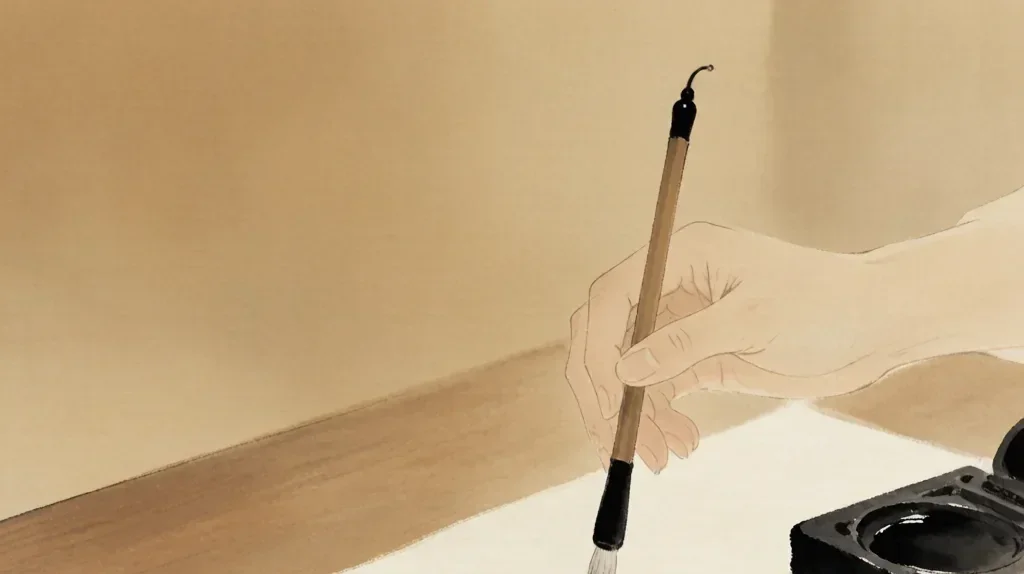
Letter Writing: The Etiquette of the Epistle
The Chinese letter-writing tradition — xiě xìn (写信) — developed a formal structure so elaborate that it was practically a literary genre. A traditional letter opened with a salutation that included the recipient's full title and a respectful epithet, followed by polite inquiries about health and family. The body was composed in classical Chinese. The closing included a humble self-reference and the date according to the lunar calendar. While modern communication has simplified these formalities, the principles of respectful address and structured correspondence survive in email and even WeChat messaging.