🏯 History & Heritage

Explore 291 stories across 6 topics

🏯 Ancient Capitals

🏯
Anyang: The Cradle of Oracle Bones

Anyang: The Cradle of Oracle Bones

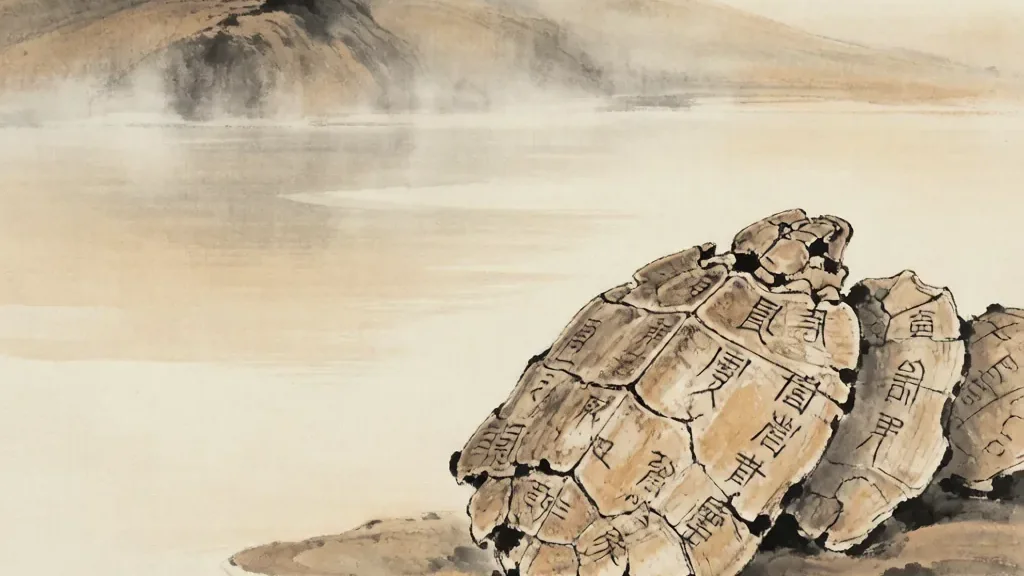
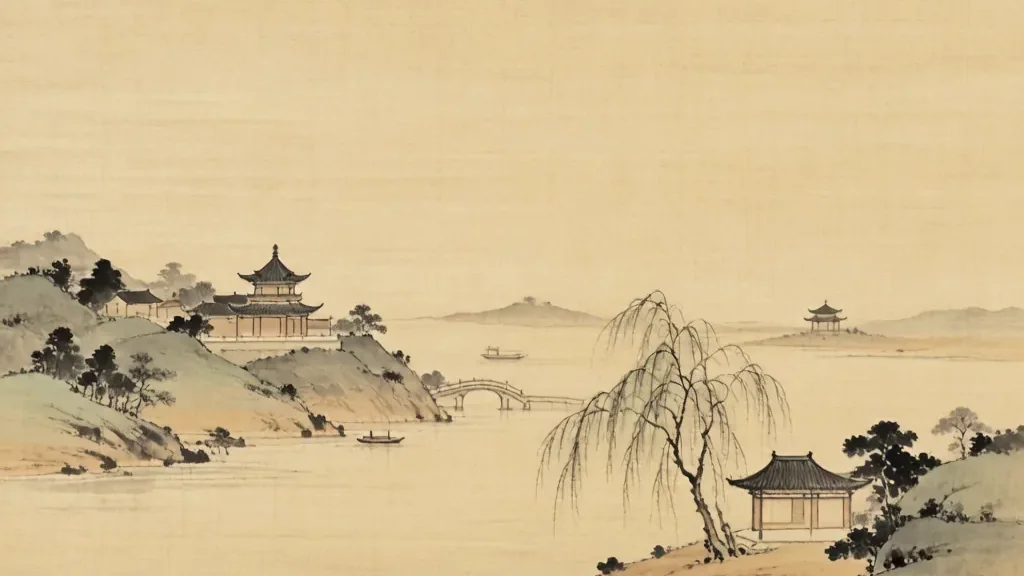
Long before Chang'an or Beijing, a capital rose on the banks of the Huan River in the heart of the Yellow River plain, and there the Chinese written language was born. Anyang (, ān yáng) was the site of Yin (, Yīn), the late capital of the Shang dynasty (, Shāng), and from its soil came the oracle bones — the earliest substantial Chinese writing we possess. Anyang is the capital that lets us read the thoughts of a Bronze Age court, and it is the threshold of recorded Chinese history.

Read story →
🏯
Beijing: The Imperial Capital

Beijing: The Imperial Capital

The youngest of China's great capitals is also the one modern visitors know best. Beijing (, běi jīng) means "Northern Capital," and for most of the last eight centuries it has been the seat of the realm — first for the Mongol Yuan, then for the Ming and Qing, and again in the modern republic. Built on a strict cosmological axis with the Forbidden City at its heart, Beijing is the most deliberate expression of imperial order ever raised in China, the fulfillment of ideas first sketched at Chang'an a thousand years earlier.

Read story →
🏯
Jianye: The Founding Capital of the Wu Kingdom

Jianye: The Founding Capital of the Wu Kingdom

Jianye — modern Nanjing under its Three Kingdoms name — was the capital of the Wu kingdom, one of the three powers that divided China after the fall of the Han dynasty. Founded by Sun Quan in 229 CE, Jianye was the first capital of a southern Chinese dynasty and established the pattern of ruling from the Yangtze River valley that would persist for centuries. The city's location gave the Wu kingdom a natural defensive barrier against the northern kingdom of Wei, while the river provided transportation and trade routes that enriched the kingdom.

Read story →
🏯
Qinhuangdao: Where the First Emperor Sought Immortality

Qinhuangdao: Where the First Emperor Sought Immortality

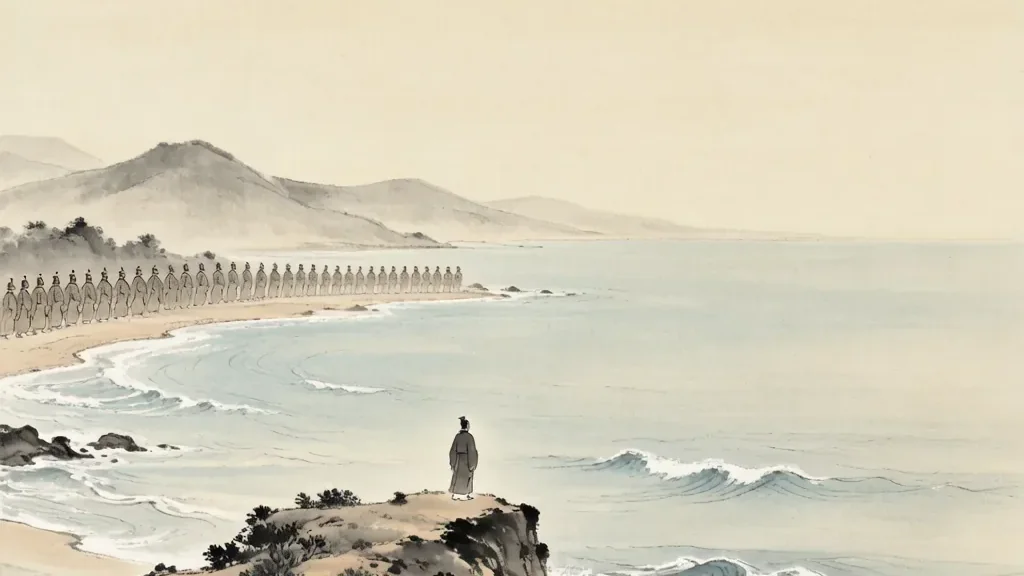
Qinhuangdao occupies a unique place among Chinese cities — it is the only city named after an emperor. The name means 'Emperor Qin's Island,' and legend holds that Qin Shihuang, the First Emperor, visited this rocky coastal outpost in eastern Hebei Province in 215 BCE to gaze upon the Eastern Sea and seek the elixir of immortality. While Qinhuangdao was never an imperial capital in the traditional sense, it served as a summer capital of sorts during the early twentieth century, when foreign powers established beach resorts and the Chinese elite built seaside villas to escape Beijing's summer heat.

Read story →
🏯
Zhengzhou: The Capital of the Shang Kingdom

Zhengzhou: The Capital of the Shang Kingdom

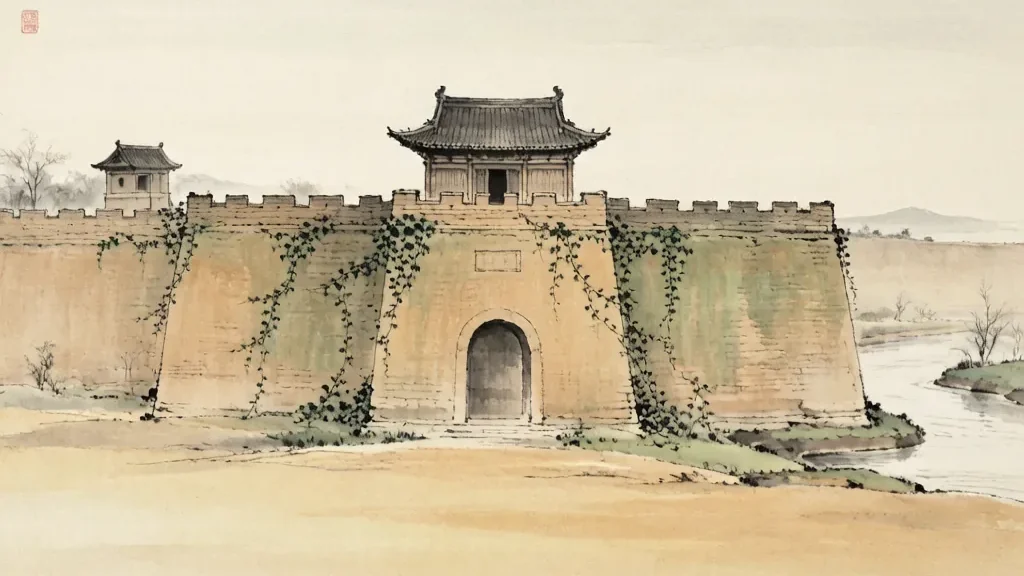
Zhengzhou, the modern capital of Henan Province, is one of the oldest cities in China's historical record, but its greatest claim to fame came in the twentieth century when archaeological excavations revealed that it was the site of an immense Shang dynasty walled city — a capital of the earliest historically confirmed Chinese dynasty. The discovery of the Zhengzhou Shang City, with its massive rammed-earth walls that still stand after 3,600 years, rewrote the timeline of Chinese urban civilization and proved that the Shang dynasty was far more advanced than previously believed.

Read story →

👑 Dynasties

👑
The Dali Kingdom: Buddhism on the Southwest Frontier

The Dali Kingdom: Buddhism on the Southwest Frontier

The Dali Kingdom (, 937–1253 CE) was the successor to Nanzhao and the last independent state in Yunnan before the Mongol conquest. Founded by the Duan family, Dali was a devoutly Buddhist kingdom whose rulers often abdicated to become monks. For over three centuries, Dali maintained peaceful relations with Song China while developing a distinctive culture blending Chinese, Indian, and Southeast Asian influences. Dali was conquered by the Mongols in 1253.

Read story →
👑
The Ming Dynasty: Porcelain, Voyages, and the Great Wall

The Ming Dynasty: Porcelain, Voyages, and the Great Wall

The Ming (, Míng, 1368–1644) was the last native Chinese dynasty to rule a unified empire. Born from a peasant revolt against the Mongol Yuan, the Ming restored Han Chinese rule and, for a time, projected confidence outward — across the oceans with gigantic treasure fleets and inward through monumental architecture. Its name means "bright" or "radiant," and the age is remembered for blue-and-white porcelain, the Forbidden City, the rebuilt Great Wall, and a flourishing of literature and the arts. Yet the same dynasty that launched Zheng He's fleets also turned sharply inward, sealing the shores it had once commanded.

Read story →
👑
The Sixteen Kingdoms: The Northern Chaos of the Five Barbarians

The Sixteen Kingdoms: The Northern Chaos of the Five Barbarians

The Sixteen Kingdoms (, 304–439 CE) is not a single state but a collective term for the chaotic succession of non-Chinese kingdoms that dominated northern China after the Western Jin collapse. For over a century, the north was a kaleidoscope of warring regimes — Xiongnu, Xianbei, Jie, Di, and Qiang rulers established over twenty states, fought constant wars, and gradually absorbed Chinese culture. The period is notorious for its complexity — borders shifted constantly, rulers were murdered frequently — yet this era was one of the most transformative in Chinese history. The nomadic conquerors Sinicized, Buddhism spread to become a dominant religion, and the cultural hybridity of north and nomadic traditions created the foundations for the cosmopolitan civilization of the Sui and Tang.

Read story →
👑
The Warring States: The Crucible That Forged an Empire

The Warring States: The Crucible That Forged an Empire

The Warring States period (, 475–221 BCE) was the crucible in which the Chinese empire was forged — through blood, iron, and relentless political calculation. For two and a half centuries, seven major states — Qin, Qi, Chu, Han, Zhao, Wei, and Yan — fought a war of all against all, mobilizing every resource, human and material, in the pursuit of supremacy. It was an age of total warfare that saw the invention of the Chinese bureaucracy, the professionalization of armies, the spread of iron technology, and the composition of philosophical works that would shape East Asian thought for millennia. And when the fighting finally ended, not with a treaty but with the total annihilation of six states by one, the result was the first unified Chinese empire — the Qin Dynasty — and a new template for governance that would endure until 1912.

Read story →
👑
The Zhou Dynasty: Ritual, Philosophy, and the Mandate of Heaven

The Zhou Dynasty: Ritual, Philosophy, and the Mandate of Heaven

The Zhou (, Zhōu) dynasty, traditionally dated 1046–256 BCE, is the longest-reigning regime in Chinese history and arguably the most consequential. In defeating the Shang, the Zhou did more than change the ruling family; they reframed the very basis of political legitimacy, invented a language of virtue and mandate that every later dynasty would adopt, and presided over an age of philosophical creativity unmatched before or since. Though the Zhou kings eventually lost real power to rival states, the ideas born in their era — ritual order, humane governance, and the questioning of heaven itself — became the bedrock of Chinese civilization.

Read story →

⚔️ Historic Events

⚔️
The An Lushan Rebellion: The Tang's Near Death

The An Lushan Rebellion: The Tang's Near Death

In 755 CE, the most powerful general in the Tang empire turned against his emperor. An Lushan, a charismatic commander of Sogdian and Turkic descent, led his northern army southward and captured the Tang capital of Chang'an. The rebellion that followed lasted eight years, killed millions, and fatally weakened the Tang dynasty. Though the rebellion was ultimately suppressed, the Tang never fully recovered. The An Lushan Rebellion marked the end of China's golden age.

Read story →
⚔️
The Hongwu Emperor Founds the Ming Dynasty

The Hongwu Emperor Founds the Ming Dynasty

In the middle of the fourteenth century, China was racked by plague, famine, and rebellion against Mongol rule. From this chaos emerged the most unlikely of founders: a half-starved orphan who had been a beggar, a Buddhist monk, and then a bandit. Zhu Yuanzhang rose from the lowest depths of Chinese society to drive out the Mongols, reunify China, and found the Ming dynasty. His reign as the Hongwu Emperor was brilliant, brutal, and profoundly transformative.

Read story →

🧑 Historic Figures

🧑
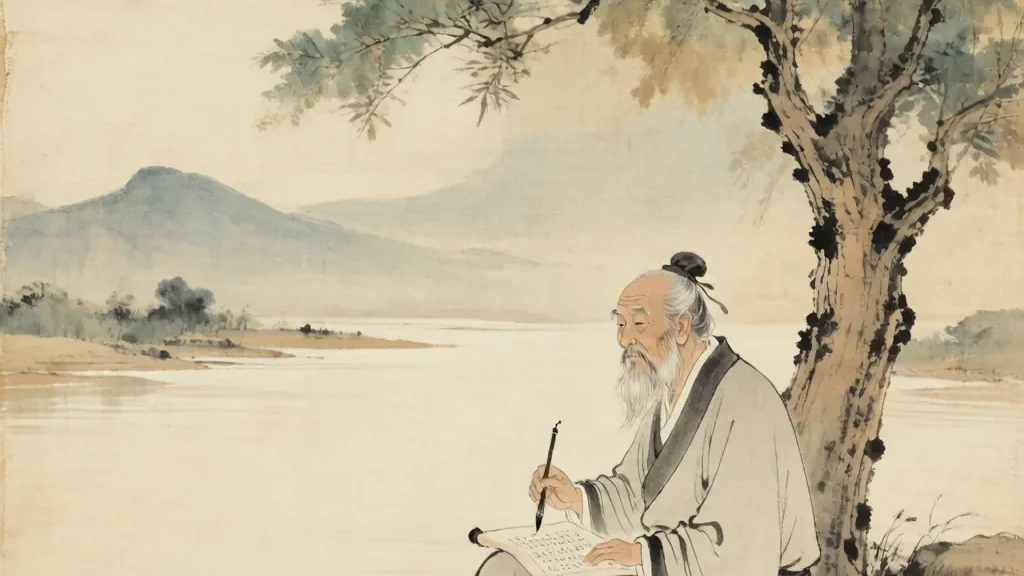
Bai Juyi: The Poet Who Wrote for the Common Heart

Bai Juyi: The Poet Who Wrote for the Common Heart

Among the poets of China's golden Tang dynasty, one name has always been loved by ordinary readers as much as by scholars. That name is Bai Juyi (, Bái Jūyì), a poet of the ninth century who made it his lifelong mission to write verse that a village woman or a toothless farmer could understand and feel. While many Tang masters prized obscurity and refined allusion, Bai Juyi pursued clarity, compassion, and direct speech. He is remembered today not only for beautiful lines but for a conscience that ran through his poetry like a spine. To read Bai Juyi is to meet a writer who believed that literature should serve people, not merely impress them.

Read story →
🧑
Ban Zhao: The Woman Who Completed the History of Han

Ban Zhao: The Woman Who Completed the History of Han

In the first century of the common era, when Chinese historiography was a male preserve, a woman completed the greatest history of her age and became the empire's most trusted teacher. Ban Zhao (, Bān Zhāo), also known by her literary name Cao Dagu, was a Han-dynasty scholar, historian, and court instructress who finished the Book of Han after the deaths of her father and brother, advised emperors, and wrote the influential Lessons for Women. She is the most prominent female intellectual of early China — a figure both celebrated for her learning and debated for the conservative advice she gave other women. To meet Ban Zhao is to meet the contradictions of women's history head-on.

Read story →
🧑
Li Shizhen: The Physician Who Catalogued All of Nature

Li Shizhen: The Physician Who Catalogued All of Nature

In the long history of medicine, few books have been as ambitious as the one a Ming-dynasty physician named Li Shizhen spent nearly thirty years writing. His Chinese name is , pronounced Lǐ Shízhēn, and his masterwork, the Bencao Gangmu or "Compendium of Materia Medica," catalogued nearly two thousand drugs drawn from plants, animals, and minerals. For English readers, Li Shizhen stands as one of the great naturalists of the pre-modern world—a man who combined field observation, careful classification, and skeptical testing in a way that feels strikingly modern. This article explores his life, his monumental book, and the reason his work still matters.

Read story →
🧑
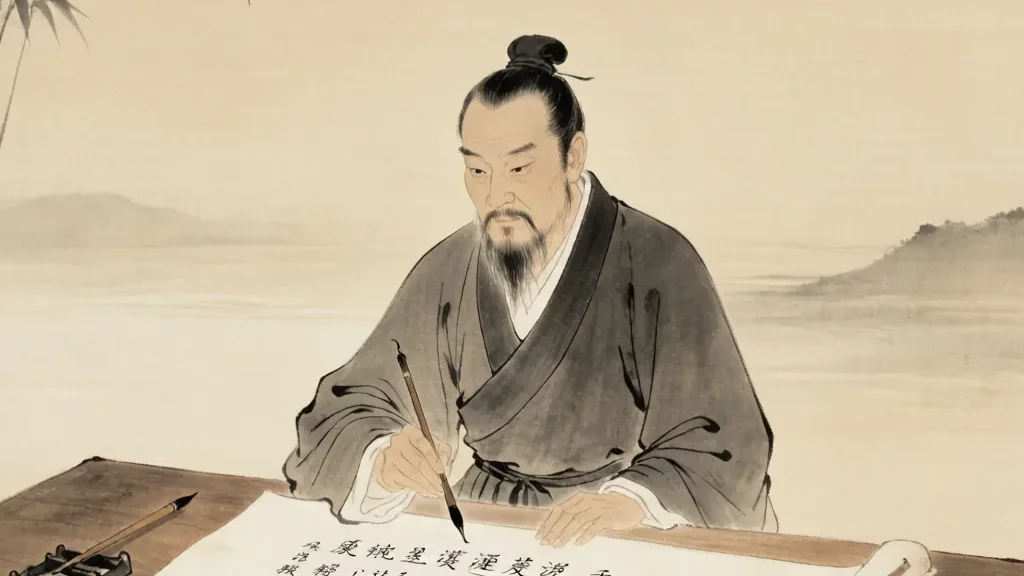
Who Was Wang Xizhi? The Sage of Chinese Calligraphy

Who Was Wang Xizhi? The Sage of Chinese Calligraphy

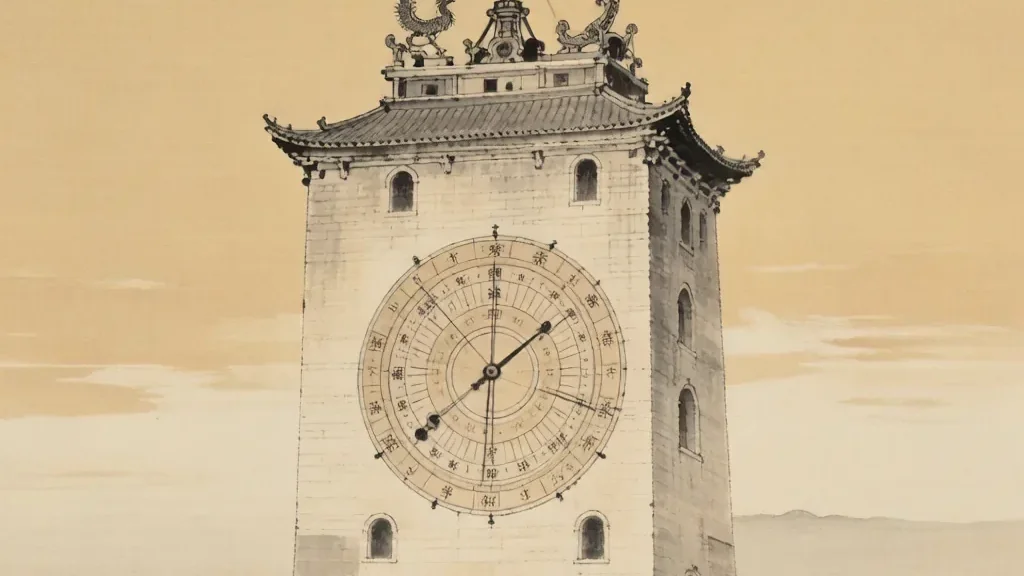
In every Chinese art museum, in every classroom where brush meets paper, in every temple where ancient words are carved into stone, one name towers above all others: Wang Xizhi. Known as the "Sage of Calligraphy," he lived in the fourth century CE during the Eastern Jin Dynasty, yet his influence on Chinese culture is as alive today as it was sixteen hundred years ago. His masterpiece, the Orchid Pavilion Preface, is universally recognized as the greatest work of calligraphy ever created — a work so revered that the Tang Emperor Taizong was buried with the original, taking it to his grave out of sheer love for its beauty.

Read story →
🧑
Zu Chongzhi: The Mathematician Who Pinned Down Pi

Zu Chongzhi: The Mathematician Who Pinned Down Pi

More than a thousand years before European mathematicians computed pi to seven decimal places, a Chinese scholar of the Southern Dynasties had already pinned it down with astonishing accuracy. His name was Zu Chongzhi, written and pronounced Zǔ Chōngzhī. A mathematician, astronomer, and engineer, Zu gave the world a value of pi correct to seven digits—a record that stood for nearly eight centuries. For English readers, he is a striking example of how advanced Chinese science had become in an age often misremembered in the West as a scientific dark age. This article tells the story of a quiet genius and his precise circle.

Read story →
🌍 World Heritage

🌍
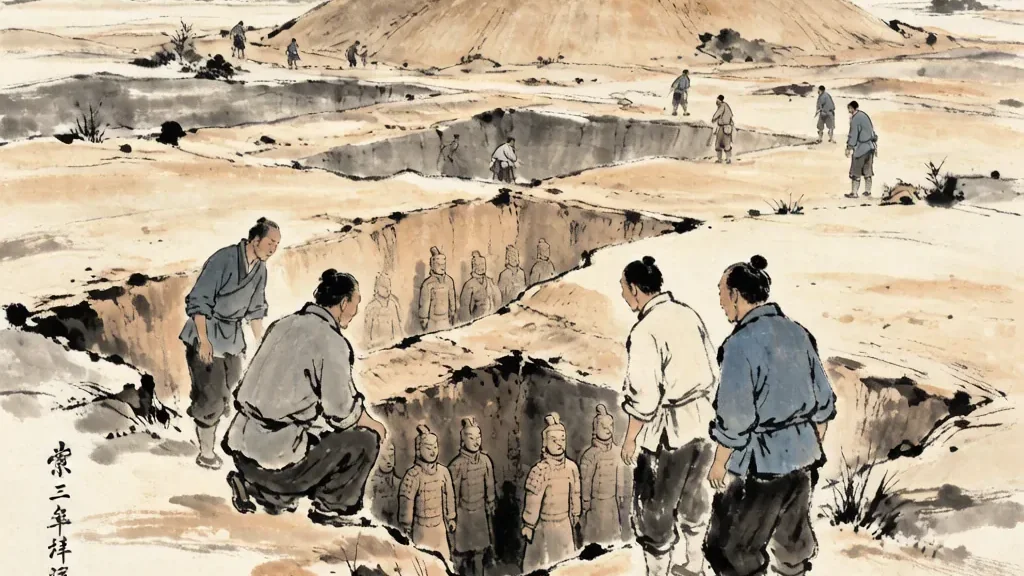
Who Built the Terracotta Army? Qin's Underground Warriors

Who Built the Terracotta Army? Qin's Underground Warriors

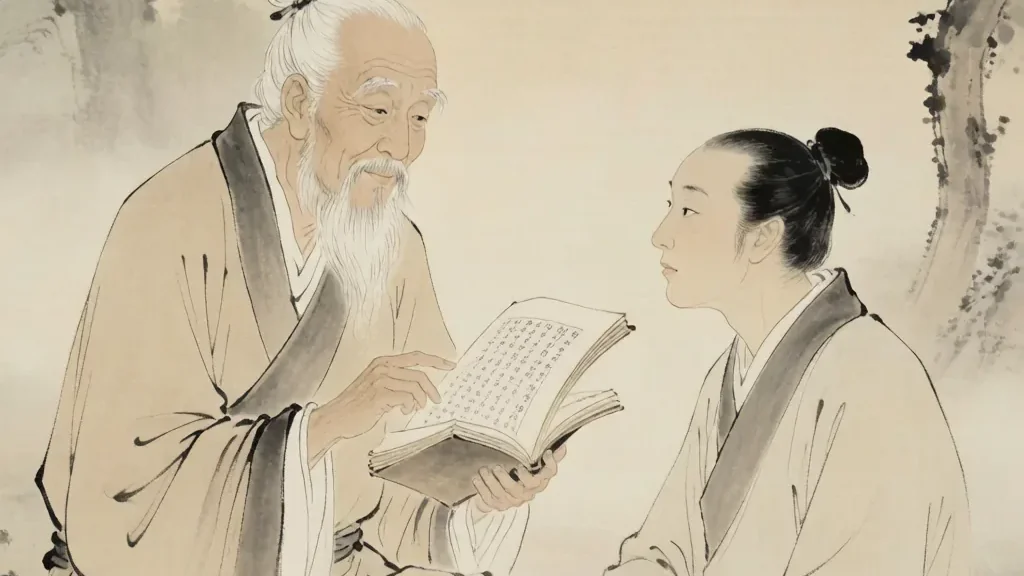
In the spring of 1974, a group of farmers digging a well near the city of Xi'an struck something hard. They had expected water. Instead, they found fragments of pottery and, beneath the dry Shaanxi soil, the head of a clay soldier. They had no idea that they had just made one of the most extraordinary archaeological discoveries in human history. Buried beneath their feet stood an entire army — over 8,000 life-size terracotta warriors, each with a unique face, arranged in battle formation, silently guarding the tomb of China's First Emperor for over two thousand years.

Read story →
🌍
What Are Fujian Tulou? Guide to the Hakka Roundhouses

What Are Fujian Tulou? Guide to the Hakka Roundhouses

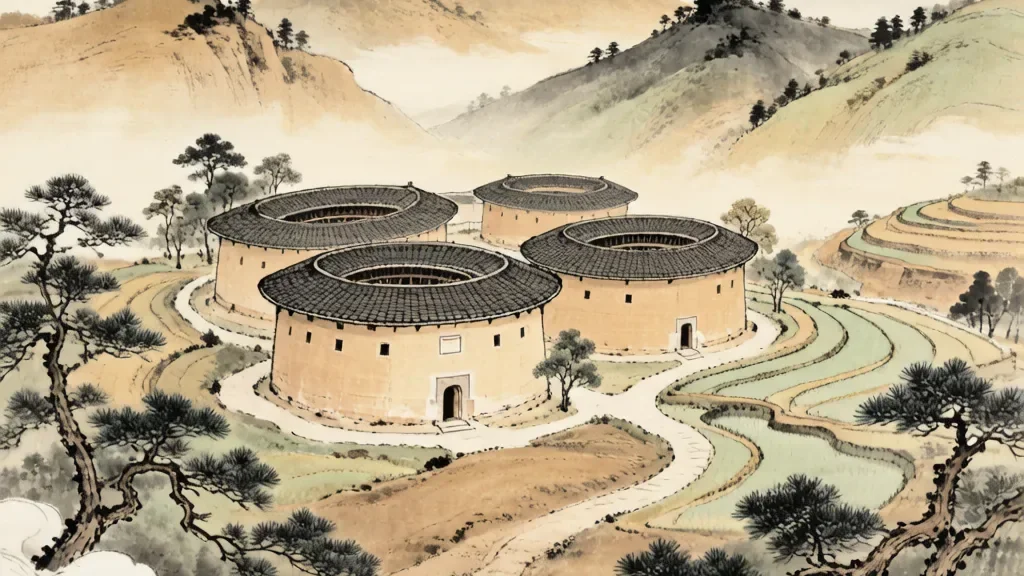
The Fujian Tulou (, Fújiàn Tǔlóu) are among the most remarkable vernacular architectural achievements in human history — massive circular or rectangular earthen fortress-dwellings, some housing up to 800 people within walls up to 1.8 meters thick, rising three to five stories high from the mountainous landscapes of southwestern Fujian Province. Constructed between the 12th and 20th centuries by the Hakka people (, Kèjiā Rén) — a Han Chinese subgroup whose name literally means 'guest families,' reflecting their history as migrants who moved south over centuries to escape warfare and persecution in northern China — the tulou represent a unique synthesis of defensive fortification, communal living, and sophisticated social organization that has no parallel in world architecture. Designated a UNESCO World Heritage Site in 2008, the 46 tulou included in the inscription represent the finest surviving examples of this building tradition, which once numbered in the thousands across Fujian, Jiangxi, and Guangdong provinces. From an anthropological perspective, the tulou are far more than buildings: they are physical manifestations of the Hakka people's egalitarian social structure, their clan-based kinship system, and their philosophy of collective defense and mutual support — a complete social world enclosed within walls of rammed earth.

Read story →
🌍
The Ming Tombs: Thirteen Emperors at Rest

The Ming Tombs: Thirteen Emperors at Rest

Some thirty miles northwest of Beijing, where the sky presses down on a basin of low hills, thirteen emperors of the Ming dynasty lie entombed beneath orderly mounds of earth and stone. Known in Chinese as (Míng Shísān Líng), the Ming Tombs are not a single grave but a vast necropolis — a planned city of the dead that grew across two centuries. To walk the Sacred Way that leads into the valley is to enter a landscape shaped by cosmology as much as by grief: the Ming rulers believed that where and how they were buried would influence the fate of the dynasty itself. For travelers interested in Chinese history, the site is one of the most complete surviving expressions of imperial funeral architecture, and a quiet counterpoint to the louder spectacle of the Forbidden City.

Read story →
🌍
The Summer Palace: A Garden of Imperial Dreams

The Summer Palace: A Garden of Imperial Dreams

On the northwestern edge of Beijing lies a landscape of lakes, hills, and pavilions that has captivated emperors and visitors for more than two and a half centuries. This is the Summer Palace, known in Chinese as (Yíhé Yuán), which literally means "Gardens of Nurtured Harmony." Built as a retreat from the rigid formality of the Forbidden City, the Summer Palace is the largest and best-preserved imperial garden in China. More than a pleasure ground, it is a carefully composed poem written in water and stone, a place where Chinese ideas about harmony between people and nature were given their most ambitious physical form. To walk through its grounds is to read a thousand years of garden design compressed into a single, luminous vision.

Read story →
🌍
Zhoukoudian: The Cave of Peking Man

Zhoukoudian: The Cave of Peking Man

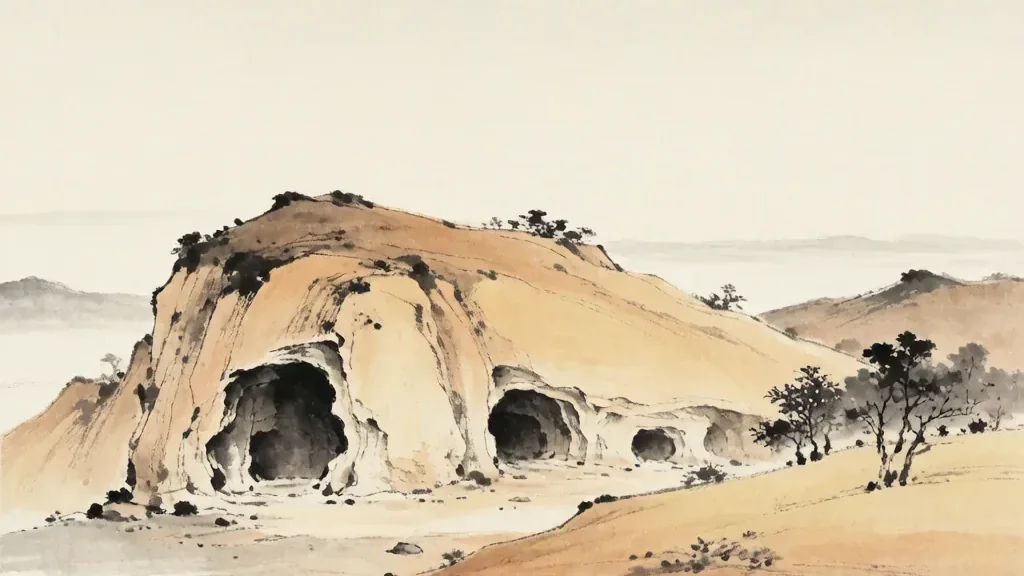
In the limestone hills southwest of Beijing lies a cluster of caves and gullies that rewrote the human story in East Asia. This is (Zhōukǒudiǎn), Zhoukoudian, the site where excavations early in the twentieth century uncovered the fossils of "Peking Man," an ancient human ancestor who lived in these caves hundreds of thousands of years ago. More than a dig, Zhoukoudian is a window into the deep past, evidence that humans inhabited northern China far earlier than anyone had imagined. Today it is a UNESCO World Heritage site and one of the most important paleoanthropological locations on Earth.

Read story →

🔭 Science & Invention

🔭
Who Calculated Pi? Zu Chongzhi's Record Achievement

Who Calculated Pi? Zu Chongzhi's Record Achievement

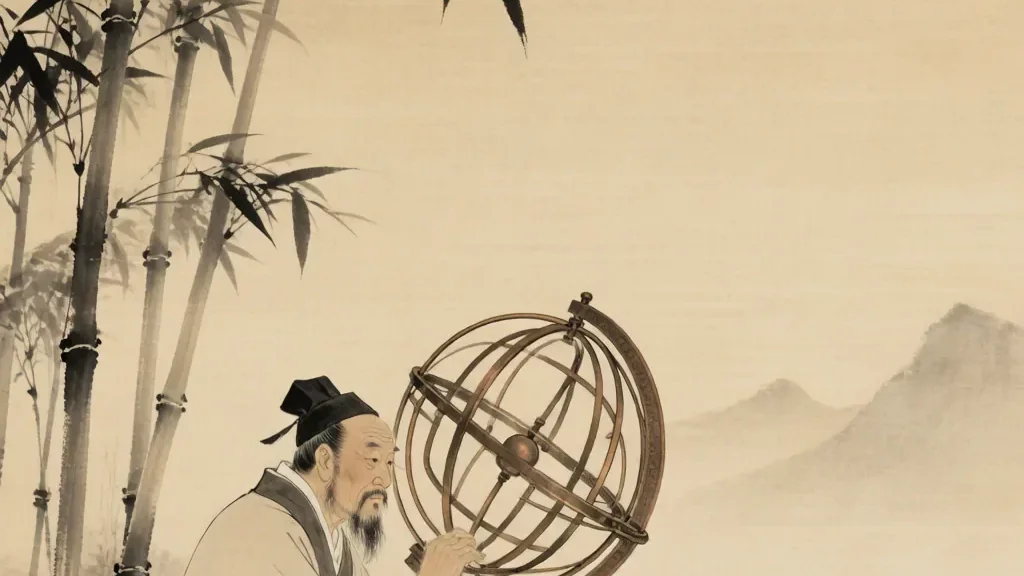
In the fifth century CE, while Europe was entering the so-called Dark Ages and mathematical knowledge across the continent was largely confined to the rudimentary arithmetic of monastery schools, a Chinese mathematician working in the southern city of Jiankang (modern Nanjing) accomplished a feat of calculation that would not be matched anywhere in the world for the next thousand years. Zu Chongzhi (, Zǔ Chōngzhī, 429–500 CE) determined the value of pi (π) — the ratio of a circle's circumference to its diameter — to an accuracy of seven decimal places: 3.1415926 < π < 3.1415927. This astonishing achievement, along with his calculation of two highly accurate rational approximations for pi (22/7 and the remarkable 355/113), places Zu Chongzhi among the greatest mathematicians in human history and stands as one of the most impressive demonstrations of the sophistication of ancient Chinese mathematics.

Read story →
🔭
What Is the Nine Chapters? A Guide to Chinese Math

What Is the Nine Chapters? A Guide to Chinese Math

The Jiuzhang Suanshu , or 'The Nine Chapters on the Mathematical Art,' stands as the most influential mathematical text in Chinese history and one of the great mathematical works of the ancient world. Compiled over several centuries — with its earliest material dating from the Zhou Dynasty (c. 1046–256 BCE) and its final form established around the first century CE during the Han Dynasty — the text presents 246 practical problems organized into nine thematic chapters, each addressing a different category of mathematical application. For over 1,500 years, the Jiuzhang Suanshu served as the foundational textbook for Chinese mathematics, shaping the education of countless scholars, officials, and engineers. Its influence extended far beyond China: the text was transmitted to Korea and Japan, where it became the basis for mathematical education, and through the Silk Road and Indian Ocean trade routes, many of its methods reached the Islamic world and ultimately influenced the development of mathematics in medieval Europe. The Jiuzhang Suanshu is remarkable not only for the breadth and sophistication of its mathematical content — which includes the earliest known use of negative numbers, the first systematic treatment of fractions, and the first description of matrix methods for solving systems of linear equations — but also for its distinctive approach to mathematics as a practical tool for solving real-world problems.

Read story →
🔭
How Old Is the Zhaozhou Bridge? The Complete Guide

How Old Is the Zhaozhou Bridge? The Complete Guide

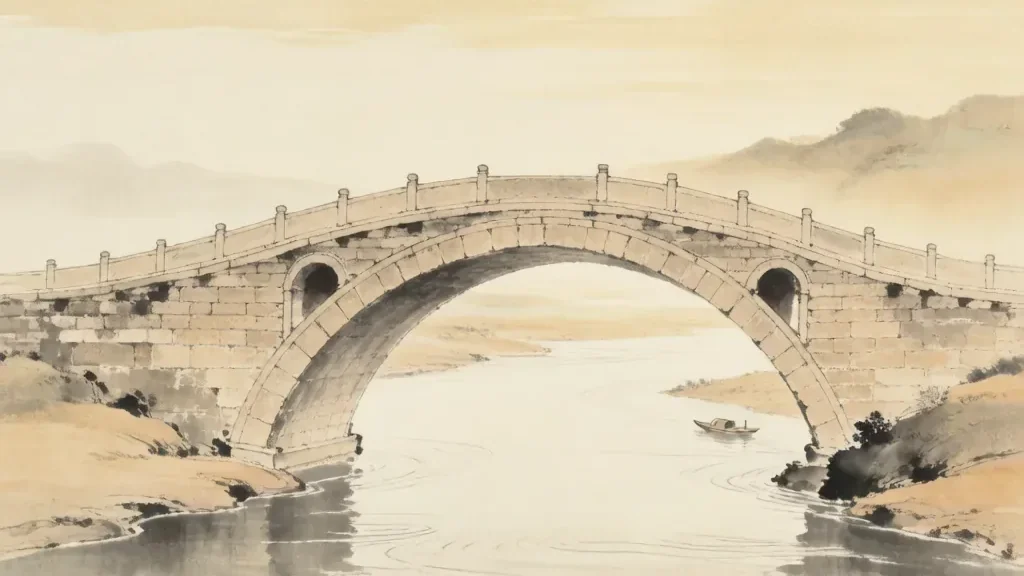
Spanning the Xiao River in Zhao County, Hebei Province, stands a bridge that has defied the expectations of engineers and the ravages of time for over 1,400 years. The Zhaozhou Bridge (, Zhàozhōu Qiáo), also known as the Anji Bridge (, Ānjì Qiáo, 'Safe Crossing Bridge'), was designed and built between 595 and 605 CE by the master craftsman Li Chun during the Sui Dynasty. It is the world's oldest standing open-spandrel segmental stone arch bridge — a structure so elegantly conceived and so perfectly executed that it remains in use today, having survived more than ten major earthquakes, countless floods, and the passage of fourteen centuries. The American Society of Civil Engineers designated the Zhaozhou Bridge as an International Historic Civil Engineering Landmark in 1991, recognizing it as one of the greatest achievements in the history of structural engineering.

Read story →
← Back to All Stories