🔤 Language & Writing

Explore 335 stories across 6 topics

🔡 Chinese Characters

🔡
The Erya: China's First Dictionary

The Erya: China's First Dictionary

This article explores Ancient Dictionary Er Ya an essential topic for understanding Chinese characters. Ancient Dictionary Er Ya reveals how the Chinese writing system encodes meaning and history in its structure. By studying ancient dictionary er ya learners gain deeper insight into the logic behind Chinese characters and how they have evolved over three millennia of continuous use. This topic connects ancient traditions with modern usage offering practical knowledge for anyone serious about mastering the Chinese writing system.

Read story →
🔡
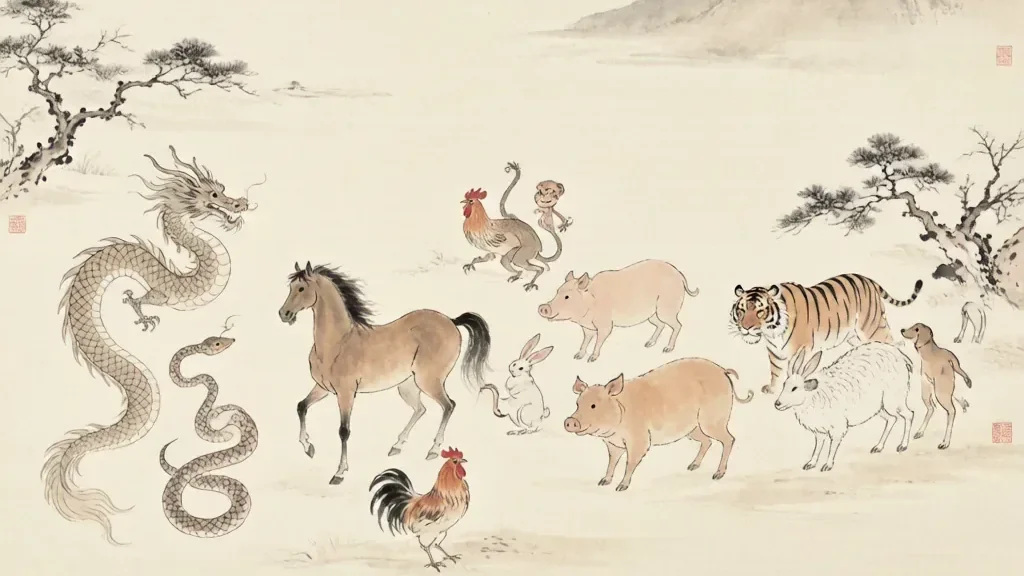
Zodiac Animal Characters: The Twelve in Writing

Zodiac Animal Characters: The Twelve in Writing

This article explores Animal Characters an essential topic for understanding Chinese characters. Animal Characters reveals how the Chinese writing system encodes meaning and history in its structure. By studying animal characters learners gain deeper insight into the logic behind Chinese characters and how they have evolved over three millennia of continuous use. This topic connects ancient traditions with modern usage offering practical knowledge for anyone serious about mastering the Chinese writing system.

Read story →
🔡
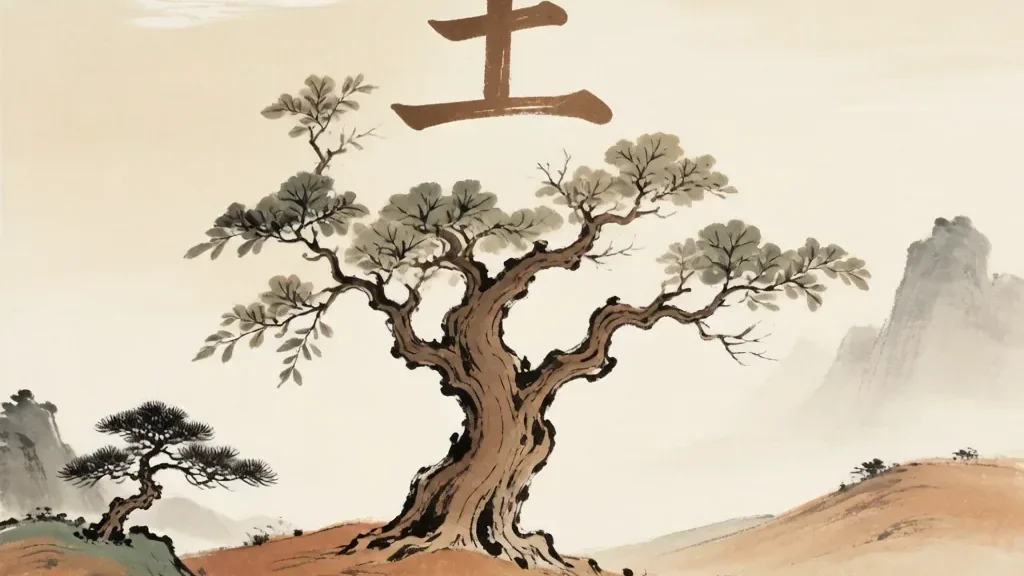
The Earth Radical: Ground Under the Character

The Earth Radical: Ground Under the Character

This article explores Earth Radical an essential topic for understanding Chinese characters. Earth Radical reveals how the Chinese writing system encodes meaning and history in its structure. By studying earth radical learners gain deeper insight into the logic behind Chinese characters and how they have evolved over three millennia of continuous use. This topic connects ancient traditions with modern usage offering practical knowledge for anyone serious about mastering the Chinese writing system.

Read story →
🔡
Nushu: The Women's Script of Jiangyong

Nushu: The Women's Script of Jiangyong

This article explores Nushu Women an essential topic for understanding Chinese characters. Nushu Women reveals how the Chinese writing system encodes meaning and history in its structure. By studying nushu women learners gain deeper insight into the logic behind Chinese characters and how they have evolved over three millennia of continuous use. This topic connects ancient traditions with modern usage offering practical knowledge for anyone serious about mastering the Chinese writing system.

Read story →
🔡
The Wood Radical: The Forest of Characters

The Wood Radical: The Forest of Characters

This article explores Wood Radical an essential topic for understanding Chinese characters. Wood Radical reveals how the Chinese writing system encodes meaning and history in its structure. By studying wood radical learners gain deeper insight into the logic behind Chinese characters and how they have evolved over three millennia of continuous use. This topic connects ancient traditions with modern usage offering practical knowledge for anyone serious about mastering the Chinese writing system.

Read story →
💬 Idioms & Chengyu

💬
The Farmer Who Pulled Up Seedlings: Chinese Idiom Story

The Farmer Who Pulled Up Seedlings: Chinese Idiom Story

There is a kind of impatience that does not look like impatience. It looks like diligence. It looks like care. It looks like a person working harder than anyone else, more determined than anyone else, more committed to the outcome than anyone else. And yet, beneath the surface, it is impatience — and the damage it does is the damage of impatience, no matter how virtuous it appears. The Chinese idiom (bá miáo zhù zhǎng), "pulling up seedlings to help them grow," describes this damage with the precision of a doctor describing a disease, and the story behind it has been warning farmers, parents, teachers, and rulers for over two thousand years.

Read story →
💬
Why You Shouldn't Add Legs to a Snake: Chinese Idiom

Why You Shouldn't Add Legs to a Snake: Chinese Idiom

Among the many forms failure that haunts artists, cooks, writers, and lovers alike — the failure of adding too much. A sauce ruined by one extra pinch of salt. A poem killed by one final adjective. A perfectly good apology destroyed by a single defensive sentence. The Chinese have spent over two thousand years compressing this mistake into four sharp characters: (huà shé tiān zú), "drawing legs on a snake." The story behind it is short, almost farcical, and its point has never stopped being relevant.

Read story →
💬
A Roc's Flight of Ten Thousand Li: Boundless Ambition

A Roc's Flight of Ten Thousand Li: Boundless Ambition

Some symbols soar. The Chinese idiom (péng chéng wàn lǐ) — "the peng bird's flight of ten thousand li" — invokes a colossal mythical bird that rises from the northern sea and wings southward across an unimaginable distance. It is the great Chinese image of boundless ambition and a soaring future, and it is most often spoken as a blessing: may your path be as vast as the peng's. Where Western well-wishers say "break a leg" or "sky's the limit," Chinese speakers may offer the peng's ten thousand li.

Read story →
💬
Gazing at the Ocean and Sighing: Knowing One's Limits

Gazing at the Ocean and Sighing: Knowing One's Limits

Humility begins at the shore of something vaster than you. The Chinese idiom (wàng yáng xīng tàn) — often rendered "gazing at the ocean and sighing" — comes from the Zhuangzi and tells of the river god who, proud of his own full waters, travels to the sea and there realizes how small he is. The phrase has become the Chinese way to express awe before immensity and a sober recognition of one's own limits. It is not despair but a clearsighted sigh: the task, or the other person's greatness, is simply larger than I am.

Read story →
💬
The Spear and the Shield: A Tale of Contradiction

The Spear and the Shield: A Tale of Contradiction

Some of the wisest lessons in Chinese culture arrive disguised as a street-corner joke. The idiom zì xiāng máo dùn , which we might translate as "the spear and the shield," captures the human habit of talking ourselves into impossible corners. In a single four-character phrase it names the logical trap of self-contradiction: saying two things that cannot both be true. For readers new to Chinese idioms, this is a perfect starting point, because the story is funny, the image is unforgettable, and the lesson applies to everything from everyday arguments to international politics. To understand it is to gain a small but sharp tool for clear thinking.

Read story →
📚 Literature

📚
What is Tang Poetry? China's Golden Age of Verse Explained

What is Tang Poetry? China's Golden Age of Verse Explained

When scholars speak of the "golden age" of Chinese poetry, they invariably point to the Tang Dynasty (618-907 CE). This remarkable period produced nearly 50,000 surviving poems by over 2,200 known poets, collected in the monumental anthology Quan Tang Shi (Complete Tang Poems). More than a literary achievement, Tang poetry represents the very soul of classical Chinese culture — a tradition so deeply woven into the fabric of Chinese identity that schoolchildren still memorize these verses today, more than a millennium after they were written.

Read story →
📚
The Legend of the White Snake: Love Against the Heavens

The Legend of the White Snake: Love Against the Heavens

Some love stories are told to make us sigh; the legend of the White Snake was told to make us question where humanity ends and the natural world begins. Baishe Zhuan, "The Legend of the White Snake," is one of China's four great folk tales, the story of a thousand-year-old white snake spirit who takes human form, falls in love with a mortal pharmacist, and battles a jealous monk to keep him. Across centuries it has lived as oral tale, drama, novel, and film. For English readers it is a fairy tale with teeth — about devotion, transformation, and the suspicion that those who love most fiercely may not be human at all.

Read story →
📚
What is Strange Tales from a Chinese Studio? Pu Songling

What is Strange Tales from a Chinese Studio? Pu Songling

Liaozhai Zhiyi , or "Strange Tales from a Chinese Studio," is the crowning achievement of classical Chinese supernatural fiction. Compiled over approximately four decades by Pu Songling (1640–1715), a failed examination candidate from Zichuan, Shandong, the collection contains nearly 500 tales of ghosts, fox spirits, demons, Taoist immortals, and other denizens of the Chinese paranormal imagination. Written in elegant classical Chinese rather than the vernacular, Liaozhai bridges elite literary tradition and folk supernatural belief, producing stories of astonishing range: some are chilling horror, others romantic fantasy, still others biting social satire. The book has never been out of print since its first publication in 1766, half a century after Pu Songling's death, and its stories have been adapted into countless operas, films, and television series.

Read story →
📚
What is Shishuo Xinyu? Tales of the Wei-Jin Literati

What is Shishuo Xinyu? Tales of the Wei-Jin Literati

Shishuo Xinyu , translated as "A New Account of Tales of the World" or "New Accounts of Old Episodes," is a collection of approximately 1,130 anecdotes about historical figures from the late Han through the Eastern Jin dynasty (c. 150–420 CE). Compiled around 430 CE by Liu Yiqing (403–444), a prince of the Liu Song dynasty, the book is organized into 36 thematic chapters covering everything from "Virtuous Conduct" to "Stinginess and Meanness," from "Appreciation and Praise" to "Taunting and Teasing." It is not a systematic history but a mosaic of personality — an intimate portrait of the Wei-Jin era's intellectual elite in their most human moments: witty, arrogant, melancholic, intoxicated, and often all four at once. The book became the definitive record of the "Wei-Jin style" , an aesthetic and existential ideal that prized spontaneity, emotional authenticity, and cultivated eccentricity above rigid Confucian propriety.

Read story →
📚
The Comprehensive Mirror: History as a Ruler's Guide

The Comprehensive Mirror: History as a Ruler's Guide

History, the Song dynasty scholar Sima Guang believed, was a mirror in which rulers could see their own faces. Zizhi Tongjian, "The Comprehensive Mirror in Aid of Governance," is the greatest chronological history ever compiled in China — a sweeping account of more than thirteen centuries, from 403 BCE to 959 CE, finished in 1084 after nineteen years of labor. Commissioned by Emperor Shenzong and led by Sima Guang, it is not a story but a chronological ledger of statecraft, meant to teach emperors what to do and what to avoid. For English readers it is the key to how China's rulers understood their own past: as a vast, repeating lesson in power, virtue, and ruin.

Read story →

📝 Classical Poetry

📝
Three Hundred Tang Poems: The Essential Collection

Three Hundred Tang Poems: The Essential Collection

If you ask any educated Chinese person to recite a classical poem, the chances are overwhelming that it will come from a single book: the 'Three Hundred Tang Poems' (, Tangshi Sanbai Shou). Compiled in 1764 by the Qing dynasty scholar Sun Zhu (, also known as Hengtang Tuishi, ), this anthology of 311 poems by 77 Tang dynasty poets has been the standard introduction to classical Chinese poetry for over 250 years. More than any other single volume, it has shaped what Chinese people remember, love, and value in their poetic heritage.

Read story →
📝
Love Poetry in Classical China

Love Poetry in Classical China

Chinese classical poetry is famous for its restraint. Emotions are implied, not declared; love is suggested through images of the moon, a pair of mandarin ducks, a red candle burning in the night, or a plum branch sent to a distant lover. And yet — beneath this surface of decorum — Chinese love poetry is capable of an intensity and sensuality that rivals any tradition in the world. From the folk songs of the Shijing to the exquisite ci of Li Qingzhao, Chinese poets have found ways to speak of love that are simultaneously indirect and devastating, chaste and passionate, conventional and utterly original.

Read story →
📝
Mountain Poetry: The Vertical Axis

Mountain Poetry: The Vertical Axis

Mountains are the bones of the earth, and they are the bones of Chinese poetry. From the sacred peaks of the Five Great Mountains to the mist-wrapped ranges of the south, Chinese mountains have been climbed, painted, worshipped, and sung for as long as the Chinese people have written poetry. Mountain poetry (, yongshan shi) is the tradition of verse that scales the heights — a poetry of ascent, of perspective, of the view from above that reveals the world in its true proportions.

Read story →
📝
The Willow in Poetry: Grace in Separation

The Willow in Poetry: Grace in Separation

The willow (, liu) is the most versatile tree in Chinese poetry. It can be a symbol of spring and renewal, when its golden catkins appear before any other leaf. It can be a symbol of parting, because its name sounds like the word for 'stay.' It can be a symbol of feminine grace, because its branches sway like a dancer's waist. It can even be a symbol of the fickle person, because its seeds are blown about by the wind. Few images in Chinese poetry carry as many meanings as the willow.

Read story →
📝
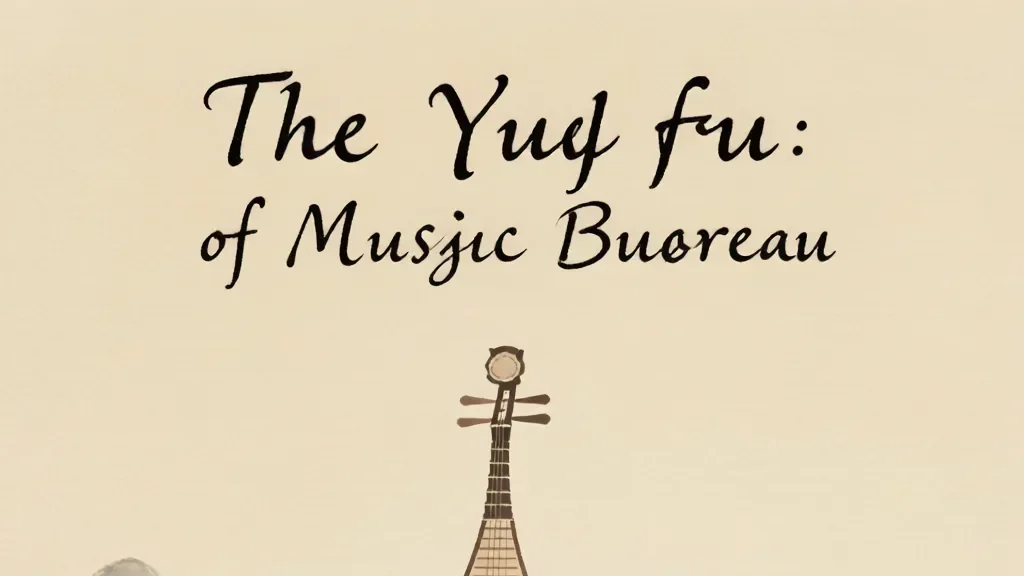
The Yuefu: Folk Songs of the Music Bureau

The Yuefu: Folk Songs of the Music Bureau

During the Han dynasty, Emperor Wu (r. 141–87 BCE) established a government office called the Music Bureau (yuefu, ) with a remarkable mission: to collect folk songs from across the empire. The bureau sent scribes to the markets and fields of every province, transcribing the songs that ordinary people sang while working, mourning, celebrating, and loving. These anonymous poems — direct, passionate, often tragic — became one of the most influential bodies of poetry in Chinese history. The yuefu tradition, born from the voices of common people, would inspire generations of literary poets who heard in those folk songs a truth that court poetry could never reach.

Read story →

🗨️ Proverbs & Sayings

🗨️
The Morning Determines the Day: A Chinese Proverb

The Morning Determines the Day: A Chinese Proverb

When Xiang Yu, the Hegemon-King of Western Chu, was surrounded by the Han army at Gaixia, his troops heard songs from their homeland drifting from the enemy camp — a psychological warfare tactic that destroyed their morale and led to one of history's most famous last stands. This battle produced the musical piece (shí miàn mái fú), 'Ambush from Ten Sides,' and the related proverb (bǎi miàn mái fú).

Read story →
🗨️
Live to Old Age, Learn to Old Age : The Case for Lifelong Study

Live to Old Age, Learn to Old Age : The Case for Lifelong Study

There is a Chinese saying that refuses to let age be an excuse: , (huó dào lǎo, xué dào lǎo) — "live until old, learn until old." It is short, rhythmic, and disarmingly simple, yet it carries one of the most demanding ideas in Chinese thought: that education has no finish line. Where many cultures treat schooling as something you complete in youth before "real life" begins, this proverb insists the two are the same thing, and that the moment you stop learning is the moment you start shrinking. For a civilization built on the conviction that character is made through constant self-improvement, the saying is less a piece of advice than a description of a well-lived life.

Read story →
🗨️
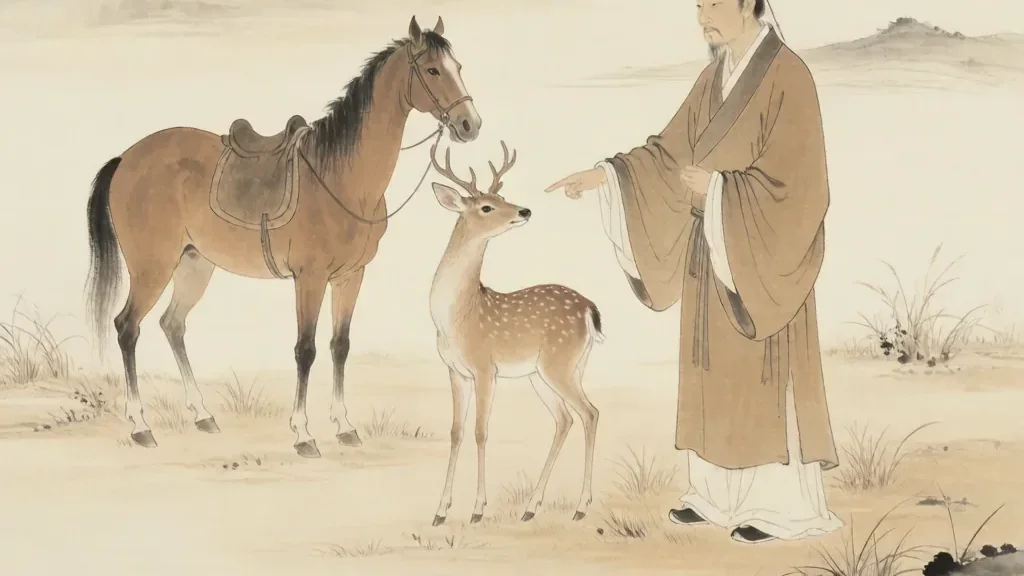
Pointing at a Deer and Calling It a Horse

Pointing at a Deer and Calling It a Horse

After the Qin dynasty collapsed with astonishing speed — just fifteen years after unifying China — Han dynasty historians scrambled to understand what had happened. The great historian Sima Qian recorded the lesson: , (qián shì bù wàng, hòu shì zhī shī) — 'the past is not forgotten; it is the teacher of the future.'

Read story →
🗨️
Diligence Compensates for Clumsiness

Diligence Compensates for Clumsiness

In the chaos of an ancient Chinese battlefield, a commander who could distinguish the sound of his own army's bells from the enemy's — and know when to advance, retreat, or hold — held the difference between victory and annihilation. The proverb (wén zhōng qiú shèng), 'hear the bell and seek victory,' encapsulates the military wisdom of reading signals accurately under pressure.

Read story →
🗨️
Three People Make a Tiger: The Power of Rumor

Three People Make a Tiger: The Power of Rumor

When King Zhou of the Shang dynasty built a massive wine pool and a forest of hanging meat to indulge his depravity, his people's will hardened against him like a fortress wall — and his dynasty fell. The observation that 'the people's will becomes a fortress' (, zhòng zhì chéng chéng) captured a revolutionary truth: the power of a ruler depends entirely on the united will of the people.

Read story →

👪 Chinese Surnames

👪
The Hundred Family Surnames : China's Surname Primer

The Hundred Family Surnames : China's Surname Primer

Long before Chinese children learned to read novels or newspapers, they learned to recite a single four-character rhyme: 「,」 — "Zhao, Qian, Sun, Li; Zhou, Wu, Zheng, Wang." This chant is the Bai Jia Xing (, bǎi jiā xìng), the "Hundred Family Surnames," a list of hundreds of Chinese family names arranged purely for sound and status. Compiled over a thousand years ago, it was the first book most Chinese schoolchildren ever held, and it turned the entire population of surnames into a song that every adult could still quote from memory.

Read story →
👪
Surname Totems and Clan Emblems : Signs of the Clan

Surname Totems and Clan Emblems : Signs of the Clan

Long before Chinese surnames were written in characters, the clans that bore them may have been known by the beasts and plants they revered. The idea of the tuteng (, "totem") — a natural emblem a group treats as its ancestor and guardian — helps explain some of the most puzzling features of early Chinese naming. Combined with the archaeological zu hui (, "clan emblems") cast in bronze, the totemic view reveals that a surname was once a picture before it was a word.

Read story →
← Back to All Stories