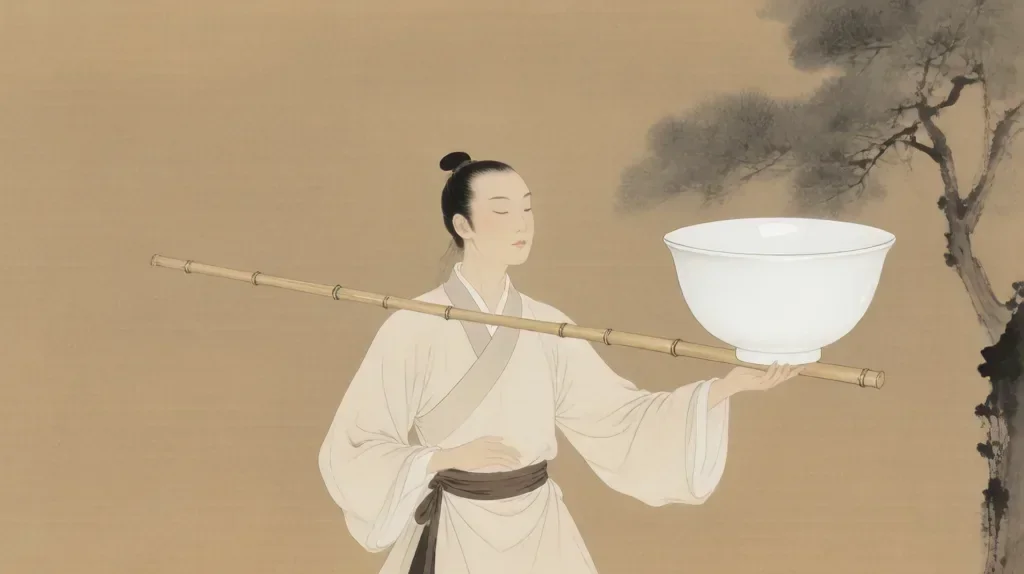
Chinese folk acrobatics, zá jì (杂技), is a vast family of physical feats—tumbling, balancing, juggling, plate-spinning, pole-climbing, and feats of strength—performed by traveling troupes, temple-fair buskers, and village entertainers for well over two thousand years. Long before it became a staged spectacle with lights and costumes, acrobatics was street skill: a boy balancing jars on his head, a troupe forming a human pyramid, a performer swallowing a sword or spinning bowls on sticks. Rooted in farming festivals, martial training, and the need to amaze a crowd, it remains one of the most athletic expressions of Chinese popular culture.
Ancient Origins
Acrobatic performance can be traced to the Warring States and Han periods, when records and tomb reliefs show dancers, strongmen, and performers walking on stilts or juggling. The Han "hundred games" (百戏) assembled music, wrestling, and astonishing physical acts into variety shows for courts and towns alike.
These early entertainments mixed sport, ritual, and display. A feat of balance might open a harvest celebration; a comic tumble might close a market day. The boundary between "game," "ritual," and "show" was loose, and acrobatics sat comfortably across all three.
The "Hundred Games" Tradition
The umbrella term bǎi xì (百戏), the hundred games, bundled together many arts that later separated into opera, dance, and pure acrobatics. Within it, acts of equilibrium, flexibility, and daring were central draws. Audiences loved the impossible made ordinary by practice.
This variety-show heritage still shapes Chinese acrobatics, which prefers a rapid succession of distinct feats over a single narrative. Even modern stage shows keep the "hundred games" rhythm: quick, dazzling, and varied.
Street and Fair Performance
For most of history, acrobatics lived in the open. A troupe would clear a ring at a crossroads or fair, beat a drum to gather a crowd, and perform for coins and food. The performer had to win the audience in seconds, so acts were visual and self-explanatory—no language needed.
Fairground acrobatics was interactive and risky. A missed catch meant a real fall, not a retake. That honesty is part of its appeal: the crowd sensed the genuine danger and admired the control that tamed it.
Signature Acts
Certain feats became trademarks. dǐng wǎn (顶碗), balancing stacked bowls on the head and feet, shows uncanny stillness. lā cí (拉瓷) and jar lifts display strength. Tightrope walking, pole climbing, and the "chair stack"—a tower of chairs balanced on a single point—display daring and poise.
Another favorite is the spinning of many plates on thin sticks at once, demanding both speed and calm. Each act isolates one human capacity—balance, grip, flexibility—and pushes it to a visible extreme, which is exactly why crowds cheer.
Training and the Body
Behind the ease is harsh training, often begun in childhood. Traditional troupes ran like families, with masters drilling students daily in flexibility, core strength, and repetition until a trick became instinct. The body was treated as an instrument to be tuned over years.
This long apprenticeship explains the art's continuity. Skills passed mouth-to-hand, master-to-student, and a troupe's reputation rested on a few signature feats perfected across generations. Talent helped, but endurance mattered more.
Acrobatics and Martial Arts
Acrobatics and martial arts grew from the same physical culture. Tumble, kick, and vault appear in both; many acrobats trained in wǔ shù basics, and some martial forms borrow acrobatic flourishes. The difference is purpose: the martial artist fights or trains, the acrobat amazes.
At festivals the two often shared a program. A lion dance or martial demonstration might precede pure acrobatics, so the crowd moved from disciplined movement to pure spectacle without a break.
From Street to Stage
In the twentieth century, acrobatics moved indoors and became a polished stage art, with troupes representing provinces and touring abroad. Costumes, music, and lighting turned rough fairground acts into theatrical productions admired worldwide.
This professionalization brought safety, scale, and prestige, but also a question of authenticity. Critics worry that too much staging hides the raw, human nerve of the old street act. The best troupes keep both: spectacle plus a hint of danger.
Modern Troupes and Global Fame
Today Chinese acrobatics troupes are among the most traveled performing groups from China, winning prizes at international circus festivals. Acts like the flying trapeze, the bicycle tower, and the contortionist's bend showcase a blend of tradition and modern circus craft.
The global success also feeds back home: young people still enroll in acrobatics schools, and television shows celebrate the art. What began as a boy with jars at a fair is now a national performance brand.
Why It Endures
Acrobatics endures because it speaks without words. A plate spun on a stick, a child balanced on a chair tower, needs no translation. In a vast country of many dialects, that silence was a strength, letting a troupe travel anywhere and be understood.
It also honors effort made visible. The crowd sees not magic but practice—years compressed into a ten-second hold—and that recognition, more than the trick itself, is the old bond between Chinese acrobat and Chinese audience.
Acrobatics in the Festival Calendar
Acrobatics found a natural home in the lunar calendar. The Lantern Festival, temple fairs, and market days all drew crowds that were idle and festive, exactly the audience a troupe needed. A company might follow the circuit of fairs through the spring, performing the same feat in a new town each week and learning which acts played best where.
This seasonal circuit shaped the repertoire. Troupes favored short, self-explaining acts that worked for a passing crowd, with a comic turn to close and pass the hat. The calendar thus choreographed the art, deciding not only when but what acrobats performed across the year.
Regional fairs also became showcases where troupes met rivals, pushing standards higher. A famous fair could make a young performer's name in a single afternoon, so the stakes, though playful, were real for those who earned by the road.
Acrobatics and the Body Beautiful
Beyond spectacle, acrobatics expressed an ideal of the trained body. A straight balance, a clean flip, a held pose—these were visible proof of discipline, the same virtue prized in calligraphy and martial art. The acrobat's body was a cultured body.
This link helped the art gain respect even among the literate, who might scorn a mere trick but admire control made lovely. The best troupes blended daring with grace, so the audience left awed and, quietly, edified.
❓ Frequently Asked Questions
What is Chinese folk acrobatics?
A family of physical feats—tumbling, balancing, juggling, and strength acts—performed by troupes and buskers for over two millennia.
Where did it begin?
In ancient variety shows like the Han "hundred games," mixing sport, ritual, and display.
What are famous acts?
Bowl balancing, jar tossing, plate-spinning, tightrope walking, and the chair-stack tower.
How do performers train?
Usually from childhood, in repetitive daily drill of flexibility, strength, and balance under a master.
How is it linked to martial arts?
They share tumbling and vaulting; many acrobats trained in basic wǔ shù before specializing.
Is it still popular?
Very; provincial troupes tour globally and win circus prizes, while stage shows keep the art alive at home.