Folk Arts
44 articles — Hands-on folk traditions: paper-cutting, puppetry, kites, and more.
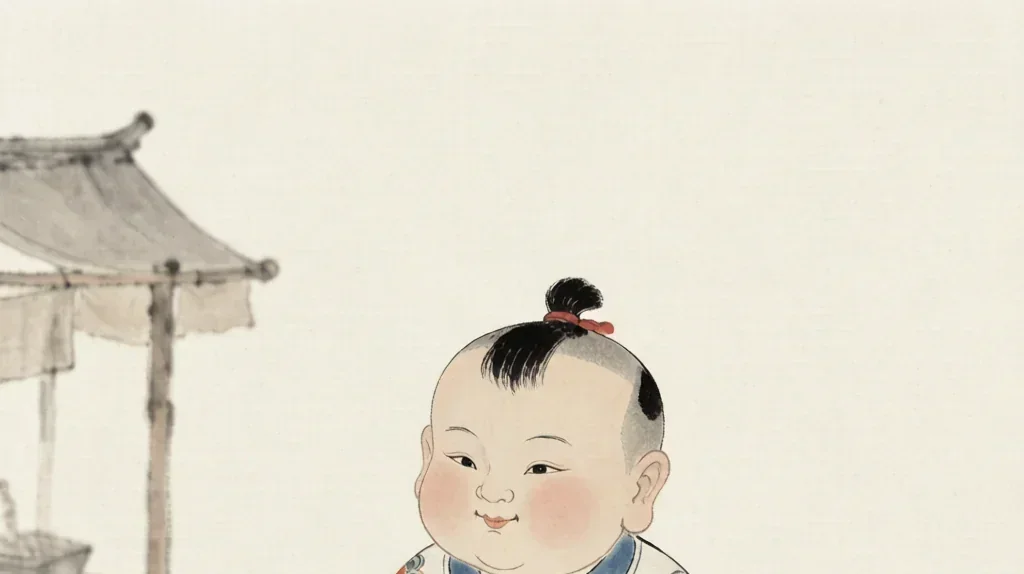
Clay Figurines (泥人): A Folk Sculpture Tradition
On a market stall in Wuxi, a round-cheeked clay child with a topknot and a beatific smile sits a few inches tall, painted in candy-bright pink and green, looking back at you with the calm of a small Buddha. This is the Dà Ā Fú (大阿福, "Big A-fu"), the most beloved of China's clay figurines, and it belongs to one of the country's oldest continuous folk-sculpture traditions.

Chinese Kites (风筝): Windborne Art
A swallow with a thousand-year-old face climbs into a spring sky, its painted wings trembling, a low hum rising from the bamboo whistle at its spine. Below, a crowd tilts its heads back and laughs.
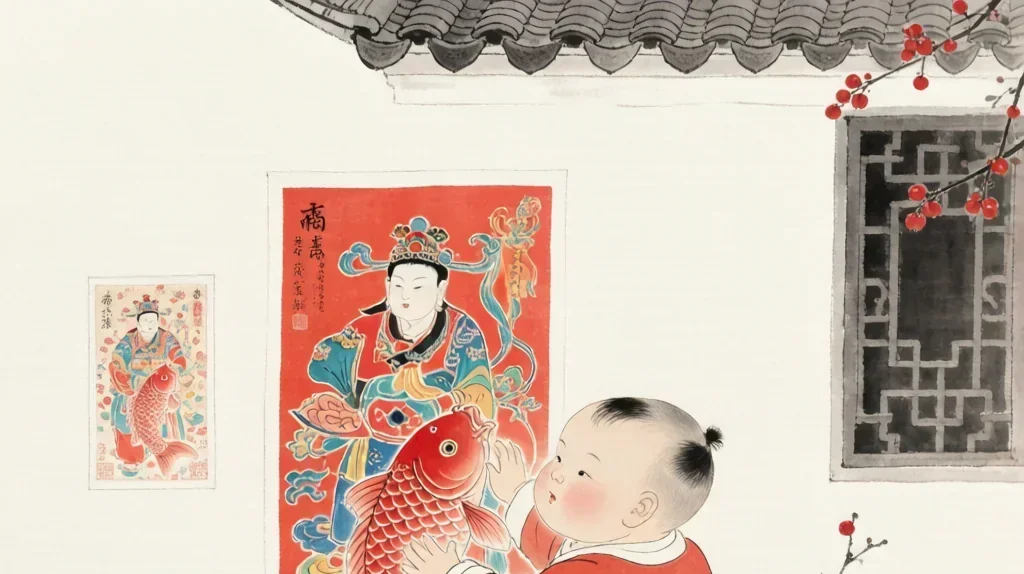
New Year Woodblock Prints (年画): Pictures of Luck
In the last week of the lunar year, a Chinese household does something no museum would dare: it takes down last year's pictures, sweeps the walls clean, and glues up a brand-new set of bright, gaudy, utterly optimistic prints. These are nián huà (年画, "year pictures"), the woodblock prints made specifically for the Spring Festival.

Chinese Paper-Cutting (剪纸): Red Happiness
Take a square of scarlet paper, fold it a few times, and with a small sharp blade cut away the negative space in a few confident minutes. Unfold it, and a whole world appears: a plump baby riding a fish, a pair of magpies in a blossoming plum, or the character for happiness repeated in perfect symmetry.
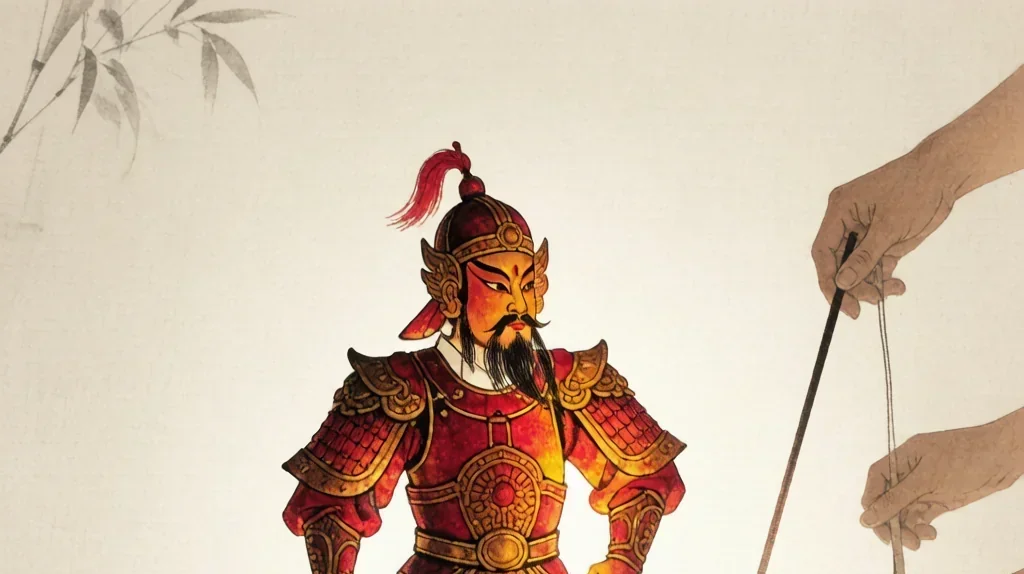
Shadow Puppetry (皮影戏): Light and Silhouette
Behind a lit white screen, a translucent figure of a general raises a painted arm, his crimson armor glowing like stained glass as he charges into battle to the beat of a drum. The audience sees only his shadow, but the effect is uncanny: a flat scrap of hide has become a hero, weeping, fighting, and dying three feet tall.

Bamboo Weaving: The Basket of Chinese Life
A single bamboo pole, split into a hundred whisper-thin strips, can become a basket, a hat, a chair, a child's toy, or an intricate artwork worth thousands of dollars. Bamboo weaving (竹编, zhú biān) is perhaps China's most versatile folk craft — one that combines the structural logic of engineering with the visual sensitivity of art. The bamboo groves of southern China provide an endless supply of raw material, and the weavers of Zhejiang, Fujian, and Sichuan have developed techniques that transform this humble grass into objects of breathtaking beauty and utility.
Batik: Wax Resist Art of the Southwest
Deep in the mountainous villages of Guizhou, a Miao woman dips a copper wax pen into molten beeswax and draws on a length of white cotton cloth. Her hand moves with the confidence of centuries — spirals, geometric diamonds, birds with spread wings, fish with curling scales — all flowing in a continuous, unbroken line. Where the wax seals the fibers, the white remains. Where the dye penetrates, the cloth becomes a deep, luminous blue. This is batik printing (蜡染, là rǎn), the wax-resist dyeing technique that China's ethnic minorities have perfected over more than a thousand years.
Clay Figurines: Shaping Folk Life from Earth
In the sunbaked courtyards of northern Chinese villages, a handful of earth mixed with water and a few bold strokes of pigment can become a galloping horse, a scowling general, or a plump baby clutching a peach. The art of clay figurines (泥塑, ní sù) is one of China's oldest continuous folk traditions, practiced for at least six thousand years since the Neolithic period. What began as humble funeral figurines and ritual objects evolved into a vibrant folk art that reached its pinnacle in the hands of master artisans from Tianjin, Huishan, and Fengxiang. These small, painted sculptures carry within them the aesthetic soul of rural China — bold, earthy, and brimming with life.
Cricket Fighting: The Autumn Sport
Two tiny warriors face each other in a shallow clay pot. They are barely three centimeters long — insects with glossy black carapaces and long antennae. They circle, their antennae twitching, then suddenly they charge, locking mandibles and wrestling with ferocious intensity. The smaller one is flipped onto its back, rights itself, and charges again. The spectators — grown men leaning over the pot, some of them wealthy businessmen — watch in total silence, then erupt in cheers when the victor is declared. Cricket fighting (斗蟋蟀, dòu xī shuài) is one of China's oldest and most obsessive folk pastimes — a sport, a gambling vehicle, and an art form that has inspired poetry, painting, and a vast literature on the care and breeding of fighting insects.
Xiangsheng: The Chinese Art of Comic Dialogue
Two performers stand on a bare stage. One is serious, the other comedic. They begin a conversation: the straight man asks a question, the comedian answers with a pun. The straight man pushes back, the comedian doubles down. Within seconds, the audience is laughing. This is cross talk (相声, xiàngsheng), the most popular form of Chinese comedic performance. The name literally means 'face and voice' — the interplay between expression and speech. Cross talk is a verbal art that relies on nothing but language: no costumes, no props, no musical instruments, just two performers and their ability to make words dance.
Dough Figurines: Art You Can Eat
Imagine a sculpture that can be shaped in minutes, painted in seconds, and eaten afterward. This is the improbable reality of dough figurines (面塑, miàn sù), a folk art that transforms simple wheat dough into intricate, brightly colored figures of animals, deities, and operatic heroes. Originating in the wheat-growing regions of northern China, dough figurines have been a staple of temple fairs and street markets for centuries. The medium is deceptively humble — flour, water, and a pinch of salt — yet master artisans can produce figures of astonishing delicacy, with translucent petals, flowing silk robes, and faces no larger than a fingernail that somehow convey joy, sorrow, or fury.
Dragon Boat Racing: The Village Competition
The drum beats faster. Forty paddles hit the water at once. The long, narrow boat — its prow carved into the head of a dragon, its stern decorated with a scaled tail — surges forward, sending spray over the cheering crowds lining the riverbanks. Dragon boat racing (赛龙舟, sài lóng zhōu) is the most physically demanding of all Chinese folk sports, a fusion of competitive rowing, ritual observance, and community celebration. Every year, during the Dragon Boat Festival, rivers across China become racetracks for these sleek, brilliantly colored vessels.
The Dragon Dance: A River of Silk and Fire
A team of fifty men and women crouches low, their legs braced, their arms gripping bamboo poles that rise into the belly of a vast, glittering dragon. At a signal from the drum, they surge forward as one body, and the dragon — a hundred feet of silk, scales, and mirrored eyes — rears, twists, and plunges through the narrow streets. The dragon dance (舞龙, wǔ lóng) is the most spectacular of all Chinese folk performances, a fusion of acrobatics, choreography, and communal ritual performed for at least two thousand years.
Folk Embroidery: Stitches That Tell Stories
A needle. A thread. A piece of cloth. With these three elements, the women of rural China have created one of the world's great textile art traditions. Folk embroidery (刺绣, cìxiù) is not the refined, scholarly embroidery of the Suzhou or Hunan schools — it is the embroidery of the village, where every stitch carries meaning, every color has a name, and every garment tells the story of the woman who made it. For centuries, Chinese village girls began learning embroidery at the age of six or seven, and by the time they married, they had produced a dowry of embroidered clothing, shoes, and bedding that represented thousands of hours of work.
Firecracker Making: A Celebration in Sound
The deafening bang of a firecracker is the sound of the Chinese New Year — a sound that has announced the arrival of spring for over a thousand years. Firecracker making (鞭炮制作, biān pào zhìzuò) is a folk art that combines chemistry, paper craft, and pyrotechnics into a single, explosive product. The firecracker is a simple object: a paper tube filled with gunpowder, with a fuse at one end. But the making of it, at the village scale, is a complex process that involves entire communities and produces an object that, for a fraction of a second, concentrates the hopes and fears of the year into a single, shattering instant.
Chinese Acrobatics: Balancing the Impossible
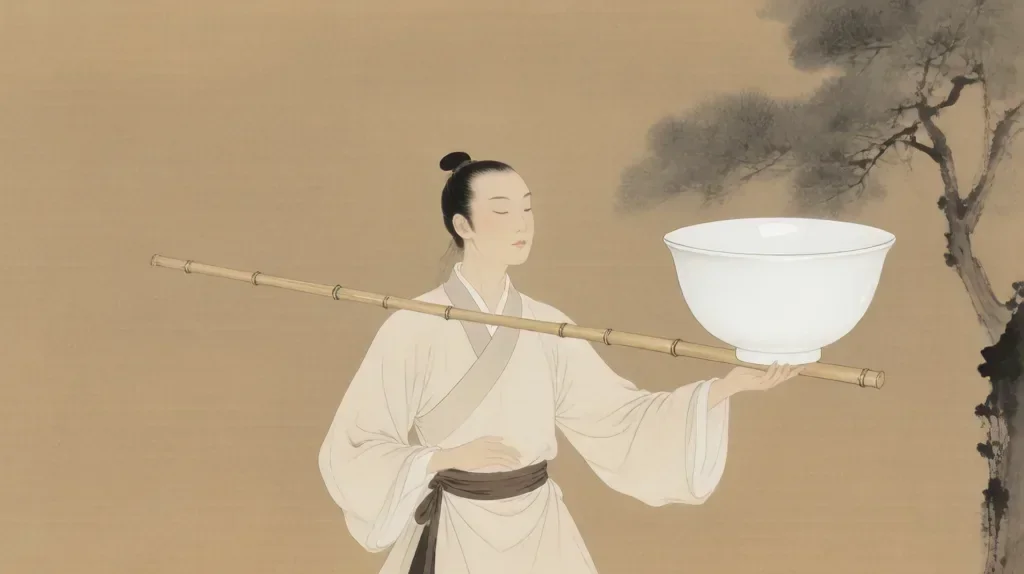
A performer balances a porcelain bowl on a bamboo pole held in her teeth while spinning a plate on each hand and walking across a tightrope. This is Chinese folk acrobatics (杂技, zá jì) — an art form that combines physical training approaching the limits of human capability with the theatrical flair of the circus. China has one of the world's oldest continuous acrobatic traditions, with a history stretching back over 2,000 years. In the villages and market towns of rural China, acrobatics was never a separate profession — farmers and laborers were the performers, and the skills they displayed were developed through the physical demands of their daily work.
The Cymbal: The Clash of Celebration
The cymbal (钹, bó) in Chinese music is not a subtle instrument. It is two heavy bronze disks, crashed together with force, producing a sound like thunder and lightning combined. Where the gong provides the deep, resonant foundation of Chinese percussion, the cymbal provides the sharp, explosive accents — the percussive punctuation that makes the music leap and dance. In the hands of folk musicians, the cymbal is not merely a timekeeper but an expressive instrument capable of a wide range of sounds from a whispery shimmer to a crashing roar.
The Waist Drum: The Beat of Collective Joy
When the big drum speaks, the village listens. The drum — the dà gǔ (大鼓) — is the heartbeat of the Chinese village, whose rhythms regulate everything from the agricultural calendar to the New Year celebration. Village drum music (鼓乐, gǔ yuè) is not a refined art for quiet concert halls. It is loud, physical, and communal — a music made by farmers whose hands are calloused from the plow, who strike the drum with the same force they use to thresh wheat. The drum calls the community together, announces joy and sorrow, and marks the passage of time in villages where life is measured by the seasons.
The Bamboo Flute: The Sound of the Countryside
A single bamboo tube, five holes drilled into it, and a notch cut at one end — this is all that is needed to produce one of the most beautiful sounds in Chinese music. The bamboo flute (竹笛, zhú dí) is the most personal and lyrical of Chinese folk instruments. Unlike the suona's piercing shout or the drum's commanding thunder, the flute speaks in a human voice — sweet, clear, and capable of infinite subtlety. In the hands of a village shepherd or a traveling musician, the bamboo flute can express longing, joy, sorrow, and the quiet beauty of the natural world.
The Gong: The Village Announcement
The gong (锣, luó) is the most instantly recognizable sound in Chinese music — a resonant, crashing bronze note that announces the entrance of an emperor, the arrival of a dragon, or the climax of an opera scene. The gong is not a single instrument but a family of instruments, ranging from small hand-held disks to massive suspended bronze plates. Chinese folk gong music is the sound of celebration itself — bright, percussive, and impossible to ignore.
The Suona: The Voice of the Village
There is no instrument on earth quite like the suona (唢呐). It is the loudest acoustic instrument in traditional Chinese music — a double-reed horn whose piercing, nasal tone can cut through the din of a village festival, a temple fair, or a wedding banquet. Played softly, it can mimic the human voice in song. Played at full volume, it can be heard from over a mile away. The suona is the instrument of celebration and mourning alike, equally at home at weddings and funerals, its sound a thread that connects the Chinese people to their deepest emotions.
Regional Opera: A Hundred Stages of China
In a clearing at the edge of a rice paddy, a stage is assembled from bamboo poles and wooden planks. As night falls, oil lamps are lit, and the village's own opera troupe — farmers and shopkeepers by day, emperors and generals by night — begins the performance. Village folk opera (社戏, shè xì) is the theater of the land — unpolished, passionate, and intimately connected to the rhythms of agricultural life. It is not the refined, codified opera of the capital but something rawer and more immediate: the stories of the Chinese village, performed by the villagers themselves.
Folk Songs of the Mountains
From the terraced rice fields of Guangxi to the rocky slopes of Fujian, the voices of farmers rise in call-and-response patterns that have echoed across Chinese valleys for millennia. Shan ge (山歌, shān gē), literally 'mountain songs,' are the most ancient and widespread form of Chinese folk music — a living tradition of improvisational singing that peasants use to court lovers, coordinate work, tell stories, and complain about their landlords. Unaccompanied by instruments, untrained by formal schools, passed down entirely through oral tradition.
Storytelling: The Art of the Oral Tale
A single performer sits on a wooden stool, a small desk in front of him, a fan in his hand. With no costume, no stage, and no musical accompaniment, he captures the attention of an entire village for hours on end. He is a folk storyteller (说书, shuō shū), and his only tools are his voice, his memory, and his ability to make the characters of ancient stories live in the minds of his listeners. Chinese folk storytelling is the oldest and most direct form of narrative art — a tradition that has preserved the epic tales of Chinese civilization for generations who could not read.
Diabolo: The Whistling Toy of the Streets
A bamboo spool spins on a string, its two ends shaped like cups. The player lifts the string, and the spool rises, spinning faster and faster until it produces a distinctive whirring sound. With a flick of the wrist, the spool is tossed into the air, caught on the string, and sent spinning again — sometimes bouncing off the ground, sometimes landing on a second string held by another player. This is the diabolo (空竹, kōng zhú), one of China's most beloved traditional toys. The name means 'hollow bamboo,' and the toy's characteristic whistle — produced by holes cut into the cups — has delighted Chinese children and adults for over a thousand years.
Puppet Show: String, Shadow, and Story
Across China, puppets are not just toys — they are actors, ancestors, gods, and lovers, brought to life by the hands of their manipulators. The Chinese folk puppet tradition (木偶戏, mù ǒu xì) encompasses an extraordinary range of forms: string puppets manipulated by up to thirty-two threads, rod puppets with articulated eyes and mouths, glove puppets that can fight with swords, and shadow puppets whose delicate leather silhouettes dance behind illuminated screens. For over two thousand years, puppetry has been the most accessible form of Chinese theater — reaching audiences who could not afford opera tickets or who lived in villages too small for traveling troupes.
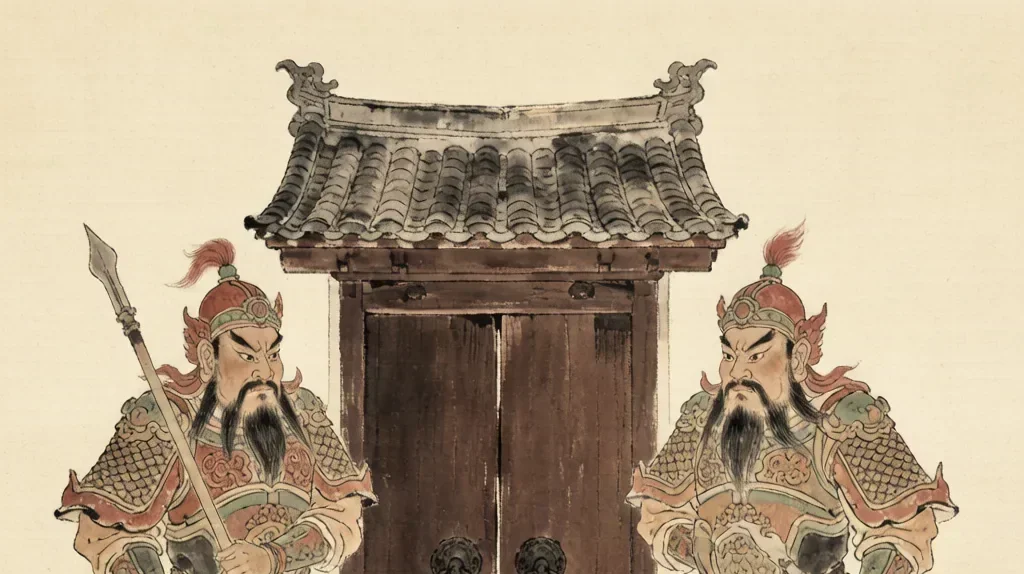
Door God Paintings: Keeping Evil Out
On either side of a traditional Chinese household's main gate, two fierce generals stand eternal guard. One has a dark face and a lance; the other has a pale face and a sword. Their eyes bulge, their armor gleams, and their expressions promise violence to any evil spirit that dares approach the threshold. These are the Door Gods (门神, mén shén), and the paintings that bear their images are among the most ancient and enduring of all Chinese folk art traditions. Door god painting is not merely decorative — it is an act of spiritual protection, a ritual that transforms a wooden door into a supernatural barrier.
Lantern Making: Lighting the Festival Sky
When darkness falls over a Chinese village during the Lantern Festival, the streets transform into rivers of light. Paper lanterns in every conceivable shape — carp, lotus, dragon, palace — sway on bamboo frames, their candlelight flickering through translucent silk and painted paper. The craft of lantern making (灯笼制作, dēnglóng zhìzuò) is among China's oldest and most technically demanding folk arts, requiring mastery of bamboo joinery, paper cutting, painting, and calligraphy.
The Lion Dance: Waking the New Year
Two performers crouch inside a costume that combines the fierce head of a lion with the flowing body of a silk blanket. The first performer must have the strength of a wrestler and the balance of an acrobat; the second must follow with millimeter precision while blind inside the costume. Together they become a single creature that can leap onto a twenty-foot pole and snatch a head of lettuce from a ten-foot-high hook. The lion dance (舞狮, wǔ shī) is the most physically demanding of all Chinese folk performing arts.

Performance Martial Arts: Wushu as Spectacle
A monk in gray robes moves through a sequence of fluid postures — his fists punch the air, his feet kick at invisible opponents, his body twists and turns in patterns that combine the grace of dance with the precision of combat. This is martial arts performance (武术表演, wǔ shù biǎo yǎn): the transformation of fighting techniques into theatrical spectacle. Unlike combat, which aims to disable an opponent, performance martial arts aim to captivate an audience — displaying speed, power, flexibility, and control in choreographed routines that can be breathtakingly beautiful.
New Year Paintings: The Paper Guardians of the Home
In the days before the Lunar New Year, Chinese families would take down the old, faded pictures pasted on their doorways and replace them with bright new ones — images of fierce door gods, plump babies, and swooping fish against backgrounds of auspicious red and gold. These are New Year paintings (年画, nián huà), the most widespread and beloved form of Chinese folk visual art. For centuries, they were the only art that ordinary Chinese families owned — not scrolls in galleries, but paper pasted on walls, gates, and kitchen altars, renewed each year as part of the ritual preparation for the new cycle of seasons.
Palm Leaf Weaving: The Grasshoppers of Summer
In the tropical heat of southern China, a fresco of drooping palm leaves catches the eye. But one leaf is not like the others — it has been folded, twisted, and pinned into the shape of a grasshopper, complete with antennae, jointed legs, and transparent wings. Palm leaf art (棕编, zōng biān) is the craft of transforming palm fronds into three-dimensional sculptures of insects, animals, and flowers. Unlike most Chinese folk arts, which require workbenches and specialized tools, palm leaf art can be practiced anywhere there is a palm tree — which is why it emerged in the villages of Sichuan, Hunan, and Guangdong, where date palms grow in every courtyard.
Papercraft: The Art of the Afterlife
In workshops across rural China, shredded newspaper, flour paste, and wire frames are transformed into ferocious lion heads, serene Buddha masks, and colorful toy animals. Paper mâché folk art (纸糊, zhǐ hú; 纸塑, zhǐ sù) is the craft of creating three-dimensional objects from paper pulp and paste — a technique that combines recycling with sculpture, producing objects that are lightweight, durable, and surprisingly strong. Unlike the fine arts of ceramics and wood carving, paper mâché belongs to the ephemeral world of festival and celebration: lion dance heads that must survive a beating, lanterns that will burn at the end of the night, and funeral objects that will be cremated with the deceased.
Lantern Riddles: Wit at the Festival
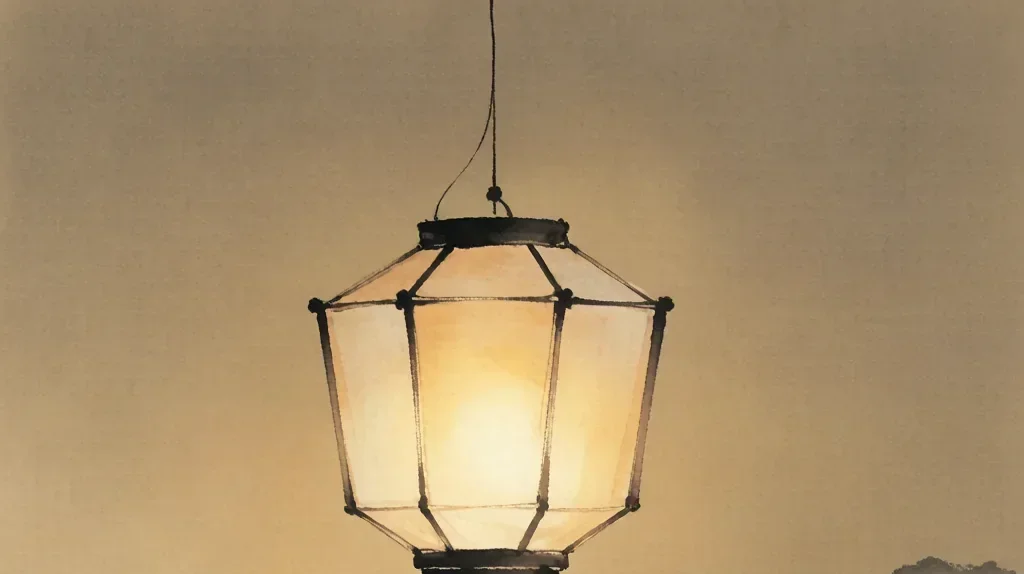
A lantern hangs in the night, its paper skin glowing with warm light. On a strip of paper attached to the lantern, a riddle is written: 'What is the thing that becomes more valuable the more it is used?' Passersby stop, read, and think. The answer is 'a friendship' — but the puzzle is that the Chinese character for 'friendship' contains the character for 'use.' The lantern riddle (灯谜, dēng mí) is a unique Chinese folk art that combines visual spectacle with literary wordplay, turning the Lantern Festival into a giant outdoor puzzle for the entire community.
Shadow Puppetry: Legends Behind the Curtain
Behind a white screen illuminated by an oil lamp, a leather general rides into battle, his horse galloping, his lance thrusting. The audience sees only his silhouette — but in that flat, black shape they read courage, desperation, and triumph. The general is a shadow puppet (皮影, pí yǐng), a figure cut from donkey or cow leather, painted in translucent colors, and manipulated on rods behind a muslin screen. Shadow puppetry is the oldest form of 'animated' theater in the world, creating the illusion of movement through a technology that predates cinema by two thousand years.
Stilt Walking: Dancing Above the Crowd
Four feet above the crowd, a performer in flowing silk robes strides through the village square as if walking on solid ground, despite having two wooden poles lashed to his legs. He stoops to interact with children, executes a perfectly controlled turn, and — without breaking rhythm — kicks one leg high enough to touch his nose. Stilt walking (踩高跷, cǎi gāo qiāo) is one of China's most visually arresting folk arts, transforming ordinary villagers into towering giants who stride above the festival crowds.
Straw Weaving: Art from the Harvest Field
After the wheat harvest, the golden straw that remains is not waste — it is the raw material for one of China's most humble and ingenious folk crafts. Straw weaving (草编, cǎo biān) transforms agricultural byproducts into hats, sandals, mats, baskets, and decorative objects. Unlike bamboo or rattan, which require careful harvesting and splitting, straw is already available in abundance after threshing, and its preparation requires only soaking and softening. The art of straw weaving belongs to the winter season, when farm work is light and families gather indoors to braid and weave the materials that will be used in the coming year.
Sugar Painting: The Sweetest Art of the Street
A copper ladle dipped in molten sugar traces a dragon's winding body across a smooth marble slab. Within thirty seconds, the sugar cools and hardens, and a child lifts away a gleaming amber dragon impaled on a bamboo stick, ready to be licked, admired, or both. This is sugar painting (糖画, táng huà), an edible folk art that combines the spontaneity of freehand drawing with the sensory pleasure of candy. The practitioners, known as sugar painters, are part chef, part calligrapher, part street performer. Their canvas is a cold stone; their ink, boiled sugar; and their artistry vanishes in the sweet crunch of a child's first bite.
Tea-Picking Opera: The Songs of the Harvest
On a temporary stage built of bamboo poles and wooden planks, a performer in a flower-bedecked hat sways to the rhythm of a bamboo clapper while singing about the virtues of the first spring tea harvest. The melody is sweet, the steps are simple, and the audience — villagers who have been picking tea on these same hillsides all week — nods along. Tea picking opera (采茶戏, cǎi chá xì) is a folk theatrical form native to the tea-growing regions of southern China, blending song, dance, and light drama into a celebration of the tea harvest.
Tie-Dye: Folk Color from the Yunnan Hills
There is a Chinese folk art that creates beauty by restraint — by tying, folding, and binding cloth so tightly that the dye cannot penetrate, leaving behind patterns of pure white against a colored ground. This is tie-dye (扎染, zā rǎn), one of China's three ancient resist-dyeing techniques. Unlike the wax-drawn lines of batik, tie-dye produces soft, blurred edges and organic, flowing patterns that recall clouds, flowers, and the mysterious shapes revealed in a marbleized surface. The art form reached its highest expression among the Bai people of Yunnan, who have preserved techniques that were already ancient when Marco Polo passed through the region.
Top Spinning: The Whirling Game of Generations
A child crouches in a dusty courtyard, a wooden top in one hand, a length of string in the other. He wraps the string around the top, throws it to the ground, and pulls. The top spins, wobbles, and settles into a perfect vertical rotation, humming against the packed earth. With a flick of the string, he sets it spinning faster. The top is the most ancient of Chinese toys — a simple cone of wood or bamboo that has been spinning in Chinese courtyards for over 4,000 years. Top spinning (抽陀螺, chōu tuó luó) is simultaneously a child's game, a competitive sport, and a folk performance art.
Window Flower: Paper-Cut Silhouettes in Every Home
With a single sheet of paper, a pair of scissors, and a lifetime of practice, a woman in rural Shaanxi can cut a paper snowflake that, when unfolded, reveals a world of butterflies, peonies, and fish swimming around a central lotus. This is window flower (窗花, chuāng huā) — paper cutting (剪纸, jiǎn zhǐ) applied to the specific purpose of decorating windows during the Lunar New Year. The red paper cutouts adhere to the glass panes of village homes, turning every window into a display of the household's taste, skill, and hopes for the coming year.
Shuai Jiao: Chinese Folk Wrestling
Two men in heavy padded jackets face each other in a circle. They circle, feint, and clash — their hands gripping each other's collars, their legs hooking and sweeping. With a sudden twist of the hips, one man throws the other to the ground. The crowd roars. This is shuai jiao (摔跤, shuāi jiāo), Chinese folk wrestling — a martial art that is also a sport and a folk performance. Unlike the stylized, theatrical combat of wushu, shuai jiao is real: the throws are real, the falls are hard, and the winner is decided by who can physically dominate whom.
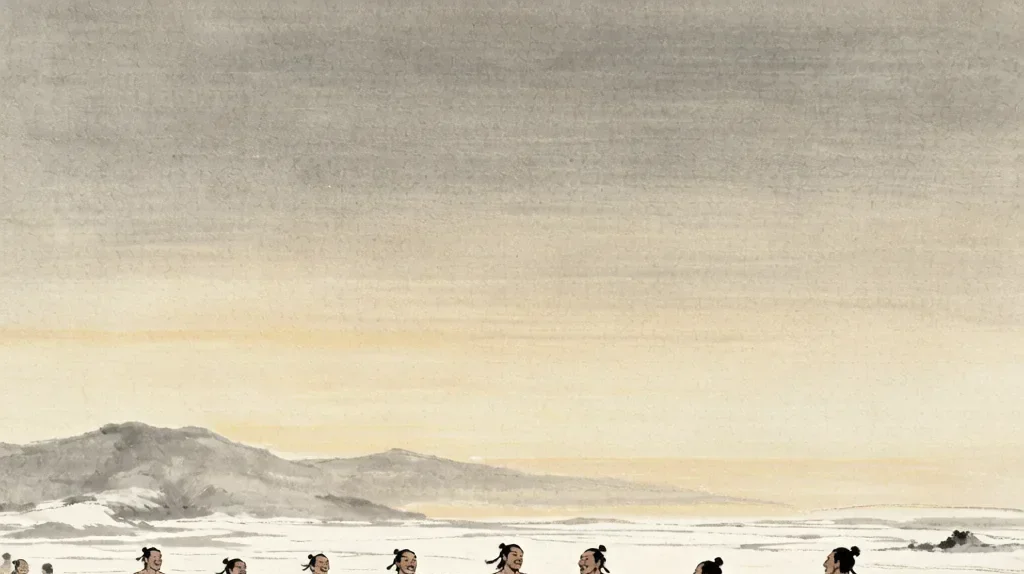
Yangge: The Harvest Dance of the North
In the frozen winter fields of northern China, farmers shed their padded jackets and form long snaking lines through the village streets, waving red silk fans and beating waist drums. Their faces are painted bright red, their movements are exuberant and earthy, and the music — a pounding drumbeat overlaid with the shrill wail of suonas — can be heard from miles away. This is yangge dance (秧歌, yāng gē), the 'rice-sprout song' that has been the defining folk dance of north China for centuries.