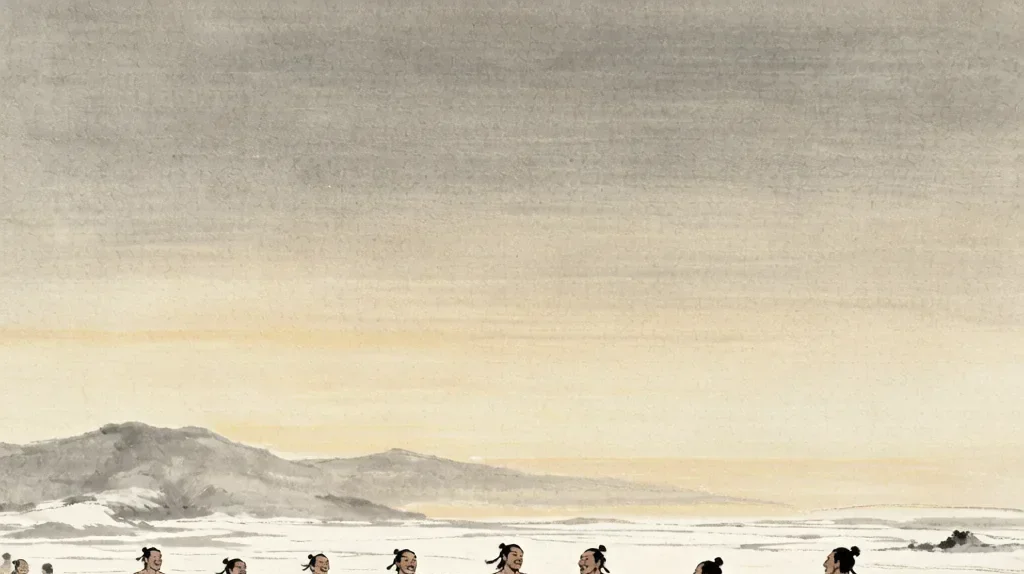
Yangge (秧歌) is a widespread Chinese folk dance, born in the fields and later filling the streets of the north with rows of swaying, singing dancers at New Year and harvest time. Its name links it to the rice seedling and the labor of planting, and its stamping, swinging steps echo the rhythm of work transformed into celebration. Equal parts dance, song, and parade, yangge is the communal heartbeat of northern village festivity, where everyone from grandparents to children can join the line and move as one bright, bobbing body.
Field Origins
The word yangge is often explained through the rice transplanting song, the music sung by farmers bending in the paddies. What was a work song of the south merged, in the north, with dry-land festival dancing.
Through the Ming and Qing dynasties, yangge became a fixed feature of northern rural celebration, performed in the cold months when field labor paused and communities gathered to mark the year.
Its grassroots nature means it was never the property of courts or stages; it belonged to the lane, the threshing ground, and the temple court.
Basic Movement and Style
The core is a walking step with a swing: dancers rock side to side, swing the arms, and often twirl a fan or a red silk handkerchief. The upper body is loose, the feet grounded and rhythmic.
Speed varies from a stately promenade to a quick, stamping finale. The look is cheerful and a little comical, designed to be read from a distance by a following crowd.
Because the step is easy to learn, yangge is inclusive; the challenge is endurance and the discipline of keeping line and beat with dozens of others.
Despite its ease, a good yangge line has polish: turns land together, ribbons flash in unison, and the comic figures time their jokes to the music, rewards of rehearsal more than of the simple step.
Formation and Parade
Yangge is performed in lines or circles that wind through streets, led by a "umbrella" master or a clown who sets the route and pace. The snaking column is the dance's signature shape.
Drummers and suona players walk with the line, and the music dictates when to speed up, turn, or gather into a circle for a set piece. The parade is the stage.
The form thus blends choreography with procession, so that the audience is never seated but walks alongside, part of the moving celebration.
Characters and Props
Dancers take types: the pretty girl with a fan, the rustic fool, the old man, the fisherman with a pole, and the "boat" lady in a mock land-boat frame. Each carries a simple prop that defines the role.
The red silk ribbon is iconic, whipped in figure-eights to flash color; the umbrella and the fan are likewise tools of expression. Props turn the body into a moving picture.
These characters let a village stage its own comedy and romance in the street, recognizably drawn from daily and operatic life.
Music and Song
The score is loud and bright: suona horns, drums, gongs, and cymbals drive the steps, while singers interject couplets of local rhyme. The tunes are short and repetitive, built for marching.
Lyrics often tease, bless the household, or tell a tiny story, and they vary by place. The music's job is to keep the line moving and the mood high.
In this reliance on wind and percussion, yangge shares the sound world of stilt walking and lion dance, the noisy brotherhood of northern festival music.
Northern Regional Schools
Shandong, Hebei, Shanxi, and Shaanxi each claim strong yangge traditions, with differences in step, costume, and the kinds of comic figures featured. "Big yangge" and "small yangge" labels mark some local distinctions.
Shanxi's styles are noted for vigorous stamping, while Shandong troupes are admired for orderly, sweeping lines. The differences are matters of emphasis, not kind.
Migration and performance exchange blurred borders, yet each county kept a recognizable accent in its dance.
Social and Seasonal Role
Yangge marks the calendar's turning points: the Lunar New Year, the Lantern Festival, and harvest thanksgiving. To dance yangge was to affirm the community's good fortune and unity.
It was also a rare licensed space for open public joy, where norms loosened and the young could mingle in the line. The dance carried social as well as festive meaning.
Villages competed good-naturedly, and a strong yangge team brought prestige, so training began early and pride ran high.
Yangge and Modern Performance
In the twentieth century yangge was adapted for staged and political pageantry, with new lyrics and formations, yet its village form persisted. Today it appears both in squares and on festival streets.
Urban parks host retired dancers who keep the step alive as exercise and sociability, a gentle modern translation of the old field dance into daily life.
Its adaptability—from rice song to parade to morning exercise—explains why yangge remains one of China's most living folk dances.
Why It Matters
Yangge matters because it is participatory culture at its plainest: not watched from afar but done together. The line dissolves the boundary between performer and crowd.
It also preserves local song, joke, and gesture in a body-based archive more durable than paper, carried in muscle and ear across generations.
In a word, yangge is the people dancing themselves, a moving portrait of collective rural joy that still steps through Chinese new years.
❓ Frequently Asked Questions
What is yangge?
Yangge is a northern Chinese folk dance and song performed in lines or circles at New Year and harvest, featuring swinging steps, fans, and red silk ribbons, rooted in field work songs.
What does the name mean?
It is commonly tied to the rice seedling and the transplanting song sung by farmers, later applied to the northern festival dance that grew from such work music.
How is it performed?
Dancers walk in a snaking column or circle, swinging the arms and props to a suona-and-drum beat led by an umbrella master who sets the route and pace.
Who can take part?
Yangge is inclusive: the basic step is easy, so children, elders, and everyone between can join. The skill lies in keeping line and beat with a large group.
Where is it strongest?
It thrives across northern China—Shandong, Hebei, Shanxi, and Shaanxi among others—each with its own step, costume, and comic characters.
Is yangge still danced now?
Yes. It survives in village festivals and has entered urban parks as exercise and social dance, while heritage events keep the fuller parade form alive.