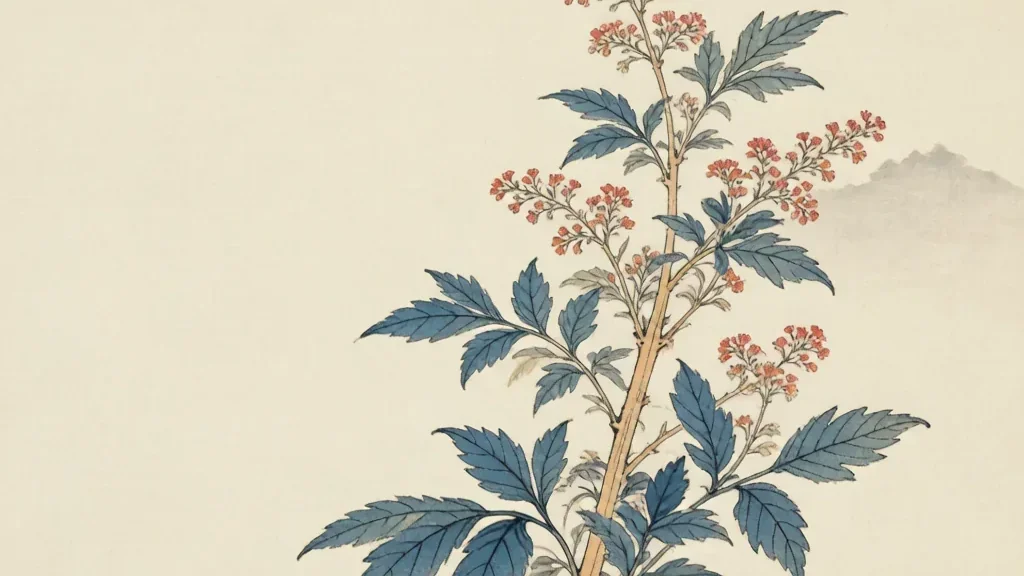
Mugwort (艾草, ài cǎo, Artemisia species) is a silvery-leaved aromatic herb long woven into the seasonal and medical life of China. Best known for its role in the Dragon Boat Festival, where bundles are hung at doors and leaves are eaten in rice dumplings, mugwort also features in traditional moxibustion, the warming therapy that uses the plant's dried, compressed wool. Bitter, pungent, and unmistakably scented, mugwort bridges folk custom, preventive health, and the rhythm of the lunar calendar.
Botanical Identity
Mugwort belongs to Artemisia, a large genus of aromatic shrubs and herbs in the daisy family. The Chinese medicinal and culinary type is often Artemisia argyi, known for soft, downy leaves.
The plant has jagged, silver-green foliage and a strong camphor-like smell that repels many insects. It grows readily along roadsides, field margins, and wasteland.
Its hardiness and scent made it a natural candidate for both household use and herbal practice across many regions of China.
Role in the Dragon Boat Festival
At the fifth-day fifth-month lunar festival (端午节, Duān wǔ jié), families traditionally hang bundles of mugwort and calamus above doorways to ward off misfortune and insects.
The timing coincides with the start of hot, humid summer, when pests and illness were historically a concern, so the custom blended hygiene with symbolism.
Mugwort leaves are also wrapped into 艾糍 (ài cí) or mixed into rice dumplings in some regions, giving the festival a distinctive herbal taste.
Moxibustion and Medicine
In traditional Chinese medicine, dried mugwort leaf is processed into 艾绒 (ài róng, "moxa wool"), which is burned near the skin to warm points in a therapy called 艾灸 (ài jiǔ, moxibustion).
Moxibustion is used alongside acupuncture to bring warmth and stimulation, especially in cooler conditions, and the practice is centuries old and still widespread.
The same leaves are used in herbal preparations and foot baths, reflecting the plant's reputation as warming and dispelling, in the body as in the home.
Culinary Uses
Beyond festival dumplings, young mugwort leaves are cooked as a bitter green in some rural cuisines, often blanched to soften their intensity and paired with strong flavors.
Mugwort is also made into 艾粑 (ài bā), green rice cakes, and the herb tints foods a characteristic grey-green while lending a fragrant, slightly bitter note.
These uses show the plant functioning simultaneously as food, medicine, and custom—a common pattern in Chinese herb cookery.
Scent, Insects, and the Home
The pungent oil of mugwort is a traditional insect deterrent. Smoldering leaves produce a fragrant smoke used to keep mosquitoes and moths away.
Hanging fresh or dried bunches at the door was thus both a protective charm and a practical measure during mosquito season.
Even today, mugwort sachets and incense recall this dual role of pleasant scent and pest control.
Symbolism and Folklore
Mugwort's association with the fifth-month festival links it to themes of protection, health, and the turning of the seasons. It is a plant of thresholds—hung at doors, used at the body's edges.
Folktales credit mugwort with driving off disease spirits, and its resilience in poor soil made it a symbol of humble, dependable virtue.
The herb thus occupies a special place where everyday botany meets belief.
Growing and Harvesting
Mugwort is easy to grow and even easier to find wild; it thrives in sunny, disturbed ground and spreads by rhizome and seed.
Leaves for medicine are gathered in summer, dried in shade, and aged—older moxa is considered finer and less harsh when burned.
Because the plant is abundant, it has remained accessible to households and small clinics alike, supporting its widespread use.
Modern Uses
Today mugwort persists in traditional clinics, wellness spas, and festival markets. Moxa sticks and heat lamps are common in acupuncture settings.
Interest in natural insect repellents has revived mugwort-based products, from sachets to essential oils, though claims are kept modest.
The plant's festival role also endures as cultural heritage, taught to children as part of seasonal custom.
Taken together, mugwort's roles—festival charm, medicinal warmth, insect repellent, and edible green—show how traditional Chinese life wove a single plant through every season. Its humble appearance hides a remarkably busy cultural life.
Mugwort Among Chinese Herbs
Mugwort sits within a broad family of aromatic Artemisia used across Eurasia; in China it is distinguished by its festival centrality and its role in moxibustion.
Compared with purely ornamental or culinary herbs, mugwort is unusually integrated into both medicine and calendar ritual.
Understanding it helps explain how Chinese culture threads plants through health, holiday, and household life at once.
Compared with showier medicinal plants, mugwort is striking for how ordinary it is—growing wild by the roadside, costing almost nothing, and recognized even by small children—yet it carries genuine cultural weight. This plain, inherited usefulness, passed quietly from grandmother to grandchild, is precisely why it has survived so long in both medicine and custom.
Mugwort and the Calendar
The fifth-month placement of mugwort ties it to one of the clearest examples of a plant marking time in the Chinese year, a green signal that summer has truly arrived.
As summer heat arrives, the herb's presence at the doorway is a sensory reminder of the season's turning, linking household routine to the rhythm of the lunar calendar.
In some villages, children learn to identify mugwort by smell before they can read its written name, making the plant an early lesson in useful, local knowledge.
Its persistence from folk medicine to festival custom shows how a single herb can hold a society's practical and symbolic life together at once.
Mugwort in Everyday Preventive Care
Many households keep dried mugwort on hand not as a daily medicine but as a seasonal preventive, used in foot baths or gentle steeps at times of transition.
The plant's warmth is balanced in practice with other herbs, reflecting the traditional emphasis on matching a remedy to the person and the moment.
Even where belief is light, mugwort remains a comforting household scent of early summer, a link between grandparents' habits and today's kitchens.
Its durability as a custom, more than any single use, explains why the humble herb still hangs at doors each fifth month.
❓ Frequently Asked Questions
What is mugwort used for in China?
It is used in moxibustion, as a festival herb hung at doors, as an insect repellent, and in some foods.
What is moxibustion?
A traditional therapy using burned dried mugwort (moxa) near the skin to warm and stimulate points on the body.
Why is mugwort associated with the Dragon Boat Festival?
Hung at doorways in early summer to repel insects and disease, blending practical hygiene with protective custom.
Can you eat mugwort?
Yes. Young leaves go into festival dumplings and rice cakes, usually blanched to soften their bitter, aromatic taste.
Does mugwort really repel insects?
Its pungent oil deters many insects, and smoldering leaves have long been used to keep mosquitoes away.
Is mugwort hard to grow?
No. It grows readily in sunny, disturbed ground and spreads easily, making it abundant and accessible.