🌸 Plants & Flora
54 articles — Plum blossom, bamboo, and symbolic plants
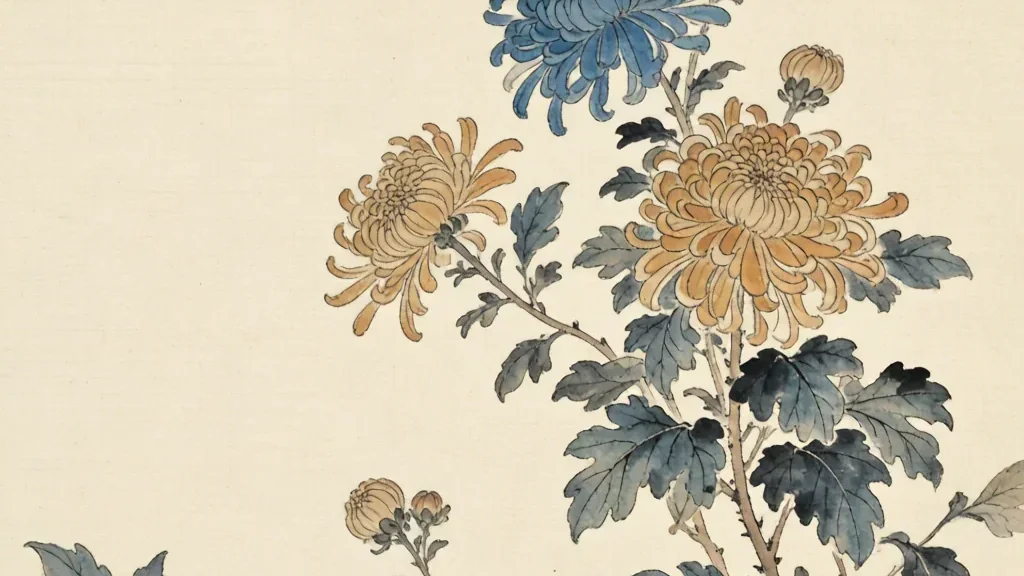
Chrysanthemum: The Autumn Noble
The chrysanthemum (Chrysanthemum morifolium), known in Chinese as 菊花 (júhuā), holds a place of profound reverence in Chinese culture that stretches back over three millennia. First cultivated during the Zhou Dynasty (1046–256 BCE) as a flowering herb, the chrysanthemum was initially valued for its medicinal properties — its petals were brewed into teas believed to promote longevity and sharpen eyesight.
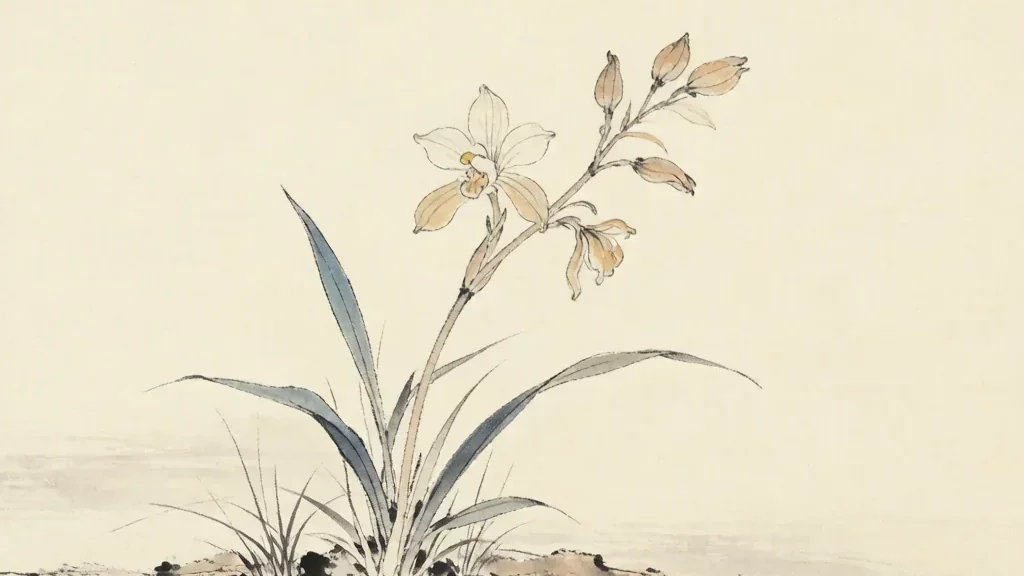
Orchid: The Fragrance of Virtue
The orchid (兰花, lánhuā), particularly the genus Cymbidium native to East Asia, has been cultivated in China for over 2,500 years and occupies a unique position in Chinese aesthetics. Unlike the bold peony or the resilient chrysanthemum, the orchid embodies a quiet, understated elegance — its subtle fragrance and delicate form have made it the supreme symbol of the Confucian ideal of the junzi (君子), or 'gentleman of virtue.

Plum Blossom: The Flower of Winter
In the depths of winter, when snow blankets the ground and most living things have retreated into dormancy, the plum blossom opens its petals to the frozen sky. Against bare branches and white landscapes, its pink and white flowers appear like tiny flames — fragile, defiant, impossibly beautiful.

The Pine: Endurance Through Winter
High on the cliffs of Huangshan, the Yellow Mountains of eastern China, pine trees grow from cracks in the granite, their roots gripping stone as if holding onto life itself. Twisted by wind, sculpted by snow, they survive where nothing else can.
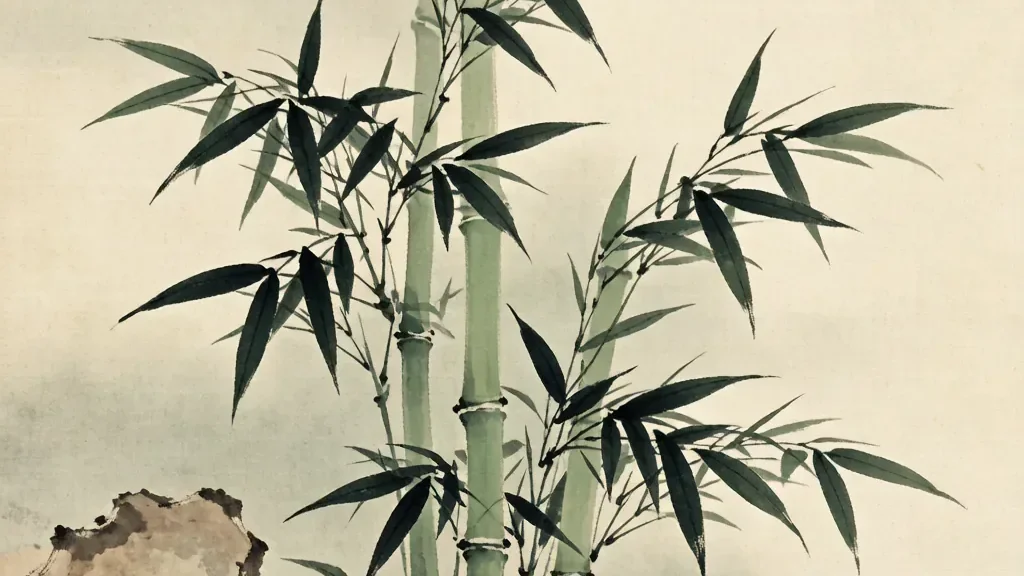
Bamboo: The Steel Among Plants
If you were asked to name the single plant that best represents China, you might say the plum blossom or the peony. But you would be wrong.

Camellia: The Winter Rose
In the depths of winter, when most gardens are bare, a glossy evergreen opens flowers of such perfection that Europeans once called it the "rose of winter. " In China it is camellia — 山茶 ( shān chá ), the "mountain tea.
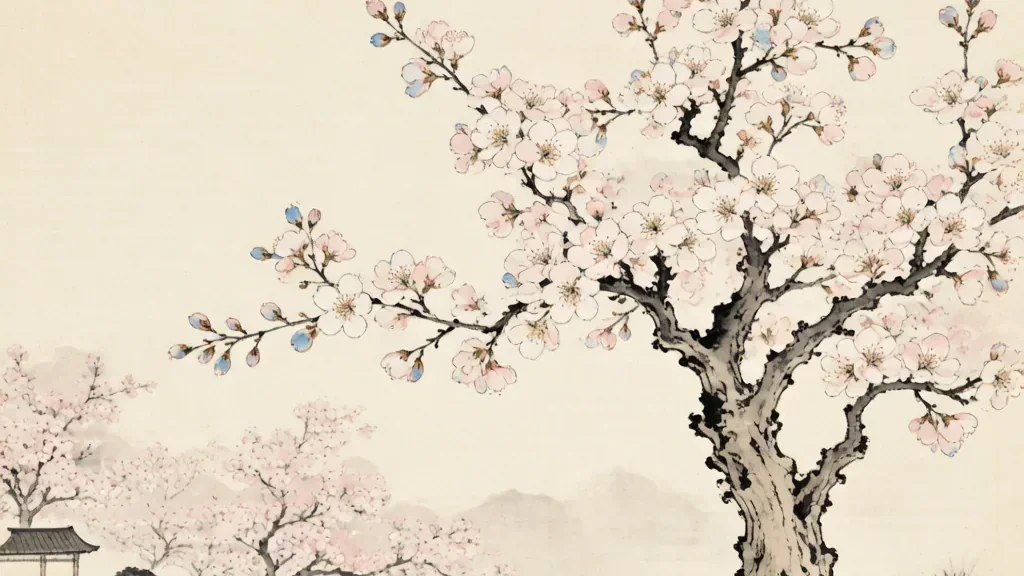
The Cherry Blossom
Each spring, a wave of pale pink sweeps across East Asia, and China joins the celebration of the cherry blossom — 樱花 ( yīng huā ). Though often associated with Japan abroad, the cherry blossom has deep roots in Chinese culture too, where it stands for the fleeting beauty of youth, the arrival of spring, and a graceful acceptance of life's brevity.
Ginseng: The Root of Life
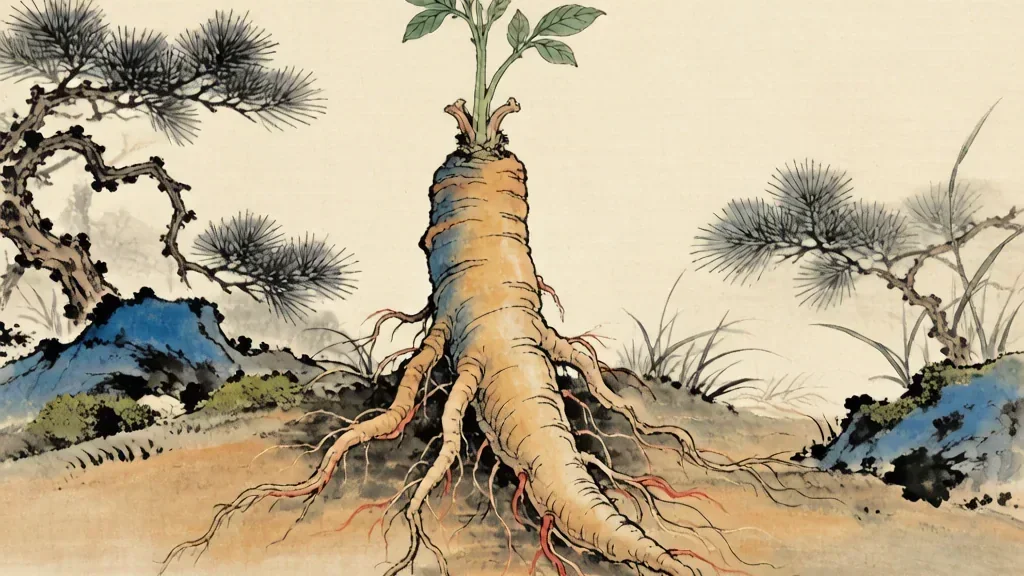
Deep in the shaded forests of northeastern China grows a root so revered that it has been called "the king of herbs" and "the root of life. " This is ginseng — 人参 ( rén shēn ), the "man root," named for the faint human shape of its forked body.

Lotus (荷花) — Purity Rising from Mud
The lotus flower (荷花, héhuā), Nelumbo nucifera, is arguably the most spiritually charged botanical symbol in all of Chinese civilization. Its unique biology — a flower of breathtaking beauty that rises pristine and unsoiled from murky pond water — has made it the perfect natural metaphor for spiritual purity, moral integrity, and the transcendence of worldly attachments.

Jasmine: The Night-Scented Flower
A single jasmine flower can perfume an entire room — and the Chinese have been capturing that fragrance in tea, oil, and song for more than a thousand years. Jasmine (茉莉花, mò lì huā ) is not native to China — it came from Persia via the Silk Road — but it has been adopted so thoroughly that it feels as Chinese as the plum blossom.
The Maple: Flame of Autumn
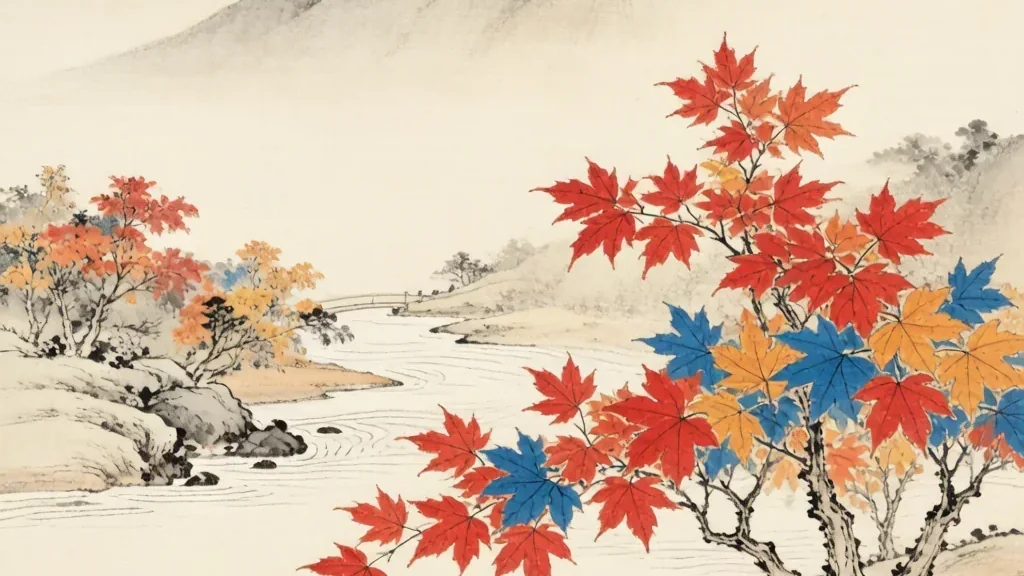
When autumn paints the mountains of northern China, no color burns brighter than the maple — 枫 ( fēng ). Its leaves turn from green to gold to a deep, almost bloody crimson, and whole hillsides seem to catch fire.
Peony (牡丹) — King of Flowers
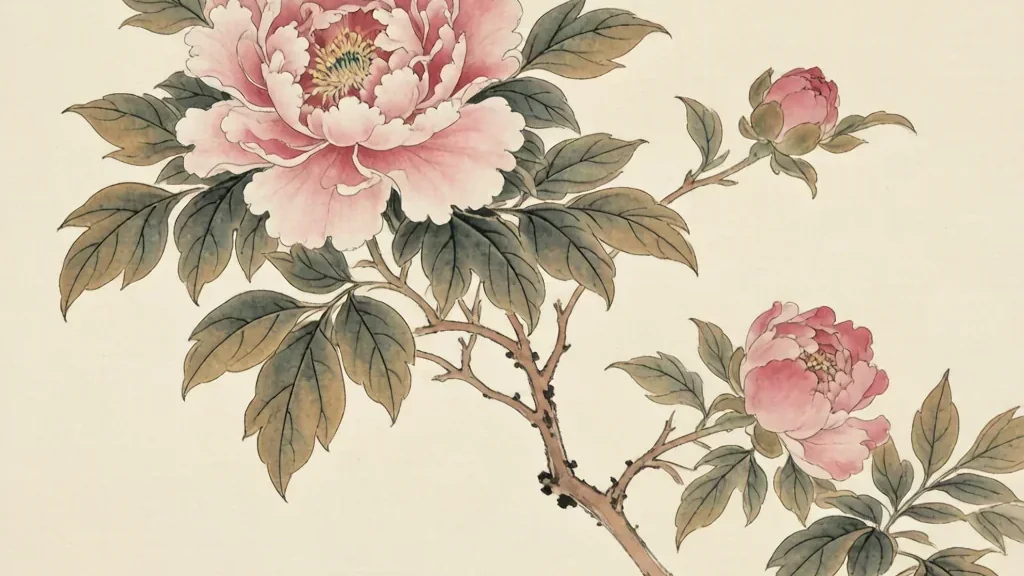
The tree peony (牡丹, mǔdān, Paeonia suffruticosa) reigns supreme as the 'King of Flowers' (花王, Huā Wáng) in Chinese culture, a title it has held since the Tang Dynasty (618–907). Native to the mountainous regions of western China — particularly the Qinling Mountains of Shaanxi Province — the wild tree peony was first brought into cultivation during the Southern and Northern Dynasties period (420–589).
Mugwort: The Moxa Herb
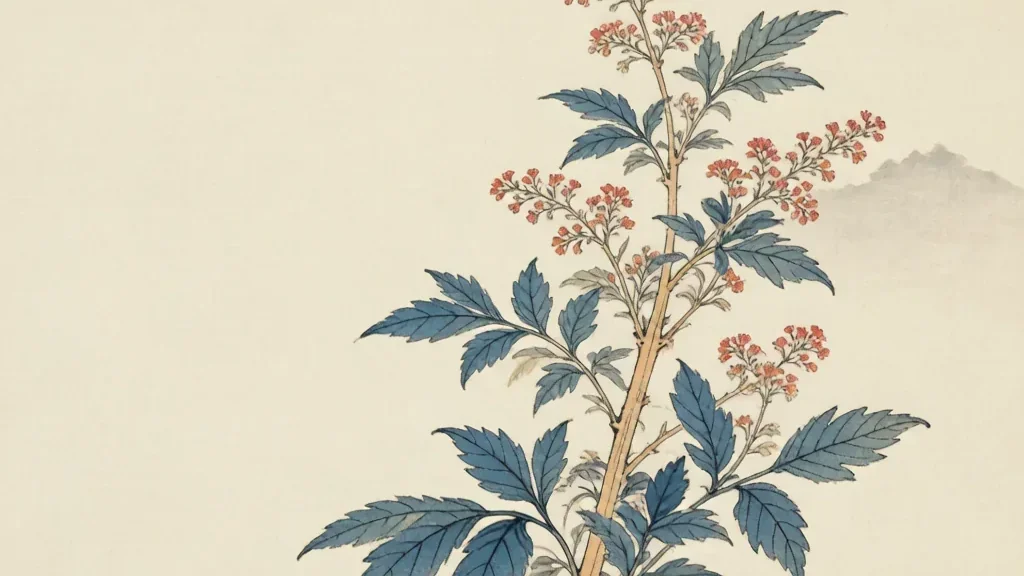
There is a plant that grows wild in every province of China, ignored by most people until the fifth day of the fifth lunar month — when it becomes the most important herb in the country. Mugwort (艾草, ài cǎo ) is a humble, silvery-leaved herb that smells like medicine and grows like a weed.

Narcissus: The Water Immortal
In the depth of winter, when almost nothing grows, a Chinese household often places a shallow bowl of water on the windowsill containing a bulb that looks like an onion — and watches it produce a cascade of white petals around a golden cup, filling the room with a fragrance so pure it seems to cleanse the air. The narcissus (水仙, shuǐ xiān ) literally means "water immortal" — a name that captures both its growing habit (in water, not soil) and its spiritual meaning: the flower that blooms at the New Year, bringing the promise of renewal.
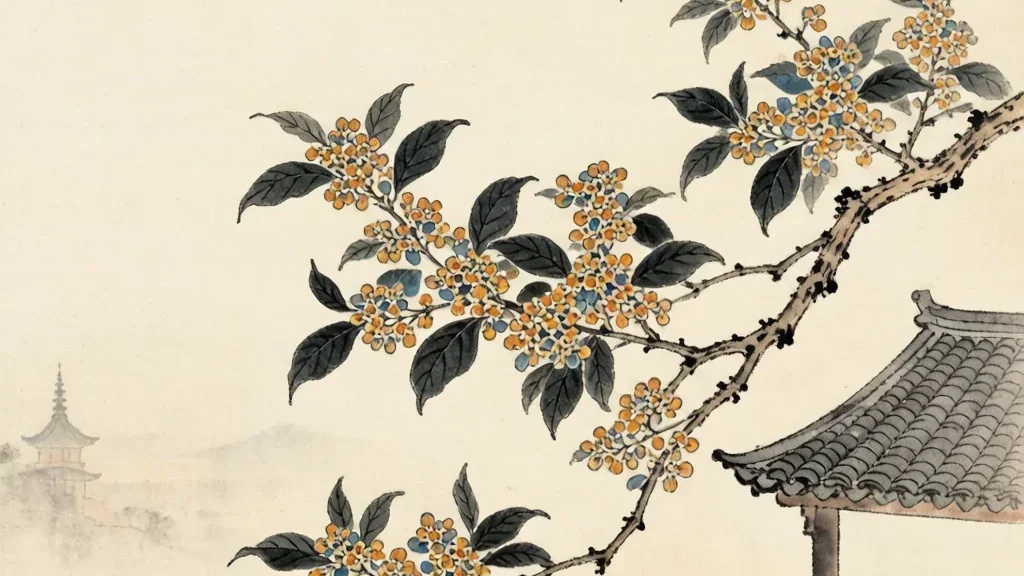
Osmanthus: The Fragrance of Autumn
The scent of osmanthus in autumn is the scent of a Chinese city at its most intimate. It comes from nowhere and everywhere — a sweet, apricot-like fragrance that drifts through the streets of Hangzhou and Guilin, so penetrating that a single tree can perfume an entire block.
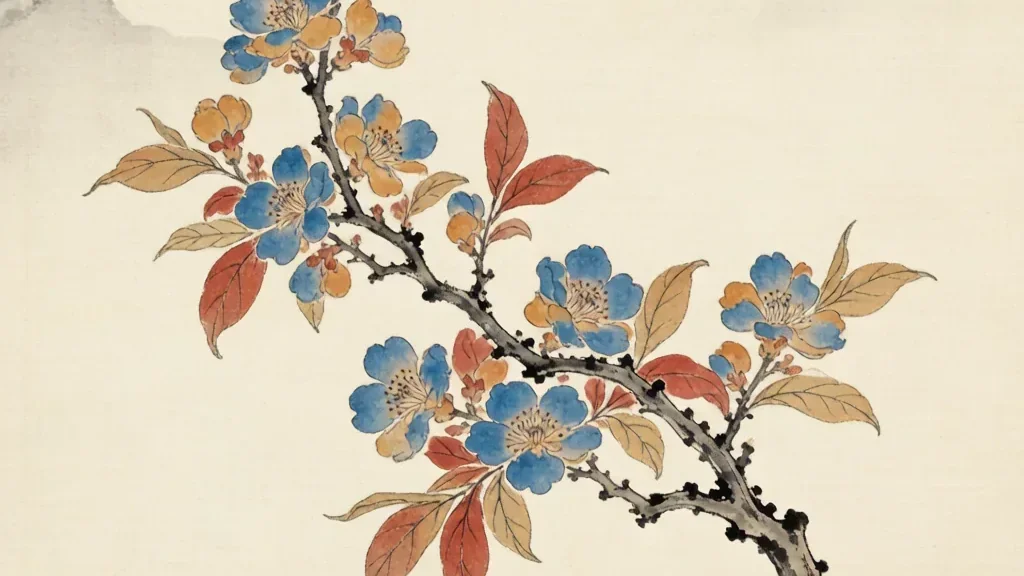
The Peach Blossom
Before the rose, before the lotus, there was the peach blossom — 桃花 ( táo huā ). In Chinese culture the peach is a plant of astonishing range: its spring flowers stand for love and marriage, its fruit grants longevity to gods and immortals, and its wood drives away evil.
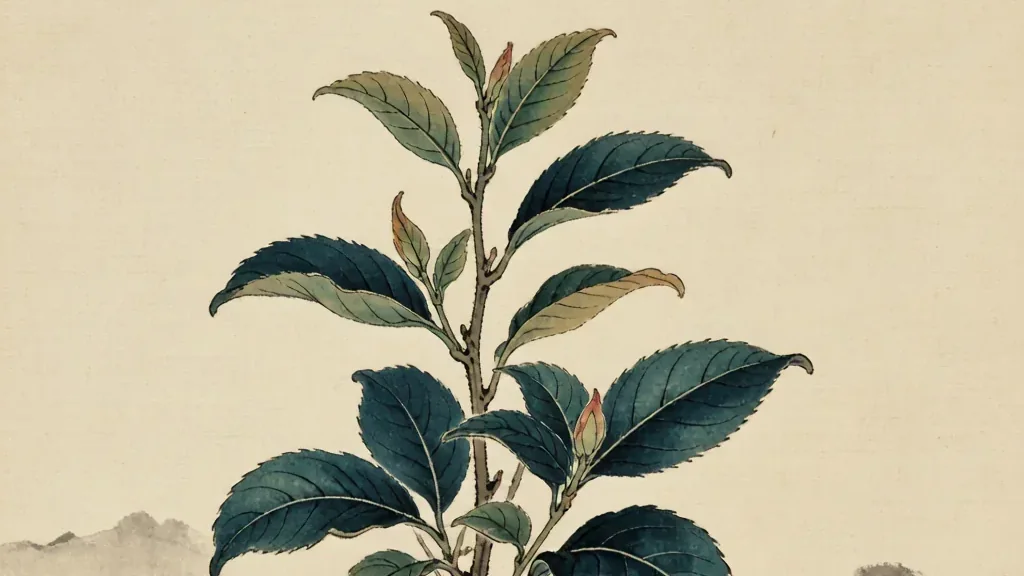
The Tea Plant
It is the plant that built empires, funded monasteries, and shaped the daily rhythm of a billion people. The tea plant — 茶树 ( chá shù ) — is a camellia by botanical birth ( Camellia sinensis ) whose young leaves, when processed, become the world's most drunk beverage after water.
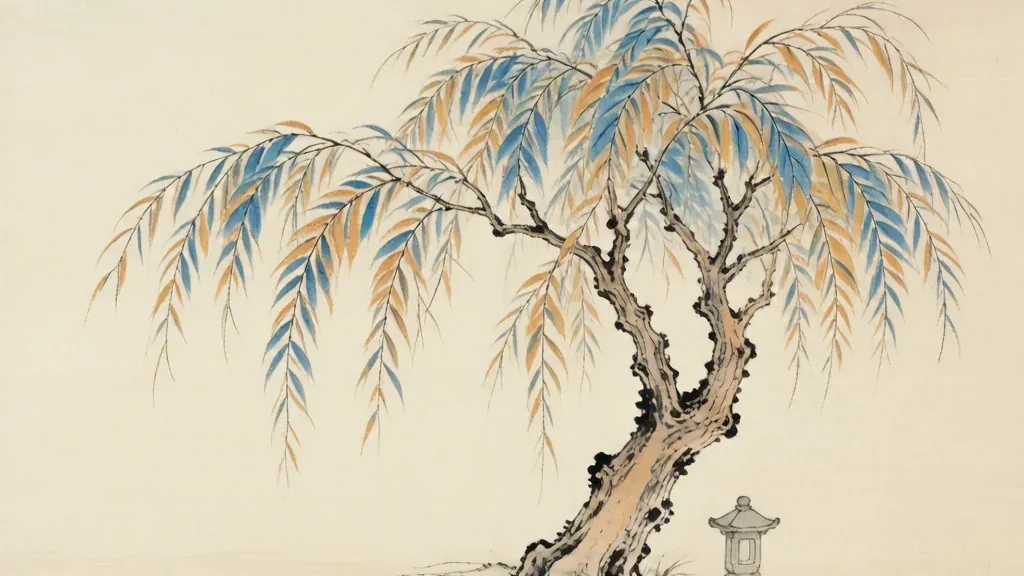
The Willow: Tree of Parting
No tree in China carries more gentle sorrow than the willow — 柳 ( liǔ ). With its slender branches trailing like threads of green silk over rivers and canal banks, the willow became the classical emblem of parting.
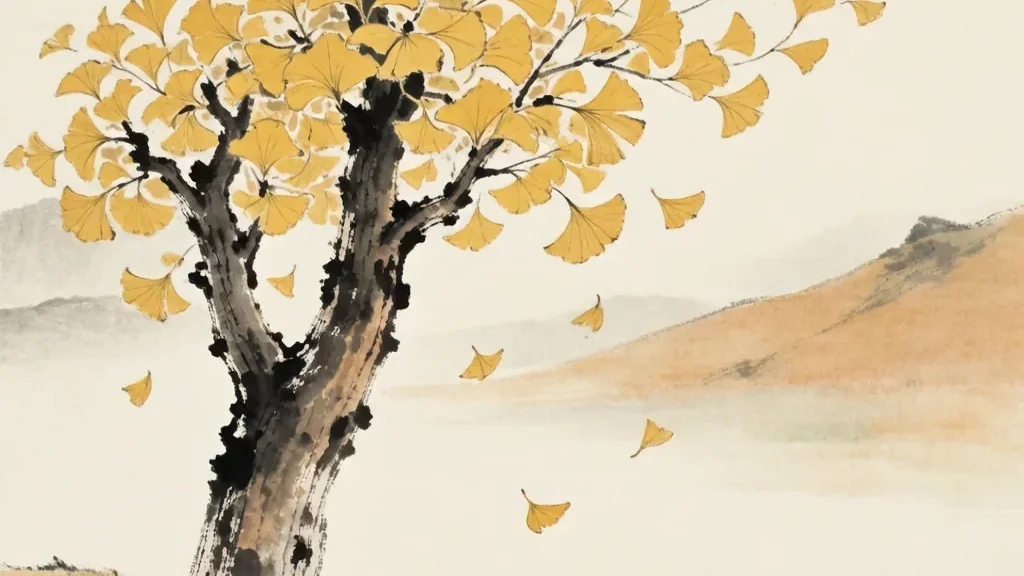
Ginkgo (银杏) — Living Fossil of Ancient China
The ginkgo tree (银杏, yínxìng), Ginkgo biloba, is a botanical marvel without parallel — the sole surviving species of an entire division of plants (Ginkgophyta) that first appeared in the fossil record approximately 270 million years ago, during the Permian period, predating the dinosaurs. Often described as a 'living fossil,' the ginkgo has no close living relatives and represents a lineage that has witnessed the rise and fall of countless species.

The Apricot: The Fruit of the Healing Spring
In early spring, before the leaves appear, the apricot tree erupts in a cloud of pale pink blossoms that seem to glow against the still-winter landscape. The apricot (杏, xìng) is the tree of early spring, bearing fruit in early summer and offering both beauty and sustenance. But in Chinese culture, the apricot carries a surprising association: the word for "apricot" sounds like the word for "good fortune" (幸), and the apricot blossom is traditionally linked to the medical profession. The phrase "the warmth of the apricot grove" (杏林春暖) is a compliment paid to a skilled doctor. The humble apricot, which most people know only as a small orange fruit, is woven into Chinese medicine, poetry, and the very language of healing.
The Bamboo Shoot: The Delicacy of the Forest
Beneath the surface of a bamboo grove, the earth swells. A hard, pointed tip pushes through the soil — and within weeks, it will be a towering stalk of bamboo. But if caught at exactly the right moment, before the shoot hardens into wood, it becomes one of China's most treasured vegetables. The bamboo shoot (竹笋, zhú sǔn) is the very definition of seasonal eating: available for only a brief window each spring and winter, prized for its tender crunch and subtle sweetness. To eat a bamboo shoot is to taste the energy of one of the fastest-growing plants on Earth.
The Bamboo: The Gentle Giant of Resilience
Of all the plants in the Chinese garden, none bends as gracefully or stands as firmly as bamboo — and the Chinese have long seen in this contradiction the highest moral lesson. Bamboo (竹, zhú) is simultaneously the most flexible and the most resilient of plants: it sways in the strongest wind without breaking, grows straight without branching, and stays green through every season. No other plant is more woven into the fabric of Chinese life. Bamboo provides food, shelter, tools, paper, and musical instruments; it appears in the oldest poetry and the darkest ink painting; it is one of the Four Gentlemen of Chinese art, alongside plum blossom, orchid, and chrysanthemum. To understand bamboo is to understand how the Chinese imagine integrity itself.
The Cinnamon: The Bark That Warms the Soul
The bark of a tree becomes one of the most valuable spices in the world — and in China, that spice is cassia (肉桂, ròu guì), a close relative of cinnamon that is warmer, stronger, and more essential to Chinese cooking than the Ceylon cinnamon of the West. Cassia is the bark of Cinnamomum cassia, a tree native to southern China. Its rolled quills are a key ingredient in the Five-Spice Powder that defines Chinese savory cooking. Its branches and twigs are used in TCM to warm the body and dispel cold. The cassia tree is the tree that warms China — from the kitchen to the clinic.
The Cherry Blossom: Transient Beauty
In early spring, the hills of southern China blush pink with a bloom that lasts only a few days. The cherry blossom (樱花, yīng huā) is the shortest-lived of the major Chinese flowers — and for that very reason, one of the most intensely loved. Unlike the plum blossom, which blooms in winter and persists, the cherry blossom explodes into color for a single magnificent week, then falls in clouds of petals. This brevity has made the cherry blossom a meditation on impermanence. To watch cherry blossoms fall is to watch beauty passing in real time — a lesson in letting go that Chinese poets and painters have explored for centuries, long before the flower became emblematic of Japan.
The Chrysanthemum: Autumn's Noble Flower
When autumn strips the garden bare and the first frost glazes the morning grass, one flower opens its petals as if defying the season itself. The chrysanthemum (菊花, jú huā) is the flower of late autumn in China, the last bloom before winter — and precisely because of this timing, it became the emblem of the noble recluse who stands firm against adversity. For over two millennia, the st, Chinese poets and painters have celebrated the chrysanthemum not merely as a beautiful flower but as a moral statement. To cultivate chrysanthemums was to declare allegiance to quiet integrity, to the joys of withdrawal from a corrupt world, and to the beauty that brightens precisely when everything else fades.
The Ginkgo: A Living Fossil of China's Gardens
There is a tree that has survived the extinction of the dinosaurs, the rise of human civilization, and the atomic bombing of Hiroshima — and it stands, unchanged in form, for more than 200 million years. The gingko (银杏, yín xìng) is a living fossil, the sole survivor of an ancient order of trees that once covered the Earth. In China, where the oldest gingko trees grow, this remarkable plant became a symbol of endurance, longevity, and hope. Its fan-shaped leaves — unique among seed plants — turn a pure, luminous gold in autumn, carpeting temple courtyards in sheets of light. To stand beneath a thousand-year-old gingko is to feel the depth of time itself.
The Ginseng: The Root of Life
In the forests of Manchuria, a plant grows so slowly and is harvested so greedily that it has been driven nearly to extinction in the wild. Its root, forked and wrinkled, vaguely resembles the human body — and in Chinese medicine, that resemblance is no coincidence: ginseng (人参, rén shēn) literally means "man root," and it is believed to strengthen the entire body the way a foundation supports a house. For over two millennia, the st, ginseng has been the most revered herb in Chinese medicine, the king of tonics, the root of life. Its story involves emperors, smugglers, war, and the near-destruction of a species — all because a twisted brown root was believed to hold the secret to vitality.
The Honeysuckle: The Cooling Flower of Summer
In the heat of a Chinese summer, a twisting vine produces clusters of slender, tubular flowers that open white and turn golden — and from these flowers, one of the most important cooling herbs in Chinese medicine is made. Honeysuckle (金银花, jīn yín huā) literally means "gold-silver flower," named for the two colors that appear on the same plant as flowers age. It is the foremost herb for clearing heat and detoxifying the body in TCM, used for everything from the common cold to skin infections. In the garden, its fragrance fills the evening air; in the pharmacy, its dried flowers are a first-line defense against summer heat and seasonal illness.
The Lotus: Purity Rising from the Mud
No flower in Chinese art rises from mud with such pure beauty — and no flower carries a heavier weight of meaning. The lotus (莲花, lián huā) emerges from the darkest pond-bottom silt to open a perfect, fragrant blossom above the waterline, a transformation that Buddhism seized upon as the perfect metaphor for spiritual awakening: enlightenment rising unsullied from the mire of worldly existence. But the lotus belongs as much to Daoism, with its celebration of natural grace, and to folk tradition, where every part of the plant feeds the body. From the Lotus Sutra to the summer soup, the lotus is the flower that sustains both spirit and stomach, and no plant better illustrates the Chinese ability to see philosophy in the ordinary.
The Lotus Root: A Hundred Threads of Connection
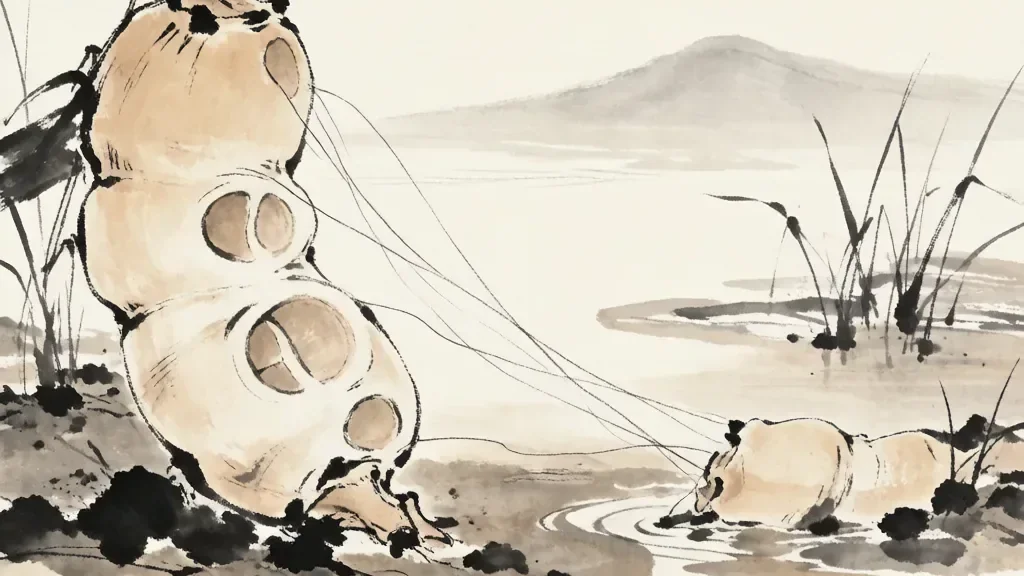
Pull a lotus root from the mud of a drained pond, wash it clean, and you will hold a chain of pale segments connected by thin threads — each segment with a pattern of holes that looks almost designed. The lotus root (莲藕, lián ǒu) is the hidden part of the sacred flower, the stem that grows in darkness yet produces the purest blossom. In Chinese cuisine, it is the vegetable of winter, harvested when the lotus leaves have died back and the energy of the plant has retreated into its root. Crisp, sweet, and versatile, lotus root is one of the most distinctive ingredients in Chinese cooking, and its visual beauty — those elegant holes — makes it a favorite for decorative dishes.
The Lotus Seed: Sleeping Through the Centuries
Deep inside the lotus seed pod — that iconic, shower-head-shaped structure that appears in floral arrangements and Buddhist art — lie the seeds, each one a small, oval nut with a bitter green embryo at its core. The lotus seed (莲子, lián zǐ) is the fruit of the sacred flower, a food that nourishes the body and calms the spirit. In Chinese cuisine, lotus seeds are used in desserts, soups, and congees. In Chinese medicine, they are a premier tonic for the heart and spleen. In Chinese symbolism, they represent the continuity of life — each seed capable of growing into a new lotus, each lotus producing hundreds of seeds. The lotus seed is the promise of endless renewal.
The Lychee: The Emperor's Favorite Fruit
In the heat of a southern Chinese summer, a rough red shell conceals a sphere of translucent white flesh with a perfume like roses and honey — this is the lychee (荔枝, lì zhī), the most prized fruit of the tropical south. For over two millennia, the st, the lychee has been the fruit of desire in China, the object of imperial cravings, the subject of poetry, and the cause of one of the most famous love stories in Chinese history. The lychee season is brief — just a few weeks in June and July — and the fruit is so perishable that it must be eaten within days of picking. To taste a perfectly ripe lychee is to understand why emperors sent riders galloping across the country to bring the fruit to the capital.
The Maple: A Blaze of Autumn Color
In autumn, the mountains of eastern China turn red — mile after mile of maple forest igniting in a display so intense that poets have wept at the sight. The maple tree (枫树, fēng shù) is China's autumn emblem, the plant that announces the turning of the year with a final, defiant burst of color. Unlike the pine, which stays green, or the willow, which bends, the maple burns. Its red leaves are the color of cinnabar, the color of the south, the color of yang fire at its most intense. To see maple leaves in autumn is to understand why the Chinese consider the changing seasons not a decline but a drama — and the maple is the lead actor in the final act.
The Millet: The Ancient Grain of the Yellow River
Before rice came to dominate the south and wheat the north, there was millet — the original grain of Chinese civilization. Millet (小米, xiǎo mǐ) was the first domesticated cereal in China, grown in the Yellow River valley since the Neolithic period. It fed the kings of the Shang and Zhou dynasties. It was the grain of the oracle bone inscriptions, the first Chinese script. And while it has been eclipsed by wheat and rice, millet never disappeared — it remains the grain of the poor, the healthy, and those who remember the old ways. Millet is the forgotten mother of Chinese agriculture, and its story is the story of how China began.
The Mulberry: The Tree That Clothed the World
A single mulberry tree can feed silkworms for generations, and a single silkworm's cocoon can produce a thread more than a kilometer long. The mulberry tree (桑树, sāng shù) is the foundation of China's most famous export — silk — and for three thousand years, the relationship between mulberry, silkworm, and Chinese civilization was the most valuable biological partnership in human history. The mulberry's leaves are the only food of the domesticated silkworm; without the mulberry, there would be no Silk Road, no imperial silks, no secret that China guarded for millennia. The humble mulberry, with its heart-shaped leaves and sweet berries, is the tree that clothed the world.
The Orchid: The Fragrance of the Scholar
In the hills of southern China, a small plant grows in deep shade, unremarkable until its season: then it sends up a spike bearing flowers that fill the air with a fragrance so refined and elusive that Chinese scholars spent two thousand years trying to describe it, failing, and trying again. The orchid (兰花, lán huā) is not the showiest of Chinese flowers — that distinction belongs to the peony — nor the most bravely defiant; that is the plum blossom. But the orchid is the most aristocratic, the flower of the scholar who values substance over appearance. Its fragrance is the scent of virtue, quiet but unmistakable, and the person who can appreciate an orchid is already halfway to being a gentleman.
The Peach: The Fruit of Immortality
In Chinese mythology, the peach tree grows in the garden of the Queen Mother of the West and bears fruit only once every three thousand years — and one bite of that fruit grants immortality. The peach (桃子, táo zi) is the fruit of long life, the flower of spring romance, and the wood from which gods carve their protective talismans. No fruit in Chinese culture carries a heavier burden of magic and meaning. The peach has been cultivated in China since the dawn of agriculture, and the peach tree in blossom — pink petals against a clear spring sky — is the visual definition of Chinese spring. Every part of the tree, from its blossoms to its pit, has been woven into a web of symbolism that touches love, death, divinity, and the hope of living forever.
The Peony: The King of Flowers
In the spring gardens of Luoyang, crowds gather to witness a flower that opens as wide as a plate, with petals layered like silk ruffles, in colors ranging from pure white to deep purple. The peony (牡丹, mǔ dān) is the king of flowers — a title it has held in China for more than a thousand years. No other flower is so deliberately flamboyant, so unabashedly luxurious. The peony represents wealth, honor, and romantic love. It is the flower of the Tang dynasty, of the imperial palace, of the woman who takes your breath away. A peony in full bloom is not a flower to be understood; it is a flower to be surrendered to.
The Persimmon: The Fruit of Happiness
In late autumn, when the leaves have fallen and the branches are bare, the persimmon tree hangs with orange fruits like lanterns — so bright against a grey sky that they seem to glow from within. The persimmon (柿子, shì zi) is the fruit of late autumn and early winter in China, the last fresh fruit of the year before the cold settles in. It can be eaten crisp like an apple or soft like a pudding, dried into a sweet chewy snack, or fermented into vinegar. Its name sounds like the word for "matter" or "affair" (事), and the phrase "everything goes well" (万事如意, wàn shì rú yì) is often illustrated with persimmons. The persimmon is the fruit of reassurance — the promise that winter will be sweet.
The Pine: The Evergreen of Longevity
While deciduous trees shed their leaves and stand naked through winter, the pine stays emphatically green — needles dark, bark rough, branches twisted by wind into shapes that could have been painted by a master. The pine tree (松树, sōng shù) is China's evergreen emblem of longevity and endurance, the plant that seems to defy time itself. A pine can live for a thousand years. It grows on rocky cliffs where nothing else will root. It remains green through snow and drought alike. For Daoist immortals, it was the tree of eternal life; for Confucian scholars, it was the image of unwavering principle; for every Chinese person, the pine on a mountainside is a reminder that some things last.

The Plum Blossom: Bravery in Winter
While the rest of the botanical world waits for spring, the plum tree blooms on snow-covered branches, opening delicate five-petaled flowers before a single leaf appears. This defiance of winter has made the plum blossom (梅花, méi huā) the foremost symbol of resilience in Chinese culture — the flower that proves life persists through the coldest dark. For poets it is courage; for painters it is the brushstroke that captures the moment between death and rebirth; for the nation it is the flower chosen to represent the very character of China. No other bloom carries as much weight in the Chinese imagination, and no other flower has been so thoroughly loved, analyzed, and celebrated as the plum blossom.
The Pomegranate: The Seed of Many Sons
When you break open a pomegranate, you find hundreds of ruby-red seeds packed like jewels into honeycombed chambers — and this visual abundance is precisely what the Chinese most value about the fruit. The pomegranate (石榴, shí liú) is the fruit of fertility and abundance in Chinese culture, a symbol of many children, many blessings, and the sweetness of a full life. Introduced from Central Asia along the Silk Road, the pomegranate was quickly adopted into Chinese gardens, medicine, and folk tradition. Its Chinese name means "stone pomegranate," a reference to the hard rind that protects the treasure within.
The Rice: The Bowl of Chinese Civilization
When the Chinese say chī fàn le ma — "have you eaten rice?" — they are not asking about a specific meal; they are asking whether you have eaten at all. Rice (稻子, dào zi) is food itself in Chinese, the standard by which all sustenance is measured. A meal without rice is not a full meal. For more than five thousand years, the rice plant has shaped the landscape of southern China, terracing hillsides and flooding valleys into vast mirrors of water. It has fed the most populous nation on Earth, and it is central to Chinese identity in a way that no other crop can match.
The Kelp: The Gift of the Sea
Along China's vast coastline, a different kind of farming takes place — not in soil, but in the sea. Seaweed and kelp (海藻, hǎi zǎo) have been harvested from Chinese waters for more than a thousand years, providing food, medicine, and industrial materials. The most important species is kelp — kūn bù (昆布) in Chinese, a large brown algae that grows in cold, nutrient-rich waters. China is now the world's largest producer of kelp, cultivating it in massive offshore farms. From the everyday soup garnish to the medicinal treatment of goiter, seaweed is the ocean's gift to the Chinese table, a plant that grows without soil, water, or fertilizer — only sunlight and sea.
The Sesame: The Seed of Prosperity
The smallest seed in the Chinese pantry produces the biggest flavor. Sesame (芝麻, zhī ma) is an ancient oilseed that arrived in China from Central Asia more than two thousand years ago and has been grinding, toasting, and pressing ever since. It comes in white and black varieties, each with a different flavor and different use. Sesame oil is the finishing touch that makes a dish Chinese — a few drops of dark, nutty sesame oil added at the very end of cooking. Sesame paste thickens hot pot dipping sauces and cold noodle dressings. Toasted sesame seeds garnish everything from dumplings to desserts. The sesame seed may be tiny, but in Chinese cooking, it is everywhere.
The Sorghum: The Grain of the North
In the dry northern plains of China, where wheat struggles and rice cannot grow, a tall grass rises to three meters with heads full of red grain — sorghum (高粱, gāo liáng). This ancient grain is the backbone of agriculture in China's drylands, a crop that asks little and gives much. Sorghum feeds people, fuels distilleries, and thatches roofs. It is the grain of baijiu — the fiery white liquor that is China's national spirit — and the grain of the hardtack that soldiers carried on the Long March. Tough, resilient, and underestimated, sorghum is the plant that thrives where other crops fail, and its story is the story of China's struggle with the land itself.
The Soybean: The Versatile Miracle Bean
A small, hairy pod containing two or three dull yellow beans — this humble package has transformed Chinese cuisine more than any other plant. The soybean (大豆, dà dòu), called the "great bean" in Chinese, is the source of tofu, soy sauce, soy milk, fermented bean paste, and dozens of other foods that form the backbone of Chinese cooking. Soy is not eaten as a whole bean in most Chinese meals; it is processed, fermented, pressed, and transformed into something else entirely. The soybean is the ultimate shape-shifter in the Chinese kitchen, turning a hard, indigestible legume into the protein that feeds a nation. Its discovery of how to unlock the soybean's potential is one of the great achievements of Chinese food technology.
The Sweet Potato: The Winter Stove of the Poor
When the Chinese say "sweet potato" (红薯, hóng shǔ), they mean a root that is neither sweet potato nor yam by Western definitions, but something else entirely — a plant that arrived from the New World in the sixteenth century and changed Chinese agriculture forever. The sweet potato was a famine-breaker, a hunger-killer, a crop that grew on marginal land and produced more calories per acre than rice. It fed the population explosion of the Qing dynasty and sustained China through its hardest centuries. Today, the sweet potato is eaten as a street food, a dessert, a snack, and a staple — a root so successful that it is impossible to imagine Chinese food history without it.
The Taro: The Earthy Staple of the South
In the rice paddies of southern China, where water covers the fields for half the year, a broad-leafed plant with heart-shaped leaves grows in the flooded margins. Below the surface, it produces a tuber that is one of the oldest cultivated crops in Asia — taro (芋头, yù tou). Taro is older than rice in China, domesticated in Southeast Asia and carried north by migrating peoples. It is a root of the tropics, growing in water and producing a starchy, nutty-tasting corm that can be steamed, boiled, fried, or ground into flour. Taro is the comfort food of the south, the starch that feeds where rice alone cannot.
The Tea Plant: The Leaf That Changed the World
According to Chinese legend, the Emperor Shennong was boiling water under a tree when a leaf fell into his pot — and tea was discovered. Whether the legend is true or not, the fact is that no plant has shaped Chinese culture more profoundly than the tea shrub (茶树, chá shù). For more than four thousand years, the leaves of this small evergreen have been brewed into a beverage that is part medicine, part ritual, part social bond, and part art form. Tea is the national drink of China, and the tea plant is the most economically and culturally significant plant in Chinese history. From the misty mountains of Fujian to the monasteries of Tibet, from the imperial tribute system to the global coffee shop, the journey of the tea leaf is the story of China's relationship with the world.
The Walnut: The Brain-Shaped Nut of Wisdom
A walnut is a brain in a shell — and in China, this resemblance was never overlooked. The walnut (核桃, hé tao) has been prized for two thousand years as the nut that nourishes the brain, because its wrinkled kernel looks like the wrinkled surface of the human cerebrum. The Chinese name itself means "peach of the Hu" (the Hu being Central Asian peoples), acknowledging the walnut's origin along the Silk Road. Walnuts are eaten for health, used in TCM to strengthen the kidneys and brain, and featured in some of China's most beloved desserts. The walnut is the nut of wisdom, the nut that feeds the mind.
The Water Chestnut: The Crunch of the Pond
In the muddy shallows of southern Chinese ponds, an aquatic plant produces a corm that is crisp, white, and sweet — a vegetable that tastes like a pear and a potato had a child in water. The water chestnut (荸荠, bí qí) is not a nut at all, but the swollen stem of an aquatic sedge. Its Chinese name is an onomatopoeia of the sound of biting into one: a brisk, satisfying crunch. In Chinese cuisine, that crunch is the water chestnut's gift — a texture that stays crisp even after cooking, providing relief in stir-fries, soups, and dumplings. The water chestnut is the vegetable of refreshment, a plant that grows in mud but tastes of clarity.
The Wheat: The Staff of Northern Life
The northern Chinese eat noodles, steamed buns, and pancakes — all from wheat — while the southern Chinese eat rice. This great culinary divide is the most fundamental food fact in China. Wheat (小麦, xiǎo mài) is the grain of the north, the staff of life from the Yellow River valley to the Gobi Desert. Brought to China from Central Asia more than four thousand years ago, wheat slowly transformed from a marginal crop to the foundation of northern cuisine. The story of wheat in China is a story of adaptation — how a foreign grain was made Chinese through noodles, dumplings, and the daily bread of the north.
The Willow: Grace and the Parting of Friends
No tree in China is more haunted by parting. When friends or lovers separated, they broke a willow branch and gave it to the traveler, for the willow (柳, liǔ) is the tree of farewell — its name a homophone for "to stay" (留), its trailing branches a visual reminder of reluctance to let go. But the willow is also the tree of spring, the first to leaf out after winter, and the tree of youthful beauty, its slender form compared to the waists of beautiful women. From the earliest poems of the Shijing to the love songs of the Tang, the willow weeps and dances through Chinese literature, a tree defined by its contradictory associations: it is the grace of spring and the sorrow of separation, the beauty of youth and the sadness of saying goodbye.