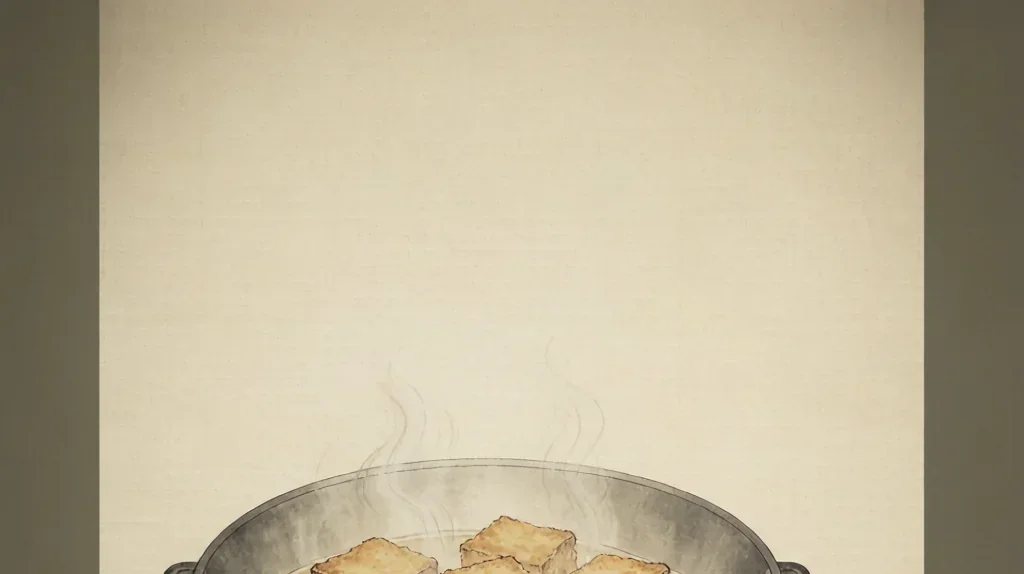
Love it or flee from it — there is little middle ground. Stinky Tofu (臭豆腐, ) is fermented tofu with an aroma so powerful it can announce a night market from a block away. Yet beneath that infamous smell lies a crisp-fried or steamed cube with a creamy, tangy center that devotees describe as addictive. It is China's most divisive snack, a rite of passage for travelers and a point of fierce regional pride.
The paradox is the whole story: a food that smells like a dare but tastes like a reward. In this article we explore the fermentation that makes it stink, its likely origins, the great divide between fried and steamed styles, how it is made and served, and why a "smelly" food holds such a cherished place in Chinese street culture.
Origins: A Happy Accident of Preservation
Like many strong-smelling foods, stinky tofu began as a preservation method. Tofu is perishable, and in pre-refrigeration China, brining and fermenting were common ways to keep soy foods edible and flavorful. A brine of vegetables, meat, or fish scraps — left to ferment — could transform plain tofu into a pungent, long-keeping delicacy.
Folklore attributes the invention to a Qing-dynasty scholar or vendor who, finding his tofu spoiled, fried it on a whim and discovered it delicious. The tale is probably apocryphal, but it captures the logic: what smells like decay to one nose smells like depth to another. Fermentation simply concentrates umami, the savory fifth taste, into a form some love and some cannot bear.
From these humble, practical roots, stinky tofu became a street institution, especially in Hunan, Jiangsu (Nanjing), Zhejiang, and Taiwan, each region guarding its own brine recipe like a family secret. The smell is the signature; the brine is the soul.
Regional Context: A Tale of Two Styles
The most famous divide is between the crispy fried style of Taiwan and the softer, soupier versions of the mainland. Taiwanese stinky tofu is usually deep-fried until the outside is golden and crunchy, then served with pickled cabbage, garlic-chili sauce, and sometimes a sweet soy. Night markets in Taipei treat it as a headline act.
On the mainland, Nanjing and Changsha offer variations: some are fried, others steamed or braised in a malty, spicy broth that keeps them soft and even more aromatic. Hunan's version tends bolder and funkier; Shanghai and Zhejiang lean toward a gentler, braised style. Each city insists its brine is best.
This regional rivalry is part of the fun. Asking "fried or steamed?" in the right city can start a friendly argument. The consensus, though, is that the smell is non-negotiable — without the funk, it is not really stinky tofu at all.
Ingredients: Tofu and a Secret Brine
The base is firm tofu, cut into cubes and submerged in a fermentation brine. The brine is the mystery ingredient: traditionally a mix of fermented vegetables (such as mustard greens), sometimes dried shrimp, fish, or meat, plus salt and water, left to culture for days or weeks. The longer it ages, the stronger the aroma.
Good brine is alive with microbes and molds that break down the tofu's proteins and fats into amino acids and volatile compounds — the source of both the smell and the savory depth. Commercial versions exist, but artisanal vendors guard their mother brine, refreshing it over years like a sourdough starter.
What reaches the plate is simple: the fermented cubes, plus accompaniments that cut the funk — pickled cabbage (suan cai) for sour crunch, chili-garlic sauce for heat, and sometimes a little soy or sesame. The tofu itself needs no seasoning; the brine did the work.
How It Is Made: Ferment, Then Sizzle
Production starts with the brine. Vendors ferment their vegetable-and-salt mixture until it develops a pungent character, then immerse fresh tofu cubes for hours or days, depending on desired intensity. The tofu absorbs flavor and softens at the center while the surface firms.
For the fried style, the cubes are drained and lowered into hot oil. The outside crisps to a brittle shell while the inside turns velvety and custard-like, a textural contrast that fans adore. The frying also tempers the aroma slightly, though the signature smell lingers in the air.
For steamed or braised styles, the cubes are cooked gently in broth or over steam, keeping them soft and soupy, often served in a bowl with sauce. Either way, the dish is finished with toppings and eaten with a skewer or spoon. The first bite is the threshold: cautious, then usually hooked.
Cultural Meaning: The Courage to Try
Stinky tofu is a cultural test and a badge of belonging. For many Chinese, loving it is a mark of authenticity, a way of saying "I understand my own food culture beyond the safe and sweet." For travelers, trying it is a small act of bravery that often earns local respect.
It also illustrates a Chinese comfort with fermentation and strong flavors — from preserved vegetables to dried seafood — that Western palates sometimes need time to accept. The dish argues that "smells bad" and "tastes good" are not contradictions but often companions, a lesson in not judging by first impressions.
At the same time, it is pure street theater. The sizzle, the steam, the unmistakable scent drawing a crowd — stinky tofu turns eating into spectacle. It is democracy again: a few coins for a plate that kings and students enjoy identically, united by the funk.
When and Where It Is Eaten
Stinky tofu is above all a night-market and street-snack food, eaten in the evening and late at night, often alongside other fried bites. In Taiwan it is a festival of the senses at places like the Shilin Night Market; on the mainland it anchors night streets in Nanjing, Changsha, and beyond.
It is typically a snack rather than a meal, served in small portions with pickles and sauce. Adventurous eaters pair it with a cold drink to cut the richness. Because the smell travels, vendors are usually clustered at the edges of markets rather than among clothes or produce stalls.
For visitors, the advice is simple: hold your breath if you must, take the first bite, and trust the crunch. Most who try it once come back. Stinky tofu may divide a nation, but it also unites anyone brave enough to discover that the best things sometimes arrive with a warning.
The Chemistry Of The Funk
The notorious smell of stinky tofu comes from fermentation chemistry rather than spoilage. As the cubes sit in a live brine of fermented vegetables, seafood, or meat, microbes and molds break the soy proteins and fats into amino acids and volatile compounds, including sulfur-containing molecules that the nose reads as powerful. This is the same family of reactions that gives aged cheese its aroma, which is why fans compare a good block to a ripe blue cheese. The frying or steaming of the finished tofu drives off some of the sharpness while keeping the savory depth, so the taste is far gentler than the smell promises. Understanding the science removes the mystery: the funk is flavor concentrated, not decay.
Stinky Tofu In Pop Culture And Travel
Few Chinese snacks have the cult status of stinky tofu abroad. Travel shows treat it as a rite of passage, food blogs rank the bravest things to eat, and night markets lean into the spectacle by letting the odor drift toward crowds as a kind of advertisement. In Taiwan it is woven into the identity of night-market tourism, sold beside bubble tea and grilled squid as a quintessential local experience. The dish also appears in comedy and casual conversation as shorthand for something loved and loathed at once, a gentle joke about Chinese tastes that locals enjoy telling on themselves. For visitors, trying it is less about the food than the story: a small, smelly proof of cultural courage that often ends in surprise at how good it tastes.
❓ Frequently Asked Questions
📝 Chinese Vocabulary
臭豆腐 — : stinky tofu, the fermented tofu snack.
豆腐 — : tofu, the soybean base.
卤水 — : brine, the fermenting liquid that gives the smell.
酸菜 — : pickled cabbage, the classic sour topping.
发酵 — : fermentation, the process behind the flavor.
臭 — : Stinky or smelly, the first character of the dish's name and the quality that defines it.
夜市 — : Night market, the lively setting where stinky tofu is most often sold and eaten.
辣酱 — : Chili-garlic sauce, the spicy condiment spooned over fried stinky tofu.
🎉 Fun Facts
- Artisanal vendors often guard a "mother brine" they refresh for years, like a sourdough starter.
- Taiwanese night markets treat deep-fried stinky tofu as a headline attraction.
- The pungent smell comes from the same fermentation chemistry that makes cheese aromatic.
- Despite the odor, the center of a good cube is creamy and mildly savory rather than harsh.
- Some cities have tried to regulate stinky tofu vendors because the odor travels and draws complaints from nearby residents, yet the snack remains a protected part of street culture.
- Adventurous visitors to Taiwan often rank stinky tofu among the top local foods to try, and travel guides list it alongside other famously pungent dishes from around the world.