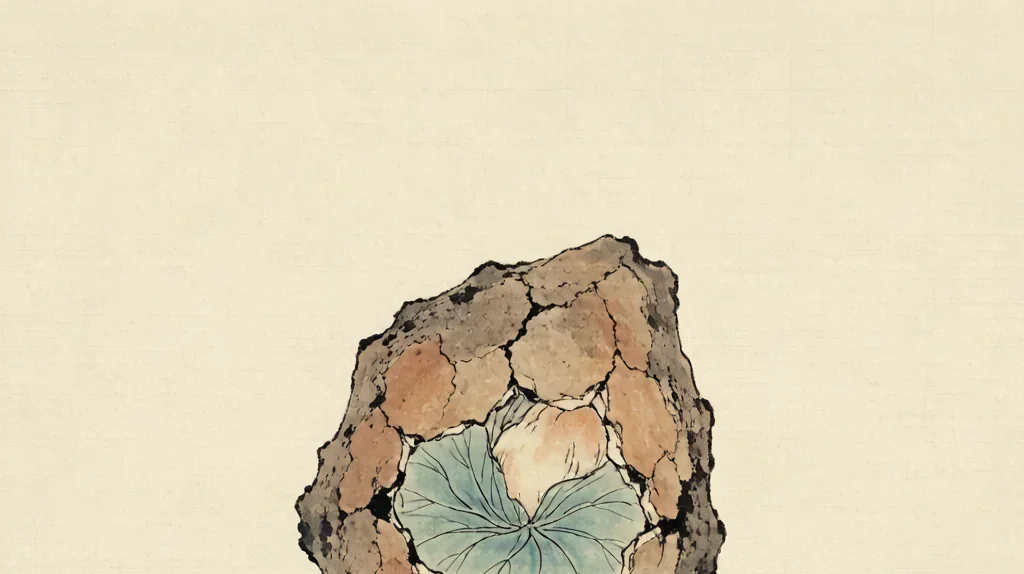
There is a Chinese dish whose very name sounds like a folk tale, and whose cooking method seems lifted from one: Beggar's Chicken (叫花鸡, ). A whole chicken is stuffed, wrapped in lotus leaves, encased in a shell of clay, and baked or buried in embers until the mud hardens and the meat inside turns astonishingly tender and fragrant. When the clay is cracked open at the table, the aroma rushes out like a secret finally told. It is rustic theater and refined eating at once.
The charm of beggar's chicken lies in its contradiction. It looks like something a homeless traveler might improvise by a roadside fire, yet it produces some of the most delicate poultry you will ever taste. In this article we follow the legend of its origin, place it in Jiangsu and Zhejiang cooking, list the ingredients that build its aroma, walk through the mud-and-leaf method, and consider why a "poor" dish became a restaurant star.
Origins: A Legend of the Road
The most beloved story tells of a hungry beggar who stole or was given a chicken but had no pot, no stove, and no utensils. Desperate, he wrapped the bird in large leaves he found nearby, smeared it with wet river clay, and buried it in a fire's hot ashes. When the clay baked hard, he cracked it open — and found the feathers had stuck to the clay and come away clean, while the meat beneath was perfectly cooked and infused with the scent of the leaves.
Whether or not any beggar actually invented it, the tale captures the logic of the method: the clay seals in moisture, the leaves perfume the meat, and the slow, even heat of embers or an oven transforms a tough bird into something luxurious. The dish became associated with the Yangzhou–Hangzhou region of the lower Yangtze, where lotus ponds and river clay made the technique natural.
Over the centuries the "beggar's" method was adopted by proper kitchens, which refined it with marinades and richer stuffings. What began as survival cooking became a deliberate delicacy — proof that necessity, in China as elsewhere, has often been the mother of culinary invention.
Regional Context: Jiangnan Comfort
Beggar's chicken belongs to the cooking of Jiangnan, the fertile "south of the river" region around the lower Yangtze, especially Jiangsu and Zhejiang provinces. This cuisine values clean, natural flavors and gentle techniques that preserve the original taste of ingredients — a philosophy perfectly suited to a chicken cooked in its own juices.
In Hangzhou, the dish is a local specialty, often served at restaurants that lean on West Lake tourism. In Suzhou and the broader Jiangsu tradition, similar leaf-wrapped and clay-baked birds appear under related names. The shared idea is "原汁原味" (yuán zhī yuán wèi) — preserving the ingredient's essential flavor — which the sealed-clay method achieves better than almost any other technique.
The dish also fits a wider Chinese love of whole-poultry presentations, from beggar's chicken to the more formal "beggar-style" banquet bird. Serving a whole chicken signals completeness and is associated with family togetherness, making the dish welcome at gatherings even though its origin story is anything but aristocratic.
Ingredients: A Fragrant Bundle
At its center is a whole chicken, ideally free-range for firmer, more flavorful meat. Before wrapping, the bird is typically marinated in a mixture of soy sauce, rice wine, ginger, scallion, and sometimes a little sugar and five-spice, then often stuffed with more aromatics — scallion, ginger, maybe mushrooms or even a few shrimp in richer versions.
Two wrappings do the real work. The first is fresh lotus leaves (or sometimes banana leaves), which keep the chicken moist and lend a green, floral aroma. The second is a thick coating of clay or a flour-and-water dough that forms an airtight shell. Some modern recipes substitute aluminum foil under the clay for hygiene, but purists argue the leaf-and-mud version is what gives the dish its soul.
Optional extras build luxury: a smear of lard on the skin, a dab of fermented bean paste, or a scattering of goji berries. But the beauty is that even the plainest version — chicken, leaf, mud, fire — works, because the technique itself is the ingredient. The clay asks only for patience and heat.
How It Is Made: Seal and Wait
Preparation starts a day ahead, with the chicken marinated so the seasonings penetrate. On cooking day, the bird is stuffed and wrapped snugly in one or two layers of damp lotus leaf, tied with string to hold the bundle. Then comes the signature step: the leaf-wrapped chicken is encased in a thick, even layer of wet clay, completely sealed so no steam can escape.
Traditionally the clay ball was buried in the embers of a wood fire or laid on hot stones. Today most kitchens bake it in an oven at a moderate temperature for two to three hours. The clay hardens like a miniature kiln, trapping all the moisture and aroma. Crucially, the feathers — if present — and the clay come off together when cracked, leaving clean skin underneath.
To serve, the hardened shell is struck with a mallet or the back of a knife at the table, and it splits open with a satisfying crack, releasing a cloud of lotus-scented steam. The leaves are peeled back to reveal glistening, fall-off-the-bone meat. The drama of the opening is part of the pleasure, a small ceremony that turns dinner into a story.
Cultural Meaning: Ingenuity and Humility
Beggar's chicken carries a gently subversive message: that greatness can come from nowhere, and that a person with nothing but a fire and some leaves can make something wonderful. In a culture that respects both scholarship and craft, the dish honors the cleverness of ordinary people. It is a folk hero on a plate.
It also embodies the Chinese appreciation for "cooked-in" aroma. Rather than saucing a finished dish, the method builds fragrance from the inside out, through steam and leaf. This resonates with a broader culinary valuesystem that prizes the natural essence of an ingredient over heavy seasoning. The humbler the origin, the more impressive the result.
At banquets, the cracked-clay presentation reads as playful hospitality — a host saying, in effect, "we saved the most fun for last." It bridges classes: a dish born of poverty now graces celebration tables, a reminder that Chinese cuisine has always recycled ingenuity into elegance.
When and Where It Is Eaten
Beggar's chicken is a specialty of the lower Yangtze and a fixture on Hangzhou and Suzhou restaurant menus, where tourists seek it as a regional experience. Because it requires advance preparation and a long bake, it is almost always ordered ahead or enjoyed at establishments that keep a batch going.
It is a communal dish, carved and shared at the table after the dramatic cracking. The meat is often eaten with a little of its cooking juices and the fragrant leaf, sometimes with steamed buns to wrap it. Its richness makes it a centerpiece rather than an everyday meal.
For travelers in eastern China, trying an authentic version is a highlight: you taste the lotus, the slow steam, and the legend all at once. Just remember to let the kitchen know in advance — a beggar's chicken cannot be rushed, and that, perhaps, is the deepest lesson of the dish.
Similar Clay-Baked Dishes Across China
Beggar's chicken is the best-known of a wider Chinese love for cooking food sealed in earth or leaves. In parts of the south, whole taro, sweet potatoes, or small fish are buried in hot coals and covered with mud, emerging tender and smoky. Some regional birds swap lotus for banana leaves or add salt to the clay for a firmer seal. The principle is ancient and practical: a dirt or leaf wrapping traps steam, protects the food from ash, and perfumes it from within. Travelers in rural areas may still meet these rustic methods at festivals or roadside pits. All are cousins of the Hangzhou classic, proof that sealing food in the ground is one of China's oldest, cleverest cooking tricks.
Serving Beggar's Chicken at a Banquet
Because the dish needs advance planning and a long bake, restaurants treat it as a centerpiece rather than a casual order. Guests often book it a day ahead, and when it arrives the waiter cracks the hardened clay at the table with a small mallet, releasing a cloud of lotus-scented steam. The leaves are peeled back and the meat, falling off the bone, is lifted out and sometimes wrapped in a soft steamed bun with a little of its juices. The theatrical opening turns dinner into a shared event, a playful high note suited to celebrations. A whole chicken also signals togetherness, so the dish fits weddings and family reunions as naturally as it fits a tourist's wish list.
❓ Frequently Asked Questions
📝 Chinese Vocabulary
叫花鸡 — : Beggar's Chicken, chicken baked in clay.
荷叶 — : lotus leaf, used to wrap and scent the chicken.
泥 — : clay or mud, the airtight cooking shell.
原汁原味 — : "original juice, original flavor," preserving an ingredient's essence.
江南 — : Jiangnan, the lower Yangtze culinary region.
叫化 — : Beggar, the folk word that gives the dish its name.
黄泥 — : Yellow river clay, the airtight sealing shell used to bake the bird.
封 — : To seal, the crucial step that traps steam and aroma inside the clay.
🎉 Fun Facts
- In the folk tale, the beggar applied wet clay over the unplucked bird, and the feathers came off stuck to the cracked shell.
- The dish is traditionally cracked open at the table with a mallet for a bit of theatrical flair.
- Lotus leaves do double duty: they keep the meat moist and perfume it with a floral scent.
- Though born of poverty, beggar's chicken is now a celebrated specialty of Hangzhou restaurants.
- The dish's whole-chicken presentation makes it a symbol of family togetherness at gatherings.
- Some recipes tuck a little lard under the skin or add goji berries for extra luxury and color.