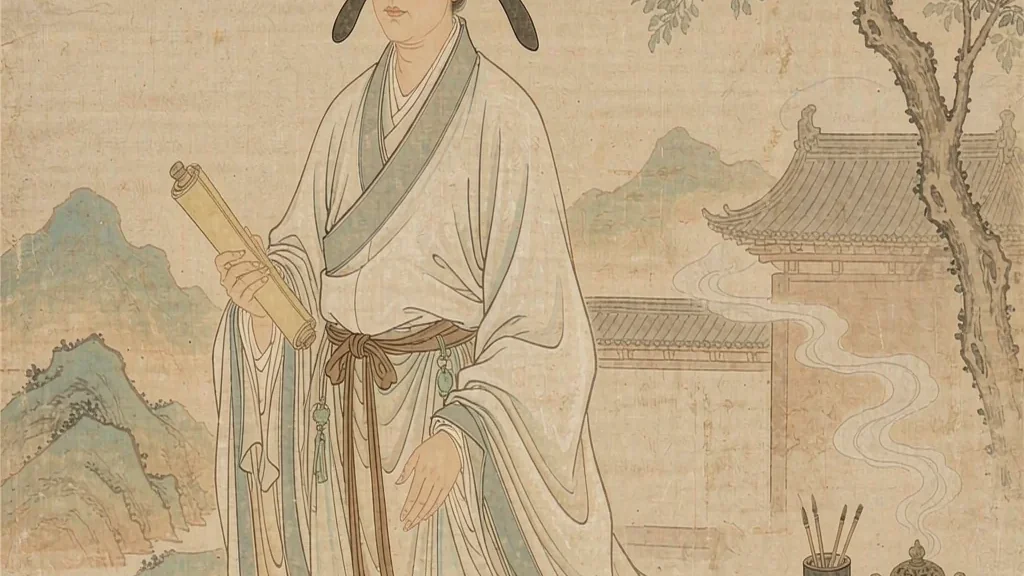
Tang-dynasty figure painting (唐代人物画, Tángdài rénwù huà) represents a high point of Chinese art, when imperial wealth, cosmopolitan confidence, and Buddhist devotion produced some of the most vivid human images ever made in East Asia. Tang painters excelled at court ladies with their full, elegant forms; at solemn portraits of emperors and ministers; at vigorous Buddhist and Daoist deities for temple walls; and at bustling genre scenes of court life. Working in rich, stable color with confident outline, they set a standard of figural grace and psychological presence that later ages looked back to as a golden model.
The Tang Moment and Its Confidence
The Tang dynasty (618–907) was an age of empire, trade, and cultural mixing along the Silk Roads. Its capital Chang'an was among the world's largest cities, and this openness fed an art that was both refined and worldly.
Figure painting sat at the center of Tang art because the court wanted images of itself—its rulers, its rituals, its beauties—and because Buddhism demanded countless iconic and narrative figures.
The resulting works are notable for composure and amplitude: Tang figures are self-assured, richly dressed, and calmly observed, reflecting a society comfortable with its own power.
Yan Liben and Imperial Portraiture
Yan Liben (阎立本, c. 601–673) served the early Tang emperors and is famous for portrait and narrative painting that validated imperial authority. His handscroll of ancient emperors presents each ruler as a moral type, praised or blamed by his likeness.
Such portraits were tools of state: they taught history to the court and displayed the legitimate line. Yan's controlled outline and dignified faces became a model for official portraiture.
His position as a high official who also painted shows how, in the Tang, figural art could be both a court duty and a route to rank.
Wu Daozi and the Vigor of the Line
Wu Daozi (吴道子, c. 680–760) is the most celebrated Tang figure painter, famed for the muscular energy of his line and for Buddhist and Daoist temple murals across the capital. Legend credits his figures with a "sculptural" relief achieved purely by brush.
He is said to have painted huge walls in a single day, and his "lúnhé" (transmission) manner influenced generations of muralists. Later critics called him the "sage of painting."
Though few originals survive, his reputation anchored the Tang ideal of the figure as born from a living, confident stroke rather than from careful tinting alone.
Court Ladies: Zhang Xuan and Zhou Fang
The most beloved Tang figure type is the court lady (仕女, shìnǚ), shown with a full, rounded body, elaborate hair, and diaphanous robes. Two masters define it: Zhang Xuan (张萱, active c. 713–742) and Zhou Fang (周昉, active c. 780–810).
Zhang Xuan's "Court Ladies Preparing Newly Woven Silk" depicts palace women at work and leisure with warm observation. Zhou Fang's "Court Ladies with Fans" and "Ladies Wearing Flowers in Their Hair" show the plump elegance and psychological stillness of high Tang taste.
These images set the canon of feminine beauty for later Chinese painting, where the "Tang figure" long meant a full-faced, richly dressed lady.
Buddhist and Daoist Figures
Tang devout patronage filled temples with figure painting. Buddhist icons, donor portraits, and hell-scene narratives covered monastery walls, while Daoist deities adorned imperial shrines. The figure was the medium of devotion.
The murals of Dunhuang and other cave-temples, expanded and repainted across the Tang, preserve Tang figure style at scale: stepped halos, flowing scarves, and calm, monumental bodies.
This religious stream kept figure painting technically ambitious, demanding large compositions populated by dozens of convincing individuals.
Technique: Outline, Color, and Presence
Tang figure painters typically laid down a sure contour line (the "iron-wire" or "orchid-leaf" line) and then filled with mineral and vegetable colors—lead white for skin, azurite and malachite for robes, cinnabar for accents.
The famous "spring-outing" and banquet scrolls use balanced, slightly elevated viewpoints and a clear sense of social rank through scale and placement. Color does the descriptive work; line gives life.
Compared with later ink figure painting, the Tang manner is opulent and external, more concerned with appearance and ceremony than with inner drama.
The "Fat Lady" Ideal and Its Meaning
The Tang preference for full-figured ladies is often read as a sign of prosperity and a cosmopolitan, non-puritanical beauty standard, possibly influenced by steppe and Central Asian tastes at court.
This ideal was not merely decorative; it signaled abundance, health, and high status in a society that could afford leisure. The figure carried social meaning in its very proportions.
Later dynasties, with different tastes, variously imitated or gently mocked the Tang "fat lady," but the type remained the reference point for courtly feminine imagery.
Legacy and Later Echoes
Tang figure painting shaped the "court lady" tradition of the Song, Ming, and Qing, and its murals fed popular and religious art for centuries. The Tang look survives in tomb murals and in copies of lost originals.
Its confidence also influenced Japan's Nara and Heian figure painting, carried across the sea with Buddhist and court culture. Tang human images became part of a wider East Asian visual language.
For modern viewers, Tang figures remain the most approachable doorway into Chinese painting: immediately human, richly colored, and quietly self-possessed.
❓ Frequently Asked Questions
What is Tang-dynasty figure painting?
It is the figural art of the Tang dynasty (618–907)—imperial portraits, court ladies, Buddhist and Daoist deities, and genre scenes—known for rich color, confident outline, and calm, self-assured human presence.
Who were the major Tang figure painters?
Yan Liben painted imperial portraits; Wu Daozi was celebrated for vigorous temple murals; Zhang Xuan and Zhou Fang defined the elegant court-lady type. Together they set the Tang standard.
Why are Tang ladies painted full-figured?
The plump, ample lady signaled prosperity, health, and high status in a cosmopolitan, confident age, possibly touched by Central Asian tastes. The type became the canon of courtly beauty.
How were Tang figures painted?
Artists laid a sure contour line (the "iron-wire" line) and filled it with mineral and vegetable colors—lead white, azurite, malachite, cinnabar—using balanced, slightly elevated viewpoints.
Where can Tang figure style be seen?
In surviving court-lady scrolls and copies, in Tang tomb murals, and in the Buddhist cave murals of Dunhuang expanded during the Tang, which preserve the manner at monumental scale.
How did Tang figure painting influence later art?
It shaped the Song–Qing court-lady tradition and fed popular and religious murals for centuries, and it influenced Japanese Nara and Heian figure painting carried with Buddhist culture.