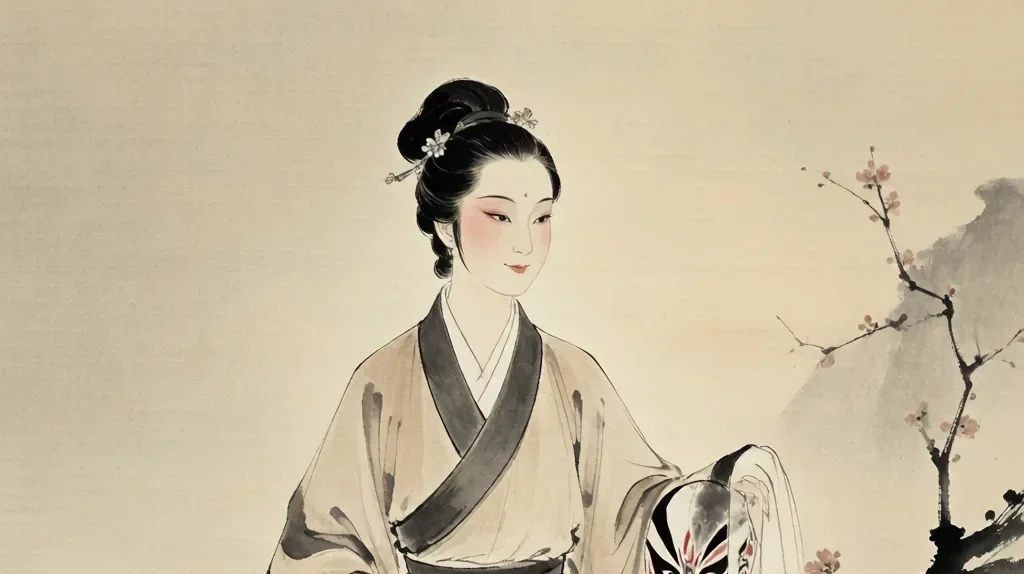
Hubei opera, known as Hanju (汉剧), is the principal traditional theatre of China's central Hubei province and one of the oldest regional operas in the Yangtze heartland. Rooted in the ancient "Chu" cultural region, it is historically celebrated for its bright Xipi melody and for supplying — alongside Anhui opera — the musical raw material from which Peking opera was forged in Beijing. With a refined ten-fold role classification and a deep repertory of civil and martial plays, Hanju remains a cornerstone of central Chinese theatrical tradition. This article explores its history, music, role system, and ongoing life.
The Ancient Opera of the Chu Land
Hanju comes from Hubei, the core of the old Chu (楚) cultural sphere of the middle Yangtze. Its antecedents are traced by scholars to the local "Chu tune" (楚调) and related central-China singing that long predate the modern form.
The region's position on the Yangtze made it a crossroads of people and tunes, so Hanju, like Huiju, grew by gathering rather than by isolation, absorbing what travelled up and down the great river.
Historical Development
By the Ming and Qing periods a recognisable Hubei opera had formed, prized in the provincial capital of Wuhan and in river-port towns where merchants and boatmen were eager audiences. Troupes performed in teahouses and temple fairs up and down the Yangtze.
Its reputation spread beyond Hubei, and Hubei players were among the southern Opera artists active in the capital, where their music met and mingled with that of the Anhui troupes.
The Xipi Melody and the "Pihuang" Link
Hanju's signature is the Xipi (西皮) mode — a bright, animated melody carried by the high-register huqin fiddle. Xipi excels at lively, declamatory singing suited to both witty dialogue and charged emotion.
When Hubei's Xipi met Anhui's Erhuang in Beijing, the two modes were joined into the "Pihuang" (皮黄) system. That fusion is the musical foundation of Peking opera, making Hanju, with Huiju, an ancestor of the national stage.
The Road to Beijing
Hubei troupes reached the capital in the Qing period and performed alongside the celebrated Anhui companies. Rather than remaining separate, the southern styles cross-fertilised, sharing tunes, plays, and performers.
Over decades this blend was polished into what we now call Beijing opera. Hanju's contribution is most visible in the Xipi arias that remain a major half of the Peking-opera musical vocabulary.
Regional Branches
Within Hubei, Hanju developed local branches distinguished by dialect and emphasis, yet all shared the Xipi core and the same role conventions. Wuhan-style Hanju was long regarded as the standard bearer.
The form also influenced neighbours: its tunes and training reached into Hunan, Shaanxi, and other operas of the region, a reminder that "Hanju" names both a province's opera and a wider family of related practices.
Repertory
The Hanju catalogue is large, rich in both civil romances and martial historical dramas. Plays of the Three Kingdoms and of loyal officials are staples, reflecting the region's love of chivalric and strategic lore.
Many Hanju works entered the early Peking-opera repertory, so a famous Beijing-opera title may trace its plot and arias back to a Hubei original staged on a Wuhan teahouse stage.
The Ten Role Lines
A distinctive feature of Hanju is its elaborate role classification. Traditionally the form organised performers into ten lines (十大行), subdividing the usual sheng, dan, jing, and chou into finer grades by age, rank, and temperament.
This fine taxonomy let Hanju match actor to character with precision and produced a depth of specialist skill — a grandfather, a young general, and a comic official each belonging to a separate trained line.
Performance and Music
Hanju performance balances song, speech, and movement within the Xipi-dominated band. The leading fiddle sets the bright tone, supported by percussion that drives entrances and combat and by plucked strings for softer passages.
Civil roles cultivate a clear, ringing Xipi line, while martial roles add acrobatic flourish. Makeup and costume follow the broad opera convention, with painted-face roles carrying the boldest designs.
Modern Survival
Like many regional operas, Hanju faced shrinking audiences in the modern era as film, television, and pop culture drew listeners away. Provincial troupes and training schools now sustain the form through performances and recordings.
Recognition of Hanju's role in the birth of Peking opera has helped fuel preservation, ensuring that the bright Xipi of the Chu land keeps sounding on Hubei stages.
Notable Plays and Classic Titles
Among the best-loved Hanju works are civil romances such as "The Tower of the Cosmic Mirror" (宇宙锋) and martial histories drawn from the novels of the Three Kingdoms and the Tang court. These plays let the ten role lines show their range, pairing a refined dan heroine against painted-face ministers and comic chou servants.
Because so many Hanju scripts migrated northward, a Beijing-opera favourite like "The Drunken Concubine" or a Zhuge Liang strategem piece often carries a Hubei forbear. Scholars of xiqu therefore treat Hanju's surviving scripts as a key to reconstructing early Peking-opera staging.
Training, Lineage, and the Old Troupes
Historically, Hanju performers trained through apprenticeship inside family or master-led troupes, learning one of the ten lines from childhood and drilling its arias, gait, and makeup until the role was second nature. A singer belonged to a line for life, and a troupe was a roster of such specialists.
In the twentieth century this informal system gave way to provincial opera schools in Wuhan and other cities, which formalised the ten-line teaching and added music theory and modern staging. The shift preserved the classification even as it changed how new actors entered the art.
Hanju in Contemporary Hubei
Today Hanju is maintained by the Hubei Provincial Opera Theatre and by county troupes that tour temple fairs and urban theatres alike. Representative artists have been honoured with national "intangible cultural heritage" recognition, signalling the state's interest in keeping the Xipi tradition alive.
Festivals in Wuhan and on the Yangtze still stage full Hanju evenings, often pairing an old classic with a newly written piece. For audiences, the bright Xipi line remains the unmistakable sound of Hubei's own opera, distinct from the Beijing stage it helped create.
❓ Frequently Asked Questions
What is Hubei opera called in Chinese?
It is called Hanju (汉剧), the traditional opera of China's Hubei province in the old Chu region of the middle Yangtze.
What is Hanju's signature music?
Its signature is the bright, animated Xipi mode, sung over a high-register fiddle and lively percussion.
How did Hanju help create Peking opera?
In Beijing, Hubei's Xipi merged with Anhui's Erhuang into the Pihuang system that underlies Peking opera.
What are the "ten role lines"?
Hanju classifies performers into ten specialised lines, subdividing the usual sheng, dan, jing, and chou by age and rank.
Is Hanju still performed?
Yes. Provincial troupes and schools sustain it through performances, recordings, and preservation programmes.
Did Hanju influence other operas?
Yes. Its tunes and training spread into Hunan, Shaanxi, and other Yangtze-region operas.