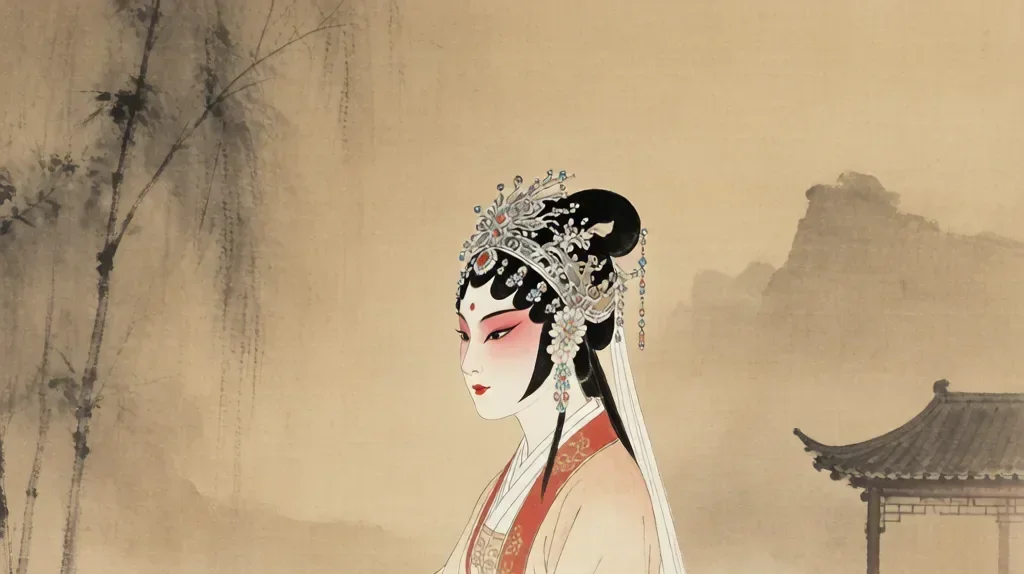
Zhejiang opera is an umbrella for the rich variety of regional theatrical traditions native to Zhejiang province on China's southeast coast, a region that has been one of the most fertile cradles of Chinese opera for nearly a thousand years. The province gave birth to Nanxi, the earliest known mature southern drama, and later to the Yue opera (also called Shaoxing opera) that became one of the most popular forms nationwide. Zhejiang's operatic culture is marked by soft, lyrical melodies, intimate emotional expression, and a deep well of local legend and romance. To explore Zhejiang opera is to trace the southern, gentle current of Chinese theatre against the louder northern clapper styles.
A Cradle of Southern Drama
Zhejiang holds a special place in opera history as the homeland of Nanxi, which appeared in the Southern Song period and is regarded as the first fully formed Chinese dramatic literature with act division, singing, and dialogue. From this seed grew the southern dramatic families that dominated the south for centuries. The province's prosperity and literacy fed a taste for refined theatre.
This southern lineage contrasts with the northern bangzi styles in melody and temperament, favoring smoothness over percussive drive.
Yue Opera, the Famous Son
The best-known Zhejiang tradition is Yue opera, originally from the Shaoxing region and thus also called Shaoxing opera. It began in the early twentieth century as a small rural entertainment and rose rapidly to urban fame. Unusually, Yue opera was pioneered by female performers and is famous for its all-female or female-dominated casts portraying both male and female roles with grace.
Its singing is gentle and melancholy, perfectly suited to love stories, and it became especially beloved by female audiences in Shanghai and beyond.
Other Zhejiang Traditions
Besides Yue opera, Zhejiang nurtures several local forms such as the lively Shaoxing opera in its broader local sense, the rhythmic Yong opera around Ningbo, and various shadow and puppet theatres. Each uses local dialect and tune, giving the province a layered soundscape of related but distinct stages.
The coexistence of these forms means a Zhejiang audience might choose between a tender romance and a rustic comic show on the same festival night.
Musical Character
Southern Zhejiang melody tends to be lyrical, with sliding phrases and a softer band built around the erhu and yueqin rather than blaring percussion. The aim is to carry emotion and intimacy, not to rally a marketplace crowd. Even martial moments keep a melodic sweetness unusual in the north.
This musical gentleness is why Zhejiang opera is often described as "water towns' music," echoing the canals and slow rivers of the region.
Language and Local Color
Zhejiang operas sing in local speech—Shaoxing, Ningbo, or Hangzhou dialects depending on the form—which gives each its particular flavor and shapes rhyme and timing. For migrants from the province, hearing the familiar tongue on stage is a powerful link to home.
The dialect basis also explains why Yue opera, though now national, still carries a southern accent even when performed elsewhere.
Repertoire and Themes
Love and longing dominate the celebrated repertoire: tales of separated lovers, faithful wives, and gentle scholars fill the stage. Yet Zhejiang forms also stage heroic and fantastical legends drawn from regional folklore. The emotional register runs from tender to tragic rather than boisterous.
Classic Yue operas about palace ladies and devoted couples have become standards taught to every new generation of performers.
Performance and Casting
Yue opera's signature is its female-led casting, with women playing sheng as well as dan, using posture and voice rather than costume alone to signal gender. Movement is flowing and restrained, favoring suggestion over acrobatics. The overall aesthetic is poetic and understated.
This approach created a distinct acting craft in which a performer's stillness and gaze carry as much as any gesture.
Festival and Social Role
In Zhejiang, opera has long accompanied temple fairs, weddings, and seasonal rites, with troupes invited to perform for the gods and the community alike. The theatre was a principal form of shared leisure and moral instruction in village life before modern media.
Even today, during the New Year and local festivals, stages are erected in town squares, recalling centuries of communal watching.
Legacy Today
Yue opera in particular enjoys professional troupes in Zhejiang and Shanghai and is taught in conservatories, with several works recognized as cultural treasures. Efforts continue to widen its audience among youth through adapted staging and media broadcasts.
Zhejiang's role as the birthplace of southern drama ensures its traditions remain central to any telling of Chinese opera history.
Training and Troupes
Zhejiang's opera schools train singers in breath control, dialect diction, and the flowing movement that defines the southern style. Yue opera students in particular study how to shift between dan and sheng registers while keeping the voice's characteristic sweetness. The best troupes maintain both a classic repertoire and a workshop for new adaptations.
Touring has always been part of the life: from river-town fairs to Shanghai's grand theatres, mobility spread the soft Zhejiang sound across the Yangtze delta and beyond, building a broad, loyal public.
Musical Form and Tune Systems
Beneath the gentle surface lies a disciplined scheme of tunes and modes that determine how an aria may unfold. A lead performer chooses a tune to match a scene's feeling, then ornaments within it, so the same story can be sung as lament or as quiet joy. The light band follows the voice rather than dominating it.
This balance of freedom and rule is what lets Yue opera feel spontaneous and intimate while remaining unmistakably itself from one play to the next.
Yue opera produced star actresses whose names became household words, drawing devoted fans to Shanghai theatres and beyond. Their recordings spread signature arias far outside Zhejiang, making the soft southern sound familiar across the country and creating a star culture unusual for a regional form.
Major troupes in Hangzhou and Shanghai now maintain the classic repertoire while training new leads, and friendly rivalry between companies keeps standards high, much as in the form's golden age of the mid-twentieth century.
❓ Frequently Asked Questions
What is Zhejiang opera?
It is an umbrella for the regional operas of Zhejiang province, most famously Yue (Shaoxing) opera, plus older southern forms like Nanxi.
Why is Zhejiang important in opera history?
It is the homeland of Nanxi, the earliest mature southern drama, which seeded the southern theatrical families.
What is special about Yue opera?
Yue opera is lyrical and romantic, pioneered by female performers who often play both male and female roles.
How does it sound different from northern opera?
Its melodies are softer and more intimate, using strings over loud percussion, reflecting a southern temperament.
What stories does it tell?
Love stories and gentle legends dominate, with themes of devotion, separation, and longing.
Is Zhejiang opera still alive?
Yes; Yue opera has major professional troupes and conservatory training, and local forms persist at festivals.