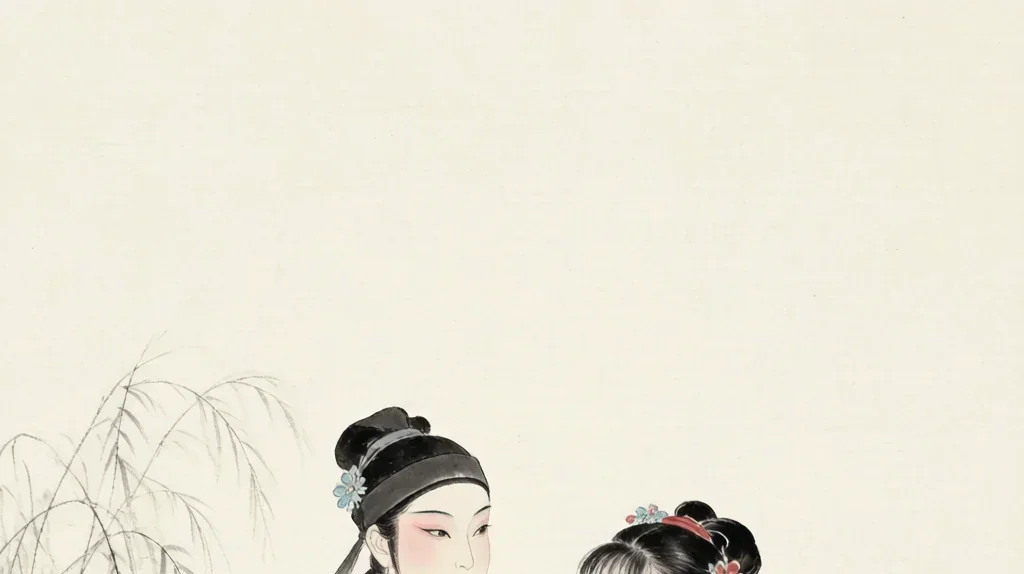
If Peking Opera (京剧) is the grand symphony of Chinese theater — bold, percussive, and dazzling — then Yueju Opera (越剧) is its chamber music: intimate, lyrical, and suffused with a delicate emotional intensity that has earned it the title "the poetry of Chinese theater." Originating in the early 20th century in the verdant hills of Zhejiang Province, Yueju has grown from a humble local folk art into China's second most popular opera form, beloved especially in the Yangtze River Delta region. Its distinctive all-female tradition, its focus on romantic love stories, and its refined, naturalistic performance style have made it one of the most accessible and emotionally resonant forms of Chinese opera for contemporary audiences.
From Shengzhou Village to Shanghai Stage
Yueju opera was born in Shengzhou (嵊州), a county in eastern Zhejiang Province, in 1906 — remarkably late for a major Chinese opera form. Its origins were humble. Farmers in the region had long sung a form of folk ballad called Luodi Changshu Diao (落地唱书调), literally "songs sung while sitting on the ground." These were simple narrative songs performed by peasants during agricultural festivals and leisure hours, accompanied by little more than clappers and a small drum. The transition from folk singing to theatrical performance occurred when these singers began to act out the stories they sang, adding simple costumes, props, and rudimentary stage conventions.
The critical breakthrough came in the 1910s and 1920s when Yueju troupes began performing in Shanghai, the cosmopolitan metropolis that served as China's cultural crucible during the Republican era. Shanghai's sophisticated audiences and its competitive entertainment market — where Yueju had to compete with Peking Opera, spoken drama, and eventually cinema — drove rapid artistic development. Playwrights created more complex librettos; musicians expanded the orchestra to include Western instruments like the cello and violin alongside traditional Chinese strings; and performers developed more refined acting techniques. By the 1940s, Yueju had become one of Shanghai's most popular entertainment forms, with star performers commanding devoted followings and appearing in films that brought the art form to audiences across China.
The All-Female Tradition: Women on Stage
One of Yueju's most distinctive features is its all-female tradition (全女班, quán nǚ bān). In the early years of Yueju, troupes were all-male, following the conventions of other Chinese opera forms. But by the late 1920s and early 1930s, all-female troupes had become the norm, and today, female performers play all roles — male and female — in most professional Yueju companies. This tradition emerged partly from practical circumstances: many of the original folk singers were women, and in the socially conservative environment of early 20th-century China, all-female troupes were considered more respectable than mixed-gender ensembles.
The all-female tradition has profoundly shaped Yueju's aesthetic character. Female performers playing young male roles — a category known as Xiaosheng (小生) — have developed a distinctive style that is neither simply masculine impersonation nor androgynous abstraction, but a unique theatrical idiom that blends masculine dignity with feminine grace. The greatest Yueju Xiaosheng performers, such as the legendary Yin Guifang (尹桂芳) and Fan Ruijuan (范瑞娟), achieved such mastery of this art that audiences reportedly forgot they were watching women and became completely absorbed in the romantic drama. The effect is subtle and sophisticated — a kind of idealized, romantic masculinity filtered through feminine sensibility, perfectly suited to the love stories that form Yueju's core repertoire. This tradition has also made Yueju a uniquely female-centered art form in a theatrical tradition otherwise dominated by male performers.
Dream of the Red Chamber and Butterfly Lovers
Yueju's repertoire is dominated by love stories (爱情故事, àiqíng gùshì), a focus that distinguishes it from other Chinese opera forms which often emphasize historical epics, military conflicts, and martial arts displays. Two works in particular stand at the pinnacle of the Yueju canon.
Dream of the Red Chamber (红楼梦, Hónglóu Mèng), adapted from Cao Xueqin's 18th-century novel — widely considered the greatest work of Chinese literature — is Yueju's supreme masterpiece. The opera focuses on the tragic love story between Jia Baoyu, the sensitive, rebellious scion of a wealthy aristocratic family, and Lin Daiyu, his delicate, poetic cousin. The Yueju adaptation, created in the 1950s, distills the novel's vast, encyclopedic scope into a concentrated emotional drama of doomed love. Its most famous aria, "Burying the Flowers" (葬花, zàng huā), in which Daiyu mourns the fallen petals and by extension her own mortality, is one of the most beloved pieces in all of Chinese opera. The 1962 film version, starring the legendary Xu Yulan (徐玉兰) as Baoyu and Wang Wenjuan (王文娟) as Daiyu, became a cultural phenomenon, seen by tens of millions and still regularly broadcast on Chinese television.
The Butterfly Lovers (梁山伯与祝英台, Liáng Shānbó yǔ Zhù Yīngtái), often called "China's Romeo and Juliet," is another cornerstone of the Yueju repertoire. The story dates back to the Tang Dynasty: Zhu Yingtai, a brilliant young woman, disguises herself as a man to attend school, where she falls in love with her classmate Liang Shanbo. When Liang discovers her true identity, he rushes to propose — but Zhu's family has already arranged her marriage to another man. Liang dies of heartbreak, and on her wedding day, Zhu visits his grave, which opens to receive her. The lovers are transformed into butterflies, flying together forever. The Yueju adaptation, with its haunting melodies and exquisite romantic tension, has become the definitive version of this beloved tale. Its most famous aria, "The Eighteen-Mile Farewell" (十八相送), in which Zhu tries to hint at her true identity through poetic metaphors as she and Liang walk together for the last time, is a masterpiece of dramatic irony and lyrical beauty.
Yueju vs. Peking Opera: A Tale of Two Traditions
Comparing Yueju with Peking Opera (京剧, Jīngjù) illuminates the distinctive character of both traditions. Peking Opera, which crystallized in the late 18th century and became China's national opera form, is characterized by its stylized, symbolic performance conventions: elaborate face paint (脸谱, liǎnpǔ) that encodes character types, acrobatic combat sequences, and a highly codified system of gestures and movements that represent everything from opening a door to riding a horse. Its music is dominated by piercing, high-pitched singing accompanied by the percussive clatter of clappers and the wail of the jinghu (京胡), a high-pitched two-stringed fiddle. Peking Opera's repertoire centers on historical and military narratives — tales of emperors, generals, and heroes.
Yueju, by contrast, is a child of the 20th century, and its aesthetics reflect a more modern sensibility. Its performance style is more naturalistic; its music, while still unmistakably Chinese, is softer and more melodic, with a greater emphasis on lyrical beauty than percussive energy; its staging incorporates more realistic scenery and lighting than Peking Opera's bare-stage minimalism. Where Peking Opera dazzles the eye and ear with spectacular technique, Yueju speaks directly to the heart with emotional intimacy. One critic described the difference perfectly: "Peking Opera makes you gasp with admiration; Yueju makes you weep." Both traditions are treasures of Chinese culture, but they speak in very different voices — one declamatory and heroic, the other intimate and poetic.
Yueju in the 21st Century
Like all traditional art forms in the modern world, Yueju faces the challenge of remaining relevant to audiences raised on film, television, and digital media. Yet Yueju has shown remarkable resilience and adaptability. Its relatively short history — just over a century — means it is less burdened by the weight of tradition than older opera forms, and its practitioners have been more willing to experiment. Contemporary Yueju productions have incorporated modern stage technology, collaborated with symphony orchestras, and even created new works based on contemporary novels and films.
The art form has found new audiences through television broadcasts, online streaming, and social media, where young fans share clips and discuss performances with the same enthusiasm their grandparents brought to live performances. Yueju's focus on romantic love and emotional expression, its accessible music, and its relatively naturalistic acting style make it easier for newcomers to appreciate than more esoteric forms of Chinese opera. Meanwhile, the core repertoire — the timeless love stories of Baoyu and Daiyu, of Liang Shanbo and Zhu Yingtai — continues to move audiences as it has for generations. As long as there are hearts to be broken and love stories to be told, Yueju opera will find its audience.
Yueju's Musical Style and Orchestra
Yueju's music is softer and more melodic than the percussive drive of northern opera, which is why it is often called the poetry of Chinese theatre. The vocal line is close to speech yet lyrical, built for intimacy rather than for filling a vast outdoor square. Its orchestra grew in Shanghai, where musicians added Western strings such as the cello and violin alongside traditional Chinese instruments, giving the ensemble a warm, modern color rare among older forms. This blend suits the opera's romantic repertoire, letting a single aria swell from a whisper of longing to a full orchestral phrase. The result is music that feels contemporary even when the story is ancient, a quality that helped Yueju win urban audiences in the twentieth century and that still makes it one of the most approachable entries into Chinese opera for first-time listeners.
Yueju Costumes and Stagecraft
Compared with the bare-stage minimalism of Peking opera, Yueju tends toward more realistic scenery, softer lighting, and costumes that serve the emotion of a scene rather than a strict code. The famous love stories call for elegant, often understated dress: a scholar's robe, a lady's gown, the few props that stand for a garden or a river. Makeup is lighter and more natural than the bold painted faces of the north, appropriate to intimate domestic drama. The all-female tradition shapes the look too, since women playing young male leads adopt a refined, androgynous elegance rather than mock masculinity. Staging thus supports feeling over spectacle, drawing the audience into the inner life of the lovers. This naturalism is a deliberate modern choice, and it is a large part of why Yueju speaks so directly to contemporary hearts.
Yueju's Signature Arias and Films
Yueju's fame rests on a handful of unforgettable arias that have outlived the stage and entered daily cultural memory. Burying the Flowers, in which Lin Daiyu mourns the fallen petals as her own mortality, is among the most beloved pieces in all Chinese opera, while The Eighteen-Mile Farewell turns a walk into a masterpiece of dramatic irony as Zhu Yingtai hints at her love through metaphor. Film carried these arias to millions: the 1962 Dream of the Red Chamber and various Butterfly Lovers adaptations became cultural events, seen by tens of millions and still rebroadcast. Because Yueju is barely a century old, it adapted to cinema and later television more readily than ancient forms, and its stars became household names. The opera's lasting power, then, is a union of tender story, singable melody, and the screen, which together keep its great love scenes alive for new generations.
❓ Frequently Asked Questions
📝 Chinese Vocabulary
越剧 — — Yueju Opera; literally "Yue (Zhejiang region) theater"
小生 — — The young male role type in Chinese opera, traditionally played by women in Yueju
全女班 — — All-female troupe; the distinctive performance tradition of Yueju
红楼梦 — — Dream of the Red Chamber; the classic novel and Yueju's supreme masterpiece
梁山伯与祝英台 — — The Butterfly Lovers; China's most famous love story
嵊州 — : Shengzhou, the Zhejiang county where Yueju opera was born in 1906.
尹桂芳 — : Yin Guifang, a legendary performer of male Xiaosheng roles in the all-female Yueju tradition.
落地唱书 — : Luodi changshu, the ground-sung folk ballads that preceded Yueju theatre.
🎉 Fun Facts
- Yueju is the youngest of China's major opera forms — it is barely over a century old, compared to Peking Opera's 200+ years and Kunqu Opera's 600+ years.
- During the 1950s and 1960s, Yueju films were so popular that a single screening could draw audiences of over 100,000 people in rural areas where outdoor film projectors were set up in fields.
- Yueju is one of the few Chinese opera forms where the orchestra often includes Western instruments. The cello, introduced in the 1940s, has become a standard part of the Yueju ensemble, its warm tone complementing the opera's lyrical style.
- Yueju was born in 1906, making it one of the very last major Chinese opera forms to appear.
- The 1962 film of Dream of the Red Chamber, starring Xu Yulan and Wang Wenjuan, was seen by tens of millions and is still broadcast on television.
- All-female troupes became the norm by the late 1920s, and women playing male Xiaosheng roles developed a style blending masculine dignity with feminine grace.