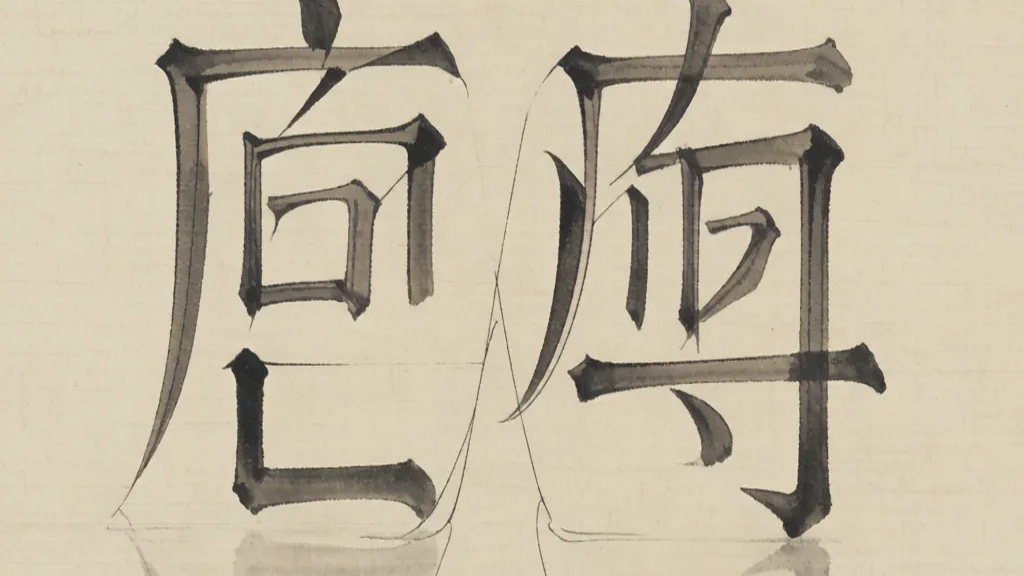
Mutually explanatory characters (转注字, zhuǎnzhùzì) are the most puzzling and contested of the six traditional categories (liùshū) of Chinese writing. Xu Shen, in his preface to the Shuowen Jiezi (c. 100 CE), defined them as characters that "are of the same kind, share a radical, and can explain one another" — his example being 考 (kǎo, "to test; aged") and 老 (lǎo, "old"). Unlike the other five categories, which describe how a character is formed, zhuǎnzhù seems to describe a relationship between two already-existing characters whose meanings overlap and whose forms share a component. Scholars have debated for two thousand years whether it denotes a derivational process, a semantic linking, or merely a dictionary-compiler's convenience. Understanding the debate is itself a lesson in how fluid and theory-laden the classification of Chinese characters can be.
The Six Categories Recap
Liùshū sorts characters into pictographs, ideographs, compound ideographs, phonetic compounds, loan characters, and mutually-explanatory characters. The first four are about formation, the fifth about borrowing, and the sixth — zhuǎnzhù — sits awkwardly, describing a relation rather than a shape.
This taxonomic mismatch is why zhuǎnzhù has always been the odd one out. It refuses to fit the "how was this drawn or built" logic that governs its siblings, and instead points at meaning connections across characters.
Xu Shen's Definition
Xu Shen wrote that zhuǎnzhù characters "build on a shared category, have the same radical, and are mutually explanatory." The phrase is compact and ambiguous: "build on a shared category" (jiàn lèi) and "mutually note/explain" (zhuǎn zhù) admit several readings, and he gave only the 考–老 pair as illustration.
Because the founder offered one example and a riddle-like definition, later scholars were free to project their own theories. The category became a scholarly Rorschach test across dynasties.
The Classic Pair: 老 and 考
老 (lǎo) shows an elder with long hair; 考 (kǎo) originally meant "aged" or "deceased father" and later "to examine/test." The two share the 老 radical (the "old" header at top) and overlap in the sense of advanced age, so each can gloss the other. This is the canonical zhuǎnzhù couple.
Note the direction: 考 is not "built from" 老 by a clear rule; rather, the two are cousins in meaning and form. That relatedness — not construction — is what zhuǎnzhù appears to capture.
Major Scholarly Interpretations
The Tang scholar Kong Yingda and others read zhuǎnzhù as "transferring a note": a meaning shifts from one character to a related one, often by dialect or extension. The Qing philologist Duan Yucai saw it as words of the same root diverging into distinct graphs while staying semantically linked.
Another camp, including some modern linguists, argues zhuǎnzhù is really about morphological derivation — one word spawning variants — while skeptics hold it is not a writing principle at all but a dictionary cross-reference device. The lack of consensus is the point.
Zhuǎnzhù vs Loan Characters
Loans (jiǎjiè) and zhuǎnzhù are easy to confuse because both involve existing characters and sound-meaning links. The traditional contrast: a loan borrows a character for an unrelated homophone, whereas zhuǎnzhù links two characters that share meaning and a component.
Some theories even merge them — arguing both are about reusing graphs — but the standard line keeps them apart by semantic closeness: loans are arbitrary sound-matches; zhuǎnzhù are meaningful cousins.
Other Proposed Examples
Beyond 老–考, scholars have proposed pairs like 颠 (diān, "top of head") and 顶 (dǐng, "summit/top"), 舟 (zhōu, "boat") and 船 (chuán, "ship"), and 谋 (móu, "plan") with related counsel terms. Each shares a component and a semantic field, fitting a loose zhuǎnzhù pattern.
Such examples are debatable; that very debatability shows the category's soft edges. Unlike a clean pictograph, a zhuǎnzhù candidate invites argument about whether the link is real or forced.
Why the Category Is Controversial
The trouble is that zhuǎnzhù names a relationship, not a method of making characters. Every character is "made" by one of the other five; none is "made by mutual explanation." So either zhuǎnzhù is redundant, or it describes something post-hoc — how characters cluster in meaning.
This has led some modern textbooks to downplay it or fold it into derivational morphology. Yet its survival in the canon reminds us that ancient theorists cared about semantic networks, not just shapes.
Pedagogical and Cultural Value
For learners, zhuǎnzhù offers a useful habit: notice characters that share a radical and a meaning family. 老 and 考, 颠 and 顶 teach that the script encodes webs of related concepts, not isolated signs. Spotting these webs aids memory and reading.
Culturally, the category reflects a Chinese linguistic sensibility that values relation and resonance over strict classification — a fitting capstone to a system built on connection.
Legacy in Modern Study
Today zhuǎnzhù lives mostly in etymology discussions and the history of linguistics. Serious dictionaries may note "same radical, related sense" links that echo it. While no one coins new zhuǎnzhù characters, the idea still frames how scholars trace word families.
Its enduring puzzle is, finally, a gift: it keeps students humble about tidy taxonomies and attentive to the messy, relational genius of the Chinese writing system.
❓ Frequently Asked Questions
What are mutually explanatory characters?
They are pairs of characters that share a radical and an overlapping meaning and can gloss each other, per Xu Shen's sixth liùshū category, zhuǎnzhù.
What is the classic example?
考 (kǎo, "to test; aged") and 老 (lǎo, "old") share the "old" radical and related senses, so each can explain the other.
Why is the category controversial?
Xu Shen's definition is vague and it describes a relationship rather than a way of forming characters, so scholars disagree on what it really means.
How does it differ from loan characters?
Loans borrow a graph for an unrelated homophone; zhuǎnzhù links two characters that share meaning and a component.
Are there other examples?
Proposed pairs include 颠–顶 (top/summit) and 舟–船 (boat/ship), though all such cases are debated.
Does zhuǎnzhù matter for learners?
It helps learners notice meaning-families sharing a radical, which aids memory, even if no new such characters are coined.