The Feng surname, written 冯 and romanized as Féng, is a long established Chinese family name with roots in the Zhou royal Ji clan and in the small states of the Eastern Zhou period. Over more than two thousand years the name has been carried by novelists who shaped vernacular literature, by warlords and reformers of the modern era, and by scholars and artists who enriched Chinese culture. The Feng lineage illustrates the classic processes of Chinese surname formation, including enfeoffment based branches, the adoption of place names as family names, the identification with a commandery homeland, and the southward and overseas dispersion of clans. This article surveys the documented origins of the Feng surname, the written form of its character, its clan traditions, and the notable bearers who extended its history into the present.
Descent From Bi Gonggao of the Zhou Royal Clan
The principal classical account traces the Feng surname to a cadet branch of the Zhou royal Ji clan through Bi Gonggao, a son of King Wen of Zhou who was enfeoffed at Bi. As the Zhou polity generated numerous junior lines, one descendant of this Bi branch was granted a fief at Feng, a walled settlement in the region of the Zhou heartland near the later capital area of Chang an. The recipients of this fief took the place name as their surname, following the common pattern by which territorial grants supplied new family names.
This Bi Gonggao connection is shared, according to genealogy, with other surnames such as Pan and Wei, which suggests a real network of related cadet lines diverging from a single royal ancestor. The value of such a claim was considerable in a society where noble descent conferred status, and Feng registers therefore opened by rehearsing the Zhou royal pedigree before detailing the specific Feng branch. The narrative binds the surname to the founding aristocracy of the dynasty that defined Chinese political culture.
Historians treat these origin stories as partly constructed memory, yet they remain essential evidence of how lineages framed their identity. The recurrence of the Bi Gonggao link across multiple surnames indicates a shared tradition rather than a literal documented chain, and the Feng case fits comfortably within that pattern. What matters culturally is that the surname entered history as a recognized offshoot of the Ji derived network.
The State of Feng and the Gui Surname Tradition
A second origin tradition connects Feng to a small state of Feng, said to have belonged to the Gui surname line, that existed during the Eastern Zhou and was conquered by the state of Jin. According to this account, when the polity was absorbed, its people took the state name as their surname. The coexistence of a Zhou Ji branch and a separate Gui state origin may reflect the convergence of distinct groups under one written surname as administrative records standardized names in the imperial era.
The story of a conquered small state whose inhabitants adopted its name is one of the most widespread mechanisms of Chinese surname formation. Minor polities such as Feng dotted the landscape of the Spring and Autumn and Warring States periods, and their absorption by larger powers dispersed their populations while preserving their names as family identifiers. The Feng surname thus carries a memory of the fragmented polities that preceded imperial unification.
Taken together, the two origin accounts show that the Feng surname could have arisen independently in more than one place and then merged under a single character. This pattern is not unusual and cautions against reading any single lineage myth as the exclusive truth. For clan memory, however, the Zhou royal version provided the more prestigious anchor, and it dominates the opening pages of traditional Feng genealogies.
Written Form and Pronunciation of Feng
The character 冯 combines the horse radical 马 on the left with the phonetic element 仌 on the right, a compound structure typical of the script's development. In modern usage the character is best known as the Feng surname, though it also appears in classical contexts with the sense of a large or numerous force. Its second tone pronunciation, Féng, places it clearly in the Mandarin system, and literate speakers immediately recognize the graph as a name.
In Cantonese and other dialects the name is pronounced with local initials and tones, and older overseas records may present the spelling Fung or Feng without tone marking, a legacy of varied romanization systems. The written character remains constant across these differences, preserving recognition among bearers who could not understand one another's speech. The stability of the graph is a cornerstone of surname continuity throughout the Chinese world.
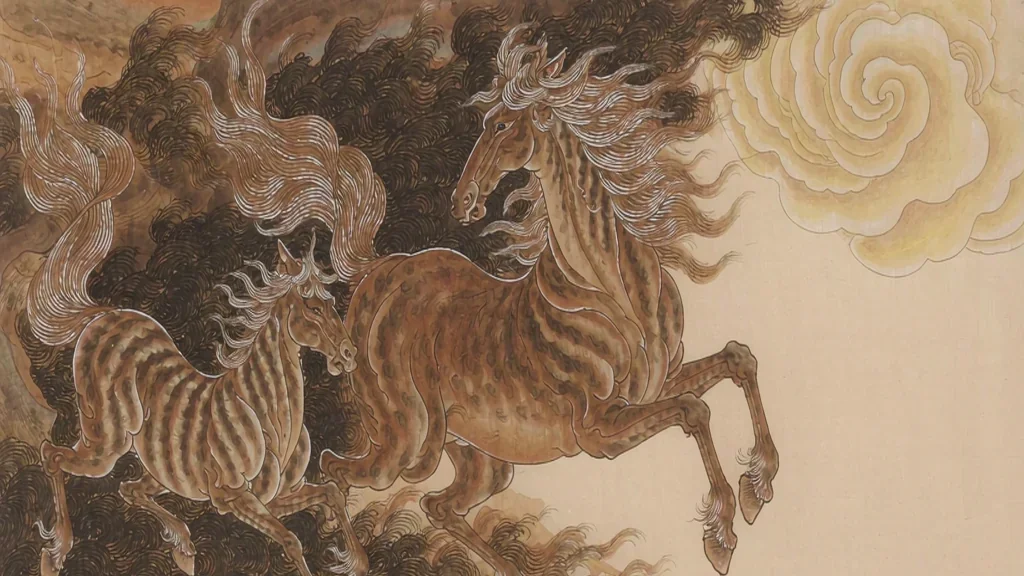
The horse radical lends the character a visual distinctiveness that helps prevent confusion with homophonous names, and clan writers have occasionally drawn on the equine imagery in decorative motifs. While such symbolic play is secondary to the name's genealogical meaning, it reflects the broader Chinese habit of finding auspicious resonance in the written form of a surname.
The Shiping Commandery and Clan Homeland
The Feng surname is traditionally associated with the Shiping commandery, located in the Guanzhong region of present day Shaanxi, as a primary ancestral seat, and some branches also cite the Yingchuan area. The Shiping connection situates the clan near the Zhou and Qin heartland, consistent with the Bi Gonggao origin story that places the founding fief in the Chang an vicinity. Clan halls and genealogies invoke these homelands to assert a credible point of origin.
As with other surnames, the junwang allowed geographically scattered Feng families to maintain solidarity by reference to a shared commandery. Even branches that had migrated far south could declare the Shiping origin and thereby claim kinship with strangers of the same name. The commandery operated as a portable homeland, recited at rituals and recorded in registers, binding dispersed families into one imagined ancestral geography.
In the material culture of the lineage, the Shiping identity appeared on hall names, ancestral tablets, and the couplets adorning lineage buildings. To be a Shiping Feng was to claim a particular heritage rooted in the northwestern heartland, and that claim structured how the clan presented itself in local society wherever it settled across the centuries.
Feng Menglong and Vernacular Literature
The most celebrated literary bearer of the name is Feng Menglong, a late Ming dynasty writer and editor whose vernacular story collections transformed Chinese popular fiction. He compiled and retold hundreds of short tales drawn from the oral and written entertainment culture of his time, arranging them into famous anthologies that circulated widely and influenced later drama and fiction. His work preserved a vivid record of the social life, humor, and moral imagination of late imperial society.
Feng Menglong's project exemplified the scholar's turn toward the vernacular, treating popular stories as worthy of serious editing and publication at a moment when print culture was expanding. By refining and anthologizing these tales, he helped elevate the status of vernacular narrative and ensured its transmission to later readers. The Feng surname thereby gained a strong association with the democratization of literature and with the textures of everyday urban life.
His career also illustrates the complex position of the late Ming intellectual, caught between examination ambitions, commercial publishing, and a restless cultural marketplace. For the Dong, Pan, and Feng lineages alike, a single luminous ancestor can define the cultural profile of a name, and Feng Menglong remains the figure through whom the Feng surname enters the history of Chinese letters.
Feng Yuxiang and the Modern Military Era
In the turbulent early twentieth century the Feng surname was prominently carried by Feng Yuxiang, a warlord and military leader who played a significant role in the republican and civil war periods. Known for a pragmatic and sometimes reformist style of command, he controlled substantial forces at various points and participated in the shifting alliances that defined the era. His career captures the instability of the republic's early decades and the outsized influence of regional military men.
Feng Yuxiang's reputation is mixed in the historical record, with accounts noting both his efforts at soldier welfare and education within his armies and the opportunism of his political switches. Whatever the verdict, his prominence placed the Feng name at the center of modern military and political history, a stark contrast to the literary fame of Feng Menglong centuries earlier. The surname thus spans both the brush and the battlefield.
The juxtaposition of a Ming novelist and a republican warlord within one surname shows the range of roles a family name can accumulate. Each generation pours new content into the vessel of the name, and the Feng lineage demonstrates how a single surname can be borne by figures of utterly different temperaments while retaining its written continuity across the centuries.
Clan Migration and the Feng Diaspora
Like many northern surnames, Feng branches joined the southward migrations that carried Han Chinese families into the Yangtze region, Fujian, and the far south, especially during periods of northern warfare. These movements dispersed the clan across provinces where it established lineage halls and assimilated local influences. In Guangdong and neighboring regions the surname became well established, forming part of the dense surname landscape of the Lingnan area.
From the southeast coast, Feng families joined the overseas emigration to Southeast Asia and, later, to the Americas and Australasia. Diaspora Feng associations followed the familiar pattern of mutual aid, festival observance, and genealogical preservation, allowing strangers who shared the name to treat one another as distant relatives. The surname thus served as a portable institution carrying kinship obligations across oceans.
In the contemporary West, Feng bearers appear across professional and commercial fields, and the name is often rendered simply as Feng in passports and directories. The stability of the written character means a Feng in Boston can recognize a Feng in Singapore as a namesake despite divergent dialects. The surname therefore operates as a quiet transnational thread connecting dispersed descendants of the same ancient lineage.
Distribution and Cultural Memory Today
Today the Feng surname is distributed throughout China and the overseas Chinese world, with a map shaped by ancient northern roots and later southern and maritime migration. It ranks among the several hundred common surnames, recognizable through its distinctive character and its roster of notable bearers. Regional Feng associations continue to preserve genealogies and to celebrate clan identity through reunions and festivals tied to Chinese custom.
Renewed interest in roots has encouraged the digitization of Feng genealogies and the reconstruction of family trees linking diaspora members to ancestral villages. Online surname culture platforms compile the origin tales, junwang information, and famous figures associated with the name, making the clan's heritage accessible to younger bearers who may live far from the Shiping homeland.
The endurance of the Feng surname across enfeoffment myths, vernacular fiction, and modern warlord politics testifies to the remarkable capacity of Chinese family names to accumulate meaning over time. Whether encountered in a Ming storybook or a modern history, it carries the weight of a continuous lineage whose story began, according to tradition, with a Zhou royal fief near the ancient capital.
❓ Frequently Asked Questions
What is the origin of the Feng surname?
The main account traces Feng to a cadet branch of the Zhou royal Ji clan through Bi Gonggao, enfeoffed at Feng, while a second tradition links it to a small Gui surname state conquered by Jin.
What does the character 冯 look like?
It combines the horse radical 马 with the phonetic element 仌 and is best known as the Feng surname, pronounced Féng with the second tone.
Who was the famous literary Feng?
Feng Menglong was a late Ming writer and editor whose vernacular story anthologies became classics of Chinese popular fiction and influenced later drama.
What is the Feng clan homeland?
The traditional junwang is the Shiping commandery in present day Shaanxi, with some branches also citing the Yingchuan area.
How is Feng pronounced in pinyin?
It is romanized Féng with the second tone in Mandarin, though southern dialects and older records may show spellings such as Fung.
Is Feng a common surname?
It ranks among the several hundred common Chinese surnames, found across China and in overseas communities, with notable literary and modern figures.