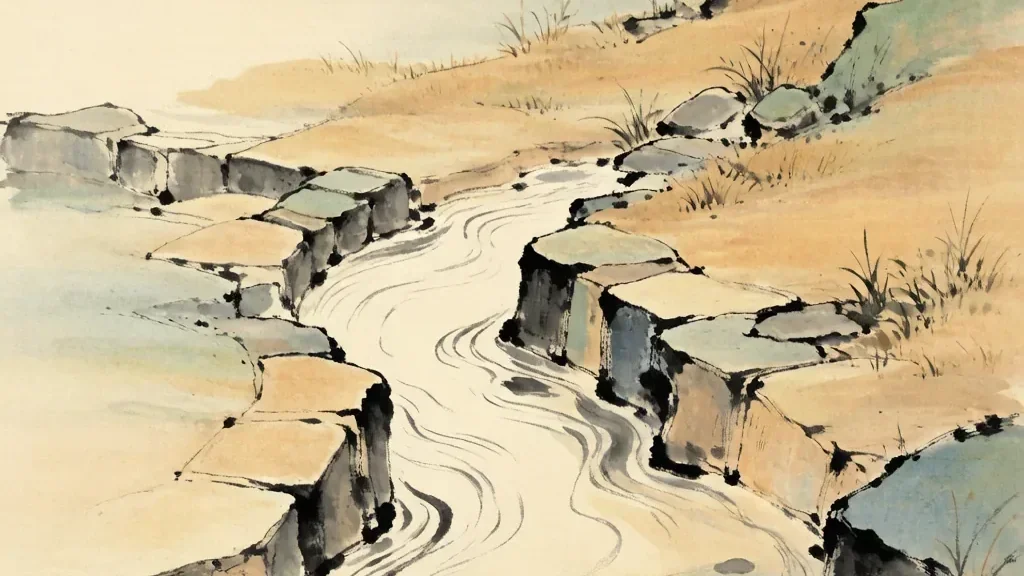
The drainage system in traditional Chinese city and garden design is one of the quiet triumphs of premodern engineering, a network of open channels, covered conduits, ponds, and sloping pavements that moved stormwater and wastewater out of dense settlements before modern pipes existed. From the baked-earth and ceramic drains of early capitals to the famous subterranean brick arteries beneath the Ming and Qing walls of Beijing, Chinese builders treated water control as a founding requirement of urban order rather than an afterthought. Good drainage protected timber buildings from rot, kept streets passable, fed moats and canals, and in the case of the classical garden turned excess water into scenery. This article surveys how Chinese cities and gardens drained themselves, what materials and gradients they used, and why these systems still matter as models of low-energy, maintainable infrastructure in a wet monsoon climate.
Why Drainage Mattered in Chinese Cities
Most of China's great cities grew in regions of summer monsoon rain, where a single storm could drop enormous volumes of water onto packed earth and timber-frame streets. Without planned drainage, lanes became rivers of mud, foundations softened, and epidemics bred in standing water. City founders therefore embedded drainage in the original grid, not as a later patch.
Drainage also supported defense. The moat that ringed a walled city needed both a supply and an outlet; a drainage plan kept the water fresh and prevented the ditch from silting shut. In this way military architecture and civil hydraulics were the same project.
Finally, drainage protected wealth. Markets, granaries, and temples stood on valuable ground, and a flooded district was a direct economic loss. Investing in channels was therefore also an investment in stability.
Early Examples from Ancient Capitals
Archaeology reveals that drainage was already sophisticated in the capitals of the early dynasties. At sites associated with the Shang and Zhou, excavators have found ceramic pipe sections laid end to end to carry water beyond the settlement, evidence that organized drainage predates many famous later works by more than two millennia.
These early systems used cylindrical or slightly tapering clay pipes, sometimes set in trenches and covered with slabs, a method that anticipates the buried conduit in principle. The presence of such pipes in ceremonial and residential zones shows drainage was a normal part of planning.
Later imperial capitals, including those of the Han and Tang, expanded the idea into citywide networks, using larger sections for main trunks and smaller branches for courtyards, a hierarchy of flow that modern sewer design still follows.
The Beijing Underground Drain Network
The most celebrated traditional drainage system is the brick-lined network beneath the walled city of Beijing as laid out in the Ming and Qing periods. Broad arched tunnels ran beneath major streets, collecting runoff from the surface through open gutters and feeding it toward the city's rivers and the southern moat.
These trunks were built of fired brick with a rounded or vaulted section, large enough for a person to enter for cleaning, an essential feature because a drain that cannot be maintained soon clogs. Branch drains from lanes joined the trunks through vertical inlets set in the roadway.
The system was designed with a gentle fall so water moved by gravity alone, requiring no pumps. Its scale and durability allowed it to function for centuries and to be reused, in parts, well into the modern period.
Surface Gutters, Inlets, and Street Gradient
Above ground, Chinese streets were graded so that rainwater ran to the sides, where open stone or brick gutters carried it along the lane to an inlet. These gutters were often capped with slabs that could be lifted for clearing, blending with the paved surface while hiding the flow.
Inlets, the points where street water dropped into the underground trunk, were placed at low spots and intersections where water naturally pooled. Their mouths were sized to admit runoff but were sometimes guarded against debris with simple gratings of stone bars.
The grading was subtle but deliberate. A well-built lane shed water within minutes of a storm ending, which is why visitors to old quarters often remark that the paved streets, though narrow, rarely flood even in heavy rain.
Roof and Courtyard Drainage in Siheyuan
In the classic Beijing courtyard house, the siheyuan, drainage was a matter of domestic choreography. Roofs were sloped inward toward the court, so rain ran off the eaves into channels that ringed the paved courtyard and then left through a single outlet, a design said to gather wealth inward rather than let it escape.
The courtyard itself was slightly dished and paved with jointed stones set over a bed of sand and rubble that absorbed and conveyed water. A covered drain at one corner carried household runoff beneath the threshold to the lane gutter outside.
This micro-system taught the same lesson as the citywide one: control water at the source, move it by gravity, and keep the path clear. The siheyuan was, in effect, a drainage cell within the larger urban body.
Drainage in the Classical Garden
The scholar's garden turned drainage into art. Ponds and streams were not only scenic but functional reservoirs that received roof and path runoff, buffering storms and releasing excess through weirs to the outside canal. A garden without a water system was unthinkable.
Pathways were cambered so rain slipped to hidden side channels, and stepping stones were laid to keep feet dry while water moved beneath. The famous leaky windows and rockery also helped by slowing sheet flow and encouraging infiltration around plantings.
Because the garden aimed at naturalness, its drainage was disguised as landscape. A still pool, a murmuring channel, and a damp grotto were all parts of one hydrological plan that kept the ground firm under the pavilions.
Materials: Ceramic Pipe, Brick, and Stone
Traditional drainage relied on three durable, local materials. Fired clay pipes, some quite large, carried closed flows; brick formed the vaulted trunks and manholes; and stone supplied gutter linings, inlet covers, and the slabs that capped open runs.
All three resist decay in wet ground better than timber and need no metal. Their mass also helped stabilize temperature and reduced the smell that open wooden troughs would have produced. Where ceramic was unavailable, tamped earth channels lined with gravel served humbler sites.
The choice of material tracked the status of the place. A palace or capital used brick vaults and molded pipe; a village used earthen ditches and the occasional clay section, but the hydraulic logic was the same up and down the scale.
Maintenance, Cleaning, and the Human Factor
A drainage system is only as good as its upkeep, and Chinese cities developed routines for it. Periodic dredging of trunks, clearing of inlets before the rainy season, and repair of collapsed brick sections were tasks assigned to ward headmen or palace works offices depending on the district.
The walkable size of the Beijing trunks was no accident; it allowed crews with baskets and hoes to enter and remove silt, the single greatest enemy of any gravity drain. Records from the imperial works describe seasonal cleaning drives meant to prevent the summer floods.
Neglect, by contrast, explains many historical urban disasters. When war or disorder broke the maintenance chain, even a fine network silted and flooded, a reminder that infrastructure is a continuous social commitment, not a one-time build.
Drainage and Urban Flood Control Today
Modern Chinese cities face acute stormwater pressure from paving and density, and planners increasingly look back at traditional systems for ideas. The old emphasis on infiltration, on separated surface channels, and on maintainable brick trunks offers lessons for sustainable drainage that pure underground piping forgets.
Concepts now called sponge city design, which lets urban ground absorb and slowly release rain, echo the courtyard, garden, and open-gutter logic of the past. Permeable paving and restored canals are modern translations of ancient practice.
Studying the old networks also helps preserve them. Where historic trunks still lie under old quarters, they can be integrated into new drainage rather than destroyed, saving both heritage and engineering value.
Notable Surviving Remains
Visitors to Beijing can still see stretches of the old brick drainage where reconstruction has exposed it, and museum displays hold the curved clay pipes recovered from early capital sites. Some garden cities preserve functioning historic pond-and-channel systems that drain exactly as they did centuries ago.
These remains are more than curiosities. They let engineers measure gradients, section sizes, and join details that written plans omit, providing a physical textbook of low-tech hydraulics suited to a monsoon climate.
Each surviving length of vaulted brick tunnel is also a monument to the unnamed laborers and inspectors who kept the city dry, a reminder that infrastructure is woven from both stone and institutions.
Lessons from a Pre-Modern System
The Chinese traditional drainage system teaches that water control begins with layout: place the outlets first, grade everything toward them, and keep the paths clear. It favors gravity over machinery, local material over import, and regular care over spectacular repair.
It also shows that drainage and beauty are not opposed. In the garden the same channels that prevented flood also made the reflections, the sound of water, and the cool of the court. Utility and delight shared one plan.
For contemporary design, the lesson is humility. A system that served millions for centuries with almost no energy deserves study, not nostalgia, as cities struggle to manage the heavier storms of a changing climate.
❓ Frequently Asked Questions
How did traditional Chinese cities drain stormwater?
They used graded streets, open stone gutters, and buried brick or ceramic conduits laid on a gentle fall so rain ran by gravity to rivers and moats without pumps.
What was special about the Beijing drainage system?
It had large vaulted brick trunks beneath main streets, walkable for cleaning, with branch drains and road inlets feeding a citywide gravity network.
How did a siheyuan handle courtyard water?
Roofs sloped inward to a dished paved court with perimeter channels that carried runoff through one covered outlet to the lane gutter outside.
Did classical gardens use drainage too?
Yes, their ponds and streams were functional reservoirs that received runoff and released excess through weirs, while cambered paths hid side channels.
What materials were used in old drains?
Fired clay pipes for closed flows, brick for vaulted trunks and manholes, and stone for gutters and inlet covers, all chosen for wet-ground durability.
Why is traditional drainage relevant today?
Its gravity flow, infiltration, and maintainable design anticipate modern sponge city ideas and offers low-energy lessons for flood-prone cities.