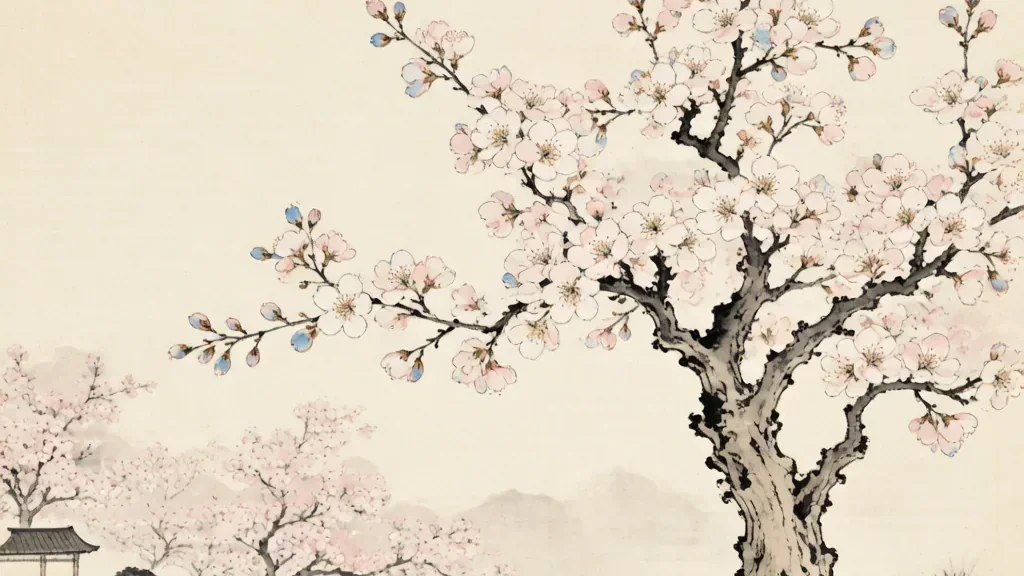
The cherry, called yīngtáo (樱桃) in Chinese, is a small, glossy stone fruit prized in China for its bright color, juicy sweetness, and short, eagerly awaited season. Born on modest trees in the rose family, cherries have been cultivated and enjoyed since antiquity, mentioned in early texts as a delicacy offered at court and celebrated in poetry for their likeness to a beauty's lips. Though the ornamental cherry blossom gets much attention in spring, the fruit cherry has its own long history as a treasured summer treat, a token of ripeness, and a small symbol of the fleeting pleasures of the warm season.
The Tree and the Fruit
The cherry is a fruit-bearing tree or shrub in the genus Prunus, cousin to plums, apricots, and peaches. The cultivated sweet and sour cherries produce small round fruits with a thin skin, juicy pulp, and a single hard stone. Colors range from pale yellow through red to near black, depending on variety.
Cherry trees are generally smaller than many orchard trees and blossom in spring with white or pale pink flowers before setting fruit. The fruit ripens quickly in late spring or early summer, and the harvest window is brief, which has always added to the cherry's preciousness.
An Ancient Delicacy
Cherries have a long record in China, appearing in early classical writings and valued at imperial courts as a fresh luxury. Because the fruit spoils fast and travels poorly, it was historically a local, seasonal pleasure rather than a traded staple, reserved for those near the trees.
Over the centuries cultivation spread through suitable regions, with different areas favoring sweeter or tarter kinds. The cherry's place in literature as a refined treat helped keep it a cut above ordinary fruit in the cultural imagination.
Cherry in Classical Literature
Chinese poets compared ripe cherries to the vermilion lips of a beloved, a metaphor that turned the fruit into an image of loveliness and desire. Tang and later poets wrote of cherries at banquets, where a bowl of the bright fruit signaled both abundance and the host's refinement.
The fruit also stood for the height of early summer and the sweetness of the season briefly enjoyed. Such references trained readers to see the cherry not just as food but as a small, edible poem about beauty and time.
The Short Season
A defining feature of the cherry is how quickly it comes and goes. The fruit ripens over a span of days and, once picked, loses quality fast, so the best cherries are eaten almost where they grow. This brevity made the cherry a lesson in seizing the moment.
In earlier times, the brief harvest was an event, with households hurrying to enjoy the fruit fresh, preserved, or in wine before it faded. The cherry's clock taught patience in waiting and promptness in tasting.
Culinary Uses
Fresh cherries are eaten out of hand as a summer snack, chilled to heighten their sweetness. They also appear in desserts, fruit plates, and compotes, and are cooked down into sauces and fillings where their tartness balances sugar.
Cherry wine and preserved cherries in syrup extend the pleasure, while dried or candied forms appear in baking. In traditional food practice the fruit is considered warming and eaten in measure, fitting a broader habit of balancing foods by nature.
Orchard and Region
Cherries favor temperate climates with enough winter cold to set fruit and a mild spring, so they grow well in parts of the north and at higher elevations in the south. Modern orchards use selected varieties for size, sweetness, and firmer skin that ships better.
Certain regions became known for fine cherries, and orchard tourism lets visitors pick their own during the season. Refrigeration and faster transport have made cherries far more widely available than in the past, though the fresh local fruit remains the ideal.
Cherry and the Blossom
It is worth keeping the fruit cherry distinct from the ornamental cherry blossom (yīnghuā), though both share the name root. The blossom is grown for flowers and admired in spring outings, while the fruit cherry is grown for the edible berry and ripened in summer.
In practice the same tree often gives both, but garden cherries and orchard cherries are usually different selections. The two together map the cherry's year: first the flower, then the fruit—beauty followed by sweetness.
Symbolism and Decoration
Beyond food, the cherry's bright red pairs with ideas of luck and liveliness in folk decoration, and the glossy fruit appears in paintings of fruits and birds as a cheerful, auspicious subject. Its roundness and color suit festive imagery.
The cherry also keeps its romantic association from poetry—small, red, and sweet, like a stolen kiss. In this it differs from the plum's moral weight, offering instead a lighter, more playful symbolism of desire and delight.
Cherry in Modern Life
Today cherries are a popular premium fruit, sold fresh in markets during the short season and increasingly imported as well as domestic. Their arrival signals summer to many urban shoppers, continuing the old excitement in a modern form.
Social media and gift culture have amplified the cherry's appeal, with attractive boxes of the fruit exchanged as treats. Yet the essential experience remains the same as centuries ago: a small, perfect sweetness available only for a little while.
A Small, Bright Pleasure
The cherry's story is modest but telling: a fruit that emperors and poets treasured, that travels badly and waits for no one, and that rewards the attentive with a few weeks of brilliance each year. It asks to be noticed and enjoyed now.
In a culture rich with symbolic flowers and fruits, the cherry keeps a special niche—not the stern teacher of virtue like the plum, but the gentle reminder that life's sweetness is real, brief, and worth savoring. To eat a cherry slowly is to honor that small wisdom.
❓ Frequently Asked Questions
How long have cherries been eaten in China?
They appear in early classical writings as a court delicacy, so the fruit has been enjoyed for a very long time, valued for its color and sweetness.
Why were cherries considered special?
They spoil fast and travel poorly, so historically they were a local, seasonal luxury best eaten near where they grew.
How are cherries used in cooking?
Eaten fresh, chilled, or in desserts and sauces; also made into wine and preserves, with tarter kinds balancing sweet dishes.
Is the fruit cherry the same as the blossom?
Both share the name root, but the fruit cherry is grown for eating, while the ornamental cherry blossom is grown for spring flowers.
What does the cherry symbolize?
Brightness, luck, and playful desire; in poetry it likened to red lips, a lighter symbolism than the plum's moral weight.
Where do cherries grow in China?
In temperate regions with cold winters and mild springs, including parts of the north and higher elevations in the south.