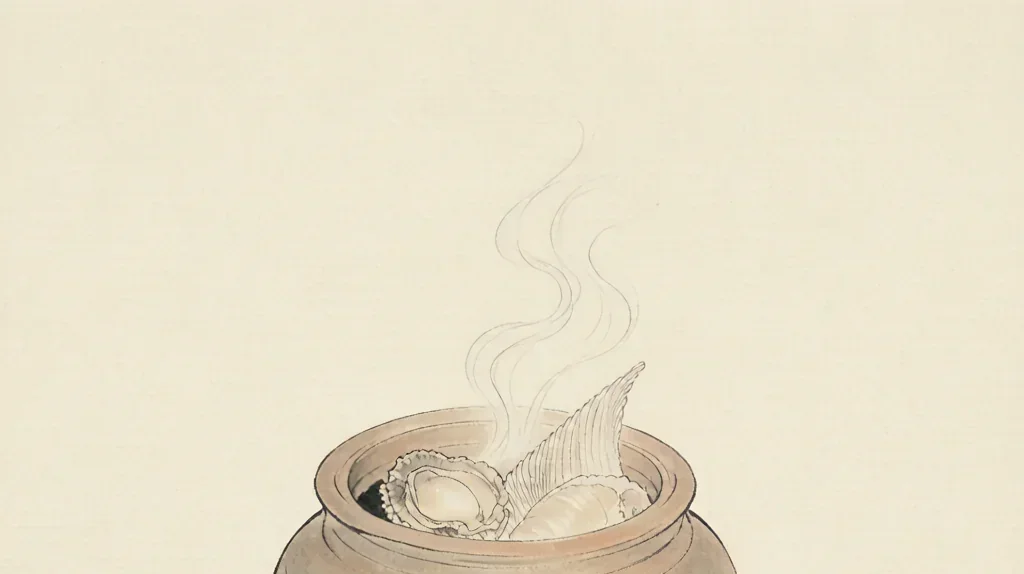
Some dishes whisper; this one shouts from across a courtyard. Buddha Jumps Over the Wall (佛跳墙, ) is a lavish Fujian-style soup so rich, so fragrant, and so meticulously composed that, as legend has it, even a Buddhist monk abandoned his vows and leapt over a wall to get a taste. It is less a single recipe than a symposium of luxury ingredients — sea cucumber, abalone, shark fin, fish maw, scallops, quail eggs, and tender pork, among others — slowly steamed together in a sealed clay pot until their essences merge into a single, velvety broth. For visitors to China who want a single bowl that captures the ambition of Chinese banquet cooking, there is almost no better place to start.
Behind the playful name lies a serious culinary philosophy: that patient, layered cooking can transform many humble and expensive parts into something greater than the sum of its parts. In this article we will trace the dish's origins in nineteenth-century Fuzhou, examine its place within Fujian (Min) cuisine, walk through the staggering list of ingredients and the days-long preparation, and consider what it means on a Chinese banquet table today.
Origins: A Banquet Born in Fuzhou
The most widely accepted story places the invention of Buddha Jumps Over the Wall in the late Qing dynasty, during the reign of the Guangxu Emperor (1875–1908), in the city of Fuzhou, the capital of Fujian province. A provincial official or wealthy merchant — accounts vary — is said to have instructed his household chef to prepare an extravagant dish for a gathering of guests. The chef combined a wealth of premium ingredients in a wine jar and sealed it, simmering everything slowly so that the aromas could not escape.
According to the popular anecdote, the fragrance drifted over a nearby temple wall, where a Buddhist monk on a vegetarian regimen caught the scent, climbed the wall, and jumped across to share the meal. Whether or not the story is literally true, it captures the dish's reputation: irresistible enough to tempt the most disciplined ascetic. The name itself was later supplied by a poet who, upon tasting it, composed the line that became its title — "Even the Buddha would jump over the wall" — turning a rich stew into a piece of culinary folklore.
What is certain is that the dish emerged from Fujian's long tradition of slow, aromatic simmering and its coastal access to some of the finest seafood in China. Fuzhou had been a port city for centuries, and its cooks were experts at coaxing flavor from dried and fresh sea products alike. Buddha Jumps Over the Wall is the culmination of that expertise, a showpiece that announced both wealth and refinement.
Regional Context: Fujian (Min) Cuisine
To understand the dish, one must understand its home. Fujian cuisine, one of the Eight Great Cuisines of China, is known for its emphasis on umami-rich broths, its mastery of soups, and its liberal use of seafood and mountain delicacies. The coastal geography supplies squid, oysters, prawns, and crabs, while the inland hills provide mushrooms, bamboo shoots, and game. Cooks in the region prize a clean, sweet, and deeply savory taste rather than heavy chili or strong spice.
Fujian is also famous for its "ten distinct flavor profiles" and its skill with clear, velvety, and thick soups. Buddha Jumps Over the Wall sits at the very top of this soup-centric tradition. It is the dish a Fujian host serves to signal the utmost respect for honored guests. Outside Fujian, it became a signature of high-end Cantonese and Shanghainese banquet restaurants, where skilled chefs could afford the rare ingredients and the long labor the recipe demands.
The dish also reflects the larger Chinese belief that geography shapes taste. Just as Sichuan leans on pepper and chili and northern China leans on wheat and vinegar, the southeastern coast leans on the sea. Buddha Jumps Over the Wall is thus both a regional dish and a regional ambassador, carrying the flavors of the Fujian coast to tables across the country and, today, around the world.
Ingredients: A Wealth of Land and Sea
The defining feature of Buddha Jumps Over the Wall is its pantry. A traditional version may include more than twenty ingredients, and the precise roster varies by chef, season, and budget. Common components are shark fin, sea cucumber, abalone, fish maw (the air bladder of a sturgeon or croaker), dried scallops (conpoy), squid, prawns, quail eggs, chicken, duck, pork tendon, ham, and a variety of mushrooms such as shiitake and the prized bamboo fungus.
Many of these items arrive in dried form — sea cucumber, scallops, and abalone in particular must be rehydrated over several days of soaking and gentle simmering before they ever meet the pot. This advance work is essential: dried seafood contributes a concentrated, complex umami that fresh ingredients alone cannot provide. The broth base is typically built from chicken, duck, and pork, sometimes with a touch of ham, simmered for hours until it is rich but not greasy.
Flavorings are restrained but deliberate. Shaoxing rice wine is almost always added, both to deepen the aroma and to balance the richness of the seafood. Ginger and scallion round out the base, and a few chefs add a whisper of rock sugar. The genius of the dish is balance: each ingredient retains a trace of its own character while submitting to the shared, luxurious whole.
How It Is Made: Days of Patience
Making Buddha Jumps Over the Wall is closer to a project than a recipe. The first stage is rehydration and pre-cooking. Dried sea cucumber, abalone, and scallops are soaked and gently simmered separately over one to three days, changing the water repeatedly to remove impurities and any fishy sharpness. Meanwhile, the meats — chicken, duck, pork — are blanched to clarify the broth.
The second stage is building the stock. The meats are simmered for hours with ginger and scallion until a deep, clean broth forms. This is strained and cooled, and the surface fat is skimmed away repeatedly so the final soup is glossy rather than oily. Only then are the precious seafood ingredients added, each at the right moment so nothing overcooks.
The final and most theatrical stage is the sealed-jar steam. All ingredients are arranged in layers inside a ceramic crock or wine jar, the rich broth is poured over them, the lid is sealed with a sheet of lotus leaf or a flour paste, and the jar is steamed for several hours. Steaming, rather than boiling, keeps the textures tender and lets the aromas circulate without escaping. When the seal is broken at the table, the released fragrance is the dish's grand announcement.
Cultural Meaning: Hospitality at Its Peak
In Chinese dining culture, few gestures communicate respect like a carefully prepared banquet, and few banquet dishes carry more weight than this one. Serving Buddha Jumps Over the Wall signals that no expense or effort was spared for the guest. It is the centerpiece at weddings, milestone birthdays, business celebrations, and official receptions. To be offered a bowl is to be told, plainly and deliciously, that you matter.
The dish also embodies a Confucian ideal of harmony. Separate, strong ingredients — the gamey, the briny, the fatty — are reconciled into one smooth whole, an edible metaphor for social order and mutual accommodation. There is even a folk blessing associated with it: because of its many components, it is said to gather "all the good things under heaven" into a single vessel, a wish for completeness and abundance.
At the same time, the dish has become a symbol of Chinese culinary ambition on the global stage. At state banquets and overseas restaurants alike, it is offered as proof that Chinese cooking is not only street food and stir-fry but also a haute cuisine of patience, precision, and opulence.
When and Where It Is Eaten
Traditionally, Buddha Jumps Over the Wall is a banquet dish rather than everyday fare, and it remains associated with special occasions and fine restaurants. In Fuzhou and other major cities, well-known restaurants have their own closely guarded versions, sometimes requiring advance orders of a day or more because of the long preparation. Travelers to Fujian often seek it out as a regional trophy.
Because the original recipe calls for shark fin, a controversial ingredient today, many modern chefs have revised the dish, substituting alternatives such as fish maw, morel mushrooms, or extra abalone and scallops. These updated versions preserve the spirit — many ingredients, a sealed jar, a long steam — while responding to concerns about sustainability and animal welfare. Ordering it is worth doing at a reputable establishment that can explain its ingredient choices.
Whether classic or modern, the experience is the same: a heavy lid lifted at the table, a cloud of fragrant steam, and a spoonful of broth that tastes like the sea, the farm, and centuries of craft at once. It is a dish best approached not as a quick meal but as an event — one that rewards the patience it first demanded from its maker.
The Sealed-Jar Method and Its Science
The dish's magic lies in its sealed ceramic jar. After the many ingredients are arranged in layers, broth is poured over, the lid is sealed with lotus leaf or a flour paste, and the whole jar is steamed for hours. Steaming, rather than boiling, keeps each component tender and lets the aromas circulate in a closed space instead of escaping into the kitchen air. The seal also blends the essences seafood, meat, and wine into one harmonious broth without any single flavor dominating. Breaking the seal at the table releases that accumulated fragrance all at once, which is exactly the drama the legend describes. It is a technique as much as a recipe, turning patience into aroma.
Buddha Jumps Over the Wall at the Banquet Table
In practice the dish is a banquet headline, not an everyday bowl. Fine restaurants in Fuzhou and beyond often require a day's notice because the dried seafood alone needs days of soaking and simmering. When it arrives, the sealed jar is opened in front of the guests, and small bowls of the rich soup are served with the tender morsels inside. Modern versions may drop shark fin for sustainability, substituting mushrooms, fish maw, or extra scallops, but the sealed-jar method and the layered luxury stay the same. For a host, ordering it signals the highest respect for guests; for a traveler, it is a regional trophy that sums up Fujian's love of the sea and the slow art of the soup.
❓ Frequently Asked Questions
📝 Chinese Vocabulary
佛跳墙 — : Buddha Jumps Over the Wall, the famed Fujian banquet soup.
福建菜 — : Fujian (Min) cuisine, known for clear, savory soups.
海参 — : sea cucumber, a rehydrated delicacy used in the dish.
鲍鱼 — : abalone, a prized coastal ingredient.
花雕酒 — : Shaoxing rice wine, used to enrich the broth's aroma.
鱼肚 — : Fish maw, the air-bladder delicacy that adds body to the pot.
干贝 — : Dried scallop, a source of concentrated umami in the broth.
坛 — : The sealed ceramic jar used for the long, aromatic steam.
🎉 Fun Facts
- The dish's poetic name is attributed to a Qing-dynasty poet who wrote a couplet declaring that even a Buddha would leap a wall for a taste.
- Some banquet versions use more than twenty ingredients, each pre-cooked separately before the final sealed-jar steam.
- Because preparation can take days, fine restaurants often require guests to order it a full day in advance.
- Modern sustainable versions swap shark fin for mushrooms or extra fish maw without changing the cooking method.
- The dish is traditionally served in a sealed ceramic jar that is opened at the table for dramatic effect.
- Fujian's coastal location gives the dish its deep-sea pantry of abalone, sea cucumber, and scallops.