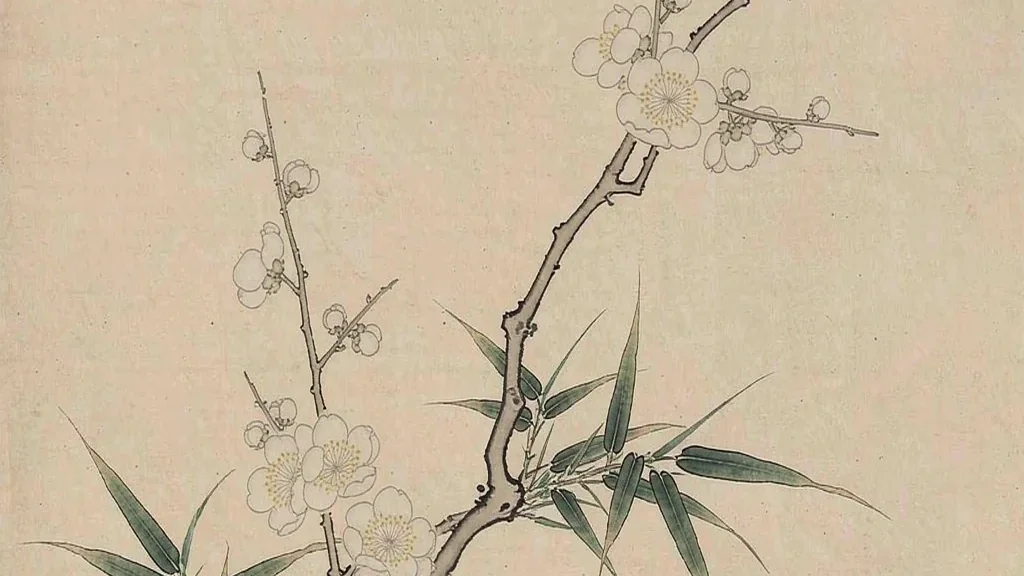
Xieyi (写意, literally "writing the idea" or "sketching the spirit") is the great freehand branch of Chinese painting, the mode that prizes spontaneous brush energy and inner feeling over minute description. Where the meticulous gongbi manner records the world in fine lines and careful color, xieyi aims to capture the "life spirit" (shengyi) of a subject with a few decisive strokes. Born in the Tang and Song eras and matured by literati artists of the Yuan, Ming, and Qing, xieyi became the dominant idiom of the scholar-painter and remains the style most Westerners picture when they think of "Chinese brush painting"—bold, wet, and unmistakably alive.
Meaning of the Term
The word xieyi combines xie (写, "to write" or "to depict") and yi (意, "idea," "intention," or "spirit"). The phrase therefore suggests not copying outward appearance but "writing out" an inner conception. This linkage between painting and calligraphy is fundamental: in xieyi the brushstroke is both image and gesture, a trace of the painter's mind and hand.
Because the term is contrastive, it is usually understood against gongbi (工笔, "fine brush"), the detailed courtly style. The opposition is not absolute—many paintersmixed both—but it gives Chinese art criticism one of its most useful pairs of categories for thinking about what a picture should do.
Early Origins
The roots of freehand painting reach back to the Tang dynasty, when poets and painters such as Wang Wei were praised for landscapes that conveyed mood through ink alone rather than through color and outline. The Tang critic Zhang Yanyuan already valued "spirit resonance" (qiyun) above likeness, a value that freehand art would later embody fully.
During the Five Dynasties and Northern Song, painters like the monk-author Guanxiu and the ink-play of figures such as Wang Mo (a splashed-ink exponent) pushed toward looser, more expressive handling. The "splashed ink" (po mo) current of the Tang and Song is often treated as a direct ancestor of full xieyi freedom.
The Literati Turn
Xieyi found its true home in the literati (wenren) movement. From the Yuan dynasty onward, scholar-officials who painted for self-cultivation rather than pay embraced a style built on calligraphic strokes, personal feeling, and scholarly reference. Su Shi and Mi Fu in the Song had already argued that a painting's worth lay in the painter's character and spirit, not in visual accuracy.
By the Ming and Qing, the ideal of "painting as calligraphy" was firmly established. Literati painters such as Xu Wei, the "Eight Eccentrics of Yangzhou," and the individualist monks Bada Shanren and Shitao carried xieyi to extremes of brevity and emotional intensity, using the style as a vehicle for individual voice.
Brush, Ink, and Spontaneity
Technique in xieyi is unforgiving precisely because it is direct. The painter loads the brush with ink or color and commits to a stroke that cannot be erased; correction is impossible, so the gesture must be both planned and spontaneous. Control and abandon are held in tension, and the dried, broken, or wet qualities of each stroke are left visible as evidence of the act.
Ink modulation—shifting between the "five tones" of ink from dark to pale—does much of the descriptive work. A single loaded brush might move from wet black to dry gray within one stroke, suggesting both solid form and atmosphere. This economy is the heart of the xieyi aesthetic.
Subjects and Themes
Freehand painters favor subjects that carry symbolic or poetic weight: orchids, bamboo, plum blossom, and chrysanthemum (the "Four Gentlemen") as tests of brush discipline and moral metaphor; birds and flowers for their lively spirit; and landscapes reduced to a few reeds, a boat, and a distant shore. Each subject is a pretext for brushplay as much as depiction.
Because xieyi is associated with personal expression, painters often add poetry and seal marks to the image, turning the work into a composite literary-visual object. The painting thus becomes a kind of conversation among brush, verse, and stamp.
Xieyi Versus Gongbi
The contrast with gongbi is the clearest way to grasp xieyi. Gongbi builds an image through tight outlines filled with layered color, rewarding patience and precision; xieyi builds through suggestive strokes that value speed, feeling, and the "idea." A gongbi flower can take days; a xieyi flower may take seconds yet still be considered "finished."
Neither is "better." Chinese criticism traditionally treated gongbi as the professional's craft and xieyi as the amateur's vehicle of spirit, but in practice great artists moved between them. The point of the distinction is that the two answer different questions: how accurately, versus how vitally, to picture the world.
Regional and Modern Developments
In the modern period, xieyi absorbed new influences. Painters of the Shanghai school (such as Wu Changshuo) and later masters like Qi Baishi and Zhang Daqian extended freehand idioms into bold, colorful, and sometimes playful registers, often blending flower-and-bird subjects with a popular appeal. Qi Baishi's shrimp and insects are quintessential xieyi: minimal strokes, maximum life.
Twentieth-century reformers debated whether xieyi should adopt Western perspective and shading, but the core commitment to brush spirit survived. Today xieyi is taught worldwide as the essence of Chinese brush painting, even as contemporary artists reinterpret it with new materials.
Why Xieyi Matters
Xieyi matters because it makes the process of painting part of the meaning of the picture. The visible stroke is a record of a human gesture, and the blank spaces are as composed as the marks. In a culture that long prized suggestion over statement, xieyi became the perfect visual form: a way to say much by doing little, and to let the viewer's imagination finish the work.
For learners, xieyi offers both a discipline and a freedom—discipline in controlling the brush, freedom in trusting the moment. That combination is why, after a thousand years, it still feels immediate.
❓ Frequently Asked Questions
What does xieyi mean?
Xieyi means "writing the idea" or "sketching the spirit." It is the freehand style of Chinese painting that values spontaneous brush energy and inner feeling over exact description.
How is xieyi different from gongbi?
Gongbi is meticulous and fine-lined, built with patient detail; xieyi is loose and direct, built from suggestive strokes. They answer different questions—accuracy versus vitality.
When did xieyi develop?
Its roots are in the Tang and Song, but it matured with the literati painters of the Yuan, Ming, and Qing dynasties.
Why is calligraphy important to xieyi?
In xieyi the brushstroke is both image and gesture. Because the term uses "write," the style treats painting as a calligraphic act tracing the painter's mind.
What subjects are common in xieyi?
Typical subjects include the "Four Gentlemen" (orchid, bamboo, plum, chrysanthemum), birds and flowers, and minimal landscapes with reeds or a boat.
Who are famous xieyi masters?
Important figures include Xu Wei, the individualist monks Bada Shanren and Shitao, and modern masters like Qi Baishi, Wu Changshuo, and Zhang Daqian.