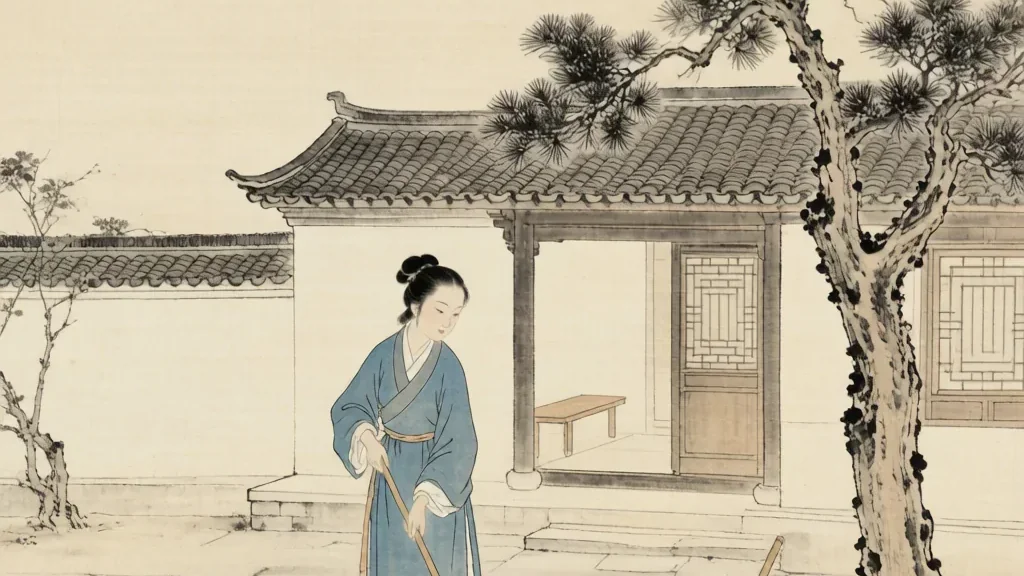
Xiaonian (小年), the "Little New Year," is the festival that opens the Chinese New Year season. Falling on the twenty-third day of the twelfth lunar month in northern China and the twenty-fourth in the south, it marks the moment when households begin in earnest the rites of year-end renewal. Its central act is the sending-off of the Kitchen God (灶王爷) to heaven, an event that sets in motion the chain of preparations—cleaning, cooking, and decorating—that culminates in the great Spring Festival (春节) itself.
Two Dates, North and South
A distinctive feature of Xiaonian is its double date. Tradition holds that the twenty-third is observed in the north and the twenty-fourth in the south, a divergence often explained by historical patterns of migration and regional custom. Some areas with strong local traditions even keep other days, but the north–south split is the best known.
Regardless of the exact day, Xiaonian functions as a hinge: after it, the old year is formally being wound down and the household turns toward welcoming the new.
The Kitchen God's Ascension
The heart of Xiaonian is the farewell to the Kitchen God, the domestic deity who watches over the family's stove and, on this night, ascends to heaven to report the household's behavior to the Jade Emperor. Families burn or dissolve his paper image at the hearth, sometimes after smearing his paper mouth with sweet malt sugar (糖瓜) so that he will speak only sweet words on high.
This mixture of reverence and gentle bribery captures the playful tone of Chinese domestic religion, where even the gods are treated like visiting relatives who need pleasing.
Sweet Offerings and Malt Sugar
The sticky candies offered at Xiaonian—crisp, sweet malt-sugar treats—are meant both to sweeten the Kitchen God's report and to glue his mouth shut against any criticism. Sharing these sweets among family members turns the offering into a seasonal treat, linking ritual and everyday pleasure.
Such foods are among the first of the special New Year eats, a calendar of flavors that builds from Xiaonian through to the reunion dinner and beyond.
Cleaning and Preparation Begin
Xiaonian is also when the great cleaning (扫尘) is performed and when families start preparing the foods that require lead time, such as cured meats, fermented staples, and the dough for New Year buns. The hearth having been "emptied" of its god, the kitchen can be scoured and the year's tools set in order.
In this way Xiaonian is less a single celebration than the first movement of a multi-week symphony of preparation.
Pasting Images and Charms
After the old Kitchen God image is sent off, many households paste up a new one, ready for his return at the New Year, and may hang small charms or prints near the stove. The new image is often a bright, folk-art representation flanked by couplets urging him to "speak of good deeds in heaven, protect the home on earth."
These paper images are themselves folk art, produced in great numbers by New Year print workshops and pasted across the house.
Xiaonian in Daily Life
For ordinary families, Xiaonian has long meant a pause in field work and a turn toward the home. It is a time to settle accounts, repay small debts, and reconcile quarrels so that the new year starts clean. In earlier times it also signaled the return of migrants toward their home villages for the festival.
The contemporary holiday travel rush (春运) can be seen as the modern echo of this ancient homeward pull.
Regional Foods and Customs
Beyond malt sugar, regional Xiaonian foods include special dumplings in the north and glutinous rice cakes or sweet rice balls in parts of the south, each carrying wishes for stickiness of family ties or rising fortune. Some places fly kites or perform small rites at the stove.
The variety reflects the principle that the New Year season is locally colored even where its core deities and timing are shared.
From Little New Year to Great New Year
Xiaonian is explicitly "little" only in relation to the full Spring Festival a week later; in practice it launches the entire celebration. Once the Kitchen God is dispatched and the house is set in motion, the remaining days fill with couplets, lanterns, haircuts, and the cooking of the feast.
To understand Chinese New Year, one must begin at Xiaonian, the quiet but decisive prologue.
Modern Observance
Even in cities where the hearth god is little honored, Xiaonian survives as a marker on the calendar—a reminder that the holidays are near, a prompt to clean and to travel home. Many people still eat the malt-sugar treats or post a new Kitchen God print as a nod to tradition.
The festival thus endures as a hinge between the working year and the festive one, honored more in sentiment than in full ritual by many urban dwellers.
Xiaonian and the Turning of the Year
Because Xiaonian sits exactly at the hinge between the old and new years, it carries a double mood: gratitude for the year ending and anticipation for the one beginning. Families take stock, finish outstanding business, and begin the rituals that set the festival's tone. Sending the Kitchen God is both a closing—handing in the year's report—and an opening, since his favorable account is the first condition of a lucky new year.
This duality explains why the day feels both solemn and festive, the moment a household consciously turns the page. The sweetness of the malt candy given to the god mirrors the sweetness hoped for in the months ahead, and the small acts of that evening—lighting incense, pasting a new image, sharing a treat—are the first notes of the great New Year symphony to come.
❓ Frequently Asked Questions
What is Xiaonian?
Xiaonian, the "Little New Year," is the festival about a week before Spring Festival that opens the New Year season, chiefly by seeing off the Kitchen God.
Why are there two dates?
The north observes the 23rd of the twelfth lunar month and the south the 24th, a regional split maintained by long custom.
What happens to the Kitchen God?
He is believed to ascend to heaven to report the family's conduct, so his image is burned and his mouth sweetened with malt sugar.
What foods are eaten?
Malt-sugar candies are central, with regional additions like dumplings in the north and rice cakes in parts of the south.
Is Xiaonian still important?
Yes, as a calendar marker that begins the homeward travel and cleaning of the New Year, even where the god is no longer honored.
How does it lead to Spring Festival?
It sets off the cleaning, cooking, and decorating that fill the remaining days before the reunion dinner and New Year's Day.