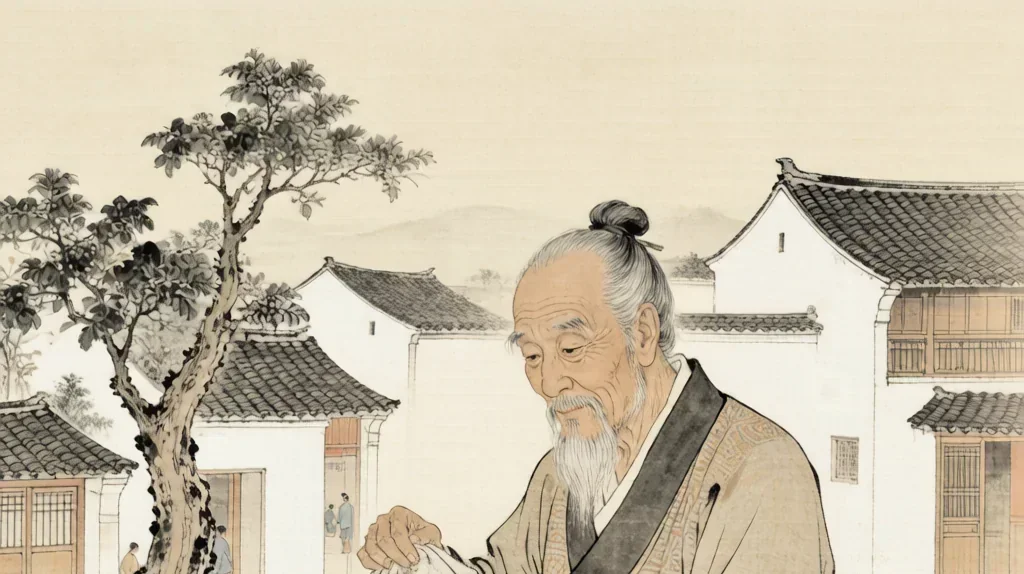
In a village in Fujian Province, an elderly man carefully unwraps a cloth bundle to reveal a thick volume bound in blue silk. The pages are yellowed with age, the characters written in elegant brushstrokes that have faded over the centuries. This is the family genealogy — the jiapu — and it contains the names of every member of his clan for more than thirty generations, stretching back to the Ming Dynasty. For Chinese families, such books are not merely historical records. They are sacred objects, tangible links to ancestors, and proofs of identity that connect individuals to a lineage stretching across millennia.
The Chinese genealogy tradition is one of the oldest and most extensive systems of family record-keeping in the world. For over three thousand years, Chinese families have meticulously documented their ancestors, creating an unbroken chain of names that links the present to the distant past. At its peak during the Ming and Qing dynasties, virtually every Chinese family maintained a genealogy, and the practice continues today in both traditional and modern forms. To understand Chinese family genealogy is to understand one of the deepest values in Chinese culture: the belief that individuals are not isolated beings but links in a chain that connects past, present, and future.
Three Thousand Years of Record-Keeping
The practice of recording family lineages in China dates back to the Shang Dynasty, when oracle bone inscriptions recorded the names of royal ancestors. By the Zhou Dynasty, the keeping of genealogical records had become formalized, with official historians maintaining the lineages of the ruling families. The Records of the Grand Historian by Sima Qian, completed around 94 BCE, included genealogical tables that traced the descent of noble families.
During the Tang and Song dynasties, genealogy underwent a transformation. In earlier periods, genealogies had been primarily concerned with the aristocracy — the great clans whose members dominated the imperial bureaucracy. But as the civil service examination system opened government positions to talent rather than birth, and as Chinese society became more fluid, genealogy became democratized. Ordinary families began keeping their own genealogies, tracing their origins not to ancient nobility but to the earliest ancestor who could be documented.
The golden age of Chinese genealogy was the Ming and Qing dynasties. During this period, the jiapu became a standard possession of every respectable family. Clan organizations, particularly in southern China, invested enormous resources in compiling, printing, and preserving genealogies. The largest of these could run to dozens of volumes, containing thousands of names, detailed biographies of notable ancestors, maps of ancestral lands, and records of clan properties and institutions. The genealogy was not just a list of names — it was a comprehensive record of the family's history, achievements, and identity.
The Structure of a Genealogy
A traditional Chinese genealogy is far more than a family tree. It typically begins with a preface explaining the origins of the clan, often tracing its lineage to a famous historical figure or even to legendary emperors. Many Chinese families claim descent from the Yellow Emperor or other ancient sage-kings, and the genealogy provides the documentary evidence for these claims. Following the preface comes the zipu, or generational poem — a crucial element that we will explore in detail below.
The heart of the genealogy is the genealogical table, which records each male family member's name, his relationship to other family members, his wife's name and family background, his children's names, and often brief biographical information. The most elaborate genealogies include full biographies of notable ancestors, describing their achievements, their character, and their contributions to the family and community. These biographies served as moral exemplars, teaching younger generations what it meant to be a worthy member of the clan.
Beyond the family records, many genealogies include a wealth of supplementary material: rules of conduct for family members, records of clan properties and ancestral halls, copies of imperial edicts and honors received by the family, and even poetry and essays written by clan members. Some genealogies include maps showing the location of ancestral graves, instructions for performing ancestral rites, and accounts of the family's migration history. In their full form, Chinese genealogies are encyclopedic documents that preserve every aspect of family life and identity.
The Generational Poem: Names as a Chain
One of the most distinctive features of Chinese genealogy is the zibei, or generational naming system. Many families have a generational poem — a poem composed by an ancestor that provides a specific character for each generation's given name. For example, a family might have a poem with twenty characters, and each generation uses the next character in the poem as part of their name. When the poem is exhausted after twenty generations, a new poem is composed.
This system serves a remarkable purpose: it allows anyone who knows the poem to determine a person's generation within the family simply by looking at their name. Two people with the same generational character are of the same generation, even if they have never met. An older generational character indicates a senior generation, even if the individuals involved are younger in age. This system creates an instant hierarchy that organizes the entire clan, making it possible for people to know their proper relationship to any other clan member they encounter.
The generational poem is not merely practical — it is also a form of cultural transmission. The poems often express the family's values and aspirations. A typical poem might include characters meaning "virtue," "prosperity," "learning," "harmony," or "longevity," embedding the family's moral teachings in the very names of its members. When parents name their child according to the generational poem, they are participating in a tradition that connects their child to ancestors and descendants across centuries.
Ancestral Halls: The Physical Home of Genealogy
The genealogy is intimately connected to the citang, or ancestral hall — the physical building where a clan gathers to honor its ancestors. In traditional Chinese villages, the ancestral hall was often the most impressive building, constructed with the finest materials and decorated with calligraphy, paintings, and tablets recording the names of ancestors. It served as the clan's spiritual center, administrative headquarters, and social gathering place.
Inside the ancestral hall, wooden tablets representing the ancestors are arranged on altars, organized by generation. During important festivals, particularly the Qingming Festival (Tomb-Sweeping Day) and the ancestral worship ceremonies held on the first and fifteenth of each lunar month, clan members gather to burn incense, offer food and wine, and pay their respects. The genealogy is often displayed during these ceremonies, and births, deaths, and marriages are recorded to keep the family record current.
The ancestral hall was also where the genealogy was kept and protected. The books were stored in special cabinets, often under the care of a designated family elder. They were brought out for ceremonies, for the resolution of disputes (the genealogy could prove relationships and inheritance rights), and for the periodic task of updating the records. In times of war or disaster, saving the genealogy was considered a sacred duty — to lose the family genealogy was to lose the family's connection to its past.
The Genealogy in Times of Crisis
The twentieth century was devastating for Chinese genealogical traditions. War, revolution, and political campaigns took a heavy toll. Millions of irreplaceable genealogical records were lost, and the knowledge of how to maintain them nearly disappeared.
Yet the tradition proved remarkably resilient. In overseas Chinese communities, where political pressures were less severe, genealogy maintenance continued. Clan associations in Southeast Asia, North America, and elsewhere preserved genealogies and continued the practice of ancestor worship. These diaspora communities became crucial repositories of genealogical knowledge, maintaining records that had been lost in China itself.
Since the 1980s, there has been a dramatic revival of genealogy in China. Ancestral halls have been rebuilt, genealogies have been reconstructed from surviving fragments and overseas copies, and a new generation has rediscovered the importance of family history. This revival has been fueled by multiple factors: the relaxation of political restrictions, growing prosperity that has given families resources to invest in cultural activities, and a deep hunger for roots in a society undergoing rapid change.
Modern Genealogy and the Digital Age
The genealogy revival has taken modern forms alongside traditional ones. DNA testing services have become popular in China, allowing people to trace their genetic ancestry and connect with distant relatives. Online genealogy databases have digitized thousands of jiapu, making them accessible to researchers around the world. Social media groups dedicated to specific surnames have created virtual communities where clan members can share information and organize gatherings.
The digital transformation of genealogy has also created new possibilities for historical research. Because Chinese genealogies often include detailed demographic data — birth and death dates, marriage patterns, migration histories — they are invaluable sources for scholars studying population history, social mobility, and family structure over long periods. Projects to digitize and analyze large collections of genealogies are yielding new insights into Chinese social history.
Yet the revival of genealogy has not been without controversy. Some scholars have questioned the accuracy of genealogical claims, noting that families often embellished their origins or claimed descent from famous figures to enhance their prestige. Others have raised concerns about the patriarchal nature of traditional genealogy, which typically recorded only male descendants and excluded women. Modern genealogy projects have begun to address these issues, creating more inclusive records while acknowledging the limitations of historical sources.
Why Genealogy Matters
The enduring power of Chinese genealogy lies in the deep human need for connection and meaning. In a world of rapid change and increasing individualism, knowing where you come from provides a sense of identity and belonging. The genealogy tells you that you are not alone — that you are part of something larger than yourself, a chain of lives stretching back into the distant past and forward into an unknown future.
For Chinese people, the genealogy also represents a form of immortality. In the Confucian worldview, a person lives on through their descendants, through the continuation of the family line, and through the memory preserved in the family record. To be recorded in the genealogy is to be remembered; to be forgotten is a kind of death. This belief has motivated countless Chinese families to invest enormous effort in preserving their genealogical heritage.
The genealogy tradition embodies values that remain relevant in the modern world: respect for the past, responsibility to future generations, and the recognition that individual identity is inseparable from family and community. In an age of unprecedented mobility and change, the jiapu offers something precious: a thread of continuity, a story that extends beyond a single lifetime, a reminder that we are all links in a chain that will continue long after we are gone.
Migration and the Branching of Clans
A genealogy is never only a list of names; it is also a map of movement. Many volumes open with a migration record, tracing how the founding ancestor left a northern homeland during war or famine and settled in a southern village, and how later generations fanned out across provinces in search of land, trade, or office. These branching accounts explain why distant cousins in different regions still share one surname and one hall name. Reading the migration sections reveals the larger patterns of Chinese history, the southward drift of population, the pull of frontier settlements, the scattering of lineages under pressure. For descendants the route itself becomes a kind of inheritance, a story of survival that connects a person in a modern city to a specific village and a specific ancestor who once walked there.
❓ Frequently Asked Questions
📝 Chinese Vocabulary
- 家谱 (jiāpǔ) — Family genealogy; the book of ancestors
- 字辈 (zìbèi) — Generational naming system; the poem that determines given names across generations
- 祠堂 (cítáng) — Ancestral hall; the physical building where a clan gathers to honor its ancestors
- 清明节 (Qīngmíng Jié) — Tomb-Sweeping Day; the festival when families visit ancestral graves
- 祖先崇拜 (zǔxiān chóngbài) — Ancestor worship; the practice of honoring deceased family members
🎉 Fun Facts
- The Kong family — descendants of Confucius — maintains the longest continuous genealogy in the world, documenting over 80 generations spanning more than 2,500 years.
- Some Chinese genealogies run to over 100 volumes and contain records of tens of thousands of family members, making them some of the most extensive family records in human history.
- The generational naming poem of the Ming Dynasty imperial family was so long that it would have provided names for 200 generations — enough to last over 5,000 years.
- During the political upheavals of the twentieth century many genealogies were hidden inside walls, buried in jars, or sunk in wells so they would survive raids and campaigns that targeted old family records.
- Traditional genealogies were patrilineal, listing only male-line descendants in full while recording wives merely by their maiden surname, a structure that modern projects are working to make more inclusive.
- Today DNA ancestry testing and online surname databases have fueled a new wave of root-seeking, especially among overseas Chinese eager to reconnect with a home village recorded generations ago.