The Cangjie input method (仓颉输入法) is one of the most influential systems for typing Chinese characters on a computer keyboard. Invented in the late 1970s by the Taiwanese engineer Chu Bong-Foo, it lets a user enter a character by breaking it into a handful of basic shape components and pressing the corresponding keys, rather than typing a phonetic spelling. Named after Cangjie, the mythical inventor of writing, the method appeals to those who know character structure but not necessarily a romanization. For decades it was the dominant Chinese input system in Taiwan and Hong Kong, and it remains a benchmark for shape-based typing: fast for experts, but demanding to learn.
The Inventor and the Name
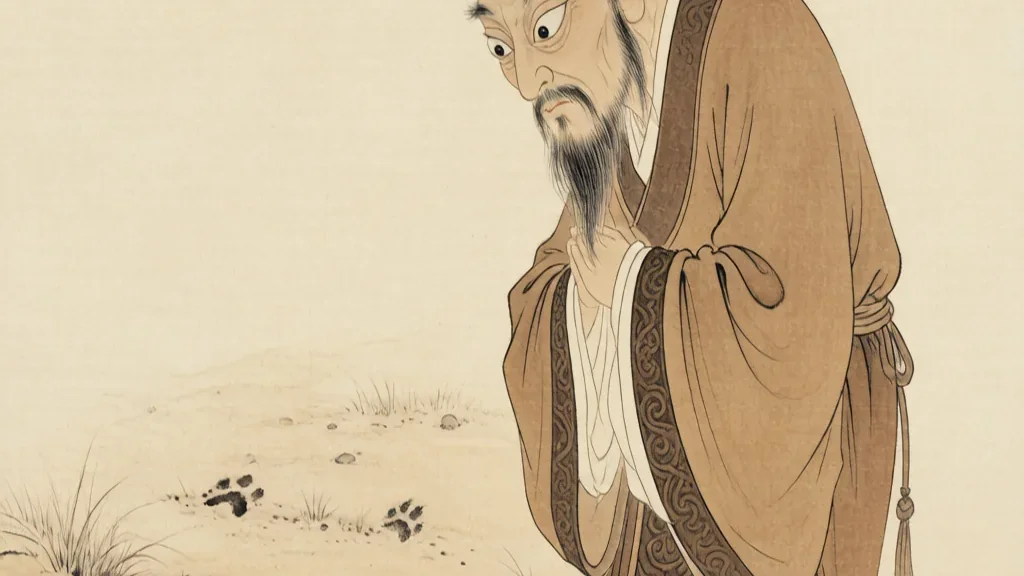
Cangjie was created by Chu Bong-Foo and first released in 1976. He named it for Cangjie (仓颉), the legendary official said to have devised Chinese characters after observing animal tracks and the patterns of nature. The choice is fitting, because the method is founded on the visual shape of characters rather than their sound. Chu's goal was a system that any Chinese speaker could use without learning a foreign alphabet or a phonetic scheme, and that could be implemented on the limited hardware of the era.
How Cangjie Encodes Shapes
The method distills every character into a sequence of up to five "radicals" drawn from a fixed set of about twenty-four basic shapes, each mapped to a letter key. For example, the character 明 (bright) is split into 日 and 月, which correspond to the keys A and B; the character 木 (tree) uses the key D. The keyboard thus becomes a palette of character components. The first and last components are usually encoded, with middle ones summarized, so a long character still yields a short code. The genius is that the codes are based on the standard shape of each part, not on pronunciation.
Key Groups and Visual Logic
The twenty-four root shapes are organized by rough visual family: things that look like the sun or an opening, things that look like a hand or a fork, things that look like water or fire. The keyboard layout was arranged so that related shapes sit near each other where possible. Learners memorize a small table of "which shape = which key," then practice decomposing characters. Because the decomposition follows consistent rules (top before bottom, left before right, outside before inside), a trained user can derive the code of an unknown character on sight.
Advantages Over Phonetic Input
Cangjie's great strength is independence from pronunciation. A user who does not know pinyin or Mandarin, or who speaks a dialect, can still type any character by its form. It also disambiguates homophones instantly: since the code is visual, there is no list of same-sounding candidates to choose from, as in pinyin input. Expert typists can reach very high speeds, and the method works for both traditional and simplified forms. For proofreading and editing, it keeps the typist close to the written structure of the language.
The Learning Curve
The cost is steepness. A beginner must memorize the shape-to-key table and internalize the decomposition rules before typing is comfortable, and early practice is slow. Unlike pinyin, which nearly anyone who can spell can attempt, Cangjie demands real study. This is why it never became the mass default on the mainland, where pinyin — built on the familiar Roman alphabet — won the popular market. In Taiwan and Hong Kong, where traditional characters dominate and pinyin is less natural, Cangjie kept a strong foothold among professionals.
Cangjie and Character Decomposition
Cangjie is essentially a formalization of how characters are taken apart. The same skill it teaches — seeing a character as an assembly of components — is exactly the analytical habit behind radicals and the six principles of character formation. A person who learns Cangjie often gains a sharper intuition for how characters are built, which helps in handwriting, dictionary lookup, and memory. The method is thus both a tool and a small course in structural literacy.
Variants and Legacy
Over time several variants appeared, including simplified and "quick" (速成) versions that take only the first and last components for speed at the price of more ambiguity. Cangjie also influenced later shape-based methods and remains bundled in many operating systems for traditional-character users. Though phonetic input now leads by user count, Cangjie endures as the professional's shape-based choice and as a fascinating example of encoding an ancient script for the keyboard age.
Cangjie in Everyday and Professional Use
In Taiwan and Hong Kong, Cangjie is not a curiosity but a daily tool taught in schools and preinstalled on operating systems. Many professionals who write traditional characters prefer it precisely because it sidesteps pinyin, which maps poorly onto southern dialects and Mandarin romanization. Court reporters, editors, and fast typists value its predictability: once learned, the code is reproducible without guessing among homophones. Though younger users increasingly adopt phonetic or handwriting input on phones, Cangjie retains a loyal base, and "quick" Cangjie remains a popular compromise for casual typists who want speed without memorizing every key.
Cangjie and the Philosophy of Shape
Cangjie embodies a distinctive attitude toward the script: that characters are visual objects first and sounds second. In a phonetic system the written form is a mere transcript of speech; in Cangjie the form is the thing itself, accessed directly through its parts. This aligns with the traditional Chinese view that writing can be understood even by those who speak alien tongues, since the shape carries meaning independently of pronunciation. It is no accident the method bears the name of the mythic inventor of writing rather than of a scholar of sound. Cangjie thus preserves, in the mechanics of the keyboard, an ancient faith in the priority of the visible character.
❓ Frequently Asked Questions
What is the Cangjie input method?
A shape-based system for typing Chinese by decomposing each character into basic components mapped to letter keys, invented by Chu Bong-Foo in 1976.
How is it different from pinyin input?
Cangjie encodes the visual shape of a character, so it needs no phonetic spelling and produces no homophone candidate list.
Why is it named Cangjie?
After the legendary inventor of Chinese writing, fitting because the method is based on character form rather than sound.
Is Cangjie hard to learn?
Yes for beginners; one must memorize the shape-to-key table and decomposition rules, but experts can type very fast.
Where is Cangjie popular?
Mainly in Taiwan and Hong Kong among traditional-character users, while pinyin dominates the mainland.
Does learning Cangjie help with characters?
It trains the habit of seeing characters as assemblies of parts, which aids handwriting, memory, and dictionary use.