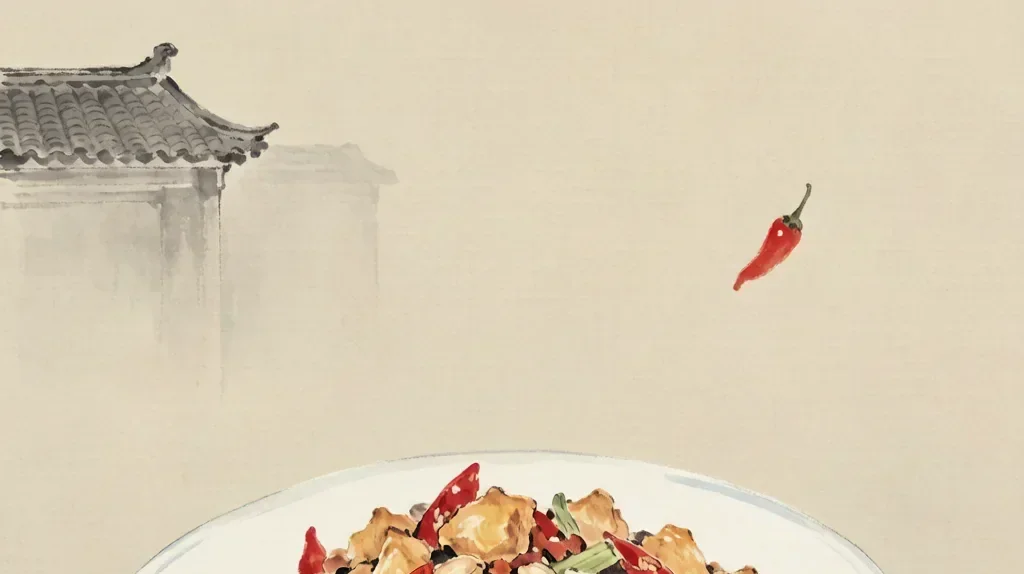
Kung Pao chicken is probably the dish that introduced more Westerners to Chinese food than any other, yet its real Chinese self is richer and more interesting than the sweet, sticky version often found on overseas takeout menus. In Mandarin it is gōng bǎo jī dīng, written 宫保鸡丁. The name is a title, not an ingredient: gōng bǎo was an official rank, and the dish is said to honor a Qing-dynasty governor who loved it. At its heart it is diced chicken, dry-fried with chili and peanuts, brightened by a sweet-sour-savory glaze. The result is crunchy, tender, gently hot, and impossibly moreish. This article traces the dish from a provincial official's table to the world's dinner tables, and explains what makes an authentic version sing.
A Governor and His Favorite Dish
The most enduring story behind gongbao jiding credits Ding Baozhen (丁宝桢), a scholar-official of the Qing dynasty who served as governor of Sichuan in the late nineteenth century. Ding held the honorary title Tàizǐ Shàobǎo (太子少保), a "Protector of the Heir Apparent," loosely rendered as gōng bǎo or "Palace Guardian." He was famously fond of food and of a particular home-style stir-fry of diced chicken with chili and peanuts. His chefs refined it, and the dish traveled under his title. Whether Ding truly invented it or simply popularized it, the attribution stuck, and "Gongbao" became a permanent culinary label.
Interestingly, Ding was not a Sichuan native — he came from Guizhou — and early versions of the dish show both Sichuan and Guizhou influences, notably the use of zhàolà, a distinctive vinegar-preserved chili used in Guizhou cooking. Over time the recipe settled into the Sichuan idiom, adopting the region's love of dried chili and, in some accounts, a whisper of numbing Sichuan peppercorn. The dish's biography is therefore a small lesson in how Chinese food moves: a personal taste becomes a regional standard becomes a national classic.
Regional Roots in Sichuan and Beyond
Although gongbao jiding is claimed by Sichuan cuisine, its flavor profile is actually more restrained than many Sichuan dishes. Where mapo tofu envelopes the tongue in numbing-spicy intensity, gongbao is built around húlà — "fragrant heat" — the aroma released when dried chilies are fried in oil just until they darken and perfume the fat. The dish is savory and only moderately hot, with a clear sweet-and-sour lift from vinegar and a little sugar. This balance is precisely why it became China's friendly ambassador abroad.
Within China the dish exists in family variations: some cooks add diced cucumber or carrot for color and crunch, some use cashews instead of peanuts, and Sichuan purists may include a few Sichuan peppercorns for a faint tingle. But the constant is the quick, high-heat stir-fry that keeps the chicken diced small and tender and the peanuts toasted. As one of the dishes counted among the wider family of China's Eight Great Cuisines, gongbao jiding demonstrates that Sichuan food is not only about overwhelming heat but about aromatic layering.
The Essential Ingredients
A proper gongbao starts with boneless chicken thigh or breast, cut into small, even cubes so they cook in seconds and stay juicy. The supporting cast is short but specific. Dried red chilies — typically the long, moderately hot variety — are cracked open and seeded or left whole, then fried to release aroma. Raw peanuts are toasted separately until golden and added near the end so they keep their crunch. Scallion whites, garlic, and ginger form the aromatic base, and a splash of Shaoxing wine lends depth.
The sauce is where the magic consolidates: a mixture of light soy sauce for salt, dark vinegar (traditionally a black vinegar such as báizhèn or a Shanxi-style vinegar) for tang, a spoon of sugar for balance, and a little cornstarch to glaze. Some recipes add chicken stock. The finished seasoning should taste simultaneously salty, sweet, sour, and gently hot — none dominating. Peanuts are not garnish here; they are structural, giving every bite a nutty counterpoint to the soft chicken.
How to Cook Gongbao Jiding
The method is classic Chinese stir-fry discipline: prepare everything before the heat goes on, because the cooking is fast. The chicken is usually velveted first — tossed with a little soy, wine, and cornstarch and sometimes a splash of oil — then briefly marinated so it stays silky. The sauce is mixed in a bowl ahead of time. A wok is heated until nearly smoking, oil is added, and the chilies and Sichuan peppercorns (if used) are fried for seconds until fragrant but not burnt; burnt chili turns bitter and ruins the dish.
Next go the aromatics, then the chicken, spread out and left to sear before tossing. Once the meat turns opaque, the prepared sauce is poured in and the wok is tossed vigorously; the cornstarch thickens almost instantly into a glossy coat. Toasted peanuts and scallion greens go in at the last moment. The whole stir-fry takes only a few minutes, which is why gongbao is a staple of the busy home cook. Serve it immediately with steamed rice, and the contrast of hot, fragrant chicken and cool rice is the point.
Cultural Meaning and the Name's Politics
Gongbao jiding carries a neat cultural wrinkle. After the reforms of the late twentieth century, the original "Gongbao" name returned, and today it appears proudly on menus from Chengdu to Toronto. The episode shows how food names can become small battlegrounds of history.
More broadly, the dish exemplifies a Chinese ideal of textural contrast — cùcāo and cuì — the soft chicken set against the crunch of peanuts and the snap of chili. Chinese dining values the interplay of textures as much as flavors, and gongbao is a textbook case. It also reflects the Confucian-tinged courtesy of sharing: diced small, it is easy to spoon onto a companion's plate, and its moderate heat makes it a safe, welcoming choice for mixed tables.
When and How It Is Eaten
Gongbao jiding is an everyday restaurant and home dish, equally at home as part of a multi-course banquet or as a quick weeknight stir-fry. Because its heat is approachable, it is often one of the first "real" Chinese dishes a newcomer tries, and it frequently appears at celebratory family meals where guests of different spice tolerances must be pleased at once. In Sichuan it might be matched with a cold noodle or a soothing soup; abroad it is the dependable centerpiece of the "Chinese combo."
You will also find it adapted to local tastes — the overseas "kung pao" leans sweeter and sometimes loses the chili's fragrance entirely — but its bones remain the same: chicken, peanuts, chili, quick fire. For the cook at home, few dishes reward so little effort with so much authentic flavor, which is perhaps the truest legacy of the governor who liked his chicken diced and his chilies fried just so.
The Sauce: Balancing Salty, Sweet, and Sour
The soul of gongbao jiding is its sauce, a quick mixture of light soy for salt, a little dark vinegar for tang, sugar for roundness, and cornstarch to glaze. Mixed before the wok heats, it must hit the pan at exactly the right second and thicken almost at once into a glossy coat. The goal is a taste that is simultaneously salty, sweet, and sour with a gentle chili warmth behind it — none of the notes dominating. This balance is why the dish travels so well: it is flavorful without being aggressive, complex without being confusing. A cook learns the sauce by eye and tongue rather than strict measurement, adjusting for the acidity of the vinegar or the sweetness of the sugar. Get it right and the chicken shines; get it wrong and the dish turns cloying or flat. The sauce is the quiet achievement behind the crunch.
Gongbao Around China and the World
Few Sichuan dishes have traveled as far as gongbao jiding. At home it stays close to its roots: diced chicken, dried chili, and peanuts, with Sichuan peppercorn optional. Abroad it morphed into 'kung pao chicken,' often sweeter, saucier, and heavier on bell peppers and carrots unknown to the original. That adaptation helped make it a gateway to Chinese food for millions who found mapo tofu too fierce. Inside China the dish also varies — Guizhou versions keep a tart edge from vinegar-preserved chili, while some chefs add cucumber or cashews for color and crunch. Its journey shows both the strength and the cost of popularity: the bones survive everywhere, but the fragrance is easiest to lose in translation. Even so, the core of chicken, peanut, and chili remains a global shorthand for Sichuan.
❓ Frequently Asked Questions
📝 Chinese Vocabulary
宫保鸡丁 — : Kung Pao chicken, diced chicken stir-fried with chili and peanuts.
鸡丁 — : Diced chicken, the dīng meaning small cube.
糊辣 — : "Fragrant heat," the aroma of chilies fried in oil.
花椒 — : Sichuan peppercorn, sometimes added for a faint numbing note.
宫保 — : "Palace Guardian," the official title from which the dish takes its name.
花生 — : Peanut, the crunchy nut that structures the dish
干辣椒 — : Dried red chili, fried to release the dish's fragrant heat
醋 — : Vinegar, the sour note that balances the sweet and salt in the sauce
🎉 Fun Facts
- The dish's namesake, Ding Baozhen, was also known for flood-control and engineering works as well as his appetite.
- Gongbao jiding is sometimes listed among the "official dishes" of the Qing court's regional banquet tradition.
- The dried chilies in a traditional recipe are often left mostly whole, so the heat perfumes rather than dominates the oil.
- It is one of the few Sichuan dishes mild enough to be a child-friendly introduction to the cuisine.
- Gongbao chicken was among the first Sichuan dishes to reach the West, appearing on overseas Chinese restaurant menus long before 'mala' became a global buzzword.
- In Chinese cooking competitions, gongbao jiding is a standard test dish because it demands precise control of heat, timing, and the salty-sweet-sour balance in seconds.