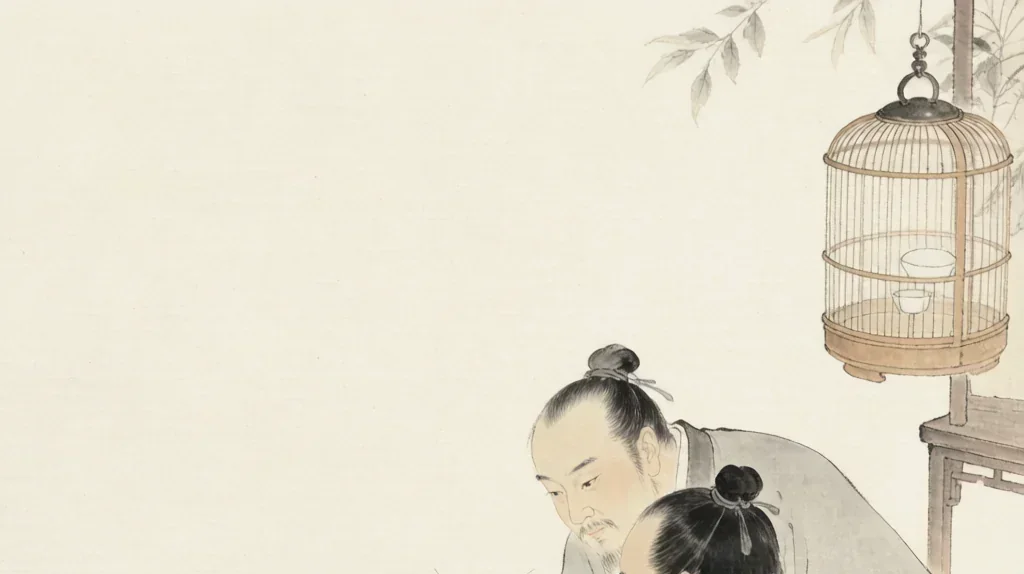
In the autumn months, when the nights grow cool and the fields turn golden, a peculiar excitement stirs in certain corners of Chinese cities. Men gather in teahouses and private clubs, carrying small ceramic pots wrapped in cloth. Inside each pot lives a carefully selected and meticulously trained cricket, raised for one purpose: combat. Cricket fighting — "dou xishuai" in Chinese — is one of the most distinctive and controversial traditional pastimes in Chinese culture, a practice that has captivated everyone from emperors to peasants for over a thousand years.
The Rise of Cricket Culture
Cricket keeping began innocently enough during the Tang dynasty, when people started capturing the chirping insects and keeping them in cages for their song. The cricket's musical call was appreciated as a sound of autumn, a melancholy reminder of the passing seasons that inspired countless poems. Tang dynasty ladies kept crickets in golden cages by their pillows, falling asleep to the insects' gentle chirping.
The transition from listening to fighting occurred during the Song dynasty, and no single figure did more to popularize cricket fighting than Jia Sidao, the infamous Southern Song chancellor. Jia was obsessed with crickets, devoting more time to studying insect combat than to affairs of state. He wrote the "Cu Zhi Jing" (Classic of Crickets), the first comprehensive guide to selecting, training, and fighting crickets. His neglect of governance contributed to the fall of the Southern Song, and history remembers him as a cautionary tale — the man who lost an empire to crickets. Yet his book became the foundational text of a tradition that would endure for centuries.
The Science of Selection
Choosing a fighting cricket is a highly specialized skill passed down through generations. Enthusiasts evaluate potential champions based on a complex set of physical criteria: the shape and color of the head, the strength of the mandibles, the length and thickness of the antennae, the firmness of the abdomen, and the overall "spirit" or "fire" of the insect. A champion cricket must have a large, square head — "the head of a lion" — with powerful jaws that can clamp down on an opponent and refuse to let go. The color of the cricket is also significant, with black and dark brown specimens prized for their aggression, while lighter-colored crickets are considered weaker.
Crickets are categorized into named types based on their physical characteristics, much like breeds of dogs. There is the "Green Head General," the "Purple Gold Wing," the "White Teeth Blue," and dozens of other varieties, each with its own fighting style and reputation. Expert selectors can spend hours examining a single cricket, turning it gently in their hands, blowing on it to observe its reactions, and testing its grip strength by letting it bite a strand of grass. A truly exceptional cricket — one with perfect form and a fierce temperament — can sell for thousands of dollars at specialized markets that spring up each autumn.
Training and Care
Raising a fighting cricket is a demanding art. The insects are kept in specially designed clay pots with fitted lids, the interiors of which are meticulously maintained at the right temperature and humidity. Each cricket is fed a carefully controlled diet that may include rice, corn, chestnuts, ginseng, and even tiny amounts of meat. Some trainers add traditional Chinese medicinal herbs to the food, believing that certain preparations enhance the cricket's strength and fighting spirit.
Training involves a combination of physical conditioning and psychological preparation. Crickets are exercised by being made to chase a small brush or by being placed on a rotating platform that forces them to walk continuously. Before a fight, the cricket is "teased" with a special tool — often a thin stick tipped with rat whiskers or fine grass — to provoke its aggression. The trainer will stroke the cricket's antennae and mandibles, stimulating its fighting instinct until it is "hot" and ready for combat. Some trainers use female crickets as motivation, briefly introducing a female to the male before a fight to increase his territorial aggression.
The Arena and the Fight
Cricket fights take place in a small ceramic or wooden arena, typically a shallow bowl or box with clear sides so spectators can watch. The two combatants are introduced into the arena simultaneously, and the fight begins when they make contact with their antennae. The battles are surprisingly intense: crickets lunge at each other with open mandibles, grappling, biting, and throwing each other across the arena. A typical fight lasts anywhere from a few seconds to several minutes, ending when one cricket retreats or is physically unable to continue.
During the fight, the owners use a special tool called a "yin cao" — a thin stick with a fine tip — to guide their crickets. They cannot touch the opponent's cricket, but they can stimulate their own insect, encouraging it to attack. The referee ensures fair play, and a fight is stopped if one cricket is clearly defeated or injured. Victorious crickets are celebrated with special food and rest, while defeated ones — depending on the owner's disposition — may be retired to a life of comfortable captivity or released back into the wild.
Pu Songling and "The Cricket"
No discussion of cricket fighting is complete without mentioning Pu Songling's famous story "Cu Zhi" (The Cricket), from his classic collection "Strange Tales from a Chinese Studio" (Liaozhai Zhiyi). Written in the 17th century, the story tells of a poor man named Cheng Ming who is ordered by the imperial court to supply a champion fighting cricket. His desperate search drives him to the brink of ruin, and when his young son accidentally kills the prized cricket, tragedy ensues. The story is a biting satire of how the obsession with cricket fighting corrupted the imperial bureaucracy and destroyed ordinary lives. It remains one of the most powerful literary works in Chinese literature and has been adapted into films, operas, and ballets.
Controversy and Modern Practice
Cricket fighting occupies an ambiguous position in modern China. On one hand, it is recognized as a traditional folk custom with deep historical roots. On the other, the gambling that often accompanies cricket fights — with wagers sometimes reaching staggering sums — places the practice in a legal gray zone. In recent years, authorities have cracked down on illegal cricket fighting rings, while permitting regulated, non-gambling competitions as a form of cultural preservation.
Despite the controversies, cricket fighting endures. Autumn cricket markets still draw crowds in cities like Shanghai, Beijing, and Tianjin. Documentary filmmakers have chronicled the lives of cricket trainers and fighters, capturing a world that feels both ancient and vividly alive. For practitioners, cricket fighting is more than a pastime — it is a connection to a thousand years of Chinese culture, a living link to the Tang poets who listened to crickets sing and the Song scholars who first set them to battle.
Cricket Markets and the Autumn Season
Cricket culture runs on the calendar. The season opens in late summer and peaks in early autumn, when mature males are at their fiercest and the night air turns cool the traditional time to catch, buy, and match them. Each year temporary markets spring up in Shanghai, Beijing, Tianjin, and other cities, with sellers displaying ranked crickets in cloth-wrapped pots and buyers bending close to judge a specimen's head, jaws, and fire. The best wild champions are still said to come from Shandong's fields. The atmosphere is part fair, part auction, and part swap meet, and the trade supports a whole economy of catchers, breeders, pot-makers, and trainers. When the cold comes the season ends, the pots are stored, and the talk turns to next year's hopefuls a rhythm the pastime has kept for a thousand autumns.
Crickets as Pets and Symbols in Literature
Long before it fought, the cricket sang, and that song made it a companion. Tang poets and court ladies kept caged crickets for the autumn sound, and the insect became a steady figure in Chinese verse as a token of the passing season and quiet longing. Later it stepped into prose as a symbol of obsession and fate: Pu Songling's The Cricket, in Strange Tales from a Chinese Studio, uses a boy's death over a royal cricket to indict a court that valued insects over people. The cricket thus carries two reputations at once the gentle musician of the pillow and the gladiator of the bowl and Chinese literature holds both. To keep a cricket was, and is, to keep a small piece of autumn indoors, whether for its song, its fight, or simply the company of a creature that has shared Chinese rooms for fifteen hundred years.
❓ Frequently Asked Questions
📝 Chinese Vocabulary
- 斗蟋蟀 — Cricket fighting, literally "fight crickets"
- 促织 — An old literary name for crickets, and the title of Pu Songling's famous story
- 促织经 — "Classic of Crickets," the first cricket-fighting manual by Jia Sidao
- 引草 — The thin tool used to guide and stimulate fighting crickets
- 聊斋志异 — "Strange Tales from a Chinese Studio," Pu Songling's collection of supernatural stories
🎉 Fun Facts
- The Southern Song chancellor Jia Sidao was so obsessed with cricket fighting that he reportedly ignored urgent military dispatches while absorbed in cricket matches — a neglect that contributed to the Mongol conquest of China.
- A champion fighting cricket can be worth more than $10,000 at specialized markets, with some exceptional specimens selling for over $50,000.
- Crickets have natural "weight classes" and are weighed on tiny scales before matches to ensure fair competition — a practice remarkably similar to modern boxing and MMA.
- The Qing dynasty Qianlong Emperor was an enthusiastic cricket fighter and maintained a dedicated cricket palace within the Forbidden City, where imperial trainers raised thousands of fighting crickets.
- The chirping cricket was first kept for its song, not its fighting Tang dynasty women kept them in golden cages by the pillow to fall asleep to the autumn sound.
- Before a match, trainers may briefly introduce a female cricket to the male to stoke his territorial aggression.