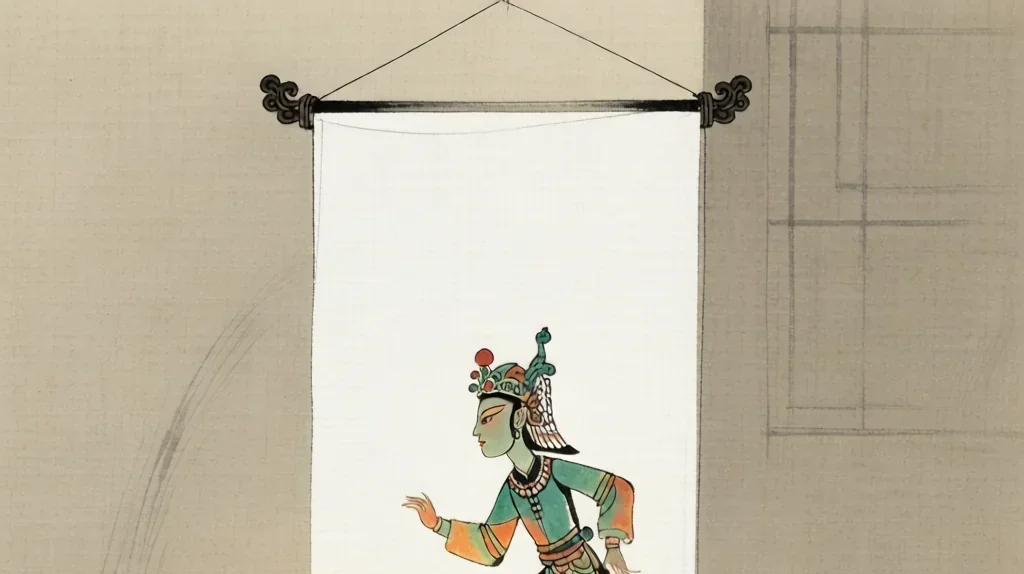
Shadow puppet theatre, known in Chinese as piyingxi (皮影戏), is one of the oldest forms of screened entertainment in the world. Flat figures cut from hide are painted, jointed, and pressed against a lit silk or paper screen, so that their coloured shadows act out legends to the music of a small singing band. For a thousand years this intimate, portable art brought epic tales to village squares and court halls alike. This article looks at how piyingxi is made, performed, and why its flickering shadows have endured across China's regions.
What Is Shadow Theatre?
At its simplest, piyingxi is a play told by shadows. The audience sits on one side of a translucent screen; behind it, puppeteers move leather figures so that their silhouettes are thrown onto the lit surface. A narrator or singer supplies the voices and the story.
The effect is at once theatrical and cinematic. Because only shadows are seen, the figures can fly, shrink, or duel with supernatural ease, and the viewer's imagination fills in the colour that the silhouette only hints at.
Origins and Early History
Chinese sources place shadow theatre's roots in the medieval period, with legends crediting clever court entertainers for devising shadow figures to comfort a grieving emperor. Whether or not the legend is true, the form was well established by the Song dynasty, when urban markets boasted shadow troupes.
From China the idea travelled along trade and migration routes into Central and Southeast Asia, the Islamic world, and eventually Europe, making piyingxi an early example of a Chinese performance technology that circled the globe.
The Puppets: Cut, Coloured, Articulated
The figures are usually cut from donkey, sheep, or ox hide that has been scraped thin, dried, and sometimes soaked to become translucent. Artisans trace the design, punch out fine patterns, and tint the leather with dyes so light passes through in coloured washes.
Each puppet is jointed at the waist, shoulders, elbows, and knees, with the head often removable so one body can wear many characters. Three to five slender rods — one at the body and one per hand — let a skilled handler walk, fight, and weep the figure.
The Screen and the Light
The screen is traditionally a frame stretched with polished paper or, later, white silk, sized to a small window the audience gathers around. Behind it burns a lamp or, in modern times, an electric light, whose glow turns the hide translucent and projects the shadows forward.
The quality of the light matters. A steady, warm source keeps the colours rich and the edges clean; a flickering flame can be used on purpose to suggest wind, fire, or panic within the tale.
The Performer Behind the Screen
A single master may do everything at once: hold two or three figures, speak all the roles, and cue the musicians, while apprentices manage props and spare puppets. The work demands both deft hands and a strong voice.
Because the audience never sees the performer, the puppet becomes the entire character. A tilt of the head rod, a tremble of the hand rod, can read across the screen as love, fear, or defiance.
Singing and Music
Shadow theatre is rarely silent. A small band — often dizi flute, string lute, and percussion — accompanies local arias, and the chief puppeteer sings the dialogue in the regional style, so that a Shaanxi troupe sounds quite unlike one from Hebei or Sichuan.
The music binds the visuals together and signals mood: a bright, fast tune for comedy; a slow, minor phrase for parting or death. In this sense piyingxi is cousin to full opera, performed by shadows instead of actors.
Repertory and Stories
The standard shadow repertory draws on the same well as opera: court romances, loyalty-and-treason tales of generals and ministers, and the adventures of gods and demons. Favorite cycles retell the exploits of the Three Kingdoms heroes or the journeys of pilgrims through trials.
Because troupes were mobile and intimate, they also performed shorter comic pieces and moral tales for festivals, weddings, and household rites, adapting the length to the occasion and the pay.
Regional Styles
China's shadow theatre is not one style but many. The figures of the north tend to be larger and bolder; those of the south finer and more delicate. Shaanxi, Hebei, Beijing, Sichuan, and the Huizhou area each claim distinctive carving, colour, and musical habits.
This variety means a traveller could recognise a hometown silhouette by its cut and its tune. Regional identity rides not only in the stories but in the very shape of the puppets.
Craft and Decline
Making and performing piyingxi is a long apprenticeship, and the carved hides are themselves collectible folk art. In the twentieth century, film, television, and changing village life pushed many troupes off the road, and the chain of master-to-student thinned.
Some regions lost the living craft almost entirely, keeping only old figures in museums. The fragility of the hides and the secrecy of local tune families made recovery slow where the link was broken.
Legacy Today
Piyingxi survives today through cultural preservation programs, festival showcases, and a growing audience for heritage handicraft. Carved shadow figures are exhibited and sold as art, while troupes perform both classics and new works for schools and tourists.
Its influence also lingers in modern animation and design, where the flat, jointed silhouette and the glow of the screen remain a recognisable poetic image of Chinese storytelling.
❓ Frequently Asked Questions
Q: What is Chinese shadow puppetry (Piyingxi)?
A: Chinese shadow puppetry (皮影戏, píyǐng xì) is an ancient form of storytelling using flat, articulated figures cut from leather or paper, held against a translucent screen with a bright light behind them. It is one of the oldest film-like arts in the world.
Q: How are shadow puppets made?
A: Traditional shadow puppets are made from donkey or cow leather, which is treated, scraped thin, and cut into detailed shapes. The figures are carved with intricate patterns and painted with vibrant colors. Joints are connected with string or wire to allow movement.
Q: How is a shadow puppet performance conducted?
A: A performance involves the puppeteer manipulating the figures behind a white cloth screen (the 'stage'), moving them close to or away from the screen for different effects. The puppeteer also provides the character's voice. A troupe typically includes musicians playing traditional instruments.
Q: Where is shadow puppetry still practiced in China?
A: Shadow puppetry thrives in Shaanxi (the most famous center), Hebei, Gansu, Hunan, and Guangdong provinces. The Shaanxi style is known for its bold carving and distinctive Qingiang opera music. UNESCO recognized Chinese shadow puppetry as an Intangible Cultural Heritage in 2011.
Q: What does piyingxi mean?
A: Piyingxi (皮影戏) means "leather shadow play," named for the hide figures whose shadows are projected on a lit screen.
Q: How are the puppets made?
A: Artisans cut and carve thin, scraped animal hide, punch fine patterns, dye it translucent, then joint the pieces with rods for movement.
Q: Who performs the voices?
A: The chief puppeteer usually sings and speaks all roles while manipulating the figures, backed by a small local music band.
Q: Is shadow theatre related to opera?
A: Closely. It shares operatic stories and regional singing styles, presenting them through shadows rather than living actors.
Q: Are there different regional styles?
A: Yes. North and south, and provinces like Shaanxi, Hebei, and Sichuan, differ in figure size, carving, colour, and tune.
Q: Does shadow theatre still exist?
A: It survives through preservation programs, festivals, and museums, though film and television greatly reduced village troupes in the past century.