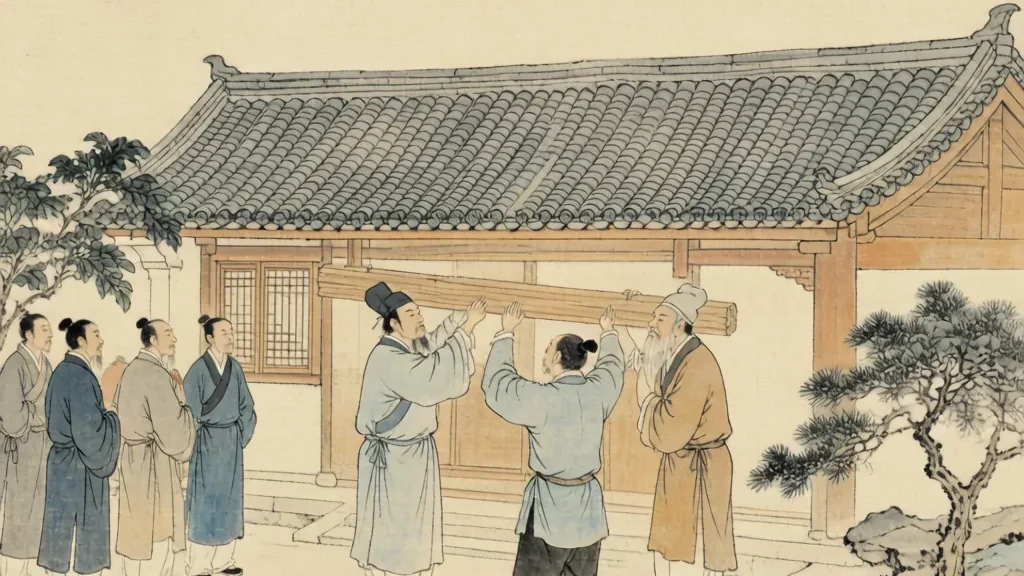
The Shangsi Festival (上巳节, Shàngsì jié), traditionally observed on the third day of the third lunar month, is one of the oldest spring festivals in Chinese culture. Rooted in ancient rites of purification by water, it was once a solemn occasion for driving away illness and misfortune, and over the centuries it blossomed into a joyful day of riverside outings, love poetry, and communal celebration. Though it faded from the official calendar in many regions, its spirit survives in spring customs still practiced today.
Origins in Ancient Purification Rites
The earliest form of the festival was a ritual of "bathing to cleanse" known as fú xì (祓禊). In the Zhou dynasty period, people gathered at rivers and streams on the first sì day of the third lunar month to wash away the impurities of winter and to dispel pestilence through contact with flowing water. The ceremony was both practical and symbolic: water, the source of life, was believed to carry away sickness and bad luck.
These gatherings were often supervised by court officials whose duty was to lead the people in seasonal rites. Over time the solemn purification gradually acquired a festive character, blending religious observance with the simple pleasure of escaping the cold months and greeting spring.
The Date: The Third Day of the Third Month
Originally the festival floated with the sexagenary calendar, celebrated on the first sì (巳) day of the third month. During the Han dynasty it was fixed more firmly to the third day of the third lunar month, giving the festival its enduring name "Shangsi" — literally "upper sì." The number three was itself auspicious in traditional cosmology, associated with growth and renewal.
Because the lunar date shifts against the solar year, the festival usually falls in April. In the warm south the blossoming of orchids and peach trees made the timing feel especially apt for a return to nature.
The Rite of Floating Wine Cups
Among the most elegant customs associated with Shangsi was qū shuǐ liú shāng (曲水流觞), the "floating wine cup along a winding stream." Guests sat beside a twisting channel of water; a small cup of wine was set afloat upstream, and whoever it stopped before was required to compose a poem and drink. The game united literary skill with the leisure of the riverside.
This pastime transformed the purification rite into a refined social event for scholars and officials. It celebrated not only the cleansing of the body but the refreshment of the mind through poetry and friendship.
Poetry and the Orchid Pavilion Gathering
The festival reached its cultural peak in the literary imagination of the Wei and Jin period. The most famous Shangsi gathering took place in 353 CE at the Orchid Pavilion (兰亭, Lántíng), where the calligrapher Wang Xizhi and dozens of friends practiced the floating-cup rite. Wang's preface to the collected poems, the Lantingji Xu, became one of the most revered works of Chinese calligraphy.
That single event fixed Shangsi in the Chinese canon as a festival of art, friendship, and philosophical reflection on the passing of time. Later generations recited the preface as a model of graceful prose.
From Ritual to Spring Outing
As the centuries passed, the religious purpose of Shangsi receded and the festival became essentially a tà qīng (踏青), or spring outing. Families left their homes to walk in the countryside, pick orchids, and enjoy picnics by the water. Children flew kites, and young people, freed from winter confinement, met one another in the open air.
This shift mirrored a broader pattern in Chinese festive life, in which ancient sacrificial rites softened into seasonal leisure. The doorway of spring had opened, and the festival marked the moment to step through it.
Women's Customs and Romance
Shangsi was long associated with women's health and fertility. Women washed their hair in the river and wore sprigs of orchid or mugwort, believing the water would protect them from illness and grant children. The festival was sometimes called a "daughter's festival" in local traditions.
Because young men and women mingled freely outdoors, the day also carried a romantic charge. Folk songs and courtship near the water echoed the earlier, freer sexual mores recorded in the Classic of Poetry. In this sense Shangsi resembled the poetic spring gatherings of the southeast.
Decline and Merging with Other Festivals
From the Tang dynasty onward, Shangsi gradually lost its distinct status. The Cold Food and Qingming festivals, both tied to tomb-sweeping and spring renewal, absorbed many of its outdoor customs. By the Ming and Qing periods official observance had largely disappeared from the central plains.
Yet the memory endured. Local gazetteers continued to mention riverside gatherings, and the floating-cup game survived as a literary amusement rather than a popular rite.
Regional Variations
In the south, especially around the Yangtze, Shangsi kept stronger links to orchid-picking and poetry. In parts of the southwest, especially among Zhuang and other ethnic communities, the third day of the third month remains a vibrant "Singing Festival" where young people gather to trade love songs — a living descendant of the old spring meeting.
In some areas people eat colored glutinous rice or special cakes, blending the festival with local foodways. These variations show how a single ancient rite branched into many regional expressions.
Modern Revivals
In recent decades there has been renewed interest in traditional festivals as markers of cultural identity. Some cities and universities host Shangsi-themed events featuring hanfu clothing, classical music, and poetry readings by the water.
The festival's message — renewal, cleanliness, and the joy of spring — resonates with contemporary desires to reconnect with nature and heritage. While no longer a national holiday, Shangsi enjoys a quiet revival among young enthusiasts of traditional culture.
Symbolism of Water and Renewal
At its heart Shangsi is a festival of water. Flowing water stands for the movement of time, the washing away of the old, and the renewal of life. To stand at a stream in early spring was to place oneself within the great cycle of the seasons.
This symbolism links Shangsi to countless other water rites across the world, yet its particular Chinese form — part purification, part poetry, part picnic — gives it a gentle, literary warmth unique to the tradition.
❓ Frequently Asked Questions
When is the Shangsi Festival held?
It falls on the third day of the third lunar month, which usually corresponds to a date in April on the solar calendar.
What was the original purpose of the festival?
It began as a purification rite in which people washed in rivers and streams to cleanse illness and bad luck from the body.
What is "floating the wine cup"?
It was a literary game where a cup of wine floated down a winding stream and whoever it stopped before had to compose a poem and drink.
Why is the Orchid Pavilion famous?
In 353 CE Wang Xizhi hosted a Shangsi gathering there and wrote a preface that became one of China's most treasured calligraphy works.
Is Shangsi still celebrated today?
Official observance faded, but regional singing festivals and modern hanfu events keep its spirit alive.
How is Shangsi different from Qingming?
Shangsi centered on water purification and poetry, while Qingming focuses on tomb-sweeping; over time the two shared spring customs.