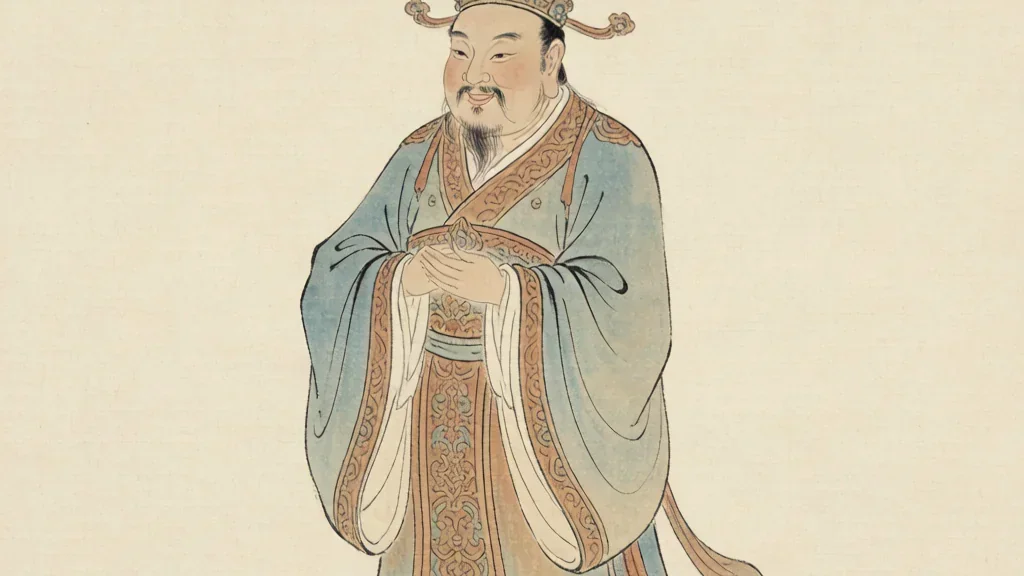
Xishen (喜神), the "God of Happiness" or "God of Joy," is a deity of gladness, weddings, and good news in Chinese folk belief. Unlike the God of Wealth with his clear portfolio, Xishen is more elusive — often defined by direction rather than image, invoked at marriages and festive moments to draw joy toward the household. The custom of "welcoming the happiness god" shows how Chinese ritual turns abstract good feeling into a guest to be invited in.
Who Is Xishen?
Xishen is the spirit of happiness and auspicious events, especially marriage. He is less a developed personality than a focused benefactor of joy, called upon when people want good things to arrive.
His vagueness is itself characteristic: many Chinese folk gods are invoked for a single function, and Xishen's function is the blessing of happy occasions.
The God of Direction
A distinctive feature of Xishen worship is that the god is associated with a particular compass direction each day, calculated from the almanac. To "welcome Xishen" one faces or moves toward that direction.
This made the deity almost a coordinate: a wedding or business opening might be timed and oriented so that the family would meet happiness coming from its proper quarter.
Xishen and the Wedding
Marriages are Xishen's great occasion. The almanac would name the day's happiness direction, and the bridal chair or the couple's bow might be arranged to receive the god from there.
Because weddings gather the family's hopes, inviting Xishen was a way of solemnizing joy — ensuring the union began under the god's favorable gaze rather than by chance.
The "Xi" Character
The character xi (喜), meaning "joy" or "happiness," appears everywhere at weddings — on lanterns, bed linens, and the famous "double happiness" symbol (shuangxi) pasted on doors.
This written sign is the god's earthly emblem: to display xi is to summon the mood and protection Xishen represents, blending word, symbol, and deity.
Relation to the God of Wealth
Xishen often appears beside Caishen, the God of Wealth, in New Year and wedding imagery. Wealth and happiness are natural companions in festive blessing.
Yet they differ in tone: Caishen is greeted with offerings for gain, while Xishen is "welcomed" as a presence of delight — less transactional, more atmospheric.
The Almanac Connection
The daily Xishen direction comes from the traditional almanac (huangli or tongshu), which lists auspicious hours and orientations for activities. Choosing the right direction was part of planning a happy event.
This shows how ordinary folk practice wove astronomy, calendar, and feeling into a single act of preparation for life's milestones.
Paper-Cuts and Decoration
Red paper-cuts of the xi character and related motifs decorate the wedding home, serving both as ornament and as an invitation to the happiness god to dwell there.
The visual warmth of these cuttings helps explain why Xishen, though vaguely defined, feels concretely present at any Chinese wedding.
Modern Echoes
Today few people calculate a Xishen direction, but the "double happiness" symbol and the spirit of inviting joy remain central to weddings and celebrations. The god survives in habit more than doctrine.
The persistence of the xi character at marriages is a quiet testament to a deity defined less by story than by the universal wish he was made to carry.
Xishen in Daily Celebration
Beyond weddings, Xishen is invoked at any moment of good news — a birth, a passing exam, a home move — when families want the joy formally acknowledged and protected. The god's breadth is his usefulness.
In older custom a family might "welcome the happiness god" at the start of such an event by facing his almanac direction and setting off a small celebration, turning private relief into a blessed occasion.
This habit shows how flexible folk religion is: a vaguely defined deity can be summoned for almost any happy turn, filling the gaps left by the more specialized gods of wealth or long life.
The Xi Symbol in Material Culture
The xi character migrates far beyond paper-cuts: it appears on ceramics, embroidery, lanterns, and wedding furniture, each instance a small invocation of the happiness god's presence in daily objects.
Craftswomen historically incorporated xi into patterns passed down through families, so that the symbol carried both aesthetic taste and a quiet prayer woven into the cloth or clay.
Seen across these objects, Xishen reveals himself not as a statue in a temple but as a motif dispersed through the material life of the home — happiness made into something you can hang, wear, and keep.
Xishen and Festive Etiquette
The logic of welcoming joy shapes small courtesies: hosts may orient a celebration toward the day's happiness direction, and guests bless the event with phrases that summon the god's mood.
This etiquette blurs the line between deity and sentiment — to "invite Xishen" is often simply to create an atmosphere of warmth, a social more than a theological act.
Such blending is typical of Chinese folk practice, where inviting a god and cultivating a feeling are nearly the same gesture, performed with food, words, and a turned chair.
The Elusiveness of Xishen
Compared with gods who have temples and statues, Xishen is strikingly undefined, a deity known more by the joy he brings than by any story of his own.
That very vagueness is a strength: a god of happiness need not be pictured to be felt, and the xi character does his representing wherever it is pasted.
Xishen at the New Year
During the Spring Festival the god of happiness joins the round of visiting and blessing, his direction noted by families planning the first outing of the year.
Though less prominent than the wealth or stove gods, his presence rounds out the season's mood, ensuring that joy, not only gain, is invited through the threshold.
That balance — happiness alongside prosperity — is the quiet wisdom of the festival calendar, which remembers that a good year is more than a profitable one.
❓ Frequently Asked Questions
Who is Xishen?
Xishen is the God of Happiness or Joy in folk belief, invoked especially at weddings and festive occasions to draw gladness near.
Why is Xishen a "direction"?
The almanac assigns the god a compass direction each day; people face or move that way to "welcome" happiness.
How is Xishen linked to weddings?
Marriages are his main occasion; the couple's arrangement and the xi decorations invite his favorable, joyful gaze.
What is the "double happiness" symbol?
It is the shuangxi character, two xi joined, pasted on doors and linens as Xishen's emblem at weddings.
How is Xishen different from Caishen?
Caishen is greeted for wealth; Xishen is welcomed as a presence of delight, less transactional and more atmospheric.
Is Xishen still honored today?
Few calculate his direction now, but the xi symbol and the spirit of inviting joy remain central to celebrations.