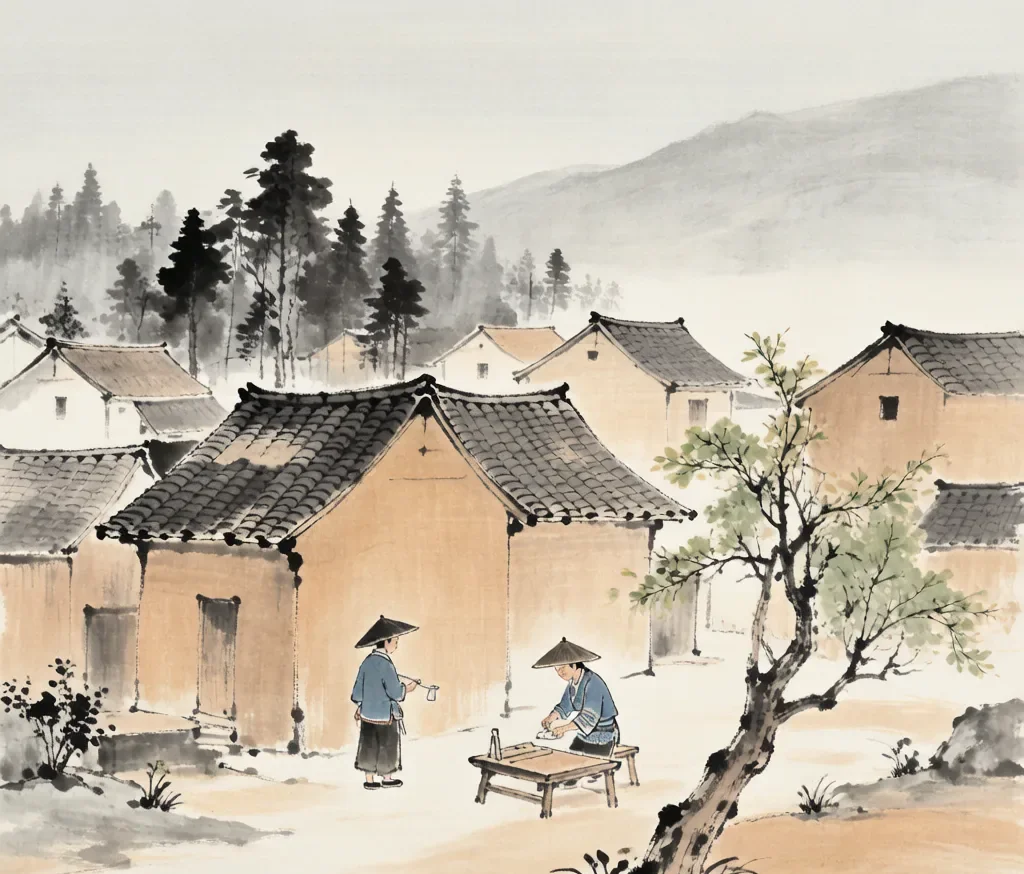
The Achang, or Achangzu (阿昌族), are a Tibeto-Burman people of roughly 40,000 in China, concentrated in the hills of western Yunnan around Lianghe, Longchuan, and Luxi counties, near the border with Myanmar. They are celebrated above all as master smiths of the "Husa knife" (husa dao), a famed blade whose forging has defined Achang craft identity for generations. Alongside this metalworking tradition, the Achang practice wet-rice agriculture, revere ancestors and nature spirits, and gather each year for the Alu Wolu Festival — a small but culturally vivid community at the crossroads of the Yunnan frontier.
Origins and Homeland
The Achang are counted among the early inhabitants of the rugged uplands of western Yunnan, with language and legend linking them to the broader Tibeto-Burman migrations into the Irrawaddy and Salween watersheds. Their heartland lies in the Husa area of Lianghe County, from which the famous knife takes its name.
Close to the Myanmar border, the Achang have long shared the frontier with the Dai, Jingpo, and De'ang peoples, and their culture shows the imprint of these neighbors while retaining a distinct identity.
Language
Achang is a Tibeto-Burman language with local dialects, the principal ones being the Lianghe and Longchuan varieties. Like several small Yunnan minorities, the Achang have no traditional script of their own.
Chinese characters serve for writing and administration, and in daily multi-ethnic life many Achang also speak Dai or Jingpo and, increasingly, Mandarin. Romanized systems have been devised by linguists to record folklore and song.
The Husa Knife Tradition
The Achang are most renowned as blade-smiths. The Husa knife (husa dao) is prized across Yunnan and beyond for its sharpness, durability, and fine temper, produced through repeated folding, quenching, and polishing by hereditary smiths.
Forging is both craft and heritage: techniques pass from father to son, and a good Husa knife is valued as a tool, a gift, and a symbol of Achang skill. The trade has sustained Achang households economically and given the group a widely recognized name.
Agriculture and Village Life
Most Achang are wet-rice farmers, terracing the valleys and lower slopes for rice, and growing maize, beans, and vegetables in gardens. Where the land allows, they also cultivate sugarcane and vegetables for market. The rhythm of the paddies sets the farming calendar, and the harvest is both a livelihood and the occasion for the Alu Wolu Festival. Around the fields, groves of trees and stands of bamboo supply the raw material for tools and the famous blades, linking the smith's craft to the surrounding land.
Villages are compact clusters of timber-and-tile houses, often with a central space for communal gathering. Labor is organized through household and reciprocal help, and the agricultural calendar sets the tempo of festivals.
Belief and Ritual
Achang religion blends ancestor worship with reverence for nature spirits of mountain, water, and field. Village shamans and elders conduct rites to secure harvests, cure illness, and mark life transitions.
Close contact with the Dai has also brought Theravada Buddhist influences to some Achang communities, layering temple observance onto older animist practice. This mixture gives local ritual a regionally varied character.
The Alu Wolu Festival
The signature Achang celebration is the Alu Wolu Festival, held in the fourth lunar month to honor the culture heroes Alu and Wolu, credited in legend with teaching the people agriculture and craft. It is at once a thanksgiving and a renewal.
During the festival, villagers raise a ceremonial banner, perform the "Alu Wolu" dance in procession, sing epics of the heroes, and share feasts. It is the principal occasion for reaffirming community identity and courting among the young. Elders use the gathering to recount the deeds of Alu and Wolu to the next generation, so that the myth stays alive as living teaching rather than a distant legend, and visiting relatives from other counties reinforce the sense of a single Achang people spread across the frontier.
Music and Dance
Achang performance centers on the "Alu Wolu" dance and on sung narratives accompanied by the lusheng (reed pipe) and gong ensembles. The choreography reenacts planting and forging motions, binding myth to daily work.
Antiphonal singing between youths is a courtship custom, and the gong-and-drum music of festivals carries a distinctly frontier sound shared with neighboring groups. Song remains the main vehicle for storytelling in the absence of a script.
Clothing and Ornament
Achang dress reflects both practicality and regional style. Women wear short jackets with long skirts and silver ornaments, while men favor short coats and, traditionally, a turban; blue and black dominate the palette.
Silver belts, earrings, and embroidered trims mark festive dress, and the quality of a woman's silver set signals family standing. Cloth is hand-woven and indigo-dyed in older households.
Cuisine
The Achang diet is built on rice with vegetable and meat side dishes, seasoned with chili and fermented condiments typical of Yunnan border cooking. Sour and spicy flavors predominate, and preserved vegetables stretch the lean season.
Communal meals at festivals feature pork, rice wine, and sticky rice cakes. Hospitality is expressed through repeated toasts of home-brewed liquor, a frontier custom shared with neighboring peoples.
Modern Life and Craft Survival
Roads, schools, and cross-border trade have drawn the Achang into the regional economy, and many younger people now combine farming with wage work or commerce. The Husa knife, meanwhile, has gained new life as a heritage commodity and tourist good.
Cultural bureaus promote the Alu Wolu Festival and support smith workshops to keep forging alive. The Achang thus exemplify a small minority sustaining identity through a single celebrated craft in a rapidly changing frontier.
Trade and the Border Economy
The Achang sit astride old caravan routes between Yunnan and Myanmar, and border trade in tea, horses, and blades has long supplemented farming. The Husa knife in particular traveled far as a valued good.
Today cross-border markets and road links let Achang farmers and smiths sell both produce and craft, blending ancient exchange patterns with modern commerce while keeping the forge at the center of community pride.
❓ Frequently Asked Questions
Where do the Achang live?
Mainly in Lianghe, Longchuan, and Luxi counties of western Yunnan, near the Myanmar border.
What are they famous for?
They are celebrated master smiths of the Husa knife (husa dao), a prized, finely tempered blade.
What language do they speak?
A Tibeto-Burman language with Lianghe and Longchuan dialects; they write in Chinese and often speak Dai or Jingpo.
What is the Alu Wolu Festival?
A fourth-month festival honoring the culture heroes Alu and Wolu with dance, epic song, and feasting.
What is their traditional livelihood?
Wet-rice farming supplemented by the renowned blade-forging craft and some market gardening.
What do they believe?
Ancestor worship and nature-spirit reverence, with Theravada Buddhist influence from Dai neighbors in some areas.