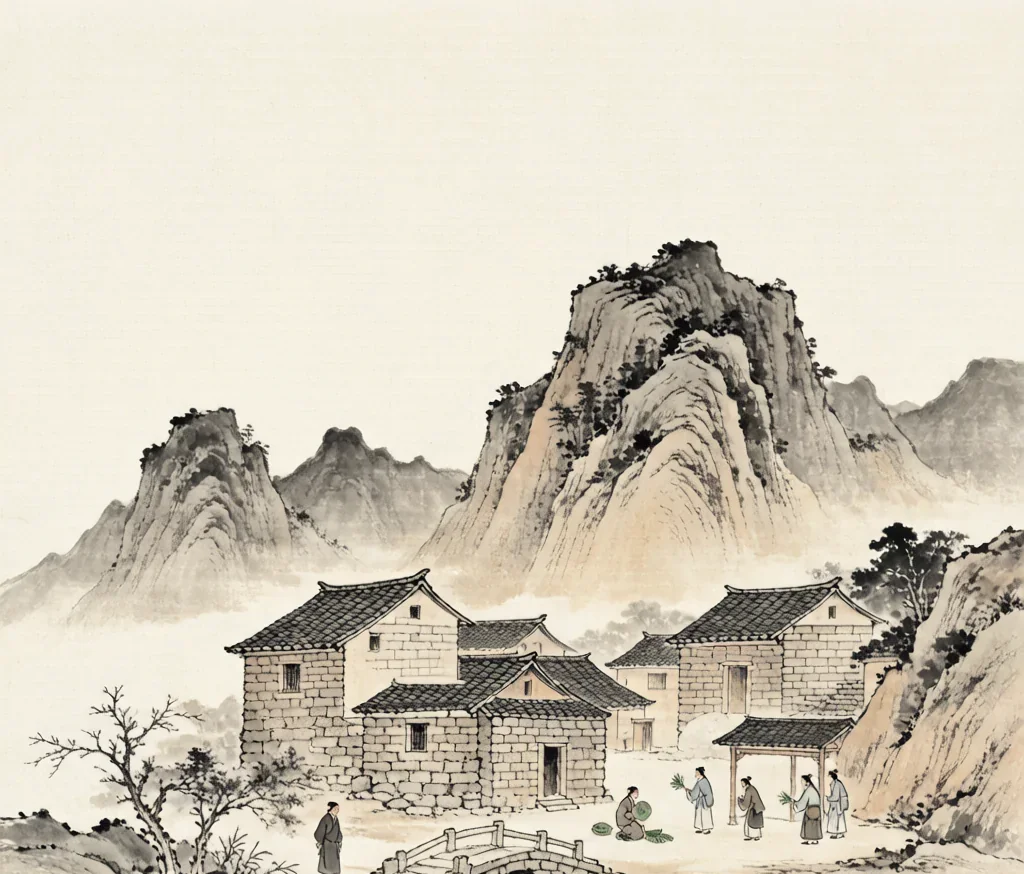
The Gelao, or Gelaozu (仡佬族), are a Tibeto-Burman people of about 580,000 in China, recognized as one of the earliest inhabitants of the hills of Guizhou, where they live alongside the Miao, Buyei, and Yi. Once far more widespread across the southwest, the Gelao are noted in historical records for ancient iron-smelting and for a striking former custom of extracting teeth at marriage. Today they are rice and maize farmers who gather for the "Tasting New Rice Festival" (Chi Xin Jie), and whose distinctive heritage — including the "sand pottery" tradition — survives as a quiet thread in the multi-ethnic fabric of the Guizhou highlands.
Ancient Inhabitants of Guizhou
The Gelao are considered among the original peoples of Guizhou, with roots traceable to the "Liao" and other early groups recorded in Tang and Song sources. Their ancestors once ranged more widely across Yunnan, Sichuan, and Guangxi before contracting into the Guizhou highlands. Over the centuries, pressure from later migrating groups pushed the Gelao into the less accessible hills, where they developed the terraced agriculture and localized identity that define them today. This long retreat into the karst gave the Gelao a reputation in old records as a quiet, enduring mountain people.
Living in dispersed hamlets among other minorities, the Gelao developed a localized identity shaped by the rugged karst landscape of limestone peaks and fertile valleys where they practiced dry and wet farming.
Distribution Today
The largest Gelao populations are in the mountains of northern and western Guizhou — in places such as Wuchuan Gelao and Miao Autonomous County and Daozhen — with smaller communities in Guangxi, Yunnan, and Sichuan.
Because they are interspersed with Miao, Buyei, and Yi neighbors, many Gelao are bilingual or multilingual, and Gelao villages often sit within broader multi-ethnic townships rather than exclusive homelands.
Language
Gelao is a Tibeto-Burman language with several divergent dialects, some so distinct that speakers of different varieties cannot understand one another. The Gelao have no traditional script of their own.
Chinese is the language of writing and schooling, and many Gelao speak the languages of neighboring minorities. As fluent Gelao speakers age, documentation projects race to record the dialects before they fade.
Iron Smelting and the "Sand Pottery"
Historical accounts credit the Gelao ancestors with early skill in iron smelting and forging, and the group was once known for metalwork in the southwest. This reputation as "iron people" appears in old Chinese descriptions.
A related craft is the "sand pottery" (sha tao) and distinctive Gelao ceramics, fired from local clay and used for cooking and storage. Though less prominent today, these crafts anchor a heritage of material ingenuity.
The Tooth-Extraction Custom
The most famous historical Gelao practice was the extraction of teeth — often the upper incisors — at marriage or puberty, recorded by early travelers and anthropologists as a rite of passage and beauty mark.
This custom has largely disappeared in modern times, but it remains a vivid marker in ethnographic literature of Gelao distinctiveness, illustrating how bodily rites encoded group identity in the past. Scholars read the practice as a sign of belonging and beauty shared with neighboring groups who observed similar tooth rites, and its memory now surfaces in museum displays and heritage talks that explain the old highland world to younger Gelao who know it only as story.
Agriculture and Livelihood
Traditionally the Gelao practiced a mixed mountain agriculture of wet rice in valleys and maize, millet, and potatoes on slopes, supplemented by pigs, poultry, and kitchen gardens. Terracing tamed the steep land, and the careful rotation of plots kept the thin soil fertile. Surviving mainly on what the hills could give, Gelao households developed a cuisine of preserved vegetables, smoked pork, and corn dishes suited to the cool, damp highland climate, a diet that still marks festive tables today.
Today many combine farming with off-farm work and migration, and cash crops such as tobacco and tea have entered the local economy. The agricultural calendar still frames festivals and family routines.
The Tasting New Rice Festival
The Chi Xin Jie, or "Tasting New Rice Festival," is the Gelao's principal celebration, held at harvest when the first ripe grain is offered in thanksgiving. Families cook the new rice, worship ancestors and the grain spirit, and share the meal.
The festival reaffirms the bond between people and land, and it is an occasion for visiting, song, and the wearing of festive dress. It encapsulates the Gelao's identity as farmers of the high country.
Music, Dance, and Dress
Gelao music features the lusheng reed pipe and gong ensembles, with circle dances performed at festivals. Songs mark planting, harvest, and courtship, and the oral epics recall migration and origin.
Women's dress varies by region but commonly includes short jackets, long skirts, and embroidered trims with pleated aprons; men wear short coats. Indigo and black dominate, with red accents at festivals.
Belief and Ritual
Gelao religion combines ancestor worship with nature-spirit reverence, and elders or shamans conduct rites for harvest, health, and the household. Offerings of the first fruits and animal sacrifices mark key moments.
Contact with Han neighbors brought Daoist and Buddhist elements, while some Gelao adopted Christian practice in the modern era. The core remains a farmer's piety toward land and lineage.
Modern Identity
Like many small minorities, the Gelao face language loss and cultural assimilation, yet county cultural programs celebrate the Tasting New Rice Festival and revive crafts to sustain recognition.
As one of Guizhou's "first peoples," the Gelao carry a deep sense of place. Their story — of iron, rice, and quiet endurance in the karst — adds an ancient layer to the southwest's ethnic mosaic.
Clothing and Identity Today
Gelao dress has simplified with modern life, yet festive wear still displays pleated aprons, embroidered cuffs, and silver ornaments that mark community gatherings. Regional variation in cut and color recalls old local identities.
Younger Gelao may wear daily clothes like their Han neighbors, but at the Tasting New Rice Festival the full heritage dress returns, visibly asserting a continuity with the ancient highland farmers of Guizhou.
❓ Frequently Asked Questions
Where do the Gelao live?
Mostly in the mountains of Guizhou, especially Wuchuan and Daozhen, with smaller groups in Guangxi, Yunnan, and Sichuan.
What is special about their history?
They are among the original peoples of Guizhou and were historically noted for iron smelting and a tooth-extraction marriage custom.
What language do they speak?
A Tibeto-Burman language with divergent dialects and no native script; daily writing is in Chinese.
What is their main festival?
The Tasting New Rice Festival (Chi Xin Jie), a harvest thanksgiving for the first ripe grain.
What is their traditional livelihood?
Mixed mountain farming of rice, maize, and millet, with pig-keeping and, historically, metalwork and pottery.
What do they believe?
Ancestor worship and nature-spirit reverence, with Daoist, Buddhist, and some Christian influences over time.