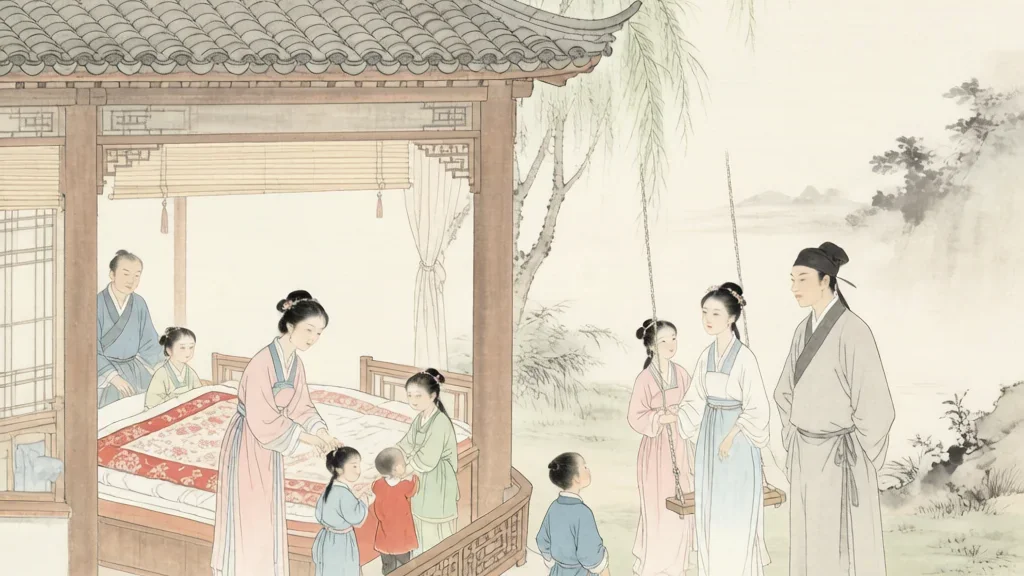
The Double Sixth (天贶节, tiān kuàng jié), observed on the sixth day of the sixth lunar month, is a homely Chinese festival built around one simple act: taking the household out into the sun. Clothes, quilts, books, and temple scrolls are aired and beaten to drive off the damp and the mildew left by the early-summer plum rains. Known too as the "sunning day" (晒伏, shài fú), it is less a rite of worship than a seasonal housecleaning, a moment when families and monasteries alike turn their faces to the hottest sun of the year.
A Festival Named by an Emperor
The name Tiankuang—"heaven's gift" or "heaven's bestowal"—comes from a specific imperial moment. In 1008 CE, during the Song dynasty, Emperor Zhenzong (宋真宗) announced that a heavenly text (天书, tiān shū) had descended to him as a sign of divine favor. To mark the supposed event he created several new observances, fixing the sixth day of the sixth month as Tiankuang Festival.
The timing was no accident: late spring in northern China is the tail end of the damp plum-rain season, and the sudden dry heat of early summer was the perfect moment to air out a musty household. The emperor's decree gave an old habit of sunning a formal name and a place on the calendar that it keeps to this day.
The Plum Rains and the Sun
To understand the festival, look at the weather. Each year the plum rains (梅雨, méi yǔ)—a long, humid spell named for the ripening plums—soak central and eastern China through early summer. Cloth, paper, and stored grain grow mold; silver tarnishes; books sprout worms in the warmth and wet.
When the rains break and the sixth month's sun turns fierce, households seize the first truly dry days to haul everything outdoors. Sunning on the sixth of the sixth became the traditional peak of this annual fight against damp, a practical ritual repeated so regularly that it earned its own name and date.
Sunning the Clothes and Quilts
The most widespread custom is shai yi (晒衣, shài yī): spreading clothes, jackets, quilts, and padded winter wear across rails, walls, and rooftops so the sun can kill odor and mildew. Wealthy households once displayed whole wardrobes; courtyards became a patchwork of color under the noon glare.
The act is partly superstition—some believe sunning on this exact day keeps insects away for the year—and partly plain hygiene. Either way it is a communal sight: an entire lane or village blooming with laundry, neighbors comparing the fineness of their cloth as they chat in the heat and swat away the last of the damp.
Sunning the Books and Scrolls
Scholars and collectors treat the day as a rescue for libraries. Old books, scrolls, and paintings are laid out to dry and aired page by page, a precaution against bookworms and foxing. This gave the festival a learned nickname, the "sunning-the-books day" (晒书, shài shū).
A famous anecdote from the Jin dynasty tells of a scholar who, instead of airing his books, sat bare-chested in the sun—explaining he was "sunning his bellyful of learning." The story is retold each year as a wry joke about erudition, and it shows how the custom reached from the scholar's study into Chinese wit.
Temples and the Sutras
Buddhist monasteries observe the day as the "sutra-sunning festival" (晒经节, shài jīng jié). Monks carry their stored scriptures outdoors to be aired and wiped, protecting the fragile texts from humidity. A legend explains why: when the monk Xuanzang (玄奘, xuán zàng) returned from India with sacred texts, his boat overturned and the sutras soaked.
On the sixth of the sixth month he spread them on a rock to dry, and temples have honored the date ever since. Whether or not the tale is true, it gave the custom a pious frame, and many lay people still visit temples on this day to witness the rare airing of the canon.
Washing the Elephants
In the Yuan, Ming, and Qing capitals, the sixth of the sixth month brought a spectacle quite unlike laundry: the imperial elephants were marched to the moat and washed. The animals, gifts from tributary states and used in court ceremonies, were bathed by their handlers before crowds of onlookers along the waterways.
In Qing-dynasty Beijing this "elephant-washing" (洗象, xǐ xiàng) drew huge gatherings, and painters recorded the scene in scrolls. The custom mixed practical care of the beasts with public pageantry, a reminder that the Double Sixth was celebrated as much in the palace as in the cottage.
Regional and Ethnic Variations
The Double Sixth means different things in different communities. In parts of North China it is "Auntie's Day" (姑姑节, gū gū jié), when married daughters return to their parents' home bearing gifts—a warm family visit timed to the bright weather and the lull in farm work.
Among the Bouyei (布依族, bù yī zú) people of Guizhou, the sixth of the sixth is a major festival honoring the rice seedlings and featuring singing, sweeping rites, and village feasts. Tibetan areas keep related sunning rites for scriptures. The thread linking them is the same sun and the same season; the customs simply bloom into whatever each locality needs.
Food and Small Customs
Because the day is more housekeeping than holy day, its foods are plain and local. In some regions people eat noodles or a bowl of fried flour (炒面, chǎo miàn) on the sixth of the sixth; others mark it with a simple family meal after the morning's work of sunning is done.
The point is less the dish than the rhythm: a morning of airing and beating, then rest in the heat. Some families also take the chance to clean ancestral tablets and household shrines, folding the practical cleaning into a broader tidying of the home's spirit as well as its cloth.
A Living Seasonal Rite
Today the Double Sixth survives mostly as habit rather than holiday. In humid southern cities people still haul quilts and books onto balconies in early summer, and temple monks continue to air their sutras on the traditional date. It no longer closes shops or fills squares, but its logic endures.
Read the weather, seize the dry sun, and drive the damp from your life. In that small, sensible act the Tiankuang Festival keeps its old promise—a gift from heaven not of scripture, but of a clear, mildew-free day to share with neighbors.
❓ Frequently Asked Questions
📝 Chinese Vocabulary
天贶节 — : Tiankuang Festival; the Double Sixth sunning day.
天贶 — : "heaven's gift"; the festival's name.
晒伏 — : sunning in the dog days; airing the household.
晒衣 — : sunning clothes; hanging laundry out to dry.
晒书 — : sunning books; airing scrolls to stop mildew.
晒经节 — : Sutra-Sunning Festival; temples air their scriptures.
梅雨 — : plum rains; the humid early-summer rains.
洗象 — : washing the elephants; a Qing capital spectacle.
天书 — : heavenly text; the sign Emperor Zhenzong claimed to receive.
🎉 Fun Facts
- The name Tiankuang means "heaven's gift"; Emperor Zhenzong of Song created the festival in 1008 after claiming a heavenly text descended.
- The sixth of the sixth lunar month falls right after the humid plum-rain season, making it the ideal dry day to air out moldy homes.
- Buddhist temples call it the Sutra-Sunning Festival and air their scriptures; the custom is linked to a legend of the monk Xuanzang.
- In Qing-dynasty Beijing, the day featured washing the imperial elephants in the moat—a public spectacle painters recorded.
- In northern villages the same date is "Auntie's Day," when married daughters return to visit their parents.
- The Bouyei people of Guizhou treat the sixth of the sixth as a major festival for the rice seedlings.
- A Jin-dynasty scholar joked that, instead of sunning his books, he sat in the sun to air his "bellyful of learning."