Chinese Dynasties
50 articles — The rise and fall of China's great dynasties.
The Han Dynasty: The Empire That Named a People
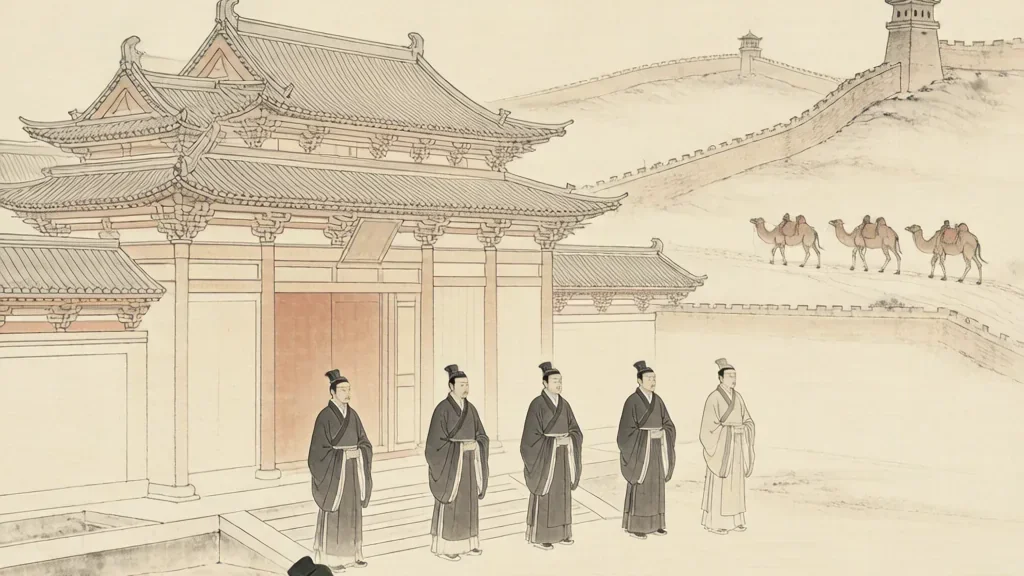
When people today speak of "Han Chinese" (汉族, Hànzú) — the ethnic majority that makes up more than ninety percent of China's population — they are naming a dynasty. The Han (汉, Hàn, 206 BCE–220 CE) ruled for over four centuries and gave the civilization its enduring identity: a written culture, a Confucian state, a trade route to the West, and a confidence that "Han" meant civilized.

The Ming Dynasty: Porcelain, Voyages, and the Great Wall
The Ming (明, Míng, 1368–1644) was the last native Chinese dynasty to rule a unified empire. Born from a peasant revolt against the Mongol Yuan, the Ming restored Han Chinese rule and, for a time, projected confidence outward — across the oceans with gigantic treasure fleets and inward through monumental architecture.

A Brief History of Chinese Dynasties
Spanning more than four thousand years, the story of China's dynasties is often called the world's longest continuous civilization. From the banks of the Yellow River (黄河, Huáng Hé) to the halls of the Forbidden City, one ruling house after another rose, flourished, and fell — yet the underlying culture, writing system, and bureaucratic ideals survived every upheaval.
The Qin Dynasty: Unity Forged in Fire
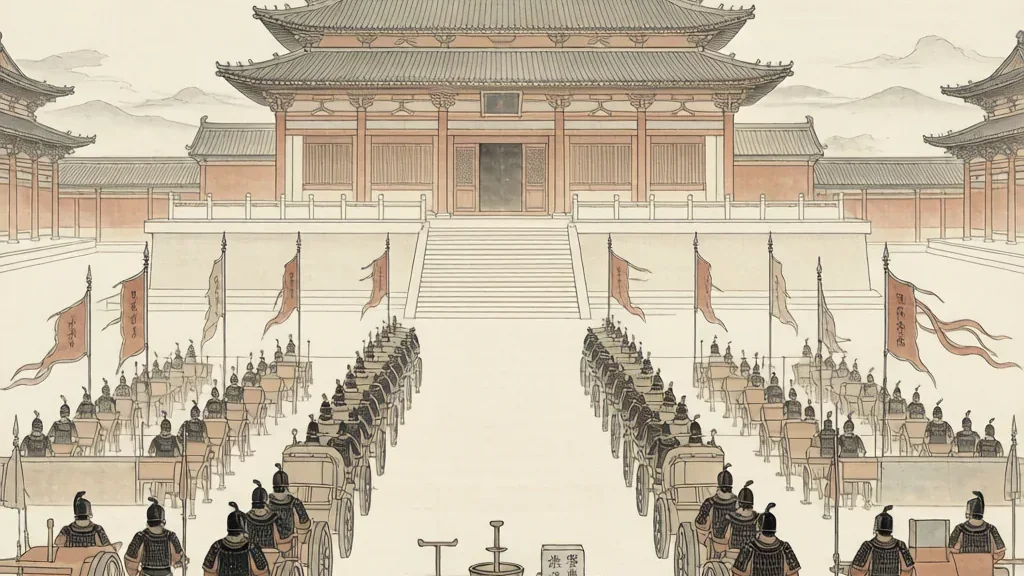
In 221 BCE, after centuries of the Warring States' chaos, the state of Qin (秦, Qín) crushed its last rivals and for the first time unified the Chinese cultural core under one ruler. That king, Ying Zheng, took a title no Chinese had borne before — huángdì (皇帝), "emperor" — and called himself Qin Shi Huang (秦始皇), the First Emperor.

The Qing Dynasty: The Last Empire
The Qing (清, Qīng, 1644–1912) was China's final dynasty — and its largest by territory. Founded by the Manchu (满洲), a people from the northeast beyond the Great Wall, it conquered a Ming China exhausted by rebellion and went on to quadruple the population, more than double the map, and stage a last great age of imperial craft and confidence.
The Song Dynasty: Innovation and Refinement
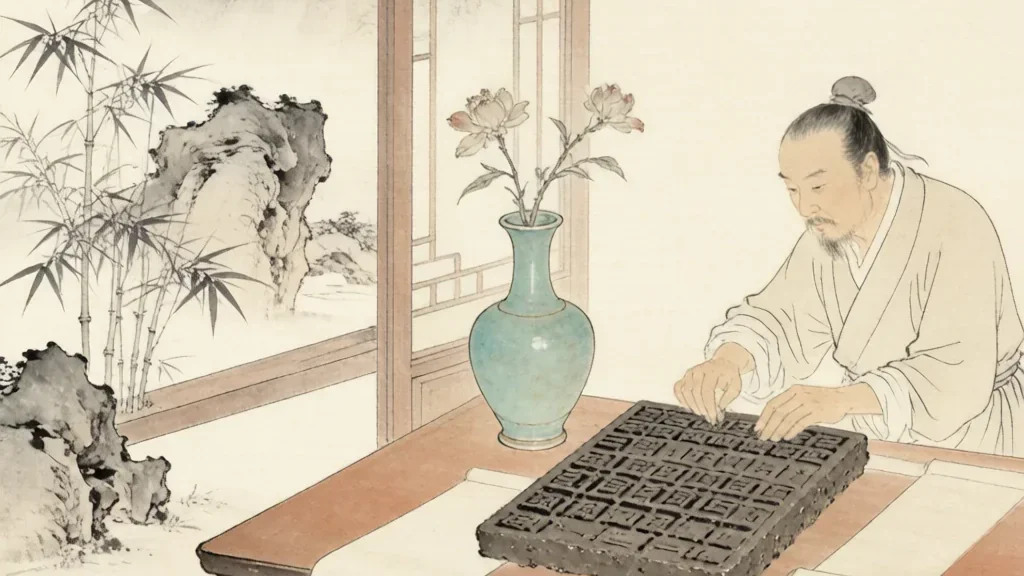
The Song (宋, Sòng, 960–1279 CE) is often called China's early-modern age. Militarily weaker than the Han or Tang, it nonetheless presided over an economic and technological takeoff unmatched anywhere in the pre-industrial world.

The Sui Dynasty: The Brief Bridge
Some dynasties are remembered for how long they lasted; the Sui (隋, Suí, 581–618 CE) is remembered for what it made possible. In just thirty-seven years, the Sui ended nearly three centuries of division, rebuilt a unified Chinese state, dug the Grand Canal that would feed China for a thousand years, and invented the exam-based bureaucracy the Tang turned into a world wonder.

The Tang Dynasty: A Cosmopolitan Golden Age
Few eras shine as brightly in Chinese memory as the Tang (唐, Táng, 618–907 CE). Born from the ruins of the short-lived Sui, the Tang reunified a divided realm and launched a golden age of poetry, painting, Buddhism, and openness to the world.

Wei-Jin and the Sixteen Kingdoms: An Age of Division
Between the fall of the Han and the rise of the Tang lies a long, turbulent interval that historians once dismissed as mere chaos — yet it was one of the most creatively restless periods in Chinese history. The Wei-Jin (魏晋, Wèi Jìn, roughly 220–420 CE) and the overlapping Sixteen Kingdoms (十六国) witnessed the shattering of the Han order, the southward flight of the Chinese elite, and the arrival of steppe peoples who would reshape the north.

The Xia and Shang: Foundations of Chinese Civilization
Long before the Great Wall or the Forbidden City, the foundations of Chinese civilization were laid along the Yellow River (黄河, Huáng Hé), where floodplain villages grew into the first states. The Xia (夏, Xià) and Shang (商, Shāng) dynasties — traditionally dated from about 2070 to 1046 BCE — mark the threshold between prehistoric China and the written, historically documented world.

The Yuan Dynasty: The Mongol Empire in China
For the first time in its history, China was ruled by a conquest dynasty from the steppe. The Yuan (元, Yuán, 1271–1368) was the Chinese chapter of the Mongol world-empire founded by Genghis Khan, and under his grandson Kublai Khan it brought the whole of China — including the stubborn Southern Song — under foreign rule.

The Zhou Dynasty: Ritual, Philosophy, and the Mandate of Heaven
The Zhou (周, Zhōu) dynasty, traditionally dated 1046–256 BCE, is the longest-reigning regime in Chinese history and arguably the most consequential. In defeating the Shang, the Zhou did more than change the ruling family; they reframed the very basis of political legitimacy, invented a language of virtue and mandate that every later dynasty would adopt, and presided over an age of philosophical creativity unmatched before or since.
The Dali Kingdom: Buddhism on the Southwest Frontier
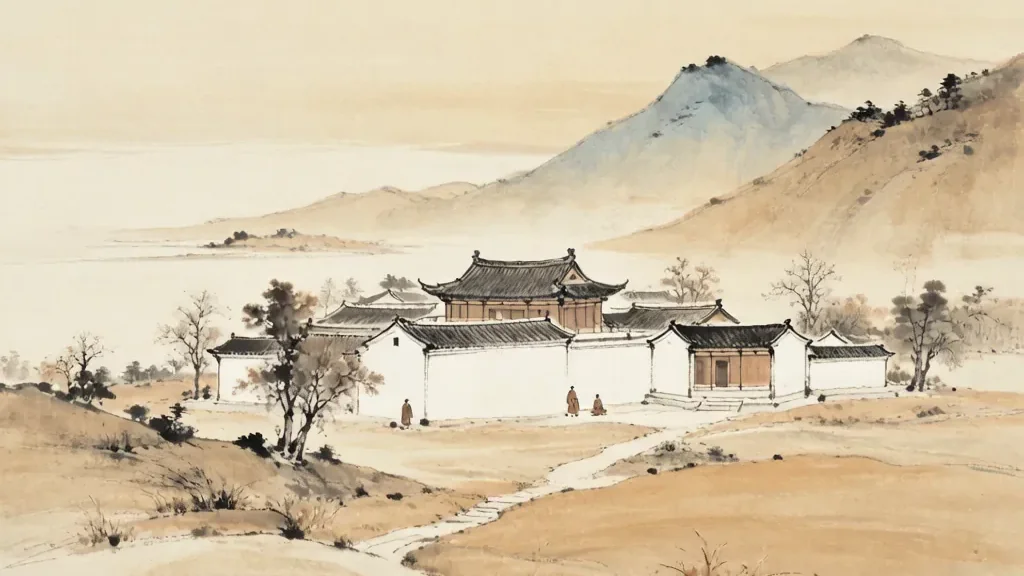
The Dali Kingdom (大理国, 937–1253 CE) was the successor to Nanzhao and the last independent state in Yunnan before the Mongol conquest. Founded by the Duan family, Dali was a devoutly Buddhist kingdom whose rulers often abdicated to become monks. For over three centuries, Dali maintained peaceful relations with Song China while developing a distinctive culture blending Chinese, Indian, and Southeast Asian influences. Dali was conquered by the Mongols in 1253.
The Eastern Han: Eunuchs, Scholars, and the Decline
When Liu Xiu, a distant Han imperial relative, restored the Han Dynasty in 25 CE with its capital at Luoyang, the empire was reborn — but it was a different place than the Western Han had been. The Eastern Han (东汉, 25–220 CE) inherited the institutions of its predecessor but faced new challenges: a more powerful aristocracy, growing influence of eunuchs at court, and the relentless pressure of nomadic confederations. Despite these tensions, the Eastern Han was a period of genuine achievement. Paper was invented, the first Chinese dictionary was compiled, astronomy and mathematics advanced, and the empire expanded its influence deeper into Central Asia. But the dynasty's fatal weakness — the struggle between scholarly officials, imperial relatives, and eunuchs — ultimately tore it apart, leading to the collapse that ushered in the Three Kingdoms period.
The Eastern Jin: Exile and Culture in the South
When the Western Jin court fled south after the fall of Chang'an in 316 CE, it carried more than imperial regalia — it carried the memory of Chinese civilization. The Eastern Jin (东晋, 317–420 CE), established at Jiankang (Nanjing), was a refugee dynasty led by northern aristocrats who had lost their homeland. For just over a century, the Eastern Jin maintained the claim of legitimate Chinese rule while the north was dominated by non-Chinese kingdoms. Politically weak and chronically divided by factionalism, the Eastern Jin was nonetheless culturally brilliant: it produced Wang Xizhi, China's greatest calligrapher; Tao Yuanming, China's most beloved pastoral poet; and the refined aristocratic aesthetics that would define Chinese high culture for centuries.
The Eastern Zhou: The Spring and Autumn of a Hundred Schools
In 771 BCE, the Western Zhou capital fell to barbarian invaders, and the royal court fled east to Luoyang. The Eastern Zhou (东周, 770–256 BCE) was born not in triumph but in trauma — a diminished monarchy presiding over a world it no longer controlled. And yet this period of political fragmentation produced the most extraordinary intellectual flowering in Chinese history. The Eastern Zhou encompasses two sub-periods: the Spring and Autumn (春秋, 770–476 BCE) and the Warring States (战国, 475–221 BCE). It was an age of iron swords and bamboo manuscripts, of warring princes and wandering philosophers, of Confucius and Laozi, Sun Tzu and Mozi, Mencius and Zhuangzi. When the Zhou finally expired and China was reunified under the Qin, the ideas generated during these five chaotic centuries had already determined the course of Chinese civilization for the next two thousand years.
The Five Dynasties: A Decade for Every Throne
The Five Dynasties (五代, 907–960 CE) period is the crucible in which China's medieval order was broken and a new early modern order forged. After the Tang collapse, northern China was ruled by five short-lived military regimes — Later Liang, Later Tang, Later Jin, Later Han, and Later Zhou — none lasting more than sixteen years. These were military dictatorships founded by frontier generals of mixed Chinese and Shatuo Turk ancestry. The period is often dismissed as chaotic and culturally barren, but it was during these decades that the political and military structures of the Song Dynasty were assembled. The Five Dynasties are the bridge between the aristocratic medieval world of the Tang and the bureaucratic early modern world of the Song.
The Jin Dynasty: The Jurchen Conquerors of the North
The Jin Dynasty (金朝, 1115–1234 CE), founded by the Jurchen people (女真) of Manchuria, rose with astonishing speed. Within a decade of their rebellion against the Liao, the Jurchen had destroyed the Liao empire (1125 CE) and captured the Song capital Kaifeng (1127 CE), taking the Song emperor captive. The Jin ruled northern China for over a century, governing a multi-ethnic population of Jurchen, Khitan, Chinese, and Bohai people. The Jin Sinicized more rapidly than any earlier conquest dynasty, adopting Chinese language, Confucian institutions, and Buddhist practices. By the early 13th century, the Jin was a thoroughly Sinicized state facing a new threat — the rising Mongol Empire — that would prove its undoing.
Goguryeo: The Korean Kingdom That Fought China's Dynasties
The relationship between China and Korea is one of the longest in world history. For over two millennia, Korea was China's closest neighbor — influenced by Chinese culture, writing, and institutions while maintaining its own distinct identity. The Korean kingdoms of Goguryeo, Balhae, Goryeo, and Joseon each interacted with Chinese empires through war, trade, and tribute. Korea adopted Chinese Confucianism and Buddhism while fiercely guarding its independence.
The Liao Dynasty: The Khitan Empire of the Steppe
The Liao Dynasty (辽朝, 907–1125 CE) was a vast empire established by the Khitan people (契丹) of Manchuria, controlling territory from the Korean border to Mongolia and from Manchuria to the northern Chinese plain. Far from being a simple 'barbarian' state, the Liao was a sophisticated dual-administration empire that ruled its nomadic Khitan subjects and sedentary Chinese subjects through separate administrative systems. The Liao adopted Chinese writing (creating two scripts for the Khitan language), patronized Buddhism, and established a stable border with the Song through the Treaty of Shanyuan. For over two centuries, the Liao was the dominant power in East Asia, extracting tribute from the Song and controlling the steppe from the Amur River to the Altai Mountains.
Early Ming: The Restoration of Han Rule
The Ming Dynasty (明朝, 1368–1644 CE) began as one of the most remarkable success stories in Chinese history — a peasant rebellion that expelled the Mongols and restored Chinese rule. Its founder, Zhu Yuanzhang, rose from beggar to emperor, the only such ascent in Chinese history. The early Ming (明初, 1368–1424 CE) was a period of recovery, reconstruction, and expansion. The Ming rebuilt the Great Wall, restored the examination system, revived Confucian orthodoxy, and created the most powerful military in East Asia. Hongwu Emperor (Zhu Yuanzhang) and his son Yongle Emperor transformed China from a war-torn nation recovering from Mongol rule into the dominant power of East Asia, ready for the age of maritime exploration that would culminate in the voyages of Zheng He.
Late Ming: The Fall of the Last Han Dynasty
The late Ming (晚明, 1550–1644 CE) was an age of paradox — imperial decline alongside cultural efflorescence, economic prosperity next to social crisis, philosophical sophistication breeding political paralysis. The Ming empire stretched from Vietnam to Mongolia, its economy was the largest in the world, and its cities were centers of commerce and printing. Yet the government was paralyzed by factionalism, the northern frontier threatened by Manchu unification, and the countryside devastated by peasant rebellions. The late Ming produced some of China's greatest literature — the novels Journey to the West, The Plum in the Golden Vase, and the short stories of Feng Menglong and Ling Mengchu. It was a world of teahouses, bookshops, and merchant wealth, but also a world of corruption, eunuch power, and fiscal crisis. When the Ming fell to a combination of peasant rebellion and Manchu invasion in 1644 CE, it was both sudden and long-expected.
The Ming Maritime Era: Zheng He and the Treasure Fleets
The early Ming Dynasty was the age of the greatest maritime expeditions the world had ever seen. Between 1405 and 1433 CE, the Ming government launched seven massive fleets commanded by the eunuch admiral Zheng He (郑和), sailing across the Indian Ocean to Southeast Asia, India, the Arabian Peninsula, and East Africa. These expeditions dwarfed the voyages of Columbus and Magellan in scale and sophistication. The largest Zheng He ships were over 120 meters long — far larger than any European vessel of the time. The Ming treasure fleets carried tens of thousands of sailors and soldiers, projecting Chinese power across the maritime world. And then, just as suddenly as they had begun, the expeditions stopped. The Ming court turned inward, burned the shipbuilding records, and allowed China's naval supremacy to wither.
Nanzhao: The Kingdom in the Clouds of Yunnan
Nanzhao (南诏, 738–902 CE) was a powerful kingdom in modern Yunnan, founded by the Bai and Yi peoples. It controlled trade routes between China, Southeast Asia, and Tibet. For over a century and a half, Nanzhao maintained its independence against the Tang Empire, fighting wars that reached into Sichuan and Vietnam. Nanzhao culture was a unique blend of Chinese, Tibetan, and Southeast Asian influences. The kingdom fell in 902 CE and was succeeded by the Dali Kingdom.
The Northern Song: Prosperity Before the Fall
The Northern Song (北宋, 960–1127 CE) was the most economically advanced, technologically innovative, and bureaucratically sophisticated civilization the world had ever seen. While Europe struggled through the early Middle Ages, the Northern Song developed paper money, standing navies, gunpowder weapons, mechanical clocks, and movable type printing. Its capital Kaifeng was the largest city in the world, with over a million inhabitants, street lights, fire departments, and a vibrant commercial culture. The Song government was run by scholar-officials selected through competitive examinations — a meritocracy that was revolutionary for its time. Yet for all its sophistication, the Northern Song was militarily weak, perpetually threatened by the Liao and Jin empires to the north. The dynasty fell in 1127 CE when the Jurchen Jin Dynasty captured Kaifeng and carried the Song emperor into captivity — one of the greatest catastrophes in Chinese history.
The Northern Wei: The Xianbei Dynasty That Embraced Buddhism
The Northern Wei (北魏, 386–534 CE) was the most successful of the 'barbarian' dynasties — and the most thoroughly Sinicized. Founded by the Tuoba clan of the Xianbei people, the Northern Wei unified northern China in 439 CE, ending the Sixteen Kingdoms chaos, and ruled for nearly 150 years. The dynasty systematically transformed a nomadic tribal confederation into a Chinese-style bureaucratic empire. Its emperors moved the capital to Luoyang, adopted Chinese language and dress, forced Xianbei nobles to marry Chinese aristocrats, and patronized Buddhism on an unprecedented scale. The result was a hybrid civilization that laid the foundations for the Sui and Tang reunification.
Early Qing: The Manchu Conquest and Consolidation
The Qing Dynasty (清朝, 1644–1912 CE) was the last imperial dynasty of China and the second to be founded by a non-Chinese people — the Manchu (满族) from Manchuria. The Qing conquest of China was one of the most brutal in history, but the dynasty that emerged from the conquest became one of the most successful. The early Qing emperors — Shunzhi, Kangxi, and Yongzheng — created a stable, prosperous, and expansive empire that doubled China's territory, integrated Tibet and Xinjiang, and established the modern borders of China. The Qing succeeded where earlier conquest dynasties had failed: they adopted Chinese culture while maintaining Manchu identity, creating a dual system that lasted for nearly three centuries.
The High Qing: The Last Golden Age of Empire
The High Qing (清盛, 1735–1796 CE) — the reign of the Qianlong Emperor — was the apogee of the Qing Dynasty. Qianlong inherited a stable, wealthy empire and expanded it to its maximum territorial extent. The empire stretched from Taiwan to the Himalayas. Trade boomed, the population doubled, and the imperial treasury overflowed. Qianlong was a patron of the arts, a poet, and a military conqueror who launched the 'Ten Great Campaigns' expanding Qing territory. Yet beneath the glittering surface, the seeds of decline were already sprouting: population pressure, official corruption, fiscal strain from endless wars, and the arrival of European powers demanding trade. The Macartney Mission of 1793 demonstrated the growing gap between Qing and European power, a gap that would become disastrous in the 19th century.
Late Qing: The Century of Humiliation
The Late Qing (晚清, 1796–1912 CE) is the story of the decline and fall of an empire — but also of China's traumatic birth into the modern world. From the White Lotus Rebellion through the Opium Wars, the Taiping Rebellion, the Self-Strengthening Movement, the Boxer Uprising, and the Xinhai Revolution, the Late Qing saw China defeated, humiliated, and transformed. Western powers forced open China's markets, imposed unequal treaties, and carved out spheres of influence. The Qing government's inability to defend against foreign aggression led to the growth of revolutionary movements. In 1912, the Qing Dynasty fell, ending over two thousand years of imperial rule in China.
The Shang Dynasty: Oracle Bones and Bronze Civilization
The Shang Dynasty (商朝, c. 1600–1046 BCE) is the first Chinese dynasty whose existence is confirmed by contemporary archaeological evidence — not just later texts, but actual inscriptions carved into turtle shells and cattle bones. These 'oracle bones' (甲骨), unearthed by farmers near Anyang in the late nineteenth century, opened a direct window into the minds of Shang kings, revealing a world of ancestor worship, divination, human sacrifice, and sophisticated bronze casting. The Shang ruled for over five centuries from a series of capitals along the Yellow River, building an aristocratic Bronze Age civilization that established the ritual and political foundations upon which all later Chinese dynasties would build.
The Shu Han: The Legacy of Liu Bei in the Southwest
The Shu Kingdom (蜀汉, 221–263 CE), also known as Shu Han, was one of the Three Kingdoms. Ruling the Sichuan Basin from Chengdu, Shu claimed to be the legitimate successor to the Han Dynasty. The kingdom is famous for its association with Liu Bei, the righteous hero, and Zhuge Liang, whose genius made Shu formidable despite its smaller size. Shu's romanticized history has made it the most beloved of the Three Kingdoms in Chinese culture.
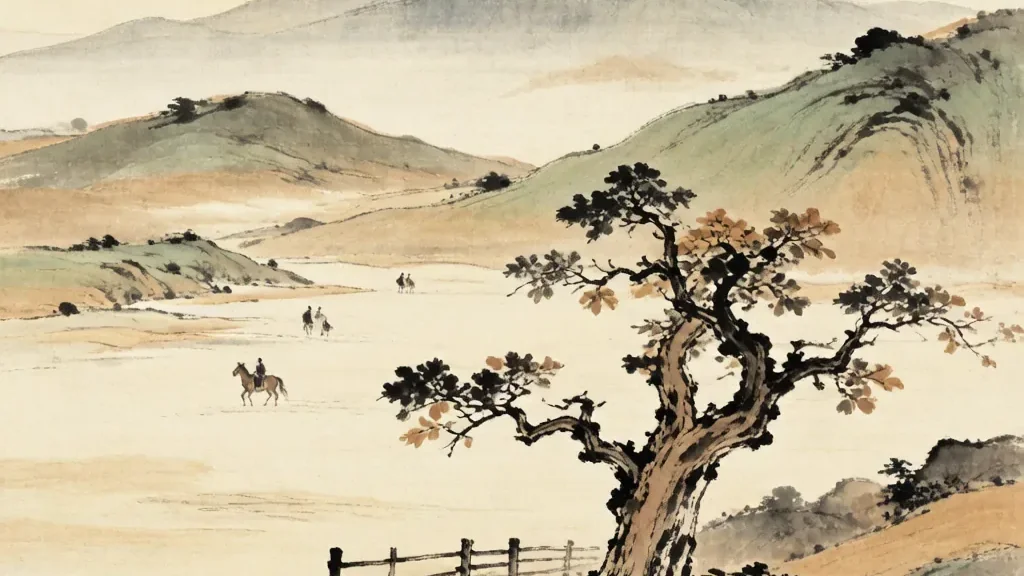
The Sixteen Kingdoms: The Northern Chaos of the Five Barbarians
The Sixteen Kingdoms (十六国, 304–439 CE) is not a single state but a collective term for the chaotic succession of non-Chinese kingdoms that dominated northern China after the Western Jin collapse. For over a century, the north was a kaleidoscope of warring regimes — Xiongnu, Xianbei, Jie, Di, and Qiang rulers established over twenty states, fought constant wars, and gradually absorbed Chinese culture. The period is notorious for its complexity — borders shifted constantly, rulers were murdered frequently — yet this era was one of the most transformative in Chinese history. The nomadic conquerors Sinicized, Buddhism spread to become a dominant religion, and the cultural hybridity of north and nomadic traditions created the foundations for the cosmopolitan civilization of the Sui and Tang.
The Southern Dynasties: Refuge of Chinese Civilization
While northern China was divided among nomadic conquerors, the south followed a different path — a sequence of four Chinese dynasties, each centered on the capital Jiankang (Nanjing), each claiming continuity with the legitimate imperial tradition. The Southern Dynasties (南朝, 420–589 CE) — Liu Song, Southern Qi, Liang, and Chen — were the preserve of Chinese high culture during the age of division. Their courts produced exquisite poetry, literary criticism, Buddhist sculpture, and the refined aristocratic lifestyle that became the ideal of Chinese civilization. Yet politically they were weak, riven by factionalism, and ultimately unable to resist the rising military power of the north.
The Southern Song: Culture in Exile
After the Jurchen Jin Dynasty captured Kaifeng and carried the Song emperor into captivity in 1127 CE, the Song court fled south to Hangzhou (Lin'an) and established the Southern Song (南宋, 1127–1279 CE). For 152 years, this rump dynasty ruled the wealthiest, most culturally sophisticated half of China while dreaming of reconquering the lost north. The Southern Song was a civilization of exiles — brilliant, melancholy, and constantly overshadowed by the shame of the northern loss. Yet it was also a period of extraordinary achievements: Neo-Confucian philosophy reached its full development, landscape painting reached its peak, the economy of the south boomed, and Hangzhou became the world's largest and most beautiful city. When the Mongols finally conquered the Southern Song in 1279 CE, they destroyed one of the most advanced civilizations of the medieval world.
The Sui Dynasty: The Brief Giant That Reunited China
The Sui Dynasty (隋朝, 581–618 CE) is one of history's great ironies: a short, brutal, tyrannical regime that prepared the way for a golden age it never lived to see. Like the Qin Dynasty before it, the Sui reunified China after centuries of division, imposed standardization, built colossal infrastructure projects, and exhausted the population so thoroughly that rebellion swept the country. The Sui lasted only thirty-seven years, but when it fell, it left behind a reunified empire, a functioning bureaucracy, a network of canals, and rebuilt fortifications — the tools with which the Tang Dynasty would build the greatest empire in Chinese history.
Early Tang: The Foundation of the Golden Age
The Tang Dynasty (唐朝, 618–907 CE) is the dynasty against which all others are measured — the golden age of Chinese civilization, when China was the most powerful, prosperous, and cosmopolitan nation on earth. But the Tang did not begin as a golden age. It began as a rebellion by the Li family, a mixed Chinese-Xianbei aristocratic clan who seized a collapsing empire. The early Tang (初唐, 618–712 CE) was a period of consolidation, institutional building, and careful expansion — the foundation upon which the brilliant high Tang would be built.
High Tang: The Golden Age of Poetry and Power
The High Tang (盛唐, 712–755 CE) represents the absolute peak of Chinese civilization — a period of military dominance, economic prosperity, and artistic brilliance rarely equaled in world history. Under Emperor Xuanzong (唐玄宗, r. 712–756 CE), the Tang Empire stretched from Korea to the Caspian Sea, its capital Chang'an was the largest and most cosmopolitan city in the world, and its poets — Li Bai, Du Fu, Wang Wei — created works that remain the pinnacle of Chinese literature. The High Tang was a civilization at its zenith, confident and open, absorbing influences from across Asia while radiating its own culture to Japan, Korea, and Central Asia. And then it collapsed — shattered by the An Lushan Rebellion, a cataclysm that killed millions and ended forever the Tang's golden age.
Late Tang: Twilight of an Empire
The Late Tang (晚唐, 756–907 CE) is the long twilight of a great dynasty — 150 years of decline punctuated by brief revivals, military rebellions, and the slow erosion of central authority. The An Lushan Rebellion (755–763 CE) broke the Tang's back; it never fully recovered. After the rebellion, the empire was a federation of semi-independent military governors (jiedushi), each commanding his own army and collecting his own taxes. The emperor in Chang'an ruled by diplomacy and marriage alliances, not by command. Yet even in decline, the Tang remained culturally vital: the late Tang produced Du Fu's greatest poetry, the revival of classical prose, and the first flowering of Chinese short fiction. The dynasty lasted so long because the great families and provincial governors, while ignoring the emperor's commands, had no interest in destroying the system that gave them legitimacy. When the dynasty finally fell in 907 CE, it was not to a single rebel but to a slow unraveling that had taken over a century.
The Ten Kingdoms: The South Divides as the North Fights
While the Five Dynasties rose and fell in the north with dizzying speed, southern China followed a very different path. The Ten Kingdoms (十国, 902–979 CE) were a collection of mostly peaceful, stable regimes — primarily in the south — that maintained independence during the northern chaos. These states were generally ruled by Chinese families, not non-Chinese generals. They preserved the high culture of the late Tang and even improved upon it: the southern kingdoms became centers of literature, art, commerce, and Buddhist learning. When the Song reunified China in 979 CE, it conquered wealthy, cultured states whose officials and scholars would staff the new imperial government. The Ten Kingdoms, often dismissed as regional trivia, were in fact the preservers of Chinese civilization during a dark age.
The Three Kingdoms: Heroes, Betrayals, and Epic Wars
The Three Kingdoms period (三国, 220–280 CE) lasted only sixty years, but no other era in Chinese history has captured the popular imagination so completely. This was the age of Cao Cao the cunning strategist, Liu Bei the righteous wanderer, Guan Yu the god of war, Zhuge Liang the mastermind, and Zhang Fei the roaring giant — heroes and villains whose exploits have been told, retold, sung, and filmed for eighteen centuries. Yet beneath the legend lies a real history of brutal warfare, epidemiological disaster, and political experimentation. The Three Kingdoms period — Wei (魏) in the north, Shu (蜀) in the southwest, and Wu (吴) in the southeast — was the first time China divided into enduring rival states after the fall of a unified empire. The stories from this era, preserved in the historical Records of the Three Kingdoms and fictionalized in the epic Romance of the Three Kingdoms, have shaped Chinese ideas of loyalty, strategy, and fate ever since.
The Tibetan Empire: The Roof of the World's Dynasty
The Tibetan Empire (吐蕃帝国, 618–842 CE) was a vast high-altitude empire that dominated Central Asia alongside the Tang Dynasty. Rising from the Yarlung Valley, the Tibetan Empire under Songtsen Gampo, Trisong Detsen, and Ralpacan conquered territory from the Taklamakan to the Himalayas. This was the period when Buddhism was established in Tibet, the Tibetan script was created, and the foundations of Tibetan civilization were laid. The empire collapsed in the 9th century after civil war and Buddhist persecution, but its legacy endured.
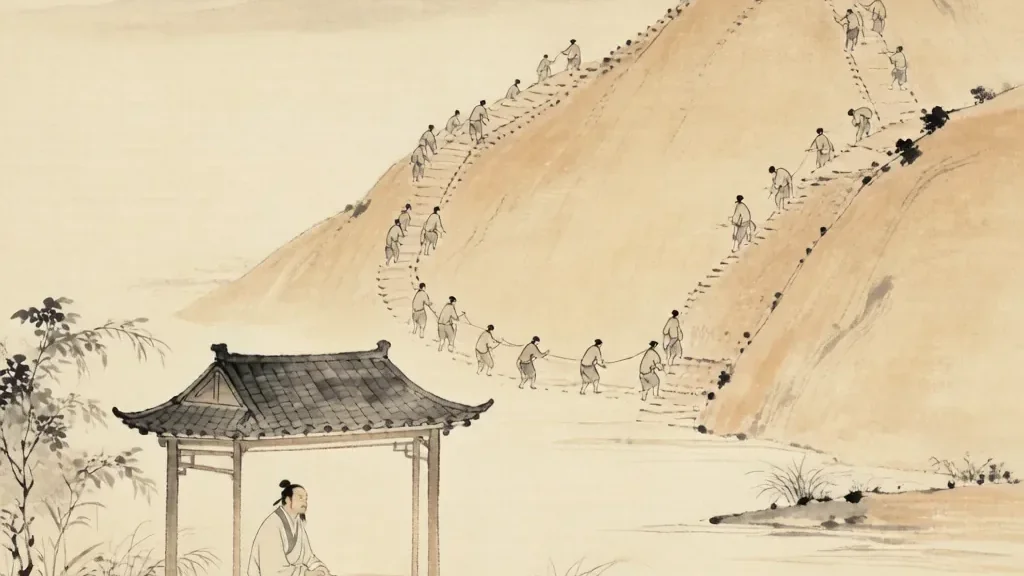
The Warring States: The Crucible That Forged an Empire
The Warring States period (战国时代, 475–221 BCE) was the crucible in which the Chinese empire was forged — through blood, iron, and relentless political calculation. For two and a half centuries, seven major states — Qin, Qi, Chu, Han, Zhao, Wei, and Yan — fought a war of all against all, mobilizing every resource, human and material, in the pursuit of supremacy. It was an age of total warfare that saw the invention of the Chinese bureaucracy, the professionalization of armies, the spread of iron technology, and the composition of philosophical works that would shape East Asian thought for millennia. And when the fighting finally ended, not with a treaty but with the total annihilation of six states by one, the result was the first unified Chinese empire — the Qin Dynasty — and a new template for governance that would endure until 1912.
The Cao Wei: The Northern Hegemon of the Three Kingdoms
The Kingdom of Wei (曹魏, 220–266 CE) was the most powerful of the Three Kingdoms. Controlling the Yellow River valley — the heartland of Chinese civilization — Wei had the largest population, richest agriculture, and most sophisticated bureaucracy. Founded by Cao Pi, son of the legendary Cao Cao, Wei's capital was Luoyang. Wei conquered Shu in 263 but was overthrown by the Sima family, who founded the Jin Dynasty in 266.
The Western Han: The Empire Finds Its Form
When Liu Bang, a former village headman turned rebel general, defeated the hegemonic Xiang Yu and founded the Han Dynasty in 202 BCE, no one could have predicted that his dynasty would give the Chinese people their permanent name. The Western Han (西汉, 202 BCE – 9 CE) was the great consolidator — the dynasty that took the centralized empire created by Qin Shihuang and made it acceptable, durable, and truly Chinese. For over two centuries, the Han expanded their territory westward into the Tarim Basin, southward into what is now Vietnam, and eastward to the sea. They established the Silk Road, standardized Confucianism as state ideology, and created a bureaucratic system that would be the model for every subsequent dynasty. So complete was the Han achievement that the Chinese people still call themselves 'Han' (汉人), and their language 'Han language' (汉语).
The Western Jin: A Brief Unity Before the Storm
During the Western Jin (西晋, 265–316 CE), China experienced a brief reunion followed by a catastrophic collapse that would divide the country for nearly three centuries. The Jin Dynasty, founded by the Sima family who had usurped the Wei kingdom, initially promised a restoration of Han-style unity. But the dynasty's fatal error — granting extensive territories and military commands to imperial princes — triggered the devastating War of the Eight Princes, a civil war among the Sima clan that destroyed the Jin military and opened northern China to invasion by nomadic peoples. The Western Jin lasted barely fifty years, yet its failure shaped Chinese history for the next three centuries, creating the north-south divide that would only be healed by the Sui.
The Western Xia: The Tangut Kingdom of the Silk Road
The Western Xia (西夏, 1038–1227 CE), also known as the Tangut Empire, was a remarkable but often overlooked dynasty that ruled the steppe and oasis regions of what is now Ningxia, Gansu, and Inner Mongolia. Founded by the Tangut people (党项), a Tibeto-Burman ethnic group, the Western Xia was a Buddhist kingdom that developed its own unique script — a complex logographic writing system unlike any other in East Asia. For nearly two centuries, the Western Xia maintained its independence against the Song, Liao, and Jin by balancing between them, paying tribute when necessary and fighting when cornered. The Tangut kingdom was completely destroyed by the Mongols under Genghis Khan, who was killed in battle against the Tangut. The Mongols annihilated the Tangut civilization so thoroughly that their script was forgotten for centuries, rediscovered only in the 20th century.
The Western Zhou: The Age of Feudal Order
When the Zhou people thundered out of the Wei River valley in the eleventh century BCE and crushed the Shang at the Battle of Muye, they did more than replace one ruling house with another — they invented Chinese political philosophy itself. The Western Zhou (西周, c. 1046–771 BCE) established the concept of the Mandate of Heaven (天命), which held that a ruler's authority came not merely from birth but from virtue, and that Heaven itself would withdraw its support from a tyrant. This revolutionary idea transformed Chinese governance forever, making the right to rule conditional rather than absolute, and providing a moral justification for rebellion that would be invoked by every successful rebel from the Han to the Communists. The Western Zhou also created the fengjian (封建) feudal system, codified ritual music and dance, and produced the oldest strata of the Chinese classics.
The Eastern Wu: The River Kingdom of the Three Kingdoms
The Kingdom of Wu (东吴, 222–280 CE), or Eastern Wu, was one of the Three Kingdoms. Ruling the Yangzi valley and the southeast coast, Wu was the longest-lasting of the three — surviving 58 years, outlasting both Shu and Wei. Wu's strength came from its navy, maritime trade, and skilled diplomacy. Founded by Sun Quan, Wu's capital at Jianye (Nanjing) was the first of many southern dynasties to make Nanjing their capital.
The Xia Dynasty: China's First Dynasty Between Myth and History
Chinese historical tradition begins with the Xia Dynasty (夏朝, c. 2070–1600 BCE), a shadowy bronze-age kingdom that has fascinated historians and archaeologists for centuries. For most of Chinese history, the Xia was accepted as the first of the Three Dynasties (三代), the primordial foundation upon which all later Chinese civilization was built. However, the Xia occupies an unusual position — it is simultaneously the most famous early dynasty and the most contested, because until the mid-twentieth century, no archaeological evidence for its existence had been found. The discovery of the Erlitou culture in the Yiluo River valley changed the conversation, but did not settle it, leaving the Xia suspended between myth and history.
The Yuan Dynasty: The Mongol Empire Rules China
The Yuan Dynasty (元朝, 1271–1368 CE) was the first time all of China was ruled by a non-Chinese people — the Mongols. Founded by Kublai Khan, grandson of Genghis Khan, the Yuan Dynasty was part of the vast Mongol Empire that stretched from the Pacific to the Mediterranean. The Mongol conquest of China was brutal — the population dropped by tens of millions — but the Yuan period also reopened the Silk Road, connected China to the Islamic world, created the first unified government of Tibet and China, and produced dramatic cultural exchanges. Marco Polo served at Kublai's court. Persian astronomers worked alongside Chinese scholars. Muslim merchants dominated maritime trade. The Yuan Dynasty was the most cosmopolitan period in Chinese history — and one of the shortest-lived.