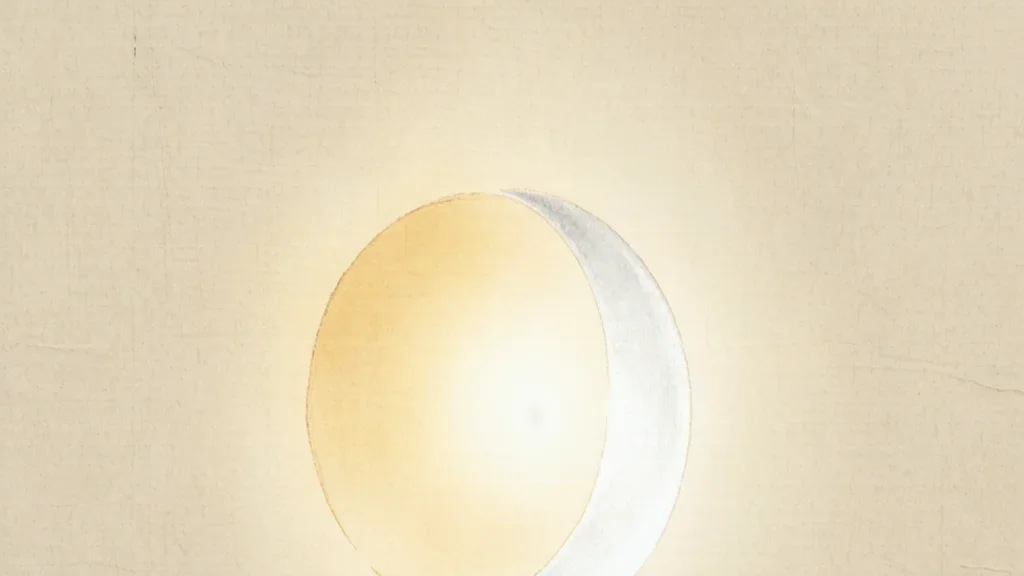
Compound ideographs, known in Chinese as 会意字 (huìyì zì) or "joined-meaning characters," are characters formed by combining two or more existing graphic elements so that their combined sense yields a new meaning. Unlike a picture that imitates a single object, a compound ideograph is a tiny visual sentence: put a person beside a tree and you get "rest" (休); put the sun and moon together and you get "bright" (明). As one of the Six Scripts (六书, liùshū) used to classify Chinese writing, the compound ideograph shows the script at its most logical and most playful, and it remains one of the most rewarding categories for learners who want to see how meaning is literally built into the shapes.
What a compound ideograph is
A compound ideograph (会意) conveys meaning through the relationship among its parts rather than by picturing one thing or by pairing a meaning-radical with a sound. The classic definition says the character is "formed by association of ideas": the reader infers the new sense from how the components interact. 明, for instance, joins 日 (sun) and 月 (moon) to mean the brightness that comes from both lights together.
This makes 会意 characters fundamentally different from a simple pictograph. A pictograph like 山 (mountain) shows one object; a compound ideograph like 炎 (two 火, "fire," stacked) shows fire intensified into "flame" or "blazing." The meaning is relational, not iconic of a single thing.
The Six Scripts and where it fits
The traditional framework of the Six Scripts—pictographs (象形), phonosemantic compounds (形声), compound ideographs (会意), loan characters (假借), mutually-explanatory characters (转注), and zhǐshì "indicatives" (指事)—was systematized in works such as the Han-dynasty Shuowen Jiezi. Among these, compound ideographs form a major productive class alongside phonosemantic compounds.
Scholars estimate that compound ideographs make up a smaller share of the characters than phonosemantic ones, but they include many of the most basic and ancient words. Their presence proves that early scribes were not only drawing pictures but reasoning abstractly with graphic building blocks.
How components combine
Compound ideographs combine parts in recognizable patterns. Sometimes two identical elements stack or sit side by side to signal intensity or plurality: 林 is "forest" from two trees 木, 森 is "dense forest" from three, 炎 is "blazing" from two fires, and 磊 is "heap of stones" from three 石.
Other times the combination is spatial or situational: 囚 places a person 人 inside an enclosure 囗 to mean "prisoner"; 看 puts a hand 手 above an eye 目 to mean "to look"; 尖 puts "small" 小 over "big" 大 to mean "sharp point." The logic is almost always visible if you know the pieces.
Rest, brightness, and following: classic examples
A handful of compound ideographs are taught to almost every beginner because their logic is immediately clear. 休 (person 亻 beside tree 木) means "to rest," evoking a traveler pausing in the shade. 明 (sun + moon) means "bright" or "clear." 从 (two persons 人 walking) means "to follow," while 众 (three persons) means "crowd" or "multitude."
These examples show the range of the method: some express physical posture, some express light, and some express social relationship. The same small set of component pictures—person, tree, sun, moon—recombines into quite different ideas.
Human-centered compounds
Many compound ideographs encode social roles through their parts, and some reflect ancient Zhou-dynasty views of gender and labor. 男 ("man, male") joins 田 (field) and 力 (strength), casting men as the ones who work the fields. 妇 ("married woman") in its older form paired 女 (woman) with a broom-like element, marking domestic work.
By contrast 好 ("good, to like") joins 女 and 子 (child), traditionally read as a woman with a child signifying well-being. Whatever one makes of the social assumptions, these characters are a fossil record of early Chinese ideas about family and labor.
Nature and body compounds
The natural world supplies many compound ideographs. 苗 (grass 艹 over field 田) is a "sprout" or "seedling." 泪 (water 氵 beside eye 目, or the older 淚 with 戾) is "tear," literally water from the eye. 鸣 (mouth 口 with bird 鸟) is "to cry out" as an animal does.
Body-based examples include 臭, an early character joining "nose" (自, which once meant nose) with "dog" to mean "smell" or "odor," on the idea that a dog's nose leads it by scent. These show how concrete observation fed the compound method.
Compound ideographs vs. phonosemantic compounds
The hardest distinction for learners is telling a compound ideograph from a phonosemantic compound (形声). A phonosemantic character such as 妈 (woman 女 + phonetic 马 mǎ) uses one part for meaning and one for sound; a compound ideograph uses both parts for meaning. The risk of confusion is real because many characters that look compound are actually phonosemantic, and vice versa.
Historically, as pronunciation drifted, some characters that began as compounds were later reanalyzed, and some phonosemantic forms were read as if compound. Dictionaries therefore sometimes disagree on a given character's classification, which is itself evidence of how the script evolved.
Evolution and the obscuring of logic
Over the long history from oracle bone to clerical and regular script, many compound ideographs were simplified or distorted so that their internal logic became hard to see. 看 still clearly shows hand-over-eye in its regular form, but 休's "person" has been reduced to the generic 亻 radical, and 众's three persons are now written as 众人 with the top person abstracted.
Simplification in the twentieth century further changed shapes: 众, 泪, and others gained forms meant to be easier to write, sometimes preserving the compound logic (泪 = water + eye) and sometimes not. The underlying idea-association usually survives in the traditional form if you look for it.
Why compound ideographs matter for learners
For students, compound ideographs are a confidence builder. Because their meaning is composed rather than arbitrary, recognizing the parts lets a learner guess or remember a character without rote memorization. Knowing that 木 is "tree" unlocks 林, 森, and many others at once.
They also teach the habit of decomposition—the practice of reading a complex character as a layout of meaningful pieces—which carries over to phonosemantic characters too. In this sense the compound ideograph is the gateway to a visual literacy of the whole script.
Modern legacy and creativity
Compound ideographs are not only ancient. New combined-meaning characters keep appearing in informal writing, internet slang, and regional usage, where users stack or merge components for humorous or emphatic effect. Some are fleeting; a few enter dictionaries or common typing.
The enduring appeal of 会意 is that it makes the written language feel like a built object rather than a code. Each character is a small argument about how two ideas belong together, and that argument is still being written today.
❓ Frequently Asked Questions
What is the difference between a compound ideograph and a pictograph?
A pictograph draws a single object (like 山, mountain), while a compound ideograph combines two or more elements whose relationship creates a new meaning (like 明, sun + moon = bright).
How can I tell a compound ideograph from a phonosemantic character?
If both parts contribute meaning, it is compound (会意); if one part gives meaning and the other gives sound, it is phonosemantic (形声). Context and etymology decide, and dictionaries sometimes disagree.
Are compound ideographs common in modern Chinese?
They are fewer than phonosemantic compounds but include many basic, ancient words, and new combined-meaning characters still appear in casual and online writing.
Why are they useful for learners?
Because their meaning is composed from visible parts, knowing the components lets a learner infer or remember characters without pure memorization, building visual literacy of the script.
What is an example of a "plurality" compound ideograph?
Characters that repeat a component to show intensity or number, such as 林 (two trees, forest), 森 (three trees, dense forest), and 炎 (two fires, blazing).
Did simplification change compound ideographs?
Yes; some simplified forms kept the compound logic (泪 = water + eye) while others reshaped the parts, sometimes obscuring the original visual reasoning in the regular script.