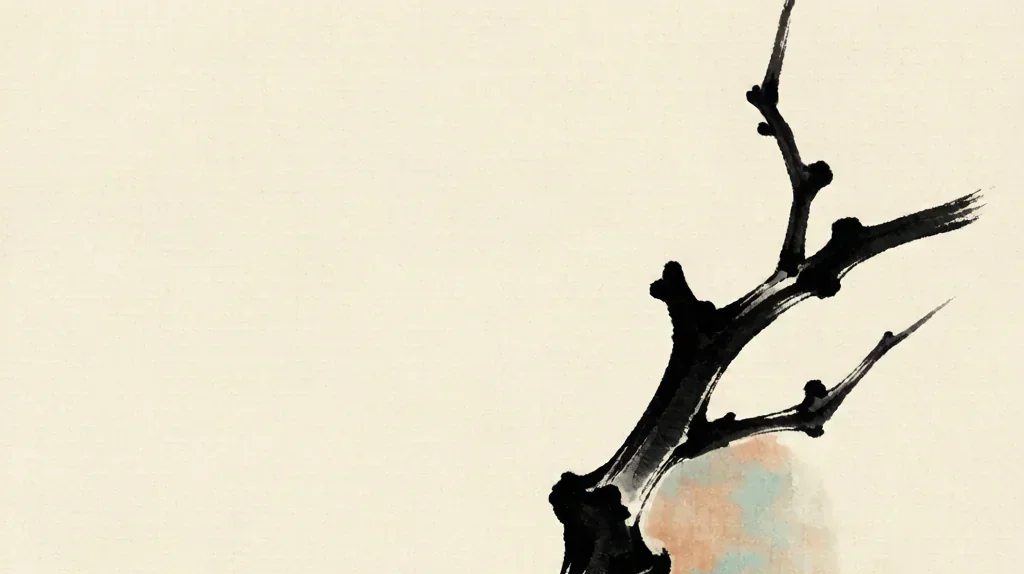
Iron painting, or tiehua, is a distinctive Chinese art from Wuhu in Anhui that builds pictures and calligraphy out of forged iron rather than ink. Developed in the early Qing period, it uses hammered, cut, and welded iron rods and sheet to form landscapes, birds, and characters, which are then mounted like a hanging scroll or set into a screen. Black iron against a pale ground reads as living ink painting in metal, merging the smith's fire with the painter's eye. The art is unusual because it refuses the usual boundary between craft and fine art: the maker must heat and hammer like a blacksmith yet compose and judge like a painter, and the resulting object belongs equally to the forge and the studio. In a country with a vast tradition of brush painting, tiehua is the witty cousin that asks whether a line made of iron can carry the same feeling as a line made of ink, and the answer it gives, again and again, is that it can.
What Iron Painting Is
Unlike cast iron ornaments, tiehua is assembled from worked iron: thin rods are bent to outline a form, sheet is cut for masses, and pieces are lightly welded or riveted together. The result is a line drawing made of metal, a sketch caught and held in a material that does not fade or tear.
Hung on a wall, a fine iron painting looks like a brush painting caught in mid-stroke and frozen in black iron. The comparison is not casual; the makers studied painting and meant their work to be read as painting, so the composition follows ink-painting convention even as the medium defies it.
The durability is part of the point. An ink scroll yellows and frays, but an iron painting can hang for centuries unchanged, so the art offers permanence to the most fleeting of pleasures, the spontaneous brushstroke, and that promise of endurance gives tiehua a quiet monumentality.
Origins in Wuhu
The art is traditionally credited to an early Qing smith in Wuhu, a Yangtze river port with ironworking traditions. Local iron and a culture of metalcraft gave the new medium its start, and the port's trade carried the novel objects to other cities where they surprised and delighted viewers.
Wuhu remained the heart of the craft, and its name is still attached to the best-known examples. The city's smiths passed the method within families and workshops, and the local supply of good iron and good fuel let the art develop a confidence it might not have found elsewhere.
The founding story matters because it locates tiehua in the world of work rather than the court. This is a craft born in a forge by a river, not in an imperial atelier, and its populist origins help explain why its subjects are often the familiar ones of ink painting rather than the remote symbols of court ritual.
From Smithy to Studio
Iron painting sits between craft and fine art. The maker must know fire and anvil like a smith yet compose like a painter, deciding where a "stroke" should be thick or thin, straight or curling, and the two kinds of knowledge must meet in a single hand for the work to succeed.
This dual identity — metalworker and artist — is what makes tiehua unusual among Chinese pictorial arts. Most media stay in their lane: the painter paints, the smith forges. Tiehua demands both, and the rarest masters are those who command the fire and the brush with equal ease.
The training reflects the duality. An apprentice learns the forge first, because the metal will not wait, and only later studies painting, because the composition needs an educated eye. The order matters: one must master the stubborn material before one can make it sing.
Techniques of the Maker
The iron is drawn to a consistent thin section, then bent cold or warm to follow the design. Joints are made by forge-welding or by small fastenings, and surfaces are treated to control rust and sheen, since an iron picture that rusts loses both its line and its ground.
Scale is planned from the start, since a wall piece must read from a distance while keeping detail up close. A crane's neck may be a single slender rod six feet long, and the maker must keep that rod true across its whole length while shaping the curve that gives it life.
Finishing is its own craft. After assembly the piece is cleaned, sometimes blackened or lacquered, and backed with a pale ground so the iron reads as brushwork. The mounting, whether paper, silk, or lacquer panel, is chosen to make the metal feel like ink, and a poor mount can undo a fine forge.
Subjects and Styles
Favorite subjects are the same as ink painting: mountains and pines, cranes and plum, bamboo, and lines of calligraphy. The iron's black weight suits bold, confident compositions over fussy detail, and the best pieces have the directness of a skilled sketch.
Some works copy famous paintings; others are original, using the metal's stiffness for a crisp, graphic look. The copy tradition shows tiehua's ambition to belong to the painter's lineage, while the originals show its freedom to exploit a material ink can never be.
Calligraphy deserves note. A line of iron characters has a sculptural presence no brush can match, and the weight of the metal gives the writing a gravity that suits inscriptions and couplets, so many iron paintings are as much literature as landscape.
Iron Painting as "Ink in Metal"
Connoisseurs liken tiehua to ink painting because both rely on line and negative space. Where ink varies by wash, iron varies by the thickness and bend of the rod, so the smith "writes" with fire, and the metaphor of writing runs through the whole art.
This analogy explains the art's appeal: it translates a familiar painterly language into a surprising, durable medium. Viewers who know ink painting read tiehua at once, because the grammar is the same even though the alphabet is iron, and that recognition is the source of its charm.
The wit is real. There is a joke embedded in every iron painting: here is your beloved ink landscape, but made of the blacksmith's stock, hung where a scroll would hang, pretending to be fragile while being invincible. The joke is gentle and respectful, and it is part of why scholars took to the art.
Mounting and Display
Finished pieces are framed or hung like scrolls, sometimes on a pale silk or paper ground so the iron reads as brushwork. Screens and panels let larger compositions divide a room, and the object moves easily between wall art and furniture, like the painted screens it resembles.
The mounting matters as much as the iron, since the contrast of black on light is the whole effect. A pale ground makes the iron glow as paper makes ink glow, and the choice of cream, grey, or white shifts the mood from warm to cool without touching the metal at all.
Public display grew with the art's fame. Large iron paintings now hang in halls and squares, where their scale and durability suit civic spaces better than fragile scrolls, and the craft has thus moved from the scholar's wall to the city's wall without losing its painterly soul.
Relation to Other Metal Arts
Iron painting relates to metalwork, copper and silver repoussé, and the openwork of lattice screens, but its closest kin is calligraphy, which it literally reconstructs in rod. Where repoussé pushes metal into relief, tiehua draws with it, keeping the line as line.
It also shares the literati vocabulary of subject and symbol with wood and bamboo carving. A crane in iron means what a crane in wood means, so the art joins a shared visual language even as it uses a material none of the others use, and collectors often group these arts on the same wall.
The forge connection is deeper than it looks. Blacksmiths had always drawn iron into scrolls for gates and railings, and tiehua can be seen as that decorative instinct lifted into fine art, the humble scrollwork of the smith promoted to the status of a painted scene.
Modern Status and Heritage
Today tiehua is recognized as intangible cultural heritage, with Wuhu workshops training inheritors and exhibiting large public pieces. New artists explore abstract and narrative subjects beyond tradition, proving the medium can carry contemporary ideas as well as old landscapes.
Museums display historic examples, and contemporary commissions bring iron painting to modern interiors and squares. The craft's permanence suits public art, and its black-on-light look fits modern interiors that favor graphic clarity over ornament.
The challenge is succession. The work is hard, hot, and slow, and few young people choose the forge when easier arts beckon, so heritage funding and teaching posts now carry the weight of keeping the lineage alive, much as in other demanding Chinese crafts.
Appreciating Iron Painting
View it as you would a painting: follow the "strokes," note how thickness carries emphasis, and enjoy the joke of ink made solid. The medium asks you to read metal as brush, to see a rod as a line and a sheet as a wash, and that act of translation is the pleasure.
A strong piece keeps the spontaneity of a sketch while showing the smith's control — fire held as steady as a hand on a brush. When the two merge, the iron disappears and only the picture remains, which is the highest praise one can give to an art that began as a blacksmith's experiment by a river.
In the end iron painting is a love letter from the forge to the studio. It takes the most stubborn of materials and teaches it to behave like the most delicate, and in doing so it reminds us that Chinese art has always loved a good contradiction, especially when the contradiction is beautifully made.
❓ Frequently Asked Questions
What is Chinese iron painting?
Tiehua is the art of building landscapes and calligraphy from forged, cut, and welded iron, then mounting them like scrolls or screens.
Where did it start?
It developed in Wuhu, Anhui, a river port with ironworking traditions, in the early Qing period.
How is it made?
Iron rods are drawn thin, bent to outline forms, and joined by forge-welding or fastenings, then framed on a pale ground.
Why compare it to ink painting?
It uses line and negative space like a brush painting, but renders them in black iron instead of ink, so it reads as painting in metal.
What subjects are used?
The same as ink painting: mountains, pines, cranes, plum, bamboo, and lines of calligraphy.
Is it still made today?
Yes; it is intangible heritage, with Wuhu workshops training inheritors and exhibiting new public works in iron.