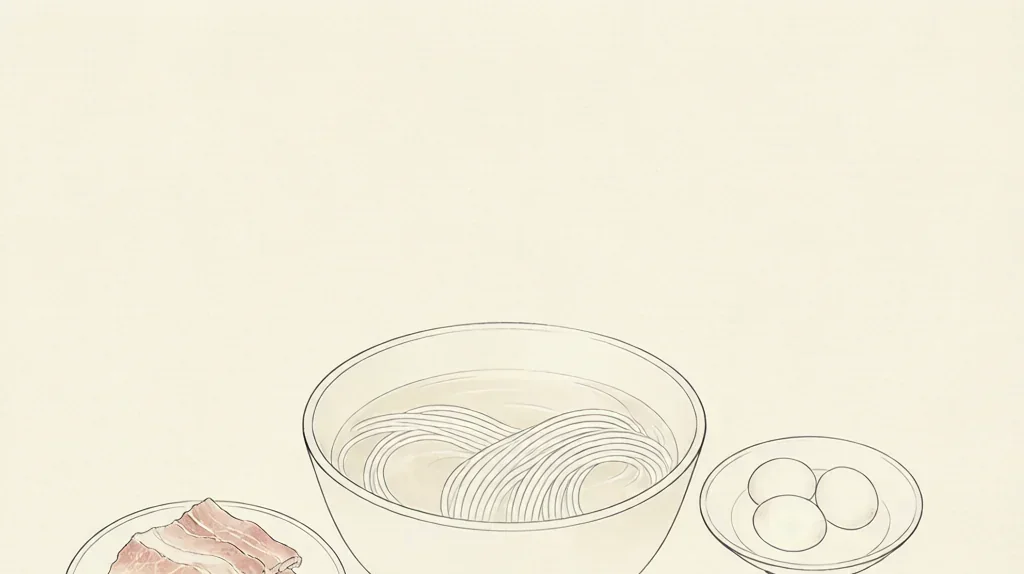
Crossing-the-Bridge Noodles is one of China's most romantic dishes — a bowl of rice noodles and tender toppings brought together by a legend of love and a clever wife. In Mandarin it is guò qiáo mǐ xiàn, written 过桥米线, literally "cross-the-bridge rice noodles." It is a Yunnan specialty in which a bowl of near-boiling stock arrives separately from the noodles and raw toppings; the diner slides everything into the hot broth, which cooks the ingredients on the spot. This article tells the dish's love story, places it in Yunnan's diverse food culture, lists its ingredients, explains the ingenious cooking method, and shows why a bowl of noodles became a symbol of devotion.
The Legend of the Wife and the Bridge
The story behind crossbridge noodles is set in Mengzi, a town in Yunnan, during the Qing dynasty. A scholar wished to study in quiet, so he retreated to a small pavilion on an island in a lake, reached by a bridge. His wife brought him meals, but by the time she crossed the bridge the food was cold. Determined, she discovered that a layer of oil floating on top of a bowl of boiling soup kept the heat trapped; she began carrying a pot of scalding stock, with the noodles and toppings kept separate, and by the time she reached the island the broth was still hot enough to cook the raw ingredients. The scholar ate well, studied well, and passed his exams — and the "crossing-the-bridge" noodles entered local legend.
Whether the tale is history or folklore, it captures the dish's defining trick: heat preserved by an oil cap, and ingredients cooked at the table by the broth's retained temperature. The romantic frame — a wife's daily care across a bridge — is why the dish is remembered as much for feeling as for flavor, and why it is often served to couples as a quiet gesture.
Regional Context: Yunnan's Crossroads Cuisine
Yunnan, in China's southwest, borders Myanmar, Laos, and Vietnam and is home to dozens of ethnic groups, so its food is among the most diverse in the country. Rice is central, and rice noodles (mǐxiàn) are eaten daily across the province in countless forms. Crossbridge noodles are the most famous Yunnan style, especially associated with the capital Kunming and the town of Mengzi, and they showcase the regional love of fresh, lightly cooked ingredients and clean broths.
Unlike the heavy, fermented flavors of some neighbors, Yunnan cooking tends toward brightness — herbs, mild chili, and the pure taste of good stock. Crossbridge noodles fit this perfectly: the broth is clear and meaty, the toppings fresh, the noodles neutral, so each element keeps its character. The dish is now standardized into "sets" in restaurants, but its roots are humble and domestic.
Ingredients: Broth, Noodles, and the Topping Tray
The broth is the heart — traditionally a rich chicken and pork bone stock, sometimes with Yunnan ham for depth, simmered long and skimmed clear, then capped with a film of chicken fat or oil to hold the heat. The noodles are thin fresh rice vermicelli. The toppings are many and arranged separately: paper-thin slices of pork or chicken, quail eggs, fish or shrimp, tofu sheets, wood-ear mushrooms, blanched greens, and sometimes a few slices of Yunnan ham.
A small dish of chili oil, pickled vegetables, and scallion usually accompanies, for the eater to adjust. The art is in the Thin slicing — ingredients must be cut so thin that the hot broth cooks them in seconds. The variety is the point: a crossbridge set is a little banquet of textures and colors arranged around a single bowl of gold stock.
How Crossbridge Noodles Are Made and Served
The method is theatrical and practical. A large bowl is filled with the boiling, oil-capped broth and brought to the table; separately come the noodles and a plate of raw, thin toppings. The diner adds the noodles first, then layers in the meats, egg, seafood, and vegetables in order of how long they need — sturdy items first, delicate greens last. The retained heat of the broth cooks everything almost instantly; within a minute the pork turns opaque and the egg sets.
This "cook it yourself at the table" approach means the ingredients stay fresh and the broth stays hot — exactly the wife's original insight. The eater then seasons with chili and scallion and lifts the noodles, now infused with the broth. The experience is interactive and gentle, more about savoring a clear, fragrant soup than about fire and spice.
Cultural Meaning: Love Served Hot
Crossbridge noodles are unusual among Chinese dishes in being openly sentimental. The legend of the devoted wife gives the bowl a warmth that pure flavor could never supply; eating it can feel like participating in a small act of care. It is therefore a popular dish for couples and for hosts wishing to show tenderness to guests, and it is often the dish a Yunnan native orders to feel home.
There is also a lesson in ingenuity. The oil cap that preserves heat is a clever piece of low-tech food science, and the dish celebrates the idea that love and wisdom meet in the kitchen. In a culinary culture that prizes balance, crossbridge noodles balance story and substance, the romantic and the practical, in a single steaming bowl.
When and How They Are Eaten
Crossbridge noodles are eaten any time of day in Yunnan — breakfast, lunch, or supper — and are a fixture of restaurants specializing in the dish, where you choose a set by size and richness. They are a communal, sit-down meal rather than a rushed street bite, because the assembly takes a moment and the broth is best enjoyed hot and fresh.
To eat them, add toppings in the right order, wait a breath for them to cook, then season and dig in with chopsticks and a spoon. Sip the broth last; it will be clear, meaty, and faintly sweet from the ham and chicken. More than sustenance, the bowl offers a story — of a wife crossing a bridge each day so the one she loved could eat well and dream big.
Beyond the Bridge: Yunnan's Other Rice Noodles
Crossbridge noodles may be the most famous Yunnan noodle, but they are only one dialect in a rich regional language. In Kunming, small-pot rice noodles are cooked to order in a tiny wok with meat and vegetables, giving a smoky, individualized bowl. The Dai and Bai ethnic groups add sour bamboo shoot, wild herbs, and pounded fermented fish for tang and funk. Around the lakes, rice noodles arrive cold with dressings of vinegar and chili, while mountain towns favor thicker, hand-cut ribbons. What unites them is the local rice, milled fresh and turned into strands of every width, and a love of bright, clean broth. Traveling across Yunnan is therefore a tour of noodle styles, with crossbridge as the romantic ambassador and dozens of humbler cousins filling the daily table.
The Broth and the Bowl: Craft of a Clear Soup
The quiet hero of crossbridge noodles is the broth. A proper base is built from chicken, pork bones, and often a strip of Xuanwei ham, simmered for hours and skimmed until the liquid is clear and golden rather than cloudy. The cook then caps it with a film of chicken fat, which is not merely for flavor — it traps heat so the broth survives the journey from stove to table. The serving bowl itself matters: wide, deep, and preheated, it holds the temperature long enough to poach paper-thin slices on contact. Done well, the soup tastes meaty and faintly sweet, never greasy, and the noodles stay springy because they were cooked separately. This careful, almost invisible craft is why the dish feels so gentle; the drama of the story rests on a broth made with patience and precision.
❓ Frequently Asked Questions
📝 Chinese Vocabulary
过桥米线 — : Crossing-the-Bridge Noodles, the Yunnan broth-and-topping dish.
米线 — : Rice vermicelli, the noodles used.
鸡汤 — : Chicken broth, the traditional base of the soup.
云南 — : Yunnan, the southwestern province that gave the dish.
蒙自 — : Mengzi, the Yunnan town at the heart of the legend.
过桥 — : Cross the bridge, the action named in the dish's title
宣威火腿 — : Xuanwei ham, a cured Yunnan ham that adds depth to the broth
小锅米线 — : Small-pot rice noodles, a popular Kunming style of Yunnan noodle
🎉 Fun Facts
- The oil layer on top of the broth is the dish's clever "thermos," keeping stock near boiling for the crossing.
- Toppings are sliced paper-thin precisely so the retained heat cooks them in under a minute.
- Yunnan's food draws on dozens of ethnic groups, making it one of China's most varied regional cuisines.
- The legend says the scholar's wife's care helped him pass his imperial exams.
- A full crossbridge set can carry more than a dozen separate toppings, and upscale Kunming restaurants arrange them like a miniature banquet around the bowl.
- Yunnan's rice noodles come in many local forms beyond crossbridge — including Kunming's small-pot noodles cooked individually in a tiny wok — making the province a true noodle crossroads.