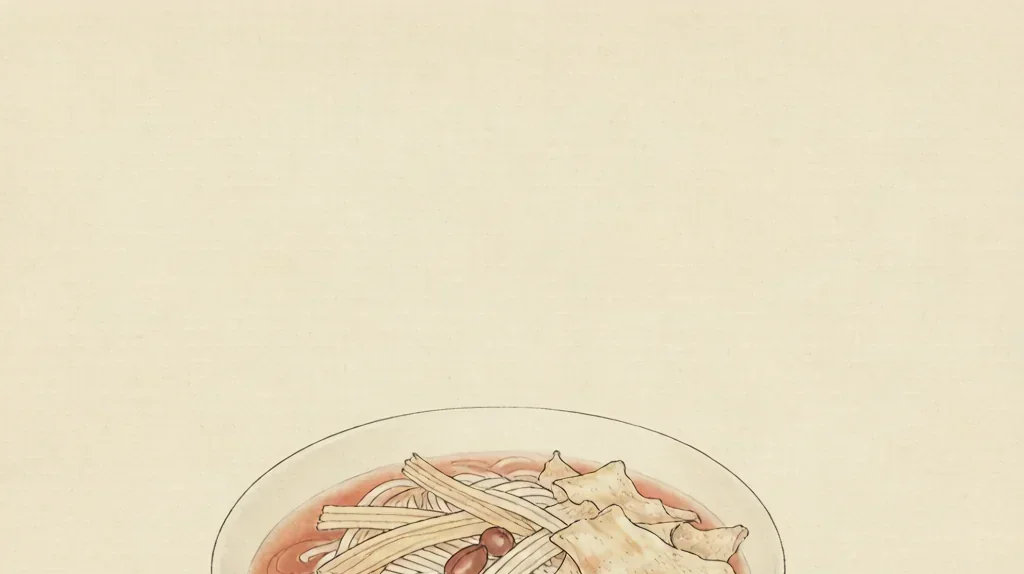
Luosifen is the most divisive bowl in Chinese food — a dish so pungent that it has been banned on some trains and in some dormitories, yet so addictive that it has become a nationwide craze. In Mandarin it is luó sī fěn, written 螺蛳粉, "river snail rice noodles." It is a bowl of thin rice noodles in a broth built from boiled river snails and pork bones, sour bamboo shoots, peanuts, and chili oil, with an aroma that the unprepared find shocking and the devoted find irresistible. This article explains where luosifen came from, why it smells the way it does, what is in it, how it is made, and how a humble Liuzhou snack conquered China.
Origins in Liuzhou
Luosifen comes from Liuzhou, a city in the Guangxi Zhuang Autonomous Region in southern China, clustered around the Liu River. The dish is relatively young, dating to the late 1970s and early 1980s, when vendors in Liuzhou began selling noodle soups made with river-snail broth — snails being abundant in the local rivers and a traditional Guangxi food. The addition of pickled bamboo shoots (suāncài) and chili gave the soup its now-famous sour-hot profile, and roadside stalls made it a working-class favorite.
The name is straightforward: luósī are spiral river snails, and fěn are the rice noodles. For decades luosifen was a local secret, known mostly within Guangxi. That changed in the 2010s, when packaged instant versions let the dish travel far beyond Liuzhou, turning a regional street food into a national phenomenon and even an export, with devoted fans from Beijing to Los Angeles.
Regional and Cultural Context
Guangxi sits at the crossroads of Han Chinese and Zhuang cultures, and its food leans sour, fermented, and fresh — a contrast to the chili-oil heat of Sichuan or the sweetness of the south coast. Luosifen fits that local logic: the sour bamboo shoots and the river-snail broth are classic Guangxi flavor moves. What made it explode nationally was the instant-noodle industry, which dehydrated the broth and toppings into a cup that could be shipped anywhere.
The dish's notoriety comes from its smell, which derives mainly from the fermented bamboo shoots. In Chinese food culture, strong aromas are not automatically negative — stinky tofu and fermented beans are loved precisely for their funk — so luosifen sits within a respected tradition of "smells bad, tastes great" foods. Its rise is also a story of how social media turned a regional oddity into a trend, with young people posting "I finally tried it" videos across the country.
Ingredients: The Snail Broth and the Famous Funk
The soul is the broth, made by simmering river snails (cleaned and often fried with ginger and liquor first to remove mud) together with pork bones, star anise, and spices for hours, until the liquid is rich and faintly sweet. The noodles are thin, round rice vermicelli that cook quickly and slurp neatly. Into the bowl go the signature toppings: sour pickled bamboo shoots, fried peanuts, firm tofu skin, fresh green vegetables, and a ladle of red chili oil.
The controversial ingredient is the suāncài — bamboo shoots fermented in brine until they develop a sharp, sulfurous aroma. This is what passengers smell across a train carriage. Other accents include black vinegar for brightness, cilantro, and sometimes slices of boiled snail meat. The combination of sour, spicy, savory, and funky is the whole point: remove the bamboo shoots and you lose the dish's identity.
How Luosifen Is Made
At its base, the broth is built slowly: cleaned snails are stir-fried with aromatics, then added to a pot with pork bones and spices and simmered to extract their essence, often with the snails later strained out so the broth is clear of shells. The rice noodles are cooked separately and briefly, since overcooking turns them mushy. To serve, noodles go in a bowl, hot broth is poured over, and the toppings are arranged on top.
The packaged version simplifies this: a cup of dried noodles, a sachet of dehydrated broth, a packet of oil, and a small bag of preserved bamboo shoots and peanuts. Add boiling water, wait a few minutes, and the experience is surprisingly close to the stall version. Home cooks making it fresh can control the funk by adjusting the amount of bamboo shoots — more for the brave, less for the cautious.
Cultural Meaning: The Politics of Smell
Luosifen is a case study in how food challenges comfort zones. Its banning on public transport and in shared dorm rooms speaks to a real tension: a beloved local flavor colliding with shared space. Yet that very controversy fueled its fame. For Liuzhou, luosifen became a point of civic pride and even economic strategy; the city branded itself around the dish and built a museum and industry around it, employing thousands.
There is also a lesson in openness. Many first-timers recoil, then return, then crave it — the classic arc of acquired taste. Luosifen thus embodies a Chinese saying that the best flavors are often hidden behind the strangest first impressions. It is a reminder that "delicious" and "fragrant" are not the same thing, and that a food's true character lives on the tongue, not in the nose.
When and How It Is Eaten
Traditionally a casual lunch or late-night snack in Liuzhou, luosifen is now eaten any time, anywhere, thanks to instant packs. At a stall it arrives steaming, the broth reddish with chili oil, the bamboo shoots and peanuts floating on top; you eat it with chopsticks and a spoon, slurping the noodles and sipping the broth. Add extra vinegar or chili to taste at the counter.
For the newcomer, the advice is simple: don't judge by the smell. Take a bite of noodle with a little broth and bamboo shoot; the sour-spicy-savory hit is bright and satisfying, not offensive. Whether you love it or simply survive it, eating luosifen is a genuine cultural experience — a small adventure in a bowl that China has enthusiastically shared with the world.
The Luosifen Economy: A City Built on Smell
Few foods have become an entire local economy the way luosifen has for Liuzhou. What began as a 1980s street bowl is now a planned industry: the city built a dedicated museum, a research institute, and an industrial park that standardizes and mass-produces the noodles, broth, and fermented bamboo shoots. Thousands of local jobs depend on it, from farming snails and bamboo to packaging and export logistics. Liuzhou aggressively brands itself around the dish, hosting festivals and promoting it as a cultural ambassador for Guangxi. The strategy worked: luosifen went from a regional secret to a national instant-noodle phenomenon and then an export, with fans from Southeast Asia to North America. The story is a rare case of a pungent working-class snack being deliberately scaled into a soft-power product, proving that even a controversial smell can be turned into civic pride and serious revenue.
Luosifen and the Smells Bad, Tastes Great Club
Luosifen belongs to a respected Chinese tradition of funk-forward foods whose aroma alarms the uninitiated but whose taste wins devotion. Stinky tofu, with its fermenting brine, is the closest cousin, and fermented black beans or shrimp paste play the same trick in other regions. In each case the strong smell comes from controlled fermentation, a preservative and flavor-deepening technique as old as Chinese cooking itself. The cultural lesson is that fragrance and deliciousness are not the same sense, and that a bold first impression can hide a bright, balanced bite. Luosifen simply pushes this logic further than most, with bamboo shoots that announce themselves across a train carriage. Once a skeptic tastes the sour, spicy, savory broth beneath the funk, the smell reframes itself as promise rather than warning, and the convert understands why the club has so many members.
❓ Frequently Asked Questions
📝 Chinese Vocabulary
螺蛳粉 — : Luosifen, Liuzhou river-snail rice noodles.
螺蛳 — : River snails, the base of the broth.
酸笋 — : Fermented sour bamboo shoots, the source of the famous aroma.
米粉 — : Rice vermicelli, the thin noodles used.
柳州 — : Liuzhou, the Guangxi city that gave the dish to the world.
鸭脚 — : Duck feet, a popular rich topping added to luosifen for collagen and savory depth.
卤水 — : The spiced master brine, the aromatic base that gives luosifen broth its deep savory character.
酸豆角 — : Pickled green beans, a crunchy, sour topping that cuts the richness of the noodle bowl.
🎉 Fun Facts
- Luosifen has been banned on some Chinese trains and in university dorms because of its odor.
- Liuzhou built a dedicated luosifen museum and industrial park, turning the snack into a major local industry.
- The dish went from local street food to national craze largely through packaged instant versions in the 2010s.
- Despite the smell, many fans describe the actual taste as bright, sour, and comforting rather than offensive.
- Liuzhou's luosifen industrial park produces the dish at scale, with automated lines packaging thousands of bowls an hour for shipment across China and abroad.
- The dish has spawned a wave of luosifen-flavored snacks and ready meals, from chips to self-heating pots, far beyond the original noodle bowl.