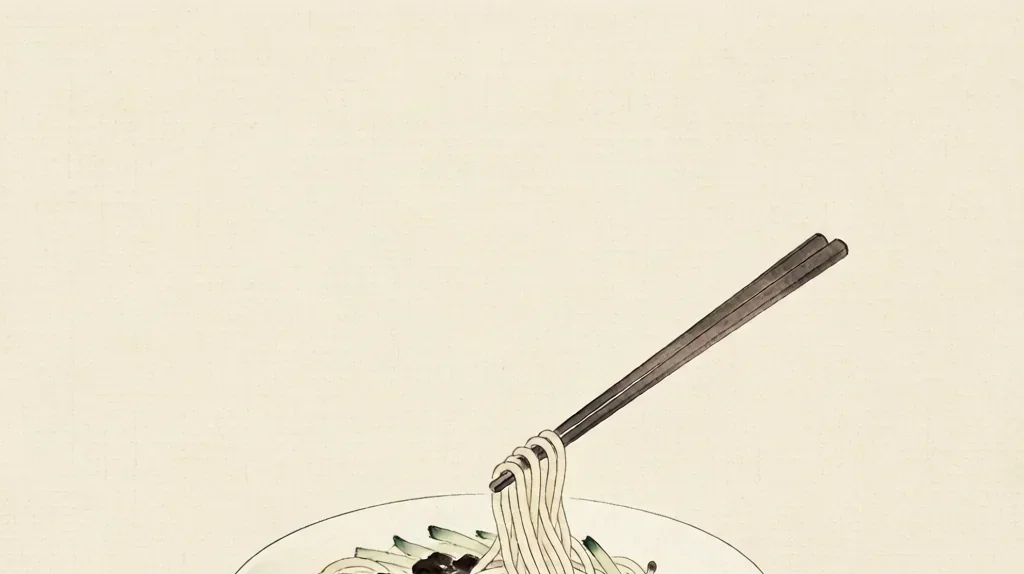
Zhajiangmian is the dish that defines a Beijing childhood for millions — a bowl of springy wheat noodles under a dark, glossy mound of fried soybean paste, scattered with crunchy raw vegetables. In Mandarin it is zhá jiàng miàn, written 炸酱面, literally "fried sauce noodles." It is unpretentious, deeply savory, and endlessly customizable, and it belongs to the everyday life of the capital as surely as the hutongs (alleys) themselves. This article explores the history of zhajiangmian, its place in northern Chinese food, what goes into an authentic bowl, how it is assembled, and why this humble noodle has such a loyal following.
Origins in the Northern Wheat Belt
Zhajiangmian comes from the wheat-eating north, where noodles have been a staple for well over a thousand years. The defining element is the zhàjiàng — a "fried sauce" of fermented soybean paste (or a mix of soybean and sweet bean paste) cooked slowly with a little pork until thick, dark, and intensely savory. The practice of stir-frying a preserved paste with fat to make a quick, shelf-stable topping for noodles grew naturally in a region where preserved beans and wheat were everyday stores.
While the dish is now synonymous with Beijing, similar "fried sauce noodles" exist across northern China and into Korea (where a related jjajangmyeon developed from Chinese immigrant cooking). The Beijing version is the standard-bearer, celebrated in the city's folk culture and even in old sayings. Its durability comes from thrift: a small amount of paste and pork stretches across a large bowl of noodles and a garden of vegetables, feeding a family cheaply and well.
Regional Context: A Beijing Icon
In Beijing, zhajiangmian is comfort food and street food at once. It is sold from noodle shops and carts, served at home on summer evenings, and famously eaten cold or at room temperature in warm weather — the noodles are cooked, rinsed in cold water to firm them, and topped with the sauce and a pile of shredded vegetables. The cool noodles against the room-temperature, concentrated sauce make it a refreshing meal in Beijing's hot, dry summers.
The dish also reflects the northern preference for wheat over rice and for preserved, fermented flavors over the fresh, light accents of the south. A "proper" Beijing zhajiangmian is judged by the quality of the sauce — its depth, its lack of bitterness, its cling — and by the variety of the vegetable toppings. Locals speak of "eight vegetables" or more accompanying the bowl, a sign of both abundance and balance.
Ingredients: Paste, Pork, and the Vegetable Garden
The sauce begins with the paste: traditionally a Tianjin-style sweet bean paste (tiánmiànjiàng) blended with salty fermented soybean paste (dòuchǐ or gānmiànjiàng), cooked down in oil with diced pork — often pork belly for its fat, which enriches the sauce. The mixture is fried slowly so the raw edge cooks off and the flavors meld into a glossy, brown reduction. Some cooks add a little rock sugar to round the saltiness.
The vegetable toppings are the dish's fresh counterpoint and its visual glory. Classic choices include shredded cucumber, blanched bean sprouts, shredded radish, cooked and cooled carrots, celery, scallion, and sometimes mung bean threads. The contrast of cool, crisp vegetables with the dense, salty sauce is the whole point — the vegetables keep the bowl from feeling heavy. A little minced garlic or a sprinkle of sesame is optional but welcome.
How Zhajiangmian Is Assembled
The method is two-track. First, the sauce: oil is heated, diced pork goes in to render and brown, then the paste is added with a splash of water or stock and simmered gently, stirring, until it thickens and darkens and the oil begins to separate slightly — a sign it is done. Meanwhile the noodles — usually thin, alkaline wheat noodles or fresh lāmiàn-style strands — are boiled until just tender, then drained. For cold service they are rinsed under cold water and drained well.
Assembly is interactive. A portion of noodles goes in the bowl, a generous spoon of sauce is dropped on top (traditionally in the center, like a small mountain), and the shredded vegetables are arranged around it in separate little piles. The eater mixes everything at the table, coating the noodles and distributing the crunch. This do-it-yourself combining is part of the pleasure and lets each person adjust the vegetable-to-sauce ratio to taste.
Cultural Meaning: Homely and Honest
Zhajiangmian is not a banquet dish; it is a home dish, and that is precisely its cultural weight. It represents the Beijing ideal of jiācháng — "homely," unshowy food made with what is on hand. To offer someone zhajiangmian is to treat them like family. The dish also embodies northern thrift and ingenuity: preserved paste and a little meat become a feast with the help of the garden's vegetables.
There is a social, even democratic, quality to it. Rich and poor eat the same bowl; the difference is only in how many vegetables and how fine the pork. In a rapidly modernizing Beijing, zhajiangmian has become a nostalgic anchor — a taste of the old hutong life that survived the city's transformation. Food writers and chefs now "elevate" it in restaurants, but its soul remains the home kitchen and the summer courtyard.
When and How It Is Eaten
Zhajiangmian is eaten year-round but peaks in warm weather, when the cold-noodle version is most refreshing. It is a lunch or a light dinner, often a one-bowl meal that needs no side dish thanks to the vegetables on top. In Beijing it is common at family gatherings and casual eateries, and many noodles shops let you choose your vegetable toppings from a buffet.
To eat it, mix thoroughly, then lift a tangle of noodles with chopsticks, the sauce clinging and the vegetables adding crunch. A bowl of clear soup or a few sips of tea on the side is traditional. Simple, hearty, and honest, zhajiangmian is the kind of food that asks nothing of you but appetite — and gives back a full, satisfied evening.
Regional Cousins Across the North
While Beijing claims the standard version, fried-sauce noodles appear across the wheat-eating north in distinctive local guises. Tianjin cooks may lean on a darker, more pungent paste, and Shandong variations bring their own fermented beans and a heavier hand with garlic. In Hebei and northeastern cities the same idea surfaces under different names, sometimes with a brighter, almost sweet sauce closer to the southern edge of the region. What unites them is the principle: preserved bean paste, a little meat, and a garden of raw vegetables over wheat noodles. Travelers who order 'fried sauce noodles' in different provinces thus taste a map of northern preferences, each bowl a local accent of one thrifty, comforting idea rather than a single fixed recipe.
Zhajiangmian on the Restaurant Table
In Beijing noodle shops, zhajiangmian is served with a flourish of choice. Many places lay out a buffet of toppings, from cucumber and bean sprouts to radish, scallion, and garlic, letting each diner build the balance of crunch and cool they prefer. The sauce arrives in a central mound, and mixing at the table becomes part of the meal's pleasure. Newer restaurants play with the format, offering miniature tasting bowls or upgraded sauces with more vegetable and less oil for health-minded customers. Yet the essential experience hardly changes: a big bowl, a generous spoon of dark sauce, and a pile of fresh vegetables to fold in. Quick, cheap, and endlessly adjustable, it remains the capital's most democratic comfort food, equally at home on a street corner and in a polished dining room.
❓ Frequently Asked Questions
📝 Chinese Vocabulary
炸酱面 — : Zhajiangmian, Beijing noodles with fried soybean paste sauce.
炸酱 — : The "fried sauce" of cooked soybean paste and pork.
甜面酱 — : Sweet bean paste, a key component of the sauce.
家常 — : "Homely," the unpretentious home-style quality the dish embodies.
黄瓜 — : Cucumber, the classic crisp topping shredded over the noodles.
黄豆酱 — : Fermented soybean paste, the salty base of the fried sauce.
豆芽 — : Bean sprouts, a classic crisp, cooling vegetable topping.
萝卜 — : Radish, shredded as a refreshing counterpoint to the rich sauce.
🎉 Fun Facts
- Beijingers traditionally arrange the vegetable toppings in separate piles rather than mixing them in advance.
- The sauce is "fried" slowly so the oil separates slightly — a sign among cooks that it has reached the right richness.
- Zhajiangmian is so tied to Beijing identity that it often appears in films and novels as a symbol of ordinary city life.
- A related Korean noodle, jjajangmyeon, is now a separate national comfort food in its own right.
- A traditional Beijing topping spread can include eight or more different vegetables, each adding its own crunch, color, and cooling note to balance the salty sauce.
- Some Beijing families keep a treasured house recipe for the fried sauce, passed down and tweaked across generations like a culinary heirloom.