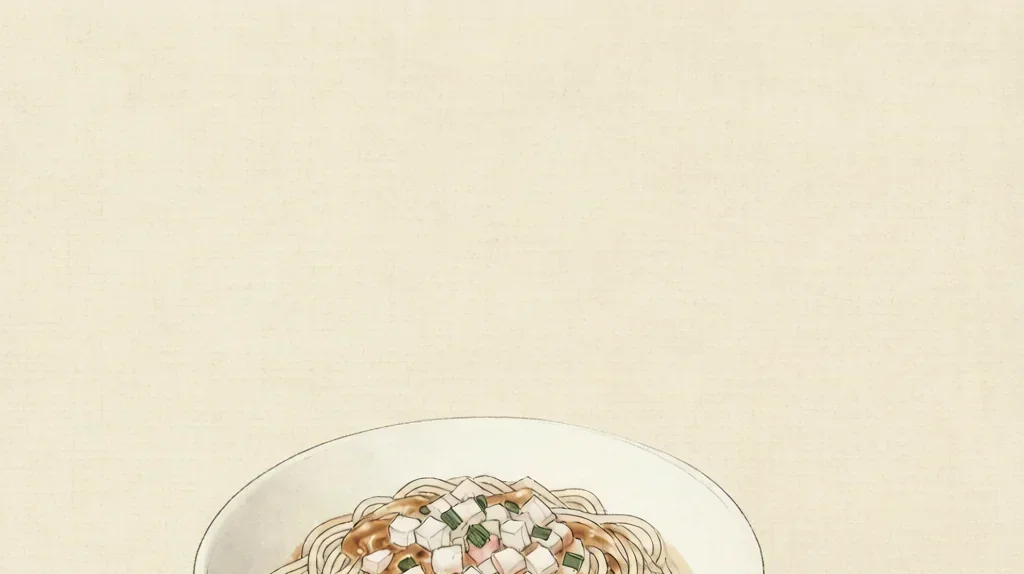
Reganmian is the breakfast of Wuhan, the sprawling river city at the heart of central China, and a dish with a wonderfully literal name. In Mandarin it is rè gān miàn, written 热干面 — "hot dry noodles." The noodles are cooked, drained, tossed with sesame paste and oil so they are glossy but not soupy, then served warm and loose rather than in broth. The result is a nutty, savory, slightly chewy bowl that a Wuhan local can eat standing at a stall before catching the bus. This article looks at where reganmian came from, why it defines a city, what makes it distinct, how it is built, and how to eat it like a local.
Origins in a Riverside City
Reganmian was born in Wuhan, a city split by the Yangtze and Han rivers into three old towns. The most told origin story dates to the early twentieth century, when a noodle vendor named Li Bao (or, in some tellings, a seller at the Hanzheng Street market) found his boiled noodles spoiling in the heat. He drained them, spread them out, and tossed them with oil to keep them from sticking; the next day he reheated and dressed them with sesame paste, and customers loved the resulting dry, fragrant bowl. Whether the details are exact, the tale fits Wuhan's character as a working port where quick, portable, filling food mattered.
Wuhan's position as a transport hub meant workers needed breakfast that was fast and substantial, and reganmian fit perfectly. By the mid-twentieth century it was the city's signature morning meal, and today an estimated thousands of stalls and shops serve it daily. It is, in a real sense, the flavor of the city's rush hour — a taste bound to the rhythm of bridges and ferries.
Regional Context: A City's Breakfast
China's cities each have a breakfast identity, and Wuhan's is reganmian. It belongs to the broader family of Hubei and central-plain wheat noodles, but its "dry" format sets it apart from the soupy noodles of the south and the broth-borne wheat noodles of the north. Crucially, it is eaten without soup — the moisture comes from sesame paste, oil, and a little cooking water, so the noodles stay separate and slick rather than submerged.
The dish also sits within Wuhan's famous "early breakfast" (zǎocān) culture, where an elaborate range of morning snacks — doupi, steamed buns, soy milk — compete for the commuter's appetite. Reganmian is the champion of that culture: cheap, speedy, and satisfying enough to carry a person to lunch. For Wuhaners abroad, a bowl of reganmian is among the strongest tastes of home.
Ingredients: Noodles, Sesame, and the Savory Toppings
The noodles are alkaline wheat noodles, similar to those used for ramen or lo mein, which give reganmian its springy bite. The signature flavoring is zhīma jiàng — toasted sesame paste, thinner and more aromatic than the tahini of the Middle East — loosened with a little hot oil or water so it coats the strands. Supporting seasonings are soy sauce for salt, a little black pepper, and often a spoon of pickled vegetable (suàncài) or chopped pickled turnip for crunch and tang.
Traditional toppings include scallion, a little shredded radish or cowpea, and sometimes a fried egg or a few shrimp. A drizzle of chili oil is optional but common. The genius is proportion: enough sesame paste to make the noodles glisten and taste nutty, but not so much that the bowl becomes a paste. The pickled vegetable cuts the richness, keeping each bite lively.
How Reganmian Is Made
The method explains the name. The noodles are boiled until just done, then drained thoroughly and tossed with a little oil so they don't clump — this is the "dry" step that distinguishes them from soup noodles. When ordered, a portion is quickly reheated by dunking in boiling water for seconds (or by steaming), then lifted into a bowl. The hot noodles are immediately dressed: sesame paste thinned with oil, soy sauce, pepper, and pickled vegetable are added and tossed vigorously with chopsticks so every strand is coated.
Speed is essential; a good stall assembles a bowl in under a minute. The eater often adds their own chili oil and scallion at the counter. Because there is no broth to keep it hot, reganmian is meant to be eaten promptly, while the noodles are still warm and separate. The whole experience is built around the standing breakfast — efficient, messy in the best way, and gone before the day truly starts.
Cultural Meaning: A Working City's Fuel
Reganmian is less a symbol than a habit, and in Wuhan that habit is identity. To eat reganmian is to be a citizen of the city — pragmatic, fast-moving, unpretentious. The dish's very plainness is the point: no broth, no fuss, just noodles and sesame, eaten on the go. It reflects a culture that values function and flavor over ceremony, the opposite of a long banquet.
There is also pride. Wuhaners will tell you, with conviction, that their breakfast noodle is the best in China, and the city has promoted reganmian as a cultural asset, even debating standards for "authentic" versions. In a country of fierce regional food loyalty, reganmian is Wuhan's banner — proof that a dish need not be fancy to be beloved, only honest and delicious.
When and How It Is Eaten
Reganmian is fundamentally a morning food, eaten at stalls and canteens from dawn through mid-morning. It is a standalone breakfast, often washed down with soy milk or tea. Because it is dry, it pairs naturally with a soupy side like a bowl of clear broth or an egg-and-tomato soup to moisten the meal. Some people eat it at any hour as a quick snack, but its soul is the commute.
To eat it like a local, add chili oil to taste, then mix hard so the sesame coats everything, and eat standing, quickly, with chopsticks. The first bite is nutty and savory; the pickled vegetable gives a bright snap; the chili lingers. It is a small, concentrated pleasure — the taste of a city that never quite stops moving.
The Vendor's Craft: Speed And Rhythm
Reganmian is a performance as much as a meal. A skilled vendor boils the alkaline noodles, drains them, and gives them a second quick dunk to reheat, all in under a minute, because the dish must be eaten hot before the strands stick. The sauce is built in the bowl ahead of time: thinned sesame paste, soy, a little pepper, and chopped pickled vegetable, ready for the noodles to be tossed through vigorously with chopsticks. Chili oil and scallion are added last, by the customer, at the counter. The choreography matters because reganmian is a commute food; the entire transaction from order to first bite can take less time than waiting for a traffic light. Watching a busy Wuhan stall at seven in the morning is to see a small, efficient ballet repeated hundreds of times.
Reganmian Beyond Wuhan
Although reganmian is shorthand for Wuhan, the dish has traveled well beyond Hubei. Across central China and in major cities, noodle shops advertise a Wuhan style, and packaged dried reganmian kits now let cooks recreate it at home with a sauce sachet and separate noodles. In Chinese communities abroad, particularly where Hubei migrants settled, reganmian appears in casual restaurants and food courts as a taste of home. Its appeal is easy to see: it needs no broth, travels without spilling, and delivers strong flavor in a few bites. Still, locals insist the authentic version is bound to place, best eaten from a stall in Wuhan where the sesame is fresh and the pace is fast. The dish has become a small ambassador for a city proud of its breakfasts.
❓ Frequently Asked Questions
📝 Chinese Vocabulary
热干面 — : Reganmian, Wuhan's hot, dry sesame noodles.
芝麻酱 — : Toasted sesame paste, the defining flavoring.
酸菜 — : Pickled vegetable, added for tang and crunch.
早餐 — : Breakfast, the meal reganmian defines in Wuhan.
武汉 — : Wuhan, the central Chinese river city that claims the dish.
碱水面 — : Alkaline wheat noodles, the springy noodle base that gives reganmian its chewy bite.
豆皮 — : Doupi, a Wuhan specialty of rice and egg wrapped around savory filling, eaten alongside the noodles.
红油 — : Chili oil, the optional fiery topping that each eater adds to taste at the counter.
🎉 Fun Facts
- Wuhan is split by the Yangtze and Han rivers, and its breakfast culture is considered one of China's richest.
- The origin legend credits a vendor who oiled leftover noodles to stop them sticking on a hot day — then dressed them the next morning.
- Reganmian is so tied to the city that Wuhan hosts competitions and debates over the "correct" recipe.
- It contains no broth at all, which surprises first-timers expecting a soupy noodle.
- A bowl of reganmian typically costs only a few yuan, yet the dish is central enough to Wuhan identity that the city promotes it as a cultural emblem alongside the Yangtze River bridges.
- The noodles are so portable that many Wuhaners eat them standing at a stall or walking to the bus, and busy vendors report selling hundreds of bowls before nine in the morning.