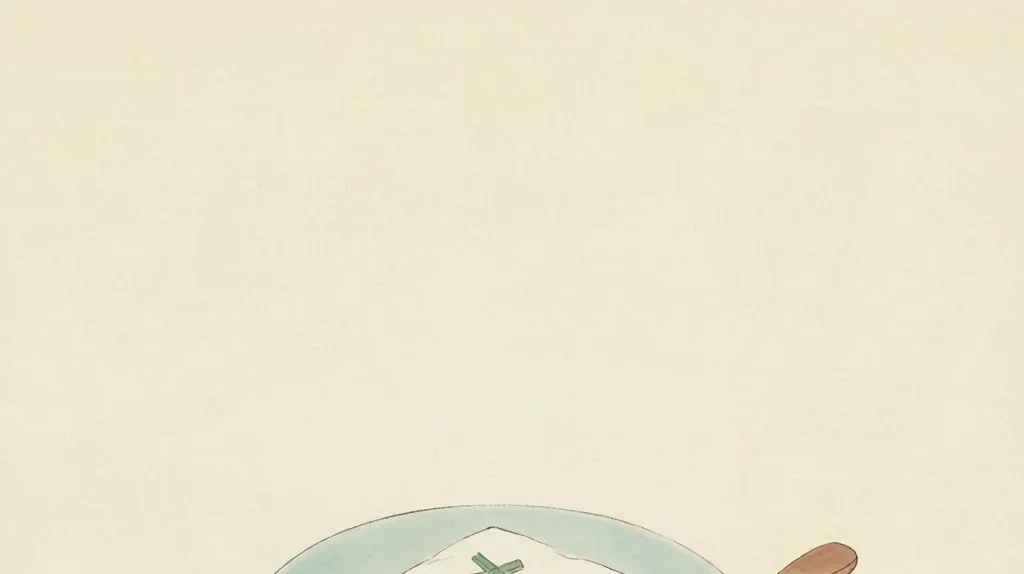
It is a curious thing, tofu. A block of it sits on the plate—pale, trembling slightly, almost entirely without flavor of its own. It looks like nothing. It tastes like nothing. And yet, for two thousand years, this humble soybean curd has been one of the most important foods in Chinese cuisine, a culinary chameleon capable of transforming into everything from the silkiest dessert to the fieriest main course. Tofu is not an ingredient; it is a canvas. And Chinese cooks have been painting masterpieces on it for millennia.
The story of tofu is a story of Chinese ingenuity, of alchemy in the kitchen, of a civilization's ability to extract nourishment from the humblest of raw materials. The soybean is notoriously difficult to digest in its natural state—it contains enzyme inhibitors that make it almost inedible raw. But the Chinese discovered that by soaking, grinding, boiling, and coagulating soy milk, they could create a food that was not only digestible but versatile, nutritious, and capable of absorbing virtually any flavor applied to it. This was tofu, and it would go on to conquer the world.
The Legend of Liu An
According to tradition, tofu was invented around 164 BCE by Liu An (刘安), the Prince of Huainan, a grandson of the founding emperor of the Han Dynasty. Liu An was a scholar, a patron of the arts, and—crucially—a devoted practitioner of Daoist alchemy. He gathered philosophers, scientists, and mystics at his court, pursuing the Daoist dream of creating an elixir of immortality. In the course of his experiments with soybeans, or so the legend goes, he accidentally created tofu.
The historical accuracy of this story is debatable. The earliest written references to tofu do not appear until several centuries after Liu An's death, and some scholars argue that the method for coagulating soy milk was discovered independently by multiple people at different times. But the Liu An legend persists because it captures something essential about tofu: its creation was a kind of culinary alchemy. Take a bean that no one can eat, transform it into a food that everyone can eat, and you have performed a small miracle.
Liu An is also credited with compiling the Huainanzi, a philosophical text that blends Daoist, Confucianist, and Legalist thought. It is fitting that tofu should be associated with a scholar who sought to synthesize different traditions. Tofu itself is a synthesis—of the agricultural knowledge of soybean cultivation, the chemical knowledge of coagulation, and the culinary knowledge of how to make blandness beautiful.
How Tofu Is Made
The basic process of making tofu has remained remarkably unchanged for two thousand years. Dried soybeans are soaked overnight in water, then ground into a slurry. The slurry is boiled, and the resulting liquid—soy milk—is separated from the solid pulp (okara). A coagulant is added to the hot soy milk, causing the proteins to curdle into soft white curds. These curds are then ladled into molds lined with cloth and pressed to varying degrees, depending on the desired firmness of the final product.
The choice of coagulant profoundly affects the character of the tofu. Gypsum (calcium sulfate) produces a smooth, tender curd and is the most common coagulant in Chinese tofu-making. Nigari (magnesium chloride), used more commonly in Japanese tofu, yields a slightly firmer texture and a hint of bitterness. For certain types of tofu, such as the soft, custard-like "flower tofu" (豆花, dòu huā), glucono-delta-lactone (GDL) is used to create an exceptionally silky texture. The art of the tofu-maker lies in choosing the right coagulant, controlling the temperature precisely, and judging the exact moment when the curds are ready to be pressed.
The Many Faces of Tofu
Tofu is not one thing. It exists on a spectrum from liquid to solid, and Chinese cuisine makes use of the entire range.
Silken Tofu (嫩豆腐, nèn dòu fu) — Also called soft tofu or Japanese-style tofu, silken tofu has the highest water content and a custard-like texture so delicate it can be eaten with a spoon. It is never stir-fried; the aggressive heat would destroy it. Instead, it is served cold with soy sauce and scallions, or gently heated in soups. The Sichuan classic mapo tofu traditionally uses silken tofu, its quivering softness providing a textural counterpoint to the fiery sauce.
Firm Tofu (老豆腐, lǎo dòu fu) — Pressed longer to expel more water, firm tofu has a dense, meaty texture that holds its shape during cooking. It can be sliced, cubed, deep-fried, braised, or stir-fried without disintegrating. Home-style tofu (家常豆腐, jiā cháng dòu fu) is the quintessential firm tofu dish: triangles of tofu are pan-fried until golden on both sides, then simmered with sliced pork, wood ear mushrooms, bamboo shoots, and a savory brown sauce.
Dried Tofu (豆腐干, dòu fu gān) — Pressed even further and sometimes smoked or braised in soy sauce, dried tofu is chewy, dense, and intensely savory. It is sliced into strips for cold appetizers, shredded for stir-fries, or braised with five-spice powder and served as a snack. Smoked dried tofu (熏干, xūn gān) has a deep, almost bacon-like flavor that adds complexity to vegetable dishes.
Tofu Skin (豆腐皮, dòu fu pí) — When soy milk is heated, a protein-rich film forms on the surface. This film is carefully lifted off and dried, creating thin, golden sheets known as tofu skin or yuba. Tofu skin has a concentrated soybean flavor and a chewy, almost meaty texture. It is used in Buddhist vegetarian cuisine as a meat substitute, wrapped around fillings to create mock duck or mock chicken, or simply braised with mushrooms and vegetables.
Fermented Tofu (腐乳, fǔ rǔ) — Cubes of tofu are inoculated with mold cultures and aged in brine with rice wine, salt, and spices. The result is a soft, pungent paste with a flavor often compared to blue cheese. Fermented tofu is used as a condiment—a tiny cube mashed into congee for breakfast, or stirred into stir-fry sauces for depth. It is an acquired taste, but those who acquire it become devoted.
Stinky Tofu (臭豆腐, chòu dòu fu) — The most divisive member of the tofu family. Cubes of tofu are fermented in a brine of vegetables, meat, and sometimes shrimp for days or weeks until they develop a powerful odor. The fermented tofu is then deep-fried until crispy on the outside and creamy within, and served with pickled vegetables and chili sauce. The smell is notorious—it has been compared to garbage, sewage, and very old cheese—but the taste is surprisingly mild, nutty, and addictive. Stinky tofu is the ultimate test of the principle that aroma and flavor are not the same thing. Night markets across China and Taiwan are perfumed with its unmistakable scent, and the longest lines are always at the stinky tofu stall.
Mapo Tofu: The Emperor of Tofu Dishes
No discussion of tofu in Chinese cuisine is complete without a deep appreciation of mapo tofu (麻婆豆腐, má pó dòu fu). This Sichuan classic is, in many ways, the perfect tofu dish. It takes the ingredient's greatest apparent weakness—its blandness—and turns it into a strength. The silken tofu cubes absorb the surrounding sauce like a sponge, becoming vehicles for an explosive combination of chili heat, Sichuan peppercorn numbness, and the deep savory funk of fermented bean paste.
The dish is named for a pockmarked (麻, má) old woman (婆, pó) who ran a restaurant near Chengdu's Wanfu Bridge in the late 19th century. Her customers were laborers who needed cheap, filling, flavorful food, and her tofu dish—simmered with minced beef in a spicy, oily sauce—was exactly that. The original recipe called for beef, but pork is now more common. The essential elements are doubanjiang (fermented broad bean paste), fermented black beans, chili oil, Sichuan peppercorn, and silken tofu. The sauce should be red and glossy, the tofu should be soft but intact, and the dish should arrive at the table bubbling and fragrant. A dusting of ground Sichuan peppercorn at the end is not optional; it is the dish's signature, the final flourish that makes your lips tingle and your palate sing.
Tofu in Buddhist Cuisine
Tofu holds a special place in Chinese Buddhist cuisine, where it has served as a protein source for vegetarian monks and lay practitioners for centuries. Buddhist monasteries, particularly in China, developed an elaborate repertoire of "mock meat" dishes using tofu and wheat gluten. Mock duck made from layers of tofu skin, mock chicken from pressed and seasoned tofu, mock fish from intricately shaped tofu and seaweed—these are not imitations so much as transformations, honoring the Buddhist prohibition against taking life while still allowing for culinary creativity.
The tradition of Buddhist vegetarian cuisine (斋菜, zhāi cài) elevated tofu from a simple food to a sophisticated culinary medium. Monastic kitchens developed techniques for pressing, seasoning, and cooking tofu that rivaled the complexity of meat-based cuisines. Some of China's finest tofu dishes originated in Buddhist temples, where monks had centuries to perfect their craft. To this day, some of the best vegetarian meals in China are found not in restaurants but in temple dining halls, where tofu is treated with a reverence that borders on the spiritual.
Tofu Goes Global
Tofu spread from China to Japan, Korea, and Southeast Asia, where it was absorbed into local cuisines and transformed. Japanese cooks developed their own traditions—agedashi tofu, hiyayakko, and the delicate Kyoto-style yudofu. Korean cuisine gave us dubu jorim (braised tofu) and sundubu jjigae (soft tofu stew). In Vietnam, tofu is fried and served with lemongrass and chili. In Thailand, it appears in curries and stir-fries.
In the West, tofu's journey was slower. It was known to Benjamin Franklin—a letter from Franklin to a friend in 1770 describes "a cheese made of peas" that is almost certainly tofu—but it remained a curiosity for two more centuries. The counterculture movement of the 1960s and 1970s brought tofu into Western consciousness, not always to its benefit. Early Western tofu was often poorly made and poorly cooked, earning it a reputation as bland, rubbery "health food" for people who had given up on pleasure.
That reputation is finally fading. As authentic Chinese, Japanese, and Korean cooking has spread around the world, tofu has been rediscovered as a legitimate culinary ingredient. Chefs now understand that tofu is not a meat substitute but a food with its own character, its own textures, its own relationship to flavor. When treated with the skill that Chinese cooks have applied for two thousand years, tofu is not a compromise—it is a revelation.
The next time you see a block of tofu, remember: you are looking at two millennia of human ingenuity, at the Daoist alchemist's accidental miracle, at the food that nourished emperors and monks and laborers alike. It is pale and trembling and silent. But give it to a Chinese cook, and it will sing.
📝 Chinese Vocabulary
- 豆腐 (dòu fu) — Tofu, literally "bean curd"
- 嫩豆腐 (nèn dòu fu) — Silken or soft tofu, with a custard-like texture
- 老豆腐 (lǎo dòu fu) — Firm tofu, pressed to remove water for a dense texture
- 麻婆豆腐 (má pó dòu fu) — Mapo tofu, the iconic Sichuan dish of tofu in spicy sauce
- 腐乳 (fǔ rǔ) — Fermented tofu, used as a pungent condiment
Everyday Tofu: Home-Style Preparations
Beyond the famous mapo and stinky versions, most Chinese tofu is quietly domestic. Home cooks dress cold silken tofu with soy, scallion, and a little sesame oil for a summer starter that needs no heat. Firm tofu is pan-fried into golden triangles and braised with pork and wood ear mushroom in the homestyle style, or simmered in a clay pot with greens. A quick soup of soft tofu, leafy vegetable, and a drop of egg shows the ingredient at its most comforting. These dishes share a principle: because tofu is mild, it borrows from whatever surrounds it — a fermented bean, a savory broth, a bright pickle. The home kitchen is where most Chinese people actually meet tofu, daily and unceremoniously. Its genius is not star turns but the hundred small ways it quietly rounds out a meal.
Tofu Across the Regions: Local Specialties
Tofu changes character from place to place. In Hunan it is pressed, smoked, and fried until chewy and brown, then braised with chili; in Jiangnan it appears as soft, snow-white squares in clear broth, prized for delicacy. The north favors firm, pressed tofu threaded onto skewers and grilled with cumin at night markets, while Fujian and Taiwan love sweet tofu pudding with syrup or ginger syrup. Yunnan stuffs tofu into leaves and roasts it over coals until hollow, and Anhui is known for hairy, fermented-tofu specialties. Even the same soybean yields a different local food depending on the coagulant, the press, and the accompanying sauce. This regional spread explains why 'tofu' means something different in Chengdu, Hangzhou, and Taipei. The block may look the same, but its dialect is local.
❓ Frequently Asked Questions
🎉 Fun Facts
- Tofu is one of the few plant-based foods that contains all nine essential amino acids, making it a complete protein—a rarity in the plant kingdom.
- Benjamin Franklin wrote about tofu in a 1770 letter to a friend, describing it as "a cheese made of peas" and including samples of soybeans for his friend to grow.
- Stinky tofu's odor has been chemically analyzed and found to contain many of the same volatile compounds present in ripe cheese, fermented fish, and—yes—garbage.
- The by-product of tofu making, soy pulp called okara, has long been reused in Chinese kitchens for vegetable patties and pancakes, reflecting a tradition of zero-waste cooking.
- Fresh soy milk — the strained liquid before coagulation — is a staple Chinese breakfast on its own, drunk hot and sweet or savory with a strip of fried dough.
- At the Cold Food Festival, observed just before Qingming, families traditionally eat cold foods, and plainly prepared cold tofu fits the fire-free custom perfectly.