← Back to Opera
🏮 Opera
Sichuan Opera (川剧) — The Art of Face-Changing
✍️ by xiaoyu luo
🗓️ Updated Jul 29, 2026
By Xiaoyu Land · 12 min read
Sichuan opera (川剧, Chuān Jù) is the regional operatic tradition of Sichuan Province and the municipality of Chongqing in southwestern China, renowned worldwide for one of the most visually spectacular performance techniques in all of theater: 'face-changing' (变脸, biàn liǎn), in which performers instantaneously switch between dramatically different painted masks in the blink of an eye. While face-changing has become the internationally recognized symbol of Sichuan opera, the art form encompasses far more — it is a rich synthesis of over 300 years of cultural evolution, combining music, acrobatics, comedy, and drama into a uniquely vibrant theatrical tradition. Sichuan opera was formally recognized as a National Intangible Cultural Heritage in 2006 and remains one of China's most beloved regional opera forms, performed regularly in teahouses, theaters, and tourist venues throughout Sichuan and beyond.
The Magic of Face-Changing: Technique and Symbolism
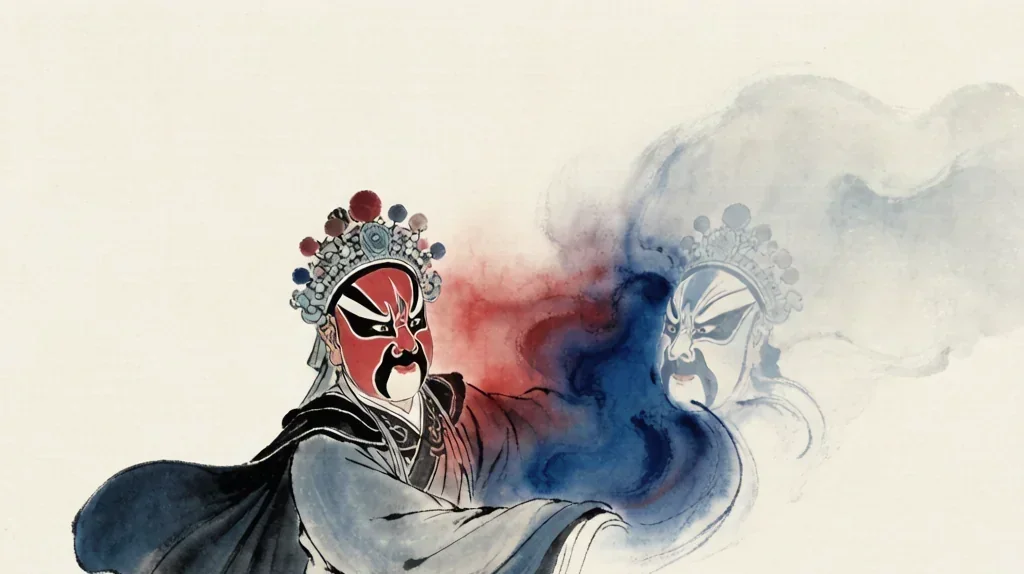
Face-changing (变脸, biàn liǎn) is a closely guarded performance technique that has been passed down through master-apprentice lineages for generations. The most common method uses layers of thin silk masks painted with different facial designs, attached to the performer's face and concealed beneath the outermost mask. Through a series of precisely timed movements — a flick of the sleeve, a turn of the head, a sweep of the hand — the performer peels away one mask to reveal the next beneath, with the transitions so rapid and seamless that the audience perceives an instantaneous transformation. The most accomplished face-changing masters can execute over a dozen changes in a single performance, with each mask depicting a different emotion or character type: red for loyalty and courage, black for integrity and ferocity, white for treachery and cunning, blue for wildness and pride, green for impulsiveness and violence, and gold or silver for gods and immortals. The technique originated as a theatrical device for depicting supernatural transformations — spirits, demons, and deities who could change their appearance — but evolved into a sophisticated vocabulary for expressing sudden emotional shifts and character revelations. There are three primary methods of face-changing: the 'wiping' method (抹脸, mǒ liǎn), where colored greasepaint is smeared across the face; the 'blowing' method (吹脸, chuī liǎn), where colored powder is blown onto the face; and the most dramatic 'pulling' method (扯脸, chě liǎn), using the silk masks described above.
Fire-Spitting, Acrobatics, and the 'Three Uniquenesses'
Beyond face-changing, Sichuan opera is famous for several other spectacular performance techniques collectively known as the 'Three Uniquenesses' (三绝, Sān Jué). 'Fire-spitting' (喷火, pēn huǒ) involves performers ejecting streams of flame from their mouths — a technique that requires years of training to master safely, as the performer must control the direction and duration of each burst of atomized fuel without injuring themselves or their elaborate costumes. 'Rolling lanterns' (滚灯, gǔn dēng) is a comedic acrobatic act in which a performer balances a lit oil lamp on their head while executing increasingly difficult movements — rolling on the ground, climbing through hoops, and even standing on their hands — all without extinguishing the flame or spilling a drop of oil. These techniques are not mere spectacle; each serves a dramatic function, whether expressing a character's supernatural power, physical dexterity, or comedic incompetence. Sichuan opera also incorporates 'sleeve dancing' (水袖功, shuǐ xiù gōng) using the extended white silk sleeves of traditional costumes to express emotion through flowing, calligraphic movements, and 'feather work' (翎子功, líng zǐ gōng), where long pheasant feathers attached to headdresses are manipulated with extraordinary precision to convey nuanced emotional states.
Music, Dialect, and the Five Vocal Styles
The musical foundation of Sichuan opera is uniquely eclectic, incorporating five distinct vocal and instrumental styles that reflect the province's position as a cultural crossroads. 'Gao qiang' (高腔, high-pitched melody) is the oldest and most distinctive style, featuring a solo singer accompanied by a chorus that interjects commentary and intensifies dramatic moments — a technique that may trace its origins to the work songs of Sichuanese boatmen on the Yangtze River. 'Kun qiang' (昆腔) represents the influence of the refined Kunqu opera tradition from Jiangsu. 'Hu qin qiang' (胡琴腔) uses the huqin fiddle as its lead instrument and derives from the northern bangzi tradition. 'Tan xi' (弹戏) features the pipa lute and has roots in Shaanxi folk music. 'Deng diao' (灯调, lantern melody) incorporates the festive music of Sichuan's traditional lantern festivals. The Sichuan dialect itself, with its distinctive tonal patterns and rich vocabulary of colloquial expressions, gives the opera its characteristic linguistic flavor — the comedic roles in particular exploit the dialect's potential for wordplay, puns, and earthy humor that would be impossible in standard Mandarin. The instrumental ensemble is led by a percussion section that includes a variety of drums, gongs, and cymbals, whose complex rhythmic patterns underscore the dramatic action and signal scene changes.
Sichuan Opera in Contemporary Culture
While Sichuan opera faces challenges from modern entertainment media, it has proven remarkably adaptable. The Chengdu Sichuan Opera Troupe, founded in 1959, maintains a repertoire of over 300 plays and performs regularly at the Shufeng Yayun Teahouse (蜀风雅韵), a historic venue that offers nightly performances combining opera excerpts, acrobatics, and traditional music in an intimate setting where audiences can sip tea and snack on local delicacies while enjoying the show. Face-changing has transcended its theatrical origins to become a symbol of Sichuanese culture, appearing in television shows, advertisements, and even as a theme for Sichuan restaurants worldwide. The technique was famously featured in the 1996 Hong Kong action film 'Dr. Wai in the Scripture with No Words,' starring Jet Li, and in 2015, a face-changing performance at the CCTV Spring Festival Gala — China's most-watched television program with over 700 million viewers — introduced the art to a new generation. Master face-changer Peng Denghuai (彭登怀), designated a 'National Treasure Artist,' has trained dozens of disciples and performed in over 40 countries, while carefully preserving the technique's traditional secrecy — the exact methods of face-changing are still not taught to outsiders and are protected as cultural secrets.
❓ Frequently Asked Questions
Q: What is Sichuan Opera (Chuanju)?
A: Sichuan Opera (川剧, chuānjù) is a regional Chinese opera form from Sichuan Province, known for its lively performances, humor, and the famous face-changing technique (变脸, biànliǎn). It combines singing, acting, martial arts, and acrobatics.
Q: What is the face-changing technique (Bian Lian)?
A: Bian Lian (变脸) is a dramatic Sichuan Opera technique where performers change their painted masks in the blink of an eye. The technique involves layers of masks that are flipped or removed using fans, arm movements, or quick hand gestures. The method is a closely guarded secret.
Q: What are the main role types in Sichuan Opera?
A: Sichuan Opera has five main role types: Sheng (male), Dan (female), Jing (painted face), Mo (secondary male), and Chou (clown). The clown role (Chou) is particularly important in Sichuan Opera, providing comic relief with distinctively humorous makeup.
Q: What other unique features does Sichuan Opera have?
A: Beyond face-changing, Sichuan Opera features fire-spitting (喷火), stilt walking, and the 'changing clothes' technique. The music uses percussion instruments and the Sichuan fiddle (川胡). The lyrics are performed in the Sichuan dialect, adding local flavor.
Q: Where can visitors watch Sichuan opera today?
A: The best place is Chengdu, where historic teahouses such as Shufeng Yayun stage nightly excerpts of opera, acrobatics, and face-changing, often with tea service in an intimate setting.
Q: How is the face-changing skill passed down?
A: It is taught only through closed master-apprentice lines, with the methods kept secret from outsiders; a performer typically trains for many years before appearing in public.
Key Terms
川剧 (Chuān Jù)
chuān jù · 'Sichuan opera' · 变脸 (biàn liǎn, face-changing) · 喷火 (pēn huǒ, fire-spitting) · 滚灯 (gǔn dēng, rolling lanterns)
脸谱 (liǎn pǔ)the painted facial designs of the characters
戏服 (xì fú)the stage costume
折子戏 (zhé zi xì)an excerpt or highlight scene performed alone
锣鼓 (luó gǔ)the gongs and drums of the percussion section
木偶戏 (mù ǒu xì)puppet theatre, a related Sichuan art
帮腔 (bāng qiāng)the choral interjection that accompanies the singer
唱腔 (chàng qiāng)the vocal singing style or melody
Fun Facts
- The exact mechanics of face-changing are considered a cultural secret, and masters of the technique are traditionally forbidden from revealing the methods to non-initiates. In 2006, a controversy erupted when a television program attempted to reveal the technique on air, drawing condemnation from cultural preservationists.
- The most face changes ever recorded in a single performance is 25, achieved by master Peng Denghuai in 1999. The changes were executed so rapidly that the Guinness World Records adjudicators required slow-motion video review to confirm each individual transformation.
- Sichuan opera's fire-spitting technique traditionally used a mixture of pine resin powder and alcohol. Modern performers use a specially formulated, less toxic compound, but the technique remains extremely dangerous — performers must be able to control the direction, duration, and intensity of the flame with split-second precision.
- Sichuan opera took its modern shape in the Qing dynasty, growing out of the merging of several older regional troupes in the eighteenth century.
- The rolling lantern act can last several minutes, with the performer rolling, crawling, and climbing while keeping a lit lamp balanced on the head.
- The clown role (chou) is so beloved that its witty, earthy humor is considered a defining feature of the whole art, not just comic relief.
Origins and Formation
Sichuan opera is a relatively young member of the Chinese opera family, taking shape in the Qing dynasty from the meeting of several older troupes in the Chengdu plain. Wandering companies that performed different regional styles—including the high-pitched gao qiang, the Kunqu-derived kun qiang, the huqin-led tunes, the pipa-based tan xi, and the festive deng diao—gradually merged into one eclectic form. The result was an art comfortable in many registers at once: rowdy comedy, stirring drama, and refined melody. This mixture is why Sichuan opera feels less like a single style than a vibrant repertoire held together by local dialect and humor. Far from a fixed ancient canon, it is a living crossroads, and its very plasticity helped it absorb face-changing, fire-spitting, and other spectacular techniques that became its signature. The form was recognized as national intangible cultural heritage in 2006.
The Beloved Clown Role
If one role defines Sichuan opera's spirit, it is the chou, or clown. Unlike in some operas where comedy is marginal, here the clown carries the local voice—quick, earthy, and quick to skewer pomp. Performers exploit the Sichuan dialect's rich slang and wordplay, delivering patter that lands whether the plot is solemn or silly. The chou's makeup is understated, often just a dab of powder, signaling that this is an ordinary person speaking plain truth amid grandeur. Through the clown, Sichuan opera stays close to daily life: the miser, the matchmaker, the bumbling official. Audiences relax when the chou appears, knowing wit is coming. This comic centrality gives the art its warmth and its democracy, ensuring that even a tale of gods and generals keeps one foot firmly in the teahouse and the market square.
Costumes, Masks, and Visual Design
Sichuan opera is a feast for the eyes before a word is sung. Elaborate costumes in saturated silks mark rank and temperament, while extended water sleeves let a performer paint emotion in the air with a flick of the wrist. The painted facial designs—distinct from the changeable silk masks of face-changing—encode character through color: bold lines for the loyal, pale patterns for the cunning. Headdresses bristle with pheasant feathers that skilled actors wave to show agitation or joy. Even props are staged with care, from folding fans used to hide a mask switch to oil lamps balanced in acrobatic acts. Together these elements form a visual grammar that an audience reads at a glance, so that meaning travels even when the dialect is unfamiliar. The design is never mere decoration; it is part of the storytelling, turning the body and the silk into a second script.
Training the Next Generation
Keeping Sichuan opera alive depends on a demanding apprenticeship. Young performers typically enter training as children, spending years on breath, posture, and the basic role types before attempting signature feats like face-changing or fire-spitting. Masters pass techniques down one-on-one, and the secret methods of mask-changing remain confined to trusted disciples, protecting both the art and its mystery. Provincial and municipal troupes run schools that combine classical repertoire with modern stagecraft, while festivals give novices a stage in front of real crowds. Recording projects now document elderly artists so that vanishing aria variants survive. The challenge is balance: too much innovation erases the tradition, too little leaves it stranded in the past. The healthiest troupes treat the old scores as a foundation to build on, sending a new generation of singers, acrobats, and clowns into teahouses and theatres across Sichuan and the world.