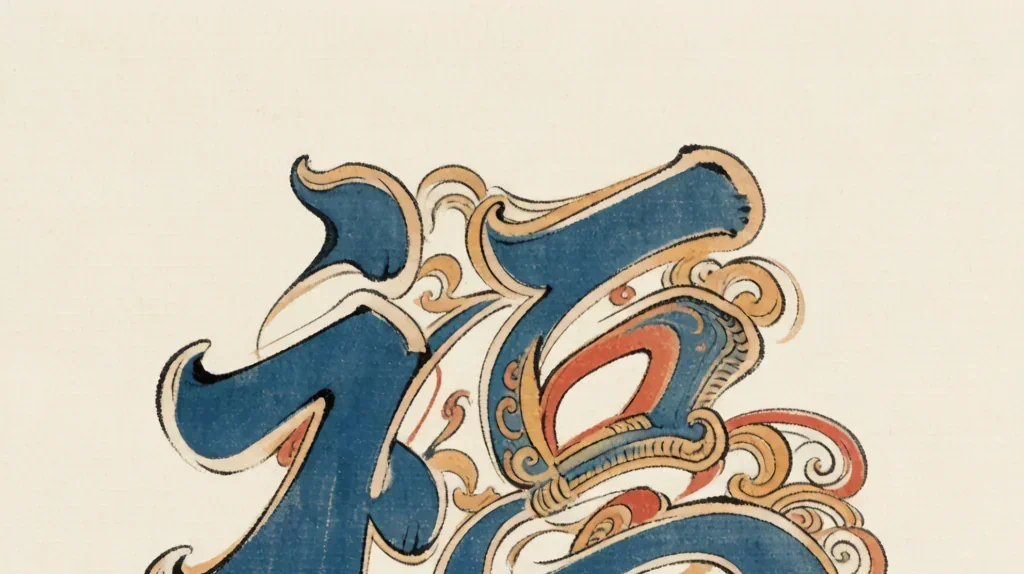
The upside-down Fu character (福) is one of the most recognizable symbols of Chinese New Year, pasted on doors and walls in homes across the Chinese cultural world. The character itself means "good fortune," "blessing," or "happiness," and displaying it is a wish for prosperity in the coming year. The playful custom of hanging the character upside down turns on a clever pun: in Mandarin the word for "upside down" (dào, 倒) sounds exactly like the word for "to arrive" (dào, 到). So an inverted Fu visually declares that "fortune has arrived." This single red character captures the wordplay, optimism, and visual humor that run through Chinese festive culture.
The Meaning of Fu
Fu (福) is a richly layered word denoting blessing, happiness, prosperity, and good luck all at once. In traditional thought the "five blessings" (wǔ fú) — longevity, wealth, health, love of virtue, and a natural death — summed up the ideal life. The character appears constantly in greetings, on gift papers, and in decorative art, making it perhaps the single most auspicious written sign in the language.
Because Chinese decorative culture is so attentive to written characters, Fu is rendered in many media: brush calligraphy, paper-cut, embroidery, porcelain, and window decorations. Its familiar square form is instantly legible even to small children, which helps explain why it became the emblem of the household New Year transformation.
The Upside-Down Pun
The custom of inverting the character depends on a homophone. The verb "to fall / to be inverted" is pronounced dào (倒), while "to arrive" is also dào (到). A descending tone and a different character, but identical in sound. Thus "福倒了" (Fu dào le, "the Fu is upside down") is heard as "福到了" (Fu dào le, "fortune has arrived").
This pun is a classic example of xié yīn (homophonic wordplay), a device beloved in Chinese folk art and festival decoration. The joke is gentle and everyone understands it, which is precisely why the upside-down Fu spread so widely — it is a charm that is also a pun anyone can appreciate.
Legend of the Origin
A popular folktale links the inverted Fu to the Ming founder Zhu Yuanzhang, or alternatively to the Empress Ma of the early Ming court. In one version, the emperor planned to mark households that had offended him with a hidden Fu symbol; the wise empress had Fu characters pasted everywhere, including upside down, so the targeted homes could not be singled out. When the emperor questioned the inverted characters, she explained they meant "fortune has arrived," pleasing him and sparing the innocent.
Whether historical or not, the story shows how the custom was rationalized as an act of compassion and cleverness. Such legends travel easily because they attach a moral to a charming practice, and they remain the most common explanation grandparents give to children today.
How Fu Is Displayed
During Spring Festival the character is written or printed in gold or black on a red square of paper and pasted on doors, lintels, windows, and storage jars. Large single characters may be mounted on the front gate, while smaller ones appear inside cabinets and on water vats — symbolically bringing fortune into every corner of the home.
There is a well-known etiquette nuance: the Fu on the main door is usually placed right-side up, while inverted Fu is reserved for interior objects and side walls. The reasoning is that the door faces the outside world and should show respect, whereas inside the house the playful "arrival" pun is welcome. Not everyone follows this strictly, but the distinction is widely taught.
Fu in Paper-Cutting and Folk Art
Paper-cutting (jianzhi) artists surround the Fu character with symbolic companions: the bat (biǎn fú, 蝙蝠), whose name is a homophone for fortune; peaches for longevity; coins for wealth; and children for family joy. A Fu set inside a circular medallion is especially common as a window flower.
Because the bat is also pronounced fu, designs with five bats radiating from a central Fu literally illustrate the "five blessings." These visual puns layer meaning upon meaning, turning a simple character into a miniature encyclopedia of good wishes that requires no reading ability to enjoy.
Fu Across the Year and Beyond New Year
Although most strongly associated with Lunar New Year, Fu decorations also appear at weddings, birthdays, and shop openings, wherever a blessing is wanted. Red Fu stickers in shops signal prosperity to customers, and Fu appears on festive packaging year-round.
In the Chinese diaspora the character functions as a portable emblem of identity. During celebrations from Singapore to San Francisco, the red Fu is pasted on windows as a quiet declaration of cultural belonging as much as a wish for luck, connecting overseas families to a shared festive vocabulary.
Modern Commercial and Digital Life
Today the Fu character is ubiquitous in consumer culture: on red envelopes, mobile payment stickers, television galas, and brand campaigns. During the New Year holiday, social-media users exchange animated Fu graphics, and apps offer "collect the Fu" games tied to marketing events.
The digitization has not erased the tradition but expanded it. A character once hand-cut by a grandmother is now sent as a sticker in a chat, yet the underlying hope — that fortune will arrive — remains exactly the same, proof that a 2,000-year-old written sign still speaks fluently to modern life.
Crafting Your Own Fu
Writing Fu by hand with a brush is itself considered auspicious, and many families invite an elder or calligrapher to inscribe a large character. The act of writing concentrates intention; the bold red square then carries both the wish and the handwriting of the person who made it.
For those less confident with a brush, preprinted Fu papers and paper-cut kits are widely available, and children often practice by tracing the character. The point is participation: the Fu is not a purchased charm so much as a household ritual of welcoming luck together.
❓ Frequently Asked Questions
Why is the Fu character sometimes upside down?
Because "upside down" (dào) sounds like "to arrive" (dào), an inverted Fu announces that fortune has arrived — a festive visual pun.
What does Fu mean?
Fu means good fortune, blessing, and happiness, and it is one of the most auspicious characters in Chinese culture.
Should the Fu on my front door be upside down?
Tradition often keeps the main door Fu upright out of respect and reserves the inverted version for inside the home, though practice varies.
Where does the upside-down custom come from?
A common legend ties it to the early Ming court, but the pun itself is the real engine of the custom's spread.
Why are bats shown with Fu?
The bat (biǎn fú) is a homophone for fortune, so bats — especially five of them — decorate Fu to signify the five blessings.
Is Fu only for Chinese New Year?
No. Fu is used at weddings, birthdays, and business openings too, wherever a blessing of good luck is appropriate.