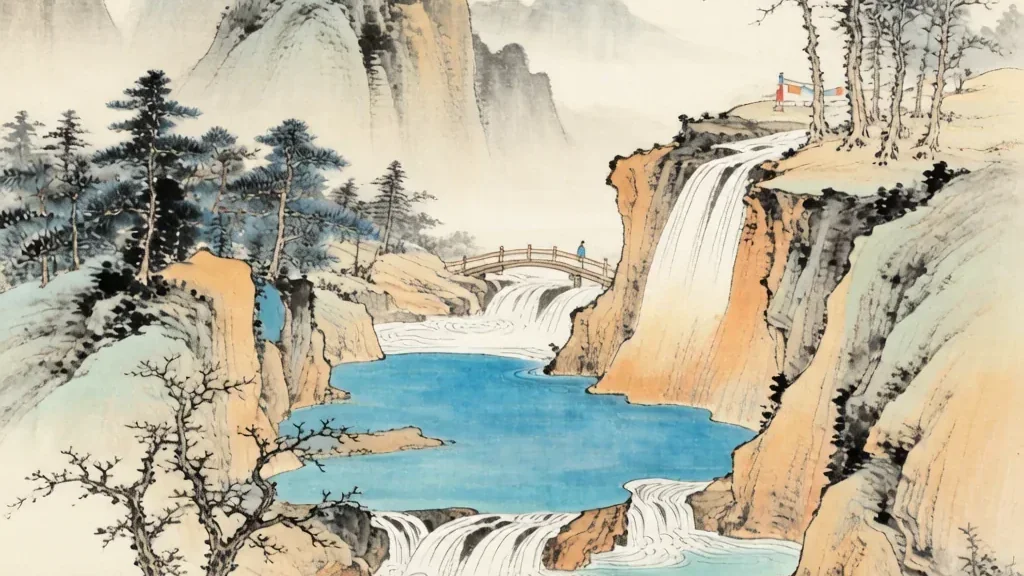
Hidden in the Min Mountains of northern Sichuan Province, at the edge of the Tibetan Plateau, lies a valley so beautiful that visitors have compared it to a fairyland, a dreamscape, and heaven on earth. Jiuzhaigou (九寨沟) — literally "Valley of Nine Villages" — is named for the nine Tibetan settlements that once dotted its length. Today, it is recognized as a UNESCO World Heritage Site and a UNESCO World Biosphere Reserve, drawing millions of visitors annually to witness its otherworldly landscape of multi-colored lakes, thundering waterfalls, and ancient forests. If there is a place on Earth where nature has painted with a supernatural palette, Jiuzhaigou is it.
Jiuzhaigou sits at an elevation of 2,000 to 4,500 meters above sea level, on the eastern edge of the Tibetan Plateau (青藏高原). This high-altitude location, combined with the valley's unique geology, creates the conditions for its most famous feature: a series of 114 stunningly colored lakes, known in Chinese as "haizi" (海子) or "sons of the sea." These lakes are not merely blue or green — they shimmer in shades of turquoise, emerald, sapphire, amber, and even violet, colors so vivid they seem artificial. The effect is created by a combination of mineral-rich water, calcium carbonate deposits, and the way sunlight penetrates the crystal-clear water to reflect off the light-colored lakebeds. The water is so transparent that submerged trees from thousands of years ago are visible on the bottom, perfectly preserved by the mineral content.
The Five-Flower Lake and Other Wonders
Among Jiuzhaigou's 114 lakes, a few stand out as truly extraordinary. Five-Flower Lake (五花海) is perhaps the most famous, a shallow pool whose waters display a kaleidoscope of blues, greens, and yellows thanks to varying depths, mineral concentrations, and aquatic plant life. Fallen tree trunks crisscross the lakebed, and the water is so clear that they appear to float in a crystalline void. In autumn, when the surrounding forests turn gold and crimson, the lake's surface reflects the colors like a living painting.
Five-Color Pond (五彩池), though tiny by comparison, is arguably even more magical. This small pool — just 5,600 square meters — displays the entire spectrum of blue from pale aquamarine to deep indigo, with the surrounding travertine terraces adding yellow, green, and white to the palette. Local Tibetans consider it sacred, and legend holds that it was the bathing place of a goddess who dropped her mirror, which shattered into the colorful fragments that became the pond.
Long Lake (长海), at 3,101 meters, is Jiuzhaigou's highest and largest lake, stretching 7.5 kilometers in length. Surrounded by snow-capped peaks, it has an austere, alpine beauty quite different from the intimate charm of the smaller pools. In winter, when the lake freezes completely, its surface becomes a sheet of pristine white, broken only by the dark silhouettes of surrounding pines. Arrow Bamboo Lake (箭竹海) and Panda Lake (熊猫海), named for the bamboo that grows along their shores and the giant pandas that once roamed the area, offer further variations on the theme of impossibly blue water in a mountain setting.
Waterfalls: The Voice of the Valley
If the lakes are Jiuzhaigou's eyes, the waterfalls are its voice. The valley contains numerous spectacular cascades, the most famous being Nuorilang Waterfall (诺日朗瀑布), one of the widest waterfalls in China at 270 meters across. Nuorilang means "magnificent" in the local Tibetan dialect, and the name is well deserved — water tumbles over a broad travertine shelf in a curtain of white, creating a constant roar that echoes through the valley. In winter, the waterfall freezes into a sculpture of ice, a frozen cathedral of blue and white.
Pearl Shoal Waterfall (珍珠滩瀑布) is equally spectacular but different in character. Here, water spreads across a wide, gently sloping travertine terrace, breaking into thousands of individual rivulets that sparkle like strings of pearls in the sunlight before plunging over a 40-meter drop. The waterfall appeared in the 1986 Chinese television adaptation of "Journey to the West," one of the most-watched TV series in history, cementing its place in popular culture. Shuzheng Waterfall (树正瀑布), though smaller, is perhaps the most photogenic, a multi-tiered cascade framed by ancient trees and prayer flags.
Tibetan Culture in the Valley
Jiuzhaigou is not only a natural wonder but also a living cultural landscape. The valley has been inhabited by Tibetan (藏族) and Qiang (羌族) communities for centuries, and their presence adds a rich human dimension to the scenery. The nine villages that gave the valley its name were traditional Tibetan settlements, with distinctive wooden houses painted in bright colors, mani stone piles carved with Buddhist mantras, and colorful prayer flags fluttering from every high point.
The Tibetan inhabitants of Jiuzhaigou practice a form of Buddhism that incorporates elements of the ancient Bon (苯教) religion, Tibet's pre-Buddhist spiritual tradition. This is reflected in their reverence for the natural features of the valley — many lakes and mountains are considered sacred abodes of deities. The Zharu Temple (扎如寺), a Bon monastery within the park, continues to serve as a spiritual center for the local community. Traditional Tibetan festivals, such as the Mazi Fair (麻孜会) and the Zhuan Shan Festival (转山节), involve circumambulation of sacred sites within the valley — a practice that has helped preserve the landscape for generations.
Autumn in Jiuzhaigou: Nature's Masterpiece
While Jiuzhaigou is beautiful in every season, autumn transforms it into something approaching the sublime. From mid-October to early November, the valley's forests — dominated by birch, maple, spruce, and rhododendron — erupt into a riot of gold, crimson, orange, and purple. These fiery colors are reflected in the impossibly blue lakes, creating a double landscape of surreal intensity. Photographers from around the world descend on the valley during this brief window, and the park's wooden walkways are crowded with visitors craning for the perfect shot.
Winter offers a completely different but equally magical experience. The waterfalls freeze into ice sculptures, the lakes become mirrors of white, and the crowds thin dramatically. The valley takes on a hushed, pristine quality, with snow clinging to every branch and the only sound being the crunch of footsteps on frozen paths. Spring brings blooming rhododendrons and the rush of snowmelt, while summer offers lush green forests and the valley's full-throated waterfalls at their most powerful. Each season reveals a different face of Jiuzhaigou's beauty.
In August 2017, a magnitude 7.0 earthquake struck the region, causing significant damage to the park and forcing its closure for restoration. The earthquake altered some of the valley's features — Sparkling Lake (火花海) was partially drained — but also demonstrated the landscape's resilience. After more than two years of restoration work, Jiuzhaigou reopened to visitors, and while some features have changed, the valley's essential magic remains undiminished. Nature, it seems, is both its own sculptor and its own restorer.
How the Lakes Were Formed
Jiuzhaigou's lakes are the product of geology and chemistry working together. The valley sits on limestone laid down over hundreds of millions of years, and after the last ice age meltwater and rockfalls dammed the streams that drain the mountains. Where underground springs are rich in calcium carbonate, the mineral slowly precipitates and cements loose rock and fallen wood into hard travertine barriers. These natural dams create the chain of terraced pools for which the park is famous. The same calcium carbonate keeps the water exceptionally clear by binding suspended particles and sinking them to the bed. Sunlight then bounces off pale travertine and submerged trunks to produce the shifting blues, greens, and turquoise that define the valley. In other words, the scenery is not static decoration but an ongoing process of deposition that continues to reshape the pools.
The Three Valleys
Jiuzhaigou is laid out like the letter Y, formed by three branching valleys that meet near the park entrance. The Rize Valley to the south holds many of the most famous lakes, including Five-Flower Lake and the Pearl Shoal, and climbs toward the glacier-capped peaks of the Min Mountains. The Zechawa Valley to the north is the highest and most remote, containing Long Lake and Five-Color Pond at the foot of snowy ridges. The Shuzheng Valley to the east links a long staircase of smaller lakes and the Shuzheng Waterfall down toward the entrance. Each valley has its own character: Rize is bright and busy, Zechawa is austere and alpine, and Shuzheng is intimate and wooded. Together they enclose more than a hundred named lakes within a compact mountain area.
Recovery After the 2017 Earthquake
In August 2017 a magnitude 7.0 earthquake struck near Jiuzhaigou, killing several people and damaging roads, hotels, and some of the natural features. Sparkling Lake partly drained as the travertine dam that held it cracked, and landslides temporarily blocked trails. The park closed for more than two years while engineers stabilized slopes and rebuilt the access routes. When it reopened, managers limited daily visitor numbers to reduce pressure on the recovering landscape. Nature also did its own repair work: new springs and fallen rock began reforming pools, and vegetation returned to cleared slopes. The event showed both the fragility of a karst landscape and its capacity to heal. Today the valley looks much as it did, with a few altered lakes serving as quiet reminders of the earthquake's force.
Visiting Through the Seasons
Jiuzhaigou changes mood with the calendar. Spring brings melting snow and budding rhododendrons, and the waterfalls run full from snowmelt. Summer wraps the valleys in deep green and the highest water volumes of the year. Autumn, from mid-October to early November, is the peak season: the forests turn gold and red and the reflection in the lakes is at its most vivid, so the boardwalks are crowded. Winter quiets everything, as waterfalls freeze into blue-white ice, the lakes still and clear, and visitor numbers fall sharply. Because the park sits high in the Min Mountains, mornings are cool even in July, and afternoon rain is common in summer. Planning a visit around the season shapes not only the colors seen but also the crowds and the ease of travel.
❓ Frequently Asked Questions
📝 Chinese Vocabulary
- 九寨沟 (Jiǔ Zhài Gōu) — The Valley of Nine Villages, a UNESCO World Heritage Site in Sichuan Province famous for its multi-colored lakes and waterfalls.
- 海子 (Hǎi Zi) — "Son of the sea," the local Tibetan name for Jiuzhaigou's stunningly colored lakes, of which there are 114 within the valley.
- 五花海 (Wǔ Huā Hǎi) — Five-Flower Lake, Jiuzhaigou's most famous lake, whose waters display a kaleidoscope of blues, greens, and yellows.
- 诺日朗瀑布 (Nuò Rì Lǎng Pù Bù) — Nuorilang Waterfall, meaning "magnificent" in Tibetan, one of the widest waterfalls in China at 270 meters across.
- 青藏高原 (Qīng Zàng Gāo Yuán) — The Tibetan Plateau, the world's highest and largest plateau, on whose eastern edge Jiuzhaigou is located.
🎉 Fun Facts
- Jiuzhaigou's water is so clear because of high concentrations of calcium carbonate (travertine), which binds to suspended particles and causes them to sink to the lakebed — creating visibility of up to 12 meters.
- The valley is home to the endangered giant panda, though sightings are extremely rare — there are thought to be fewer than 20 pandas remaining in the Jiuzhaigou area.
- The 2017 earthquake that damaged Jiuzhaigou also created new geological features — including a brand-new lake formed by a landslide that dammed a section of river, demonstrating nature's simultaneous power to destroy and create.
- The park's name records nine Tibetan villages, but only a few of those communities still live inside the valley, and their wooden houses are part of the protected cultural landscape.
- Because the lakes sit between 2,000 and 3,000 meters, the air is thin and cool even in summer, which helps preserve the fallen trees resting on the lakebeds.
- Jiuzhaigou's travertine terraces are still actively growing, so the shapes of the pools slowly change from one decade to the next.