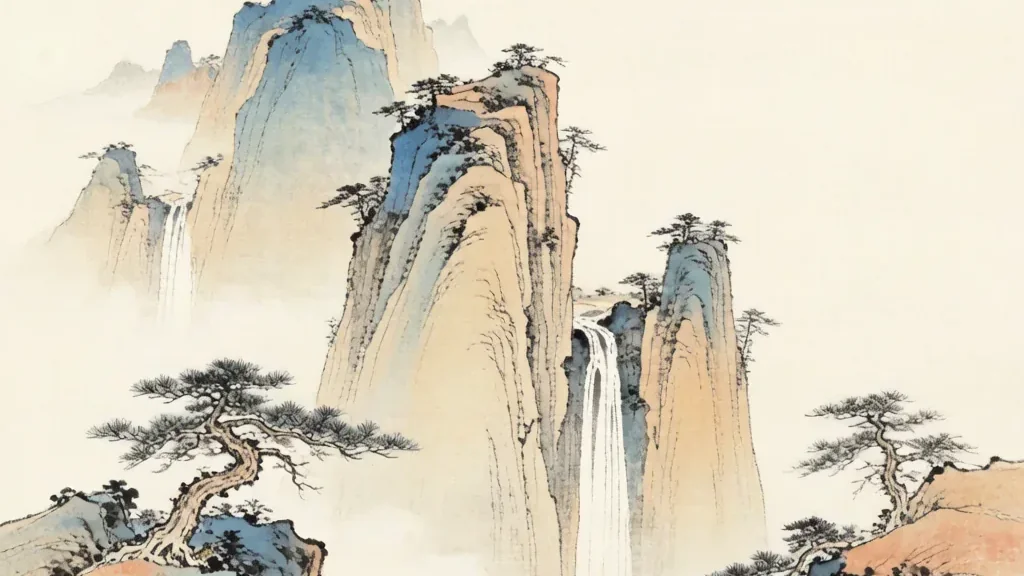
Zhangjiajie National Forest Park (张家界国家森林公园, Zhāngjiājiè Guójiā Sēnlín Gōngyuán), located in the northwestern corner of Hunan Province, is one of the most visually spectacular landscapes on Earth — a forest of towering quartz-sandstone pillars, thousands of them, rising hundreds of meters from the valley floor like petrified giants, their sheer faces draped in vegetation and often veiled in drifting mist. This surreal landscape, which served as the direct inspiration for the floating 'Hallelujah Mountains' in James Cameron's 2009 blockbuster film 'Avatar,' was China's first national forest park, established in 1982, and was inscribed as a UNESCO World Heritage Site in 1992 as part of the larger Wulingyuan Scenic and Historic Interest Area. The park covers approximately 4,810 hectares, but it is merely the centerpiece of a much larger landscape of karst towers, natural bridges, caves, and pristine forests that extends across 26,000 hectares. The sandstone pillars of Zhangjiajie, formed over 300 million years through a combination of geological uplift, water erosion, and the expansion and contraction of the quartz sandstone in the region's humid subtropical climate, number over 3,000 individual formations, with the tallest — the 'Southern Sky Column' — reaching 1,080 meters above sea level.
Geological Wonder: Three Hundred Million Years in the Making
The geological story of Zhangjiajie begins during the Devonian period, approximately 380 million years ago, when the region lay beneath a shallow sea. Over millions of years, layers of quartz-rich sand and other sediments accumulated on the seafloor, eventually compressing into sandstone and quartzite formations up to 500 meters thick. The collision of the Indian and Eurasian tectonic plates, which began approximately 55 million years ago and created the Himalayas, also uplifted the Zhangjiajie region, raising the ancient seabed to its current elevation. But the real sculptors of Zhangjiajie's pillars are water and time: the region's abundant rainfall — over 1,400 millimeters annually — combined with the quartz sandstone's unique physical properties, has carved the landscape into its current form through a process called 'differential erosion.' Vertical joints and fractures in the rock allowed water to penetrate deep into the formation, slowly dissolving the mineral cement holding the sand grains together and widening the cracks into canyons. Over millions of years, the less resistant rock eroded away, leaving behind the vertical pillars of harder quartz sandstone. The process continues today — pillars continue to form, and existing pillars occasionally collapse, their debris feeding the streams that carve ever deeper into the valley floor. Geologists estimate that the tallest pillars are still growing, as the surrounding rock erodes at a rate of approximately 2-3 millimeters per year.
A Biodiversity Hotspot in the Clouds
Zhangjiajie's unique topography has created a remarkable ecosystem that serves as a refuge for species found nowhere else on Earth. The park sits at a biological crossroads where subtropical and temperate zones meet, and its extreme vertical relief — from valley floors at 300 meters to summits above 1,200 meters — creates multiple microclimates stacked one above another. The forest cover exceeds 98%, preserving one of the last remaining stands of primary subtropical broadleaf forest in China. The park is home to over 3,000 plant species, including the dawn redwood (水杉, shuǐ shān, Metasequoia glyptostroboides), a 'living fossil' tree thought extinct until it was discovered alive in China in 1941; the dove tree (珙桐, gǒng tóng, Davidia involucrata), whose white bracts flutter like dove wings in the breeze; and ancient ginkgo trees (银杏, yínxìng) that have survived unchanged for over 200 million years. The fauna is equally diverse: the park harbors populations of Chinese giant salamander (娃娃鱼, wáwayú), the world's largest amphibian; rhesus macaques that have become habituated to visitors; clouded leopards; and over 150 bird species. The Zhangjiajie macaques (张家界猕猴), a subspecies of rhesus macaque, are particularly numerous — troupes of up to 100 individuals roam the park's trails, and their interactions with tourists have become a subject of both amusement and concern for park management.
The 'Avatar' Connection and Global Fame
While Zhangjiajie had been known to Chinese tourists and a small number of international visitors for decades, its transformation into a global icon occurred in 2010, when James Cameron revealed that the floating mountains of Pandora in his film 'Avatar' were directly inspired by the sandstone pillars of Zhangjiajie. A Hollywood production designer had shown Cameron photographs of the landscape during pre-production, and the director was so captivated that he incorporated the imagery into the film's visual language. In recognition of this connection, the park renamed the 'Southern Sky Column' (南天一柱, Nán Tiān Yī Zhù) — a 1,080-meter pillar that was one of the key inspirations for the film — as the 'Avatar Hallelujah Mountain' (阿凡达哈利路亚山). The renaming sparked controversy within China, with some critics arguing it represented cultural submission to Hollywood, while others welcomed the international recognition and tourist revenue it would generate. The controversy ultimately subsided as the economic benefits became clear: tourism to Zhangjiajie increased by over 30% in the years following the film's release, and the park now receives over 10 million visitors annually, making it one of China's most visited natural attractions.
Infrastructure and the Visitor Experience
Zhangjiajie has developed some of the most dramatic visitor infrastructure in the world, designed to provide access to a landscape that would otherwise be largely inaccessible. The Bailong Elevator (百龙天梯, Bǎilóng Tiāntī), built into the face of a quartz-sandstone cliff, is the world's tallest outdoor elevator, rising 326 meters in just 1 minute and 32 seconds — the equivalent of a 100-story building. The Zhangjiajie Glass Bridge (张家界大峡谷玻璃桥), spanning a 430-meter gorge at a height of 300 meters, was the world's longest and highest glass-bottomed bridge when it opened in 2016, and has become one of China's most Instagram-famous attractions. The Tianmen Mountain cable car (天门山索道), stretching 7,455 meters from downtown Zhangjiajie to the summit of Tianmen Mountain, is the longest passenger cable car in the world, offering vertigo-inducing views of the 'Heaven's Gate' (天门洞, Tiānmén Dòng) — a natural arch in the mountain that stands 131.5 meters tall. These engineering marvels have made the park's extraordinary landscapes accessible to millions, but they have also raised concerns about overdevelopment and the impact of mass tourism on the fragile ecosystem. Park authorities have implemented visitor caps during peak seasons and are developing sustainable tourism strategies to balance access with preservation.