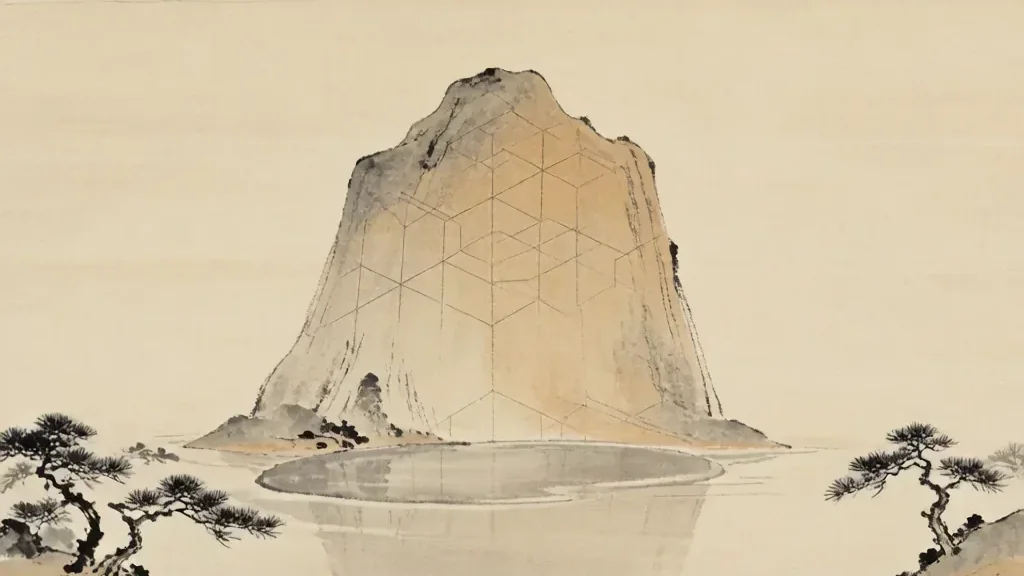
Song Neo-Confucianism was the great philosophical synthesis that remade Confucianism for a mature imperial China, blending the ethical concern of the classical tradition with the metaphysical depth of Daoism and Buddhism. Rising under the Song dynasty, it produced a comprehensive vision of cosmos and conduct centered on the concept of li (principle) and the discipline of ge wu (investigating things) to recover the innate moral knowledge of the mind. For nearly a thousand years its interpretations of the classics framed education, the examination system, and the self-understanding of the Chinese literate class, and its later Wang Yangming offshoot would emphasize the unity of knowledge and action.
Historical Context of the Song Revival
The Tang dynasty's collapse and the long upheaval that followed left Confucianism on the defensive against the cultural prestige of Buddhism and Daoism. By the Song era (tenth to thirteenth century), educated Chinese sought a native worldview that could match Buddhism's metaphysical sophistication while preserving Confucian this-worldly ethics.
The rise of printing and the expansion of schools created a reading public hungry for synthesis. The state, needing a coherent orthodoxy to staff its bureaucracy, eventually embraced Neo-Confucian teaching as the basis of the examinations.
This convergence of spiritual need, printing technology, and state patronage made Song Neo-Confucianism the dominant creed of late imperial China.
The Five Masters of the Song
The tradition venerates the "Five Masters": Zhou Dunyi, Zhang Zai, Cheng Hao, Cheng Yi, and Zhu Xi. Zhou Dunyi opened the way with his "Diagram of the Supreme Polarity," linking cosmology to ethics through a single originating principle.
Zhang Zai is famed for his western-inscription vision of heaven and earth as one body with humanity, and for a robust qi-based ontology. The Cheng brothers—Hao the humane, Yi the rigorous—sharpened the theory of li and the investigation of things.
Zhu Xi, however, was the systematizer who gathered their insights into a unified curriculum and commentary, becoming the authoritative voice of the school.
Zhu Xi and the Synthesis of Li and Qi
Zhu Xi taught that reality is constituted by li, the principle or pattern inherent in each thing, and qi, the vital stuff that gives it concrete existence. Every object has its li, and the supreme li is the Taiji, the great ultimate encompassing all principles.
For Zhu Xi, human nature is originally good because it embodies heavenly li, but qi can be cloudy or unbalanced, producing selfish desire. The task of cultivation is to clarify the li within by "investigating things" (ge wu) until one penetrates to their principles.
His emphasis on gradual, accumulative study of classics, history, and nature made Zhu Xi the champion of book-learning and the architect of the examination curriculum that lasted until the modern era.
The Supreme Polarity and Human Nature
The Taiji, or supreme polarity, is not a personal god but the unifying source of order, containing the movement of yin-yang and the generation of the five phases. From it the myriad things differentiate while sharing one principle.
Human beings, as microcosms, carry the whole Taiji within. Zhu Xi's anthropology holds that the "mind of the Way" (daoxin) is the seat of moral principle, while the "human mind" is swayed by physical qi and desire. The gentleman stills the latter to reveal the former.
This metaphysics gave Confucian morality a cosmic backing: to be good is to be in accord with the pattern of the universe itself.
Investigating Things and Moral Cultivation
Ge wu zhi zhi—"investigate things to extend knowledge"—is Zhu Xi's method. One should ponder the principles of things, from a book's meaning to a plant's growth, accumulating insight until a breakthrough reveals the unity of all li.
Crucially, investigation is not merely intellectual; it is moral, because knowing a thing's principle is knowing how to act toward it rightly. Still, Zhu Xi warned against seeking a sudden enlightenment and favored steady, lifelong effort.
Paired with quiet sitting and ritual, this discipline aimed to transform the whole person, not just to inform the mind.
The School of Mind: Lu Jiuyuan
Even within the Song, dissent appeared. Lu Jiuyuan argued that the mind itself is the principle: "The universe is my mind; my mind is the universe." For him, the search outside was unnecessary; one need only recover the originally luminous heart.
Lu's slogan "easy and simple" contrasted with Zhu Xi's mountainous program of study. The famous Goose Lake debate of 1175 pitted Lu's intuitionism against Zhu's evidential gradualism, foreshadowing the later Lu-Wang school.
Though Zhu's line won official favor in the Song, Lu's intuitionist seed grew into the Ming dynamism of Wang Yangming.
Ritual, Education, and the Family
Song Neo-Confucians reformed family ritual, producing manuals like Zhu Xi's Family Rituals that standardized weddings, funerals, and ancestor worship for gentry households. These practices knit the ideology into daily life.
They founded academies (shuyuan) where free discussion flourished outside state control, cultivating a scholar identity bound by moral seriousness. The movement thus reshaped both private family life and public education.
Ancestor halls and lineage rules inspired by Neo-Confucian ethics became fixtures of local society for centuries.
State Orthodoxy and the Examinations
From the Yuan dynasty onward, Zhu Xi's commentaries were declared the standard for the civil service examinations, a status they held into the nineteenth century. To become an official, one had to master his readings of the Four Books.
This institutional triumph made Neo-Confucianism the mental furniture of the elite. It also froze interpretation: deviation risked failure, which is why later reformers attacked the orthodoxy as sterile.
The very success that spread the teaching also, over time, turned it into a rigid credential, sowing the discontent that the Qing evidential scholars would express.
Legacy and Later Critique
Song Neo-Confucianism gave China a unified moral cosmology, a rigorous educational ideal, and a language of self-cultivation still resonant in East Asia. Its emphasis on renewal and responsibility informed scholar-officials' conscience.
Yet critics—from Wang Yangming's heirs to Qing evidential scholars to modern iconoclasts—faulted its otherworldly tone, its suppression of desire, and its eventual bureaucratic rigidity. The tension between Zhu's "investigate outside" and Lu-Wang's "trust the heart" remains a living debate.
As a synthesis of reason, ritual, and cosmos, Song Neo-Confucianism stands among the great achievements of Chinese thought, a bridge that carried Confucius into the modern world.
❓ Frequently Asked Questions
What is Song Neo-Confucianism?
It is the Song-dynasty synthesis that fused Confucian ethics with Daoist and Buddhist metaphysics around the concepts of li (principle) and qi (vital stuff).
Who was Zhu Xi?
Zhu Xi was the systematizer who unified the school's teachings and whose commentaries became the imperial examination standard.
What is li and qi?
Li is the principle or pattern in each thing; qi is the vital matter that gives it concrete form. Human nature is good in li but clouded by unbalanced qi.
What does "investigate things" mean?
Ge wu is the method of studying things' principles—through classics, nature, and ritual—to extend moral knowledge gradually.
How did Lu Jiuyuan differ?
He taught that the mind itself is principle, favoring intuitive recovery of the luminous heart over outward study.
Why was it so influential?
As state orthodoxy it shaped education, exams, family ritual, and elite self-understanding for nearly a millennium.