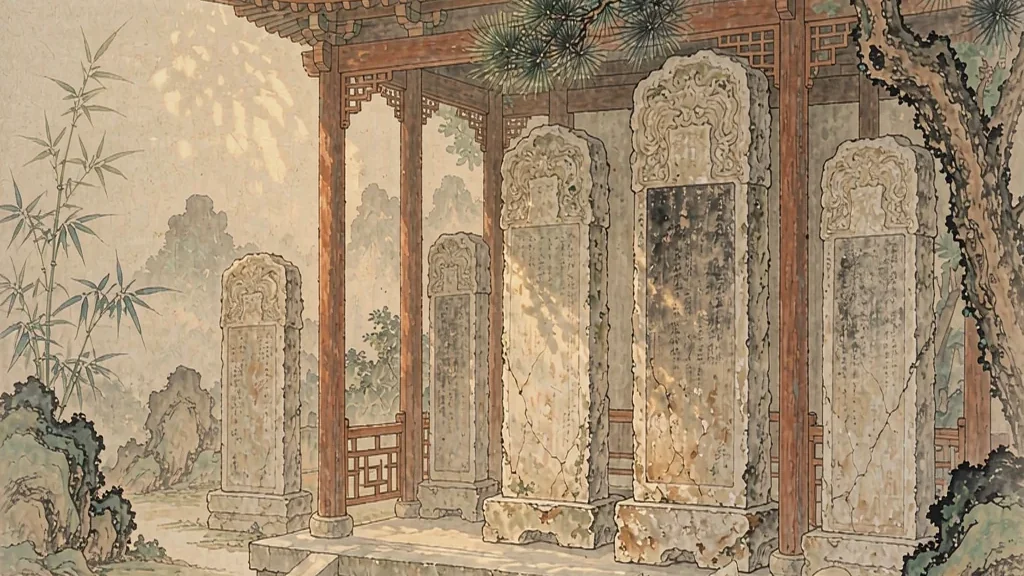
Calligraphy rubbing, known in Chinese as making a ta ben, is the technique of transferring the carved or cast surface of a stone, bronze, or tile onto paper by inking a sheet pressed into its recesses. For more than a millennium this was the chief way that inscriptions and masters' writings were reproduced and studied far from the original monument. Rubbings turned unique stone and metal objects into portable texts, making calligraphy education and scholarship possible across vast distances.
What a Rubbing Is
A rubbing captures the reverse image of an incised surface. Where the stone is cut away, the paper stays light; where the stone stands proud, it receives ink and appears dark. The result is a crisp white character on a black ground, the familiar look of a traditional inscription rubbing.
This negative image is the opposite of normal writing, yet readers quickly adjust, because the character shapes are unchanged. The rubbing preserves not only the words but the very contours of the carving, so a scholar can study the depth and angle of each stroke as the stone cutter made it.
The Basic Materials
The essential tools are few: thin, tough paper, a soft pad or pouch of silk wrapped around cotton, liquid ink, and a flat brush to lay the paper against the surface. Water is used to dampen the sheet so it clings into every incision.
Traditionally the paper was a special strong sheet that would not tear when pressed into deep cuts. The ink was applied with a padded dauber rather than a brush, giving an even film. The worker's touch had to be light and even, or the fine lines would fill with ink and disappear.
The Rubbing Process
First the stone is cleaned and sometimes lightly wetted. The damp paper is laid over it and pressed firmly with a brush so it sinks into every groove. Once the sheet is bone dry, the ink pad is tapped across the surface until the raised areas turn black and the carved lines remain white.
Timing matters. If the paper is rubbed while still wet, it may tear; if too dry, it will not have seated into the cuts. An experienced maker develops a feel for the exact moment, and the whole operation can take from minutes for a small tile to much longer for a large stele.
Types of Rubbings
Collectors distinguish several finishes. A dense, glossy black rubbing was prized for its richness, while a very light, finely inked version that let the paper texture show was valued for subtlety and was said to resemble a cicada's wing for its delicacy.
Color was sometimes used. Red or other tinted inks appear on certain decorative or commemorative rubbings. The choice of finish was partly aesthetic and partly practical, since heavier inking survived handling better in a working library.
Rubbings and the Study of Calligraphy
Before photography, a rubbing was the only practical way to own a copy of a famous inscription. Students in distant provinces could practice the regular or clerical script by working from a rubbing of a celebrated stele, even if they would never travel to see the stone.
Because rubbings froze a moment in a monument's life, they also became historical records. A stone worn by centuries of rubbing, or damaged by later events, is often known to us chiefly through early impressions that captured it when it was sharper.
Stone Inscriptions as Sources
Many rubbings come from steles, upright stone slabs bearing memorials, sutras, or official proclamations. Others come from carved cliffs, temple pillars, and the bases of Buddhist statues. Each carries both text and a calligraphic model in one object.
The study of such material, often grouped under the broad field of metal-and-stone scholarship, treated rubbings as primary evidence. Scholars compared versions, dated styles by their brush manner, and built arguments about history from small differences between impressions.
Bronze and Tile Rubbings
Not all rubbings are stone. Inscriptions on ancient bronzes, as well as patterns on roof tiles and clay seals, were also transferred to paper. These broadened the calligrapher's vocabulary by exposing artists to the angular, archaic look of early writing.
In later centuries, enthusiasts made rubbings of anything with an interesting surface, from pictorial bricks to Buddhist cave reliefs. The habit turned daily archaeological objects into art materials and fed the taste for archaic forms in writing.
Preservation and Ethics
Repeated rubbing slowly wears a stone, and some famous monuments were eventually protected or copied by other means. Modern custodians often limit access, since heavy use can blur the very lines scholars value.
This tension between study and preservation is old. Collectors have long weighed the benefit of wide distribution against the cost to the original, and today high-quality photography supplements but has not entirely replaced the rubbing as a scholar's tool.
Rubbings in the Modern Era
Although photography and scanning now reproduce inscriptions easily, hand rubbings remain prized for their tactile fidelity and beauty. Artists still make them as a craft, and museums display fine examples as artworks in their own right.
For learners, a rubbing offers something a photograph lacks: the sense of the carving's physical relief, felt through the paper. That closeness to the stone is why the rubbing continues to hold a special place in calligraphy study even now.
❓ Frequently Asked Questions
How is a rubbing made?
Damp paper is pressed into the carved surface, dried, then inked with a padded dauber so raised areas turn black and incised lines stay white.
Why are rubbings white-on-black?
Because the ink lands on the stone that stands proud, while the cut-away characters remain un-inked paper, producing light characters on a dark ground.
What is the difference between a rubbing and a copybook?
A rubbing is a direct physical impression of a real inscription, while a copybook may be a printed or handwritten model derived from such sources.
Were rubbings used for study or decoration?
Both; they were vital study tools for distant students and scholars, and also collected and displayed as beautiful objects.
Do rubbings damage the original stone?
Repeated rubbing can wear a stone over time, which is why famous monuments are now often protected or reproduced by other means.
Are rubbings still made today?
Yes, as a living craft and art form, though photography now handles most routine reproduction.