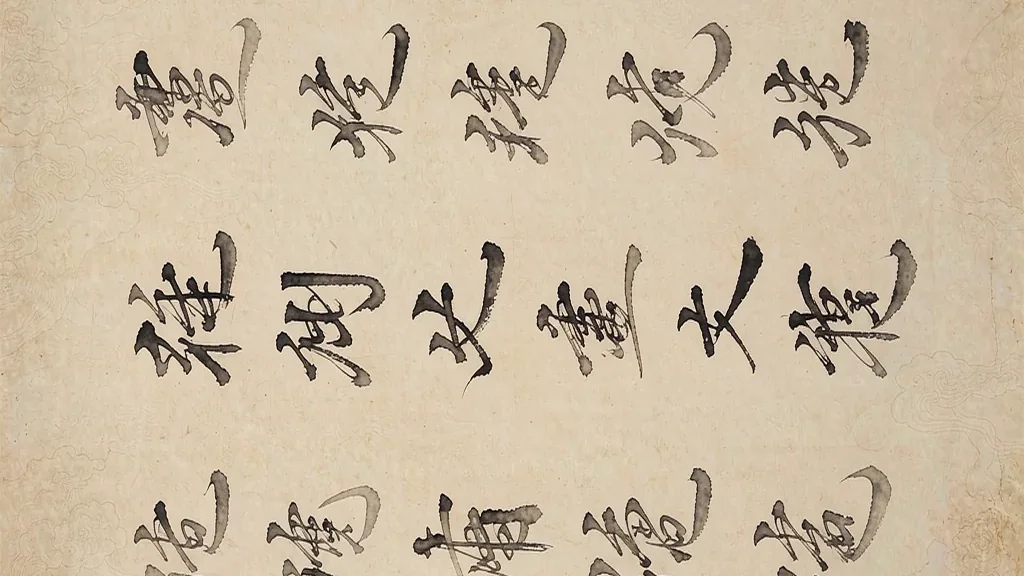
The Qianlong emperor, who ruled in the later period of the Qing dynasty, was one of history's most enthusiastic imperial patrons and practitioners of calligraphy. A prolific writer and collector, he surrounded himself with masterpieces, added his own inscriptions to them, and helped shape taste through his preferences. His calligraphic activity is a window into how a monarch used brush writing to assert cultural authority, to commune with admired predecessors, and to leave a personal mark on the art he loved.
An Emperor as Collector
Qianlong assembled one of the great collections of painting and calligraphy, housed in his palaces and gardens. He marked favorite works with seals and inscriptions, turning ownership into a form of authorship and dialogue with the past.
His collecting was not passive. By labeling, ranking, and annotating works, he constructed a canon that later viewers inherited. The imperial collection thus became a statement of what Chinese art, in his view, most deserved reverence.
His Own Brush Work
Qianlong wrote constantly, producing poems, colophons, and dedications in a fluent running-hand manner. His style leaned on the elegant literary models of earlier masters rather than on blunt archaic stone cuts.
Like many educated men of his class, he prized ease and refinement. His writing is competent and graceful rather than radically original, which fits a ruler who saw himself as a cultivated heir to tradition more than a bold innovator.
The Imperial Inscription Habit
A distinctive mark of his reign is the imperial inscription: the emperor's own words added to a treasured painting or calligraphy. These notes could praise the work, record when he viewed it, or link it to his own feelings.
Such additions were both honor and burden. They elevated a work by imperial notice yet also covered it with later writing that modern conservators must carefully read and sometimes separate in study.
The Three Rarities Studio
Among his projects was a famous personal studio devoted to three especially beloved calligraphy treasures, which he honored above his wider holdings. The space symbolized his deepest attachments within an enormous collection.
The naming of such a studio shows how personally he engaged the art. These were not just objects but companions in his literary life, returned to and reflected upon across many years of rule.
Influence of Earlier Masters
Qianlong's taste was formed by the great literati calligraphers of previous dynasties, whose works he collected and emulated. He admired the fluent, scholarly manner associated with the Yuan master Zhao Mengfu and others of refined bearing.
His allegiance to that lineage shaped what was copied and taught at court. By favoring graceful models, he reinforced a stream of taste that valued literary elegance over the rough archaic manner some contemporaries explored.
Seals and Authentication
The emperor's many seal impressions became a kind of signature across the collection. Different seals served different purposes: some marked ownership, others recorded a viewing, others praised the work.
For later scholars, these seals are evidence. They help date when a work passed through the palace and confirm provenance, though their very number can crowd a sheet and complicate the original composition.
Patronage and the Court Academy
As patron, Qianlong supported scholars, compiled catalogues, and sponsored the copying and mounting of treasures. Court workshops produced fine albums and facsimiles that spread models beyond the palace walls.
This institutional backing magnified his personal taste into public culture. What the emperor collected and praised tended to be what officials and gentry also studied, giving his preferences a wide downstream effect.
Calligraphy as Political Display
Imperial writing was never only private. A poem in the emperor's hand, placed in a garden or presented to an official, carried authority and conveyed virtue. Brush work was a soft instrument of rule, projecting the image of a sage sovereign.
In this sense Qianlong continued a long pattern in which rulers wrote to legitimize themselves as cultured heirs of the Chinese tradition. His sheer volume of writing made the pattern unusually visible.
Legacy and Modern View
Today scholars read Qianlong's calligraphy and collection with mixed feelings: gratitude for the preservation, wariness of the overcrowding he sometimes imposed on masterpieces. His inscriptions are both treasure and obstacle.
Yet his enthusiasm undeniably kept countless works alive and honored. As a practitioner he was a serious amateur of high skill; as a patron he was among the most consequential in the art's long history.
Qianlong's Poetic Output
The emperor was a tireless poet, and much of his calligraphy consists of his own verses written out by hand. His daily writing practice doubled as literary production, joining the two arts in one routine.
He inscribed poems on paintings, in gardens, and on objects, treating the verse as occasion for the brush. The sheer volume means his hand appears in thousands of places across the former palace holdings.
Critics note that the poetry is competent rather than startling, yet its constant presence shows a ruler who wielded the brush as naturally as a pen. For him writing was governance as much as art.
The Great Catalogue Projects
Qianlong sponsored monumental catalogues that recorded and graded the imperial collection, turning private holdings into a documented canon. These works guided what later scholars would study and revere.
Compiling them required teams of experts to examine, describe, and rank thousands of pieces, a bureaucratic feat as much as a scholarly one. The rankings carried the emperor's authority as final word.
The catalogues also served memory, fixing the identity and location of treasures that might otherwise be lost in the vast storerooms. In this they remain basic tools for researchers today.
Gardens, Travel, and Calligraphy
Qianlong wrote in and about his gardens, inscribing pavilions and rocks with his own lines. The landscape became a surface for his calligraphy, binding art to place in a very physical way.
On tours he left inscriptions at famous sites, asserting presence and taste across the realm. Such acts projected the imperial hand into the geography itself, a form of writing on the country.
These inscribed environments show calligraphy as something lived in, not just viewed. For the emperor the brush was a way to inhabit and mark the world he ruled.
❓ Frequently Asked Questions
Was Qianlong a good calligrapher?
He was a skilled, fluent writer in the elegant literary manner, more a cultivated heir to tradition than a radical innovator, and extremely prolific.
Why did he add inscriptions to artworks?
To record viewings, praise works, and enter dialogue with the past, turning ownership into a personal form of authorship.
What was the studio of three rarities?
It was his private studio honoring three beloved calligraphy treasures he valued above his wider collection.
Whose style did he prefer?
He leaned toward refined literary models, including the Yuan master Zhao Mengfu, favoring grace over rough archaic manner.
How do his seals help scholars?
They confirm provenance and date when works entered the palace, though their number can complicate the original layout.
What is his legacy for calligraphy?
His patronage preserved countless works and spread models, though his inscriptions are both treasured and sometimes seen as overcrowding masterpieces.