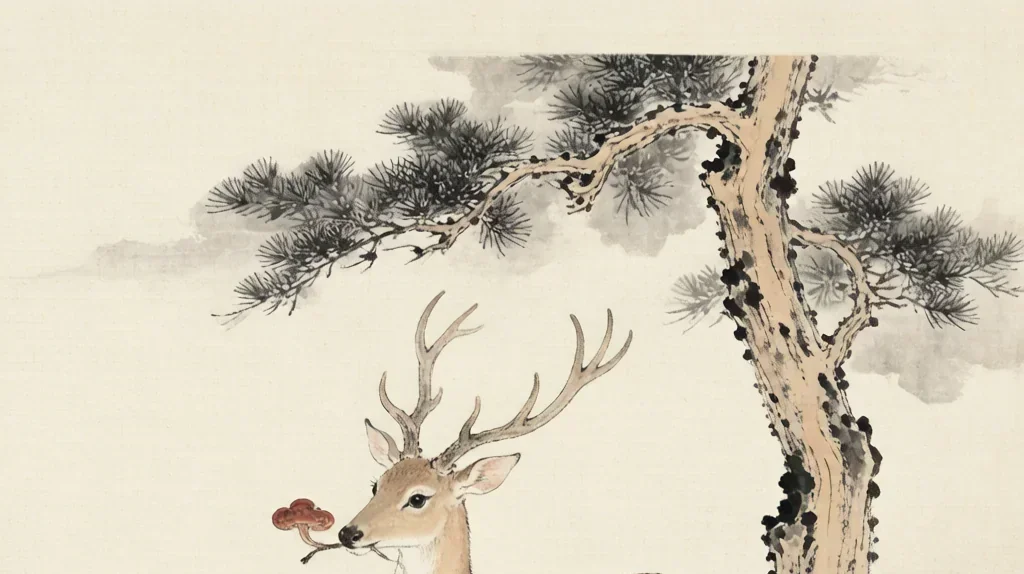
The deer (鹿, lù) holds a special, layered place in Chinese symbolism because its name is a perfect homophone for lu (禄, "official salary" or "prosperity through rank"). A gentle forest animal thus becomes a wish for career success and material reward — the deer is the creature of the ambitious scholar and the contented retiree alike. Paired with the crane and the character shou, the deer forms the classic "longevity and prosperity" trio, appearing in paintings, porcelain, and garden rocks as a quiet prayer that one might thrive both in office and in years. This essay follows the deer from forest to bureaucracy to birthday hall.
The Deer and the Pun on Lu
The Chinese word for deer, lù (鹿), sounds exactly like lù (禄), which in imperial times meant the salary and emoluments of office — in effect, prosperity granted by rank. Because of this rhyme, the deer became a walking pun for career fortune.
Aspiring officials and their families displayed deer imagery to attract promotion and a comfortable stipend. The animal carried the hope of the examination system made flesh.
This is classic Chinese symbolic economy: an ordinary creature is promoted to a blessing purely by the music of its name.
The Deer in Nature and Myth
Real deer — especially the sika and the larger red deer — roam the forests of northern and central China, and were hunted, farmed, and admired from antiquity. They are gentle, graceful, and associated with quiet woodland places.
In myth the deer is a companion of immortals and often said to live to great age; the "white deer" (白鹿, bái lù) is a particularly auspicious sign, sometimes ridden by Daoist perfected beings.
Deer were also kept in imperial parks as emblems of the ruler's harmony with nature, linking the wild animal to sovereign virtue.
Deer as a Longevity Symbol
Beyond salary, the deer shares in the longevity cluster. Alongside the crane (he) and the tortoise, it is one of the "three companions of long life," and legends credit it with knowing the whereabouts of the lingzhi fungus of immortality.
Paintings of a "crane and deer" (鹤鹿, hè lù) simultaneously invoke long life (crane) and prosperity (deer), a two-for-one blessing much loved on birthday gifts.
The deer's calm, enduring presence made it a natural fit for the wish that a person live long enough to enjoy their success.
The Deer, Crane, and Shou Trio
The most formal grouping is the "deer, crane, and shou character" (or deer-crane-pine). Here the deer gives lu (rank/prosperity), the crane gives shou (longevity), and the pine gives endurance — a complete blessing for a fulfilled life.
This trio appears on birthday screens, official gifts, and ancestral hall décor, where it congratulates an elder on both his years and his standing.
The combination shows how Chinese symbol sets were assembled like sentences, each creature a word in a wish.
Deer in Painting and Porcelain
In literati painting, a deer among pines or by a stream signaled a retired official enjoying nature — the ideal Confucian exit from career into leisure. The subject flattered both the painter and the patron.
Porcelain and lacquer often show a spotted deer with a lingzhi in its mouth, directly stating the link between the animal and the immortality fungus.
Garden rockery sometimes included a carved deer, so that a stroll might pass the emblem of prosperity resting in stone.
The Deer and the Examination Dream
Under the imperial examination system, a family's fortune rose and fell with a son's success. The deer, as lu, was the mascot of that anxious hope — a reminder that learning could be converted into salary.
Stories and songs used the deer as a shorthand for winning rank; to "catch the deer" meant to gain office. The animal carried the weight of a whole social ladder.
Even after the examination system ended, the deer retained its association with professional success and steady income.
Deer in Architecture and Gardens
Beyond freestanding carvings, deer appeared in roof-tile figurines, on beam ends, and in the patterned floors of pavilions, especially in official or scholarly compounds.
In Suzhou and other Jiangnan gardens, a "deer fence" (鹿苑, lù yuàn) or a small pen might house live deer, bringing the symbol indoors as living décor — a status touch for a wealthy host.
The presence of live deer turned the pun into a pet, a gentle, browsing reminder of the household's good standing.
The White Deer and Immortality
The white deer deserves separate note. In Daoist lore it guides seekers to elixirs and is itself a sign of transcendent luck. To glimpse one was a rare omen of blessing.
Some immortals are shown riding white deer, merging the animal's grace with the promise of liberation from mortality. The white variant elevated the ordinary deer into a carrier of the sacred.
This sacred extension kept the deer from being only about salary; it could also point upward, toward the immortal realm.
The Deer Today
The deer survives in New Year prints, birthday gifts, and corporate logos that want to suggest steady prosperity and good standing. Its pun still reads clearly to Chinese speakers.
In traditional medicine and cuisine, deer parts (velvet antler especially) remain valued, linking the living animal to health and vigor in a different register.
Though few now seek office through exams, the deer's wish — prosper in your work, live long to enjoy it — is as current as ever.
Why the Deer Endures
The deer endures because it solves a dual human wish at once: we want to succeed and we want to last. The animal is both the salary and, with the crane, the years.
It is also a soft symbol — no fierce tiger, no stern god — a creature of meadows that asks nothing but to be seen. Its gentleness makes the ambition it carries feel harmless.
To place a deer in a room is to admit, cheerfully, that one hopes for a good career and a long life — perhaps the two most Chinese of wishes.
❓ Frequently Asked Questions
Why is the deer lucky in China?
Its name lù is a homophone for lù, meaning official salary or prosperity through rank, so the deer puns on career success.
How is the deer linked to longevity?
It belongs to the longevity cluster with the crane and tortoise, and is said to know the lingzhi immortality fungus.
What does a crane-and-deer image mean?
It combines the crane's longevity with the deer's prosperity, a two-in-one birthday and career blessing.
What is the white deer?
A white deer is a Daoist omen of immortal luck, sometimes shown ridden by perfected beings.
How was the deer used in gardens?
It appeared in carvings, roof tiles, and occasionally live in garden pens as a status symbol of good standing.
Is the deer symbol still used?
Yes; it appears on New Year prints, birthday gifts, and logos wishing steady prosperity and a long life.